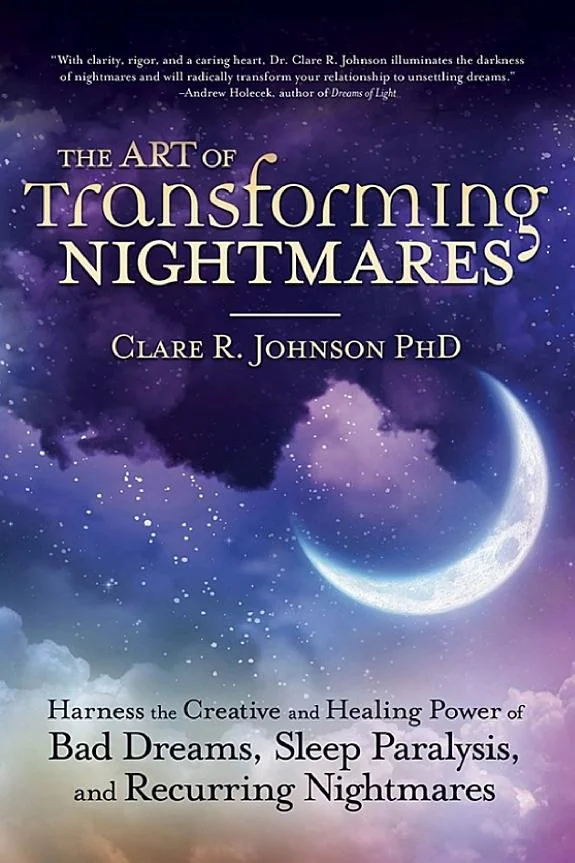
The Art of Transforming Nightmares
 83
83

The Art of Transforming Nightmares
Clare R. Johnson’s approach to nightmares is commendably direct, moving past the sensationalism often attached to such dreams. She grounds the reader in the tangible reality of their own dream experiences, offering a lucid framework for engagement. Her "sleeper-dreamer type" quiz, while a useful diagnostic, occasionally feels more prescriptive than the organic nature of dream work might allow. A particular strength is her discussion of dream residues—the emotional and physical sensations that linger upon waking—and how these can be harnessed for healing. While the book excels at providing practical steps, some readers might yearn for a deeper exploration of the archetypal dimensions often associated with extreme dream states, though Johnson clearly prioritizes accessible, personal transformation over abstract symbolism. It serves as an excellent, grounded primer for anyone seeking to reclaim agency over their night terrors.
📝 Description
83
Clare R. Johnson's 2020 book teaches how to turn frightening dreams into tools for personal growth.
The Art of Transforming Nightmares provides a practical method for dealing with unsettling dream content. Clare R. Johnson, an expert in lucid dreaming, offers clear strategies to make the experience of nightmares less daunting. Instead of just trying to avoid them, the book encourages active engagement with these often feared nocturnal visions. The core idea is to convert nightmare energy into positive forces. This requires understanding the personal meaning behind dream images, identifying psychological and emotional triggers, and using lucid dreaming skills to shape or investigate the dream.
This guide is for anyone experiencing disturbing dreams who wants a useful way to understand their messages. It will interest people focused on self-improvement, creative problem-solving, and spiritual development through dreams. Those familiar with or curious about lucid dreaming, as well as people who practice various psychological or esoteric traditions, will find useful techniques here. Johnson also presents a tool to classify different "sleeper-dreamer types," suggesting a tailored approach to working with difficult dreams.
Dream interpretation has a long lineage, from ancient healing practices to modern psychoanalysis. Johnson's work connects to this history, particularly the Jungian focus on the unconscious mind's symbolism and individuation. While Freud saw dreams as expressions of repressed desires and Jung emphasized archetypes, Johnson presents a contemporary approach. She highlights agency and transformation within the dream state itself, building on the idea that dreams are not just passive occurrences but active sites for personal change.
💡 Why Read This Book?
• Learn to identify and interpret the specific symbolic language of your personal nightmares, moving beyond fear to uncover hidden messages. Johnson's method, first published in 2021, offers concrete steps for this process. • Discover your unique "sleeper-dreamer type" through a practical quiz, enabling you to fast-track transformative techniques tailored to your individual dream patterns. • Gain practical skills in lucid dreaming and dream incubation, empowering you to actively engage with and reshape distressing dream scenarios for personal growth and creativity.
⭐ Reader Reviews
Honest opinions from readers who have explored this book.
❓ Frequently Asked Questions
What is the primary benefit of reading 'The Art of Transforming Nightmares'?
The primary benefit is learning practical, hands-on techniques to transform distressing nightmares into sources of healing, creativity, and spiritual insight, rather than merely enduring them.
Who is Clare R. Johnson and what is her expertise?
Clare R. Johnson is a world-leading expert on lucid dreaming, holding a PhD and extensive research experience in the field, lending significant credibility to her practical advice.
When was 'The Art of Transforming Nightmares' first published?
The book was first published on February 8, 2021, making its insights and techniques relatively contemporary within the field of dream studies.
Does the book offer a way to personalize dream work strategies?
Yes, it includes a unique quiz to identify your personal 'sleeper-dreamer type,' which helps in selecting the most effective transformative techniques for your individual needs.
What is the core philosophy behind transforming nightmares?
The core philosophy is that nightmares, when approached constructively, hold immense gifts and can be powerful catalysts for healing, creativity, and spiritual understanding.
Is this book suitable for beginners in dream analysis?
Absolutely. It's designed as a friendly, hands-on guide, making complex dream work accessible and actionable for those new to the subject.
🔮 Key Themes & Symbolism
Nightmare Alchemy
The book reframes nightmares not as afflictions but as potent, alchemical substances waiting to be transmuted. Johnson guides readers through the process of engaging with the fear, imagery, and emotional charge of disturbing dreams. By applying conscious awareness and specific techniques, the raw energy of a nightmare can be transformed into valuable insights, creative inspiration, or profound emotional healing, akin to turning lead into gold within the psyche.
Personalized Dream Archetypes
Central to Johnson's method is the identification of individual "sleeper-dreamer types." This concept acknowledges that not all individuals process dreams, especially nightmares, in the same way. The included quiz helps readers categorize their typical dream experience and response patterns, allowing for a highly personalized approach to dream work and the application of specific transformative techniques that align with their unique psychological makeup.
Lucid Dreaming as a Tool
Lucid dreaming, the awareness of dreaming while dreaming, is presented as a crucial tool for actively engaging with nightmares. Johnson provides practical guidance on how to induce lucidity within a nightmare scenario. This allows the dreamer to gain agency, explore the dream environment consciously, interact with dream figures, and potentially alter the narrative, thereby transforming a passive, frightening experience into an active, empowering one.
Dream Residue Integration
Beyond the dream itself, the book emphasizes the importance of 'dream residue'—the lingering feelings, physical sensations, and mental states experienced upon waking. Johnson suggests methods for consciously working with this residue, integrating the dream's message into waking life. This practice ensures that the insights gained from confronting nightmares are not lost but are actively applied, fostering sustained personal development and emotional integration.
💬 Memorable Quotes
Direct passages from the work, attributed to the author.
“Tap into the immensely rich gifts that bad dreams offer up when we work with them in healing ways.”
— This captures the book's core premise: viewing nightmares not as negative events but as potential sources of profound psychological and spiritual benefit through conscious engagement.
“A unique quiz that identifies your personal sleeper-dreamer type so you can fast-track to the transformative techniques that work best for you.”
— This highlights the book's practical, personalized approach, offering readers a diagnostic tool to tailor dream work strategies for maximum effectiveness.
“Transform Nightmares into Healing, Creative, Spiritual Gifts”
— This is the fundamental promise of the book—a radical reframing of night terrors as opportunities for profound personal growth and the unlocking of inner potential.
“Dr. Clare Johnson, world-leading expert on lucid dreaming, shares her best practical tips for overcoming nightmares.”
— This establishes the author's credentials and the book's focus on actionable, expert-backed advice for managing and transforming distressing dream experiences.
“Overcoming nightmares and a unique quiz that identifies your personal sleeper-dreamer type.”
— This emphasizes the dual focus on practical 'overcoming' strategies and a personalized diagnostic element to guide the reader's journey.
🌙 Esoteric Significance
Tradition
This work can be seen as a modern offshoot of Gnostic and Hermetic principles, particularly those concerning the transmutation of base experiences (like fear and distress) into spiritual gold. It carries the Hermetic axiom 'As Above, So Below,' applying it to the inner range of the psyche and the dream world. While not strictly adhering to ancient texts, it shares the Gnostic emphasis on hidden knowledge and liberation from suffering through understanding and conscious action, reinterpreted through the lens of contemporary psychology and neuroscience.
Symbolism
The central symbol is the 'nightmare' itself, re-envisioned not as a dark entity but as a potent, albeit challenging, messenger. The act of 'transformation' is another key motif, symbolizing the alchemical process of turning base psychic material into higher consciousness. The 'sleeper-dreamer type' acts as a personal sigil, a unique identifier that guides the individual's path through the dreamscape, suggesting that even the most terrifying experiences contain a personalized, symbolic key to awakening.
Modern Relevance
Johnson's approach resonates strongly with contemporary fields like transpersonal psychology, consciousness research, and the burgeoning interest in psychedelic-assisted therapies, which also explore altered states for healing and insight. Thinkers and practitioners like Stanislav Grof, who mapped transpersonal states, and modern lucid dreaming educators who emphasize agency in altered states, find common ground with Johnson's practical empowerment model. Her work is relevant to anyone exploring non-ordinary states of consciousness for personal growth and understanding.
👥 Who Should Read This Book
• Individuals experiencing recurrent or particularly distressing nightmares who seek actionable methods to reduce fear and gain personal insight. • Practitioners of lucid dreaming looking to expand their repertoire with specific techniques for engaging with challenging dream content. • Students of psychology, consciousness studies, or esoteric traditions interested in contemporary, practical approaches to dream work and personal transformation.
📜 Historical Context
Published in 2021, 'The Art of Transforming Nightmares' emerges within a contemporary range of renewed interest in consciousness studies, dream research, and holistic wellness practices. It builds upon the foundations laid by earlier psychological movements, notably the psychoanalytic traditions of Sigmund Freud and Carl Jung, who first brought systematic dream analysis into mainstream discourse. While Freud posited dreams as wish fulfillment stemming from repressed desires, and Jung explored archetypal imagery and the collective unconscious as pathways to individuation, Johnson's work offers a more direct, embodied approach. Her focus on lucid dreaming and practical transformation aligns with modern therapeutic modalities that emphasize client agency and experiential learning. In contrast to the more interpretive, sometimes passive, approaches of earlier decades, Johnson's methodology empowers the dreamer to actively engage and reshape their nocturnal experiences, reflecting a broader cultural shift towards self-empowerment and accessible psychological tools.
📔 Journal Prompts
Reflect on the 'dream residue' from your most recent nightmare: what physical sensations or emotions lingered, and how can you consciously work with them?
Analyze the central conflict or fear presented in a recent nightmare. What might this represent about an unacknowledged aspect of your waking life?
Consider your 'sleeper-dreamer type': how does this classification help you understand your typical reaction to distressing dreams?
Explore the potential 'gifts' hidden within a recurring nightmare symbol. What message might it be trying to convey for your healing?
Imagine you become lucid within a nightmare. What is the first conscious action you would take to transform the scenario?
🗂️ Glossary
Nightmare
A disturbing dream characterized by intense fear, anxiety, or distress, often involving threatening situations or imagery that can have a significant emotional impact upon waking.
Lucid Dreaming
A state of consciousness during dreaming in which the dreamer becomes aware that they are dreaming and may be able to exert some degree of control over the dream narrative, characters, or environment.
Sleeper-Dreamer Type
A classification system developed by Clare R. Johnson to categorize individual patterns of experiencing and responding to dreams, particularly nightmares, to tailor transformative techniques.
Dream Residue
The emotional, physical, or mental sensations and impressions that linger after waking from a dream, carrying the dream's impact into the waking state.
Transformation Techniques
Specific methods and strategies outlined in the book designed to actively engage with, understand, and ultimately convert the energy and content of nightmares into positive psychological outcomes.
Dream Incubation
A practice aimed at influencing the content of one's dreams, often by setting an intention or posing a question before sleep, to seek guidance or explore specific themes.
Waking Life Integration
The process of consciously applying insights, lessons, or emotional resolutions gained from dreams (especially nightmares) into one's daily activities and decision-making.
This book appears in 1 collection
🔮 Readers Also Liked
Browse all →






From the “Lucid Dreaming” Collection
View all →







More Free Sacred Texts & Gnosticism Books
View all →