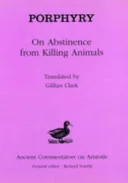
On Abstinence from Killing Animals
 80
80

On Abstinence from Killing Animals
Porphyry’s "On Abstinence from Killing Animals" remains a potent philosophical challenge, dissecting the ethics of meat consumption and sacrifice with remarkable clarity for a text from the 3rd century CE. Its strength lies in its systematic dismantling of prevailing justifications. Porphyry’s argument that true reverence for the gods necessitates compassion for all creatures, rather than ritualistic slaughter, is particularly compelling. He adeptly connects theological understanding with ethical imperatives concerning animals. A limitation for modern readers might be the occasional reliance on cosmological assumptions specific to Neoplatonism, which require some background knowledge. The passage where Porphyry discusses the injustice of inflicting suffering on beings capable of experiencing pain is a powerful, enduring point. This treatise is a foundational text for ethical vegetarianism and a vital historical document.
📝 Description
80
Porphyry's 3rd-century CE treatise argues against animal sacrifice and flesh consumption.
Porphyry's "On Abstinence from Killing Animals" dissects the ethical and philosophical reasons behind eating animals and performing animal sacrifice. This work, originally part of a larger text, builds a thorough case against these practices. Porphyry carefully examines the common justifications for them and then systematically dismantles them using logic, religious thought, and an understanding of the natural world.
He contends that true reverence for the divine extends to all living things, not through appeasement via sacrifice. Porphyry contrasts the suffering of animals with the possibility of human spiritual growth, suggesting that abstaining from harming animals leads to a more enlightened way of life. The book addresses the nature of divinity, the order of beings, and justice for all sentient creatures.
Written in the 3rd century CE, "On Abstinence" arises from a period of intense philosophical debate within Neoplatonism. Porphyry, a student of Plotinus, sought to establish a moral code aligned with Neoplatonic ideals, which emphasized the divine unity and the hierarchy of existence. This treatise challenges prevailing customs by connecting ethical treatment of animals to a broader metaphysical framework and the pursuit of spiritual enlightenment, drawing on earlier Pythagorean ideas about purity and reincarnation.
💡 Why Read This Book?
• Gain a sophisticated ancient philosophical argument for vegetarianism, rooted in Neoplatonic ethics, which challenges the necessity and justice of animal sacrifice as practiced in 3rd century CE Greco-Roman society. • Understand the historical linkage between spiritual purity and dietary practices, as Porphyry connects abstaining from animal flesh to a more enlightened relationship with the divine and the cosmos. • Explore Porphyry’s reasoning regarding the inherent value of animal life, a perspective that predates modern animal rights discourse and offers a unique historical lens on sentient suffering.
⭐ Reader Reviews
Honest opinions from readers who have explored this book.
❓ Frequently Asked Questions
When was Porphyry's "On Abstinence from Killing Animals" originally written?
Porphyry wrote "On Abstinence from Killing Animals" in the 3rd century CE, likely between 260 and 270 CE, during the height of the Neoplatonic movement.
What is the primary philosophical school associated with Porphyry?
Porphyry is a key figure in Neoplatonism, a philosophical system developed from the teachings of Plato and further elaborated by his teacher, Plotinus.
What was the main purpose of Porphyry's treatise?
The treatise aims to argue against the practice of killing animals for food or sacrifice, presenting ethical, theological, and philosophical reasons for vegetarianism.
Does the book discuss specific religious practices?
Yes, it critically examines animal sacrifice as practiced in various ancient religions, arguing it is inappropriate and unnecessary for proper devotion to the gods.
What is the relationship between this book and Porphyry's other works?
This treatise was originally part of a larger work, 'Sententiae ad intelligibilia ducentes' (Sentences Leading to the Intelligible), though it is often studied as a standalone ethical text.
Is this text considered part of esoteric or occult literature?
Yes, it is categorized as esoteric due to its Neoplatonic philosophical underpinnings, its exploration of the soul's relationship with the material world, and its ethical system advocating for spiritual purity.
🔮 Key Themes & Symbolism
Ethical Vegetarianism
The core of Porphyry's argument centers on the ethical implications of taking animal life. He posits that the capacity for suffering in animals renders their slaughter unjust. This perspective challenges the anthropocentric view prevalent in many ancient cultures, suggesting that a higher ethical standard, aligned with divine reason, dictates compassion for all sentient beings, not just humans. The work meticulously details why such practices are inappropriate from a theological standpoint and unjust from a naturalistic one.
Neoplatonic Cosmology
Porphyry’s arguments are deeply embedded within the Neoplatonic framework, which posits a hierarchy of existence emanating from the One. He uses this cosmology to illustrate the interconnectedness of all beings and the proper ordering of the universe. Understanding this framework is crucial, as it informs his view that harming lesser beings disrupts this cosmic harmony and hinders the soul's ascent towards the divine intellect. The text implicitly critiques practices that degrade the soul through association with violence.
Theology and Divine Will
The treatise contends that animal sacrifice is a misunderstanding of divine will and true piety. Porphyry argues that the gods, being perfect and self-sufficient, do not require appeasement through bloodshed. Instead, genuine worship involves cultivating inner virtue and aligning oneself with the rational order of the cosmos. He contrasts this with the perceived barbarity of non-Greek sacrificial rites, suggesting that a more sophisticated understanding of divinity leads to a rejection of such practices.
Justice and Sentience
A significant theme is the concept of justice as it applies beyond the human realm. Porphyry explores the idea that beings capable of experiencing pain and fear deserve moral consideration. His reasoning suggests that inflicting unnecessary suffering on animals is a violation of a broader principle of justice. This extends the ethical domain, prompting readers to consider the moral status of non-human creatures within the philosophical field of antiquity.
💬 Memorable Quotes
Direct passages from the work, attributed to the author.
“The gods themselves are not nourished by blood.”
— This statement captures Porphyry's theological critique of sacrifice. It posits that divine beings, being perfect and self-sufficient, have no need for the physical sustenance that animal blood might represent, thus rendering sacrifice a misguided act of worship.
“A knowledge of non-Greeks shows sacrifice to be unnecessary.”
— This refers to Porphyry's observation that many cultures and philosophical traditions, including those outside the dominant Greco-Roman sphere, did not practice or even condemned animal sacrifice, demonstrating its lack of universal necessity for spiritual or social order.
“Abstinence leads to purity of soul.”
— This interpretation reflects Porphyry's view that refraining from harming animals contributes to the purification of the individual's soul, aligning it more closely with the divine and facilitating spiritual progress.
💡 Key Ideas
Editorial paraphrase of the work's core concepts — not direct quotes.
It is unjust to inflict suffering on those who can feel pain.
This paraphrase highlights Porphyry's extension of ethical principles to non-human animals. It argues that sentience itself confers a degree of moral standing, making the causation of pain and suffering inherently wrong.
Human and divine nature reveal the inappropriateness of animal sacrifice.
This summarizes Porphyry's argument that understanding the distinct qualities of human reason and the perfect nature of the divine demonstrates that sacrificing animals is a flawed practice, not aligned with true wisdom or piety.
🌙 Esoteric Significance
Tradition
This work is central to the Neoplatonic tradition, a philosophical system deeply intertwined with esoteric thought. It fits within the lineage of mystical philosophy that seeks to understand the nature of reality through divine emanations and the soul's journey towards reunification with the ultimate source. Porphyry’s ethical prescriptions, particularly regarding diet and the avoidance of violence, are presented as practical steps for achieving spiritual purification and philosophical enlightenment within this framework.
Symbolism
While not overtly symbolic in the manner of later Kabbalistic or alchemical texts, "On Abstinence" operates with symbolic implications. The act of killing animals symbolizes a descent into the material, a participation in the cycle of suffering and generation, which hinders the soul's ascent. Conversely, abstaining from killing represents a purification, a turning away from the base material world towards the intelligible realm. The distinction between rational humans and sentient animals carries symbolic weight regarding the soul's potential for spiritual development.
Modern Relevance
Contemporary thinkers and practitioners in fields like animal ethics, deep ecology, and ethical vegetarianism often draw upon Porphyry's arguments. His sophisticated philosophical reasoning provides a historical precedent for valuing non-human life. Within modern esoteric circles, particularly those influenced by Hermeticism and ancient philosophies, Porphyry's work is revisited for its insights into ascetic practices and the ethical dimensions of spiritual development, informing contemporary discussions on compassion and interconnectedness.
👥 Who Should Read This Book
• Students of ancient philosophy and Neoplatonism: Gain a foundational text on the ethical and metaphysical underpinnings of one of antiquity's most influential philosophical schools. • Comparative religion scholars: Understand the historical debates surrounding animal sacrifice and its theological justifications in the Greco-Roman world and beyond. • Ethical vegetarians and vegans: Discover the deep philosophical roots of abstaining from animal products, tracing arguments back to the 3rd century CE.
📜 Historical Context
Porphyry's "On Abstinence from Killing Animals" was composed in the 3rd century CE, a period of intense philosophical and religious ferment in the Roman Empire. As a leading Neoplatonist, Porphyry, a student of Plotinus, sought to systematize and defend Platonic philosophy against various competing schools, including Gnosticism and Stoicism. His work engaged with earlier Pythagorean traditions, which also advocated for vegetarianism. The text emerged within a broader intellectual current that debated the relationship between humanity, nature, and the divine. Porphyry's arguments against sacrifice and meat consumption were not entirely novel, but his systematic philosophical approach, grounded in Neoplatonic metaphysics, provided a powerful intellectual justification that influenced later thinkers concerned with ethics and asceticism. The intellectual climate allowed for such detailed ethical treatises, even as older religious practices persisted.
📔 Journal Prompts
Porphyry's argument regarding the injustice of inflicting suffering.
The Neoplatonic connection between abstaining from killing and the soul's ascent.
The concept of divine will versus sacrificial practices.
The justification for human ethical consideration of animals.
The necessity of animal sacrifice according to ancient customs versus Porphyry's critique.
🗂️ Glossary
Neoplatonism
A philosophical system originating in the 3rd century CE, building upon Plato's ideas. It emphasizes a hierarchy of reality descending from a transcendent, unified 'One' and focuses on the soul's journey towards spiritual reintegration with this ultimate source.
Asceticism
A lifestyle characterized by severe self-discipline and abstention from all forms of indulgence, typically for religious or spiritual reasons. In this context, it relates to dietary restrictions and avoiding harm to living beings.
Sentience
The capacity to feel, perceive, or experience subjectively. Porphyry uses this concept to argue for the moral consideration of animals, as they are capable of experiencing pain and distress.
Logos
In Greek philosophy, particularly Stoicism and Neoplatonism, 'Logos' refers to the divine reason or principle that governs the universe. Porphyry links adherence to Logos with ethical conduct and understanding.
Theurgy
A set of religious rites and practices aimed at invoking divine assistance or communion, often associated with Neoplatonism. While Porphyry discusses piety, his focus here is more on ethical living than specific theurgic rituals.
Anthropocentrism
The belief that human beings are the central or most significant entities in the universe. Porphyry's work challenges this by arguing for the moral consideration of non-human animals.
Intelligible Realm
In Neoplatonic philosophy, the higher reality of eternal Forms or Ideas, contrasted with the physical, sensible world. Porphyry suggests that ethical practices like abstinence help orient the soul towards this realm.
This book appears in 1 collection
🔮 Readers Also Liked
Browse all →








From the “Neoplatonism” Collection
View all →





More Free Occult Philosophy Books
View all →