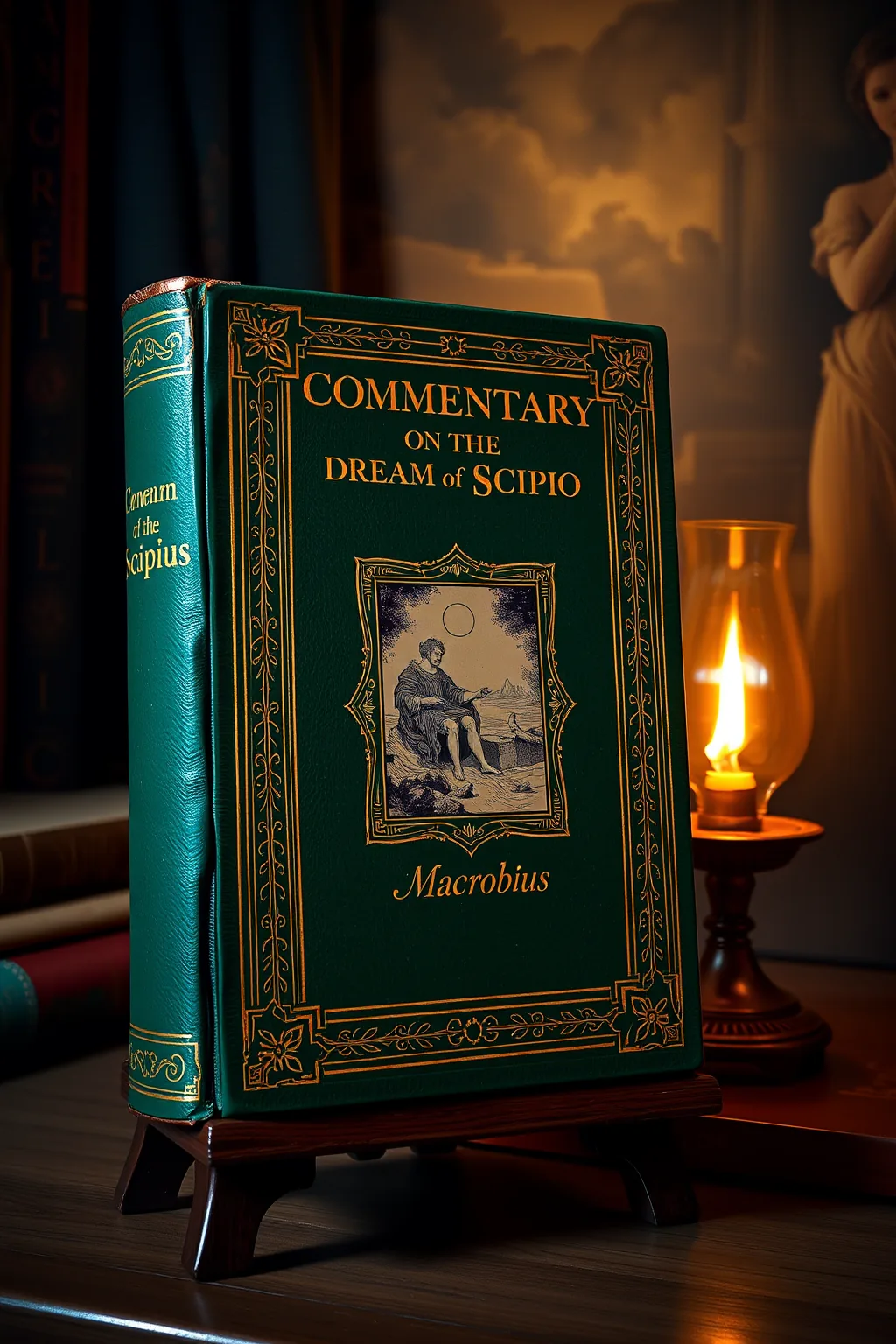
Commentary on the Dream of Scipio
 61
61

Commentary on the Dream of Scipio


Review by Ophelia Vance (Mystical Literature Reviewer) — Macrobius' Commentary on the Dream of Scipio is a masterclass in esoteric interpretation. This work is a must-read for anyone delving into Neoplatonism and the mystical traditions of late antiquity. Macrobius' insights into the symbolism of the dream are profound and thought-provoking, making this book a valuable resource for both scholars and practitioners of the occult. The strengths of this text lie in its deep philosophical underpinnings and its ability to illuminate the hidden layers of meaning within the original dream narrative. It is particularly suited for those with a keen interest in the mystical and esoteric traditions that have shaped Western thought.
📝 Description
61
Macrobius wrote his Commentary on the Dream of Scipio around 400 CE.
Ambrosius Aurelius Theodosius Macrobius's work explains Plato's "Dream of Scipio," a political allegory. His commentary, composed in the late Roman period, goes beyond a simple explanation. Macrobius structures his text into two books, examining the celestial spheres, the nature of the soul, and the path to salvation.
He connects Plato's ideas with Neoplatonic thought, particularly the concepts of Plotinus. The commentary discusses the transmigration of souls, the hierarchy of divine beings, and the role of virtue in achieving a higher state. Macrobius also integrates Stoic and Pythagorean philosophy into his interpretations, creating a synthesis of classical thought relevant to his time. The work is a significant source for understanding the philosophical and religious currents of the early fifth century.
Macrobius's commentary sits within the tradition of late antique philosophical exegesis. It engages directly with classical texts, reinterpreting them through the lens of emergent Neoplatonism. This approach aimed to reconcile earlier philosophical systems with more mystical and theological concerns prevalent in the era. The work reflects a desire to find spiritual meaning within established philosophical frameworks, making it a key text for understanding the transition from classical paganism to a more esoteric spirituality.
💡 Why Read This Book?
Why read this book — The Commentary on the Dream of Scipio is essential reading for seekers of hidden knowledge, scholars of Neoplatonism, and practitioners of the occult. This text offers a unique perspective on the spiritual and philosophical ideas of late antiquity, providing insights that are as relevant today as they were in the time of Macrobius. Whether you are a beginner exploring the mystical traditions or an experienced scholar, this book offers a rich tapestry of esoteric wisdom that will deepen your understanding and enlightenment.
⭐ Reader Reviews
Honest opinions from readers who have explored this book.
❓ Frequently Asked Questions
What is the significance of the Dream of Scipio in Neoplatonism?
The Dream of Scipio is a pivotal text in Neoplatonism, exploring the interconnectedness of the physical and metaphysical realms through symbolic interpretation.
Who is the intended audience for this commentary?
This commentary is ideal for scholars of the occult, Neoplatonism, and spiritual seekers who are interested in the esoteric traditions of late antiquity.
What are the key themes discussed in this book?
Key themes include the symbolism of the dream, the nature of the soul, and the relationship between the divine and the human.
How does Macrobius' commentary differ from other interpretations?
Macrobius' commentary stands out for its deep philosophical insights and its ability to uncover hidden layers of meaning within the dream narrative.
Why is this text relevant today?
This text remains relevant today because it offers timeless wisdom on spiritual enlightenment and the quest for hidden knowledge, resonating with modern seekers and scholars alike.
🔮 Key Themes & Symbolism
Symbolism of the Dream
Macrobius' commentary studies the strong symbolism of the Dream of Scipio, uncovering hidden layers of meaning that reveal the interconnectedness of the physical and metaphysical realms. This theme is central to understanding the esoteric traditions of late antiquity and their influence on Western thought.
The Nature of the Soul
One of the key themes in this text is the exploration of the soul's journey and its relationship with the divine. Macrobius offers useful insights into the nature of the soul and its quest for spiritual enlightenment, making this a valuable resource for spiritual seekers and scholars alike.
Divine and Human Connection
The commentary also examines the relationship between the divine and the human, offering a mystical perspective on the interplay between these two realms. This theme is essential for understanding the spiritual and philosophical ideas that shaped the occult traditions of late antiquity.
💬 Memorable Quotes
Direct passages from the work, attributed to the author.
“Symbolism is the language of the soul.”
— Macrobius emphasizes the importance of symbolic interpretation in understanding the deeper meanings of spiritual experiences.
💡 Key Ideas
Editorial paraphrase of the work's core concepts — not direct quotes.
The soul's journey is a quest for divine unity.
This quote highlights the mystical pursuit of spiritual enlightenment and the soul's longing for connection with the divine.
The dream reveals the hidden layers of reality.
This passage underscores the esoteric significance of the Dream of Scipio and its ability to unveil the mysteries of the universe.
The divine and human realms are interconnected.
This quote illustrates the mystical belief in the interplay between the divine and the human, a central theme in Neoplatonism.
Wisdom is found in the contemplation of the mysteries.
This passage encourages the reader to engage in contemplative reflection on the sacred mysteries of the universe.
🌙 Esoteric Significance
Tradition
This book belongs to the Hermetic and Neoplatonic traditions, which emphasize the pursuit of hidden knowledge and spiritual enlightenment. These traditions have shaped Western esoteric thought and continue to influence modern practitioners of the occult.
Symbolism
Key symbols in this text include the dream itself, which represents the soul's journey, and the celestial spheres, which symbolize the interconnectedness of the physical and metaphysical realms. These symbols are central to understanding the esoteric themes of the commentary.
Modern Relevance
This text remains relevant today because it offers timeless wisdom on spiritual enlightenment and the quest for hidden knowledge. Modern practitioners of the occult and spiritual seekers can find valuable insights in Macrobius' commentary, making it a valuable resource for contemporary esoteric studies.
👥 Who Should Read This Book
Beginners exploring the mystical traditions will find this book an accessible introduction to the esoteric themes of Neoplatonism. Scholars of the occult will appreciate the deep philosophical insights and historical context provided by Macrobius' commentary. Spiritual seekers will be inspired by the text's exploration of the soul's journey and its quest for divine unity. Practitioners of the occult will find valuable resources for symbolic interpretation and spiritual contemplation.
📜 Historical Context
The Commentary on the Dream of Scipio was written during the late Roman era, a time of significant cultural and intellectual exchange. Macrobius' work is a product of the Neoplatonic tradition, which sought to reconcile the philosophical ideas of Plato with the mystical traditions of late antiquity. This text was important in its time for providing a deep interpretation of the Dream of Scipio, a narrative that had captivated the imagination of scholars and spiritual seekers. Its influence can be seen in the development of Western esoteric traditions and the ongoing quest for spiritual enlightenment.
📔 Journal Prompts
How does the symbolism of the Dream of Scipio resonate with your own spiritual journey?
What insights can you gain from Macrobius' exploration of the soul's quest for divine unity?
How does the interconnectedness of the divine and human realms manifest in your life?
What are the hidden layers of reality that you have discovered through contemplation?
How can you apply the wisdom of Neoplatonism to your pursuit of spiritual enlightenment?
🗂️ Glossary
Neoplatonism
A philosophical tradition that combines the ideas of Plato with mystical and esoteric themes, emphasizing the pursuit of spiritual enlightenment.
Esoteric
Relating to hidden knowledge or mystical traditions that are not widely understood or practiced.
Symbolism
The use of symbols to represent deeper meanings or spiritual truths, a central theme in esoteric literature.
Divine Unity
The mystical belief in the oneness of the divine, often pursued through spiritual contemplation and enlightenment.
Celestial Spheres
A symbol in esoteric traditions representing the interconnectedness of the physical and metaphysical realms.
This book appears in 2 collections
🔮 Readers Also Liked
Browse all →






More by Ambrosius Aurelius Theodosius Macrobius
All books →



From the “Neoplatonism” Collection
View all →





More Free Alchemy & Hermeticism Books
View all →