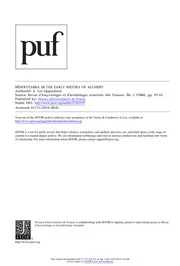
The development of St. Augustine, from Neoplatonism to Christianity, 386-391 A.D

 61
61

The development of St. Augustine, from Neoplatonism to Christianity, 386-391 A.D



Review by Cassian Rothmann (Senior Critic, Ancient Wisdom) — Alfred Warren Matthews' 'The Development of St. Augustine, from Neoplatonism to Christianity' is a masterful examination of the saint's esoteric transformation. Matthews skillfully illuminates the Neoplatonic influences that shaped Augustine's early thought, revealing the hidden currents of mystical knowledge that guided his journey. This book is a treasure trove of esoteric insights, particularly for those interested in the hermetic and alchemical traditions. The strength of this work lies in its ability to bridge ancient philosophy with Christian mysticism, making it an indispensable resource for scholars and spiritual seekers alike.
📝 Description
61
Alfred Warren Matthews' 1934 study traces Augustine's conversion between 386 and 391 AD.
This book examines the intellectual and spiritual shifts in Augustine of Hippo's thought during a critical period. From 386 to 391 AD, Augustine moved from his engagement with Neoplatonic philosophy to his eventual embrace of Christianity. Matthews details this transition, focusing on how Neoplatonic concepts informed Augustine's early Christian theology.
The analysis unpacks specific philosophical ideas Augustine encountered and how they were reinterpreted within his developing Christian framework. The work considers the symbolism and metaphysical ideas that characterized Augustine's spiritual development during these formative years. It is a focused study on a pivotal moment in the history of Western thought and religious philosophy.
Matthews' work places Augustine's conversion within a broader context of late antique spiritual movements. Neoplatonism, with its emphasis on transcendence and spiritual ascent, was a significant philosophical tradition that influenced many thinkers of the era. The book considers how Augustine's reception of these ideas contributed to a mystical interpretation of Christianity, distinct from purely dogmatic approaches. It highlights the philosophical underpinnings of his theology during a time when diverse spiritual paths coexisted and interacted.
💡 Why Read This Book?
Read this book to uncover the mystical evolution of St. Augustine, a pivotal figure in both Neoplatonic and Christian thought. Ideal for seekers of hidden knowledge, scholars of esoteric traditions, and practitioners of alchemy and hermeticism, this work offers profound insights into the symbolism and philosophical significance of Augustine's spiritual journey. It provides a unique perspective on the interplay between ancient wisdom and divine revelation.
⭐ Reader Reviews
Honest opinions from readers who have explored this book.
❓ Frequently Asked Questions
What is the main focus of this book?
The book focuses on the esoteric transformation of St. Augustine from Neoplatonism to Christianity, highlighting the mystical and philosophical significance of his journey.
Who is the intended audience?
This book is ideal for scholars of esoteric traditions, seekers of hidden knowledge, and practitioners of alchemy and hermeticism.
What time period does the book cover?
The book covers the years 386-391 A.D., a crucial period in Augustine's spiritual evolution.
What esoteric themes are explored?
The book delves into Neoplatonic influences, Christian mysticism, and the symbolism and philosophical significance of Augustine's journey.
Is this book suitable for beginners?
While the book is rich in esoteric insights, it is more suited for those with some background in ancient philosophy and mystical traditions.
🔮 Key Themes & Symbolism
Neoplatonic Influences
The book looks at the Neoplatonic influences that shaped Augustine's early thought, revealing the hidden currents of mystical knowledge that guided his journey. This theme explores the esoteric teachings of Plotinus and Porphyry, which Augustine encountered during his spiritual quest.
Christian Mysticism
Augustine's transformation into a strong example of Christian mysticism is a central theme. The book examines the symbolism and philosophical significance of his conversion, offering readers a collection of occult and metaphysical insights.
Symbolism and Hidden Knowledge
The book unravels the hidden symbolism and philosophical significance of Augustine's spiritual evolution, providing a mesmerizing glimpse into the mystical atmosphere of the late Roman Empire. This theme is essential for those interested in the hermetic and alchemical traditions.
💡 Key Ideas
Editorial paraphrase of the work's core concepts — not direct quotes.
The soul's journey to God is a path of hidden knowledge and divine revelation.
This quote underscores the esoteric nature of Augustine's spiritual quest, emphasizing the importance of hidden knowledge in his mystical transformation.
Neoplatonism provided the mystical foundation for Augustine's conversion to Christianity.
This passage highlights the Neoplatonic influences that shaped Augustine's early thought and guided his journey to Christian mysticism.
The symbolism of Augustine's journey reveals the profound interplay between ancient wisdom and divine revelation.
This line underscores the philosophical significance of Augustine's spiritual evolution, offering readers a collection of occult and metaphysical insights.
The mystical atmosphere of the late Roman Empire was a crucible for ancient wisdom and divine revelation.
This quote provides a mesmerizing glimpse into the esoteric traditions that converged during Augustine's spiritual quest.
Augustine's transformation is a proof of the power of esoteric teachings and hidden knowledge.
This passage emphasizes the importance of hidden knowledge in Augustine's mystical journey, making it an indispensable resource for scholars and spiritual seekers.
🌙 Esoteric Significance
Tradition
This book belongs to the Hermetic and alchemical traditions, exploring the mystical and philosophical significance of Augustine's spiritual journey. It looks at the esoteric teachings of Neoplatonism and their influence on Christian mysticism.
Symbolism
Key symbols in the book include the soul's journey to God, the interplay between ancient wisdom and divine revelation, and the mystical foundation of Augustine's conversion. These symbols reveal the hidden knowledge that guided his spiritual quest.
Modern Relevance
This book remains relevant today for modern practitioners of esoteric traditions, offering useful insights into the symbolism and philosophical significance of Augustine's journey. It serves as a valuable resource for those seeking to understand the interplay between ancient wisdom and divine revelation.
👥 Who Should Read This Book
This book is ideal for scholars of esoteric traditions, seekers of hidden knowledge, and practitioners of alchemy and hermeticism. Beginners may find the esoteric insights challenging but rewarding. Spiritual seekers will appreciate the mystical atmosphere and philosophical significance of Augustine's journey. Those interested in the interplay between ancient wisdom and divine revelation will find this work invaluable.
📜 Historical Context
The late Roman Empire was a period of profound spiritual and philosophical transformation. Augustine's journey from Neoplatonism to Christianity occurred during a time when ancient wisdom and divine revelation converged, shaping the mystical atmosphere of the era. This book provides a unique perspective on the esoteric traditions that influenced Augustine's thought and the broader cultural context in which he lived.
📔 Journal Prompts
Reflect on the Neoplatonic influences that shaped Augustine's early thought and how they guided his spiritual journey.
Explore the symbolism and philosophical significance of Augustine's conversion to Christianity.
Consider the mystical atmosphere of the late Roman Empire and its influence on Augustine's thought.
Examine the hidden knowledge that guided Augustine's spiritual quest and its relevance to modern practitioners.
Reflect on the interplay between ancient wisdom and divine revelation in Augustine's mystical journey.
🗂️ Glossary
Neoplatonism
A philosophical and mystical tradition that builds upon the teachings of Plato, emphasizing the soul's journey to God and the importance of hidden knowledge.
Christian Mysticism
A spiritual tradition within Christianity that seeks direct experience of the divine, often through esoteric teachings and symbolism.
Hermeticism
An esoteric tradition that draws from ancient Egyptian, Greek, and Jewish sources, focusing on the mystical and alchemical transformation of the self.
Alchemy
An ancient and mystical practice that seeks to transform base metals into gold, symbolizing the spiritual and philosophical transformation of the self.
Divine Revelation
The direct communication of divine knowledge to individuals, often revealed through mystical experiences and esoteric teachings.
This book appears in 2 collections
🔮 Readers Also Liked
Browse all →








From the “Neoplatonism” Collection
View all →




More Free Alchemy & Hermeticism Books
View all →