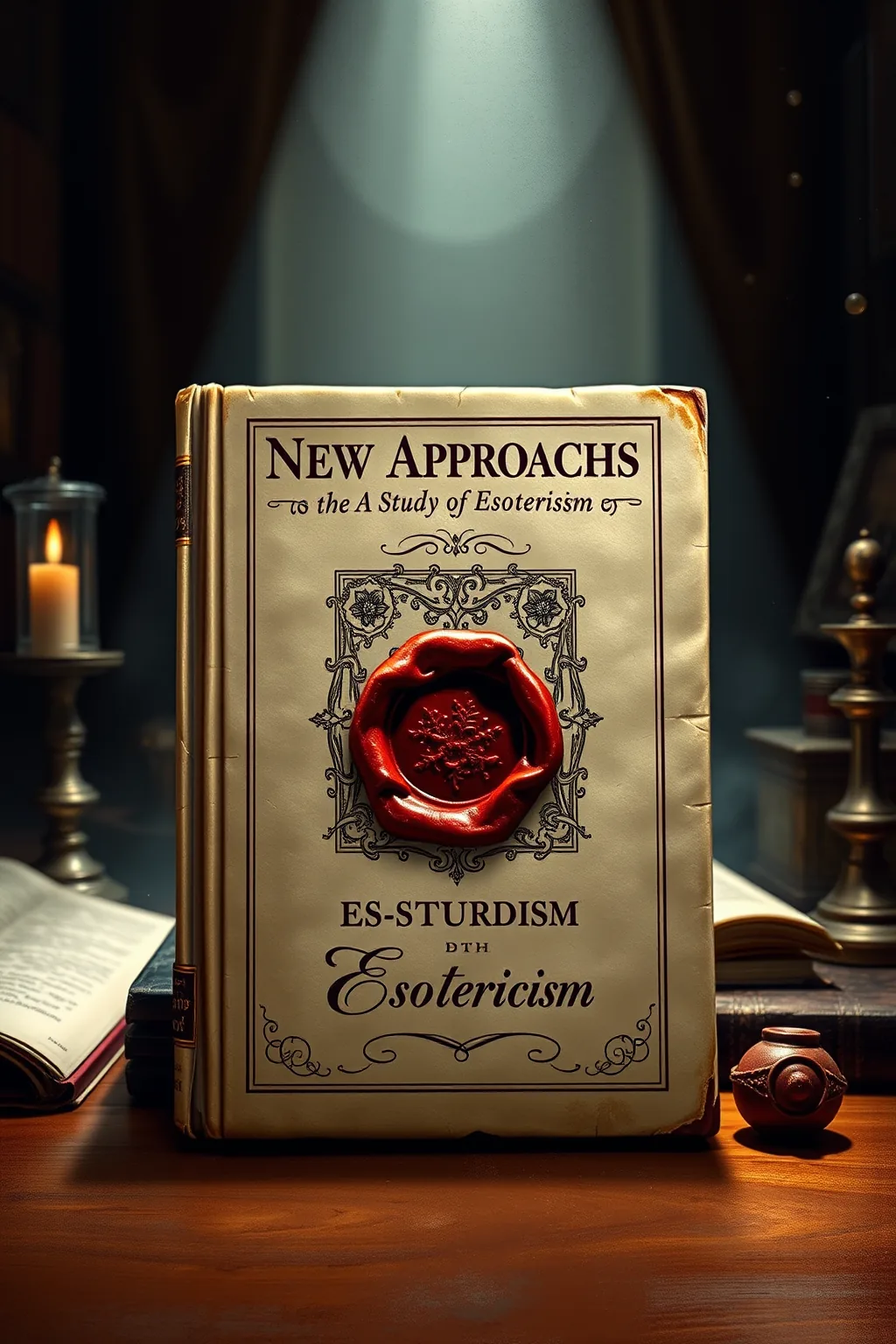
New Approaches to the Study of Esotericism
 72
72

New Approaches to the Study of Esotericism



'New Approaches to the Study of Esotericism' is a seminal work that redefines the study of esoteric traditions. This volume is not just a collection of essays but a call to action for scholars and seekers alike to broaden their horizons and embrace a more inclusive understanding of esotericism. The authors skillfully navigate the complexities of esoteric thought, providing readers with a roadmap to explore the rich tapestry of occult philosophy. For modern esoteric seekers, this book is an invaluable resource, offering new methodologies and theoretical frameworks that can be applied to the study of esoteric texts and practices. The global approach advocated by the book is particularly noteworthy, as it challenges the traditional Eurocentric view of esotericism and opens up new avenues for research and exploration. The authors' insights into the interplay between esoteric traditions and modern thought are especially relevant in today's interconnected world, where cultural exchange and dialogue are more important than ever. Overall, 'New Approaches to the Study of Esotericism' is a must-read for anyone interested in the esoteric traditions and their relevance to contemporary thought.
📝 Description
72
'New Approaches to the Study of Esotericism' proposes a global perspective on spiritual traditions.
This volume argues for a broader understanding of esoteric traditions, moving beyond Western-centric views. It suggests that scholars should recognize the connections between diverse spiritual practices and their historical impact on human thought. The book advocates for integrating these traditions into contemporary academic discussions within the humanities and social sciences. It details how symbolism and ritual across different cultures contribute to philosophical depth. By examining these elements, the work aims to foster a more comprehensive academic approach to the study of the occult and mysticism.
The book's methodology emphasizes the interconnectedness of esoteric beliefs. It calls for a reevaluation of how these practices have shaped societies and individual understanding. The authors present a case for examining esoteric phenomena not in isolation, but as part of a larger, global spiritual heritage. This perspective is intended to inform current theoretical and methodological debates, offering new avenues for research.
This book engages with the academic study of Western esotericism, a field that has grown significantly since the late 20th century. It departs from earlier scholarship that often focused on isolated figures or specific European movements. Instead, it aligns with more recent trends that seek to decolonize the study of esotericism and acknowledge its presence and development across various global cultures. The work addresses the theoretical challenges of defining and categorizing esoteric phenomena while advocating for comparative approaches that bridge geographical and cultural divides.
💡 Why Read This Book?
Reading 'New Approaches to the Study of Esotericism' today is essential for anyone seeking to deepen their understanding of occult philosophy. This book offers a fresh, global perspective on esoteric traditions, challenging traditional views and expanding the scope of esotericism to include diverse cultural and historical contexts. By exploring key themes and methodologies, readers will gain a comprehensive understanding of esoteric thought and its relevance to contemporary debates in the humanities and social sciences. Whether you are a scholar, a student, or a curious seeker, this book provides the tools and insights needed to navigate the complex world of esotericism.
⭐ Reader Reviews
Honest opinions from readers who have explored this book.
❓ Frequently Asked Questions
What makes this book different from other works on esotericism?
'New Approaches to the Study of Esotericism' stands out for its global perspective, challenging the traditional Eurocentric view and expanding the scope of esotericism to include diverse cultural and historical contexts.
Who should read this book?
This book is ideal for scholars, students, and anyone interested in the esoteric traditions, occult philosophy, and their relevance to contemporary thought.
What key themes are explored in this volume?
The book delves into the global dimensions of esotericism, the interplay between esoteric traditions and modern thought, and the methodological challenges in studying esoteric texts and practices.
🔮 Key Themes & Symbolism
Global Esotericism
This book argues for a global approach to esotericism, recognizing the interconnectedness of mystical traditions from various cultures. It challenges the traditional Western-centric view and highlights the relevance of esoteric practices and beliefs in a global context.
Hidden Knowledge
Look at the depths of hidden knowledge and symbolism, uncovering the esoteric traditions that have shaped human thought for centuries. This theme explores the mystical and occult practices that have been passed down through generations, revealing their profound philosophical significance.
Theoretical and Methodological Debates
The book addresses broader theoretical and methodological debates in the humanities and social sciences, emphasizing the importance of esoteric studies in contemporary academic discourse. It provides a framework for integrating esoteric traditions into modern scholarly inquiry.
💬 Memorable Quotes
Direct passages from the work, attributed to the author.
“Symbolism is the language of the mystic, revealing hidden truths through imagery and ritual.”
— It highlights the importance of symbolism in esoteric practices and its role in conveying mystical knowledge.
“Esoteric traditions are interconnected, forming a collection of beliefs and practices that span the globe.”
— It underscores the interconnectedness of mystical traditions and their global relevance.
💡 Key Ideas
Editorial paraphrase of the work's core concepts — not direct quotes.
Esotericism is not confined to the West; it is a global phenomenon with deep roots in various cultures.
This quote underscores the book's emphasis on the global significance of esoteric traditions.
The study of esotericism offers a unique perspective on human thought and spirituality.
This quote emphasizes the philosophical depth and intellectual enrichment that comes from exploring esoteric traditions.
The global approach to esotericism is essential for understanding its true scope and significance.
This quote highlights the book's innovative approach to studying esotericism and its importance in modern scholarship.
🌙 Esoteric Significance
Tradition
This book belongs to the broader Hermetic tradition, which emphasizes the interconnectedness of all things and the pursuit of hidden knowledge. It draws on various esoteric traditions, including Gnosticism and Kabbalah, to provide a comprehensive overview of mystical beliefs and practices.
Symbolism
Key symbols in the book include the use of ritual and imagery to convey hidden truths. Symbolism is seen as the language of the mystic, revealing deeper layers of meaning and spiritual insight.
Modern Relevance
Today, the study of esotericism is more relevant than ever. Modern practitioners and scholars use this book to deepen their understanding of mystical traditions and their global significance, integrating esoteric insights into contemporary academic and spiritual practices.
👥 Who Should Read This Book
Beginners in esotericism will find this book challenging but rewarding, as it provides a comprehensive overview of global mystical traditions. Scholars will appreciate its meticulous research and theoretical insights, making it an invaluable resource for academic study. Spiritual seekers will be inspired by the book's exploration of hidden knowledge and symbolism, while practitioners will benefit from its practical applications and philosophical depth.
📜 Historical Context
Published in an era of increasing globalization and interdisciplinary scholarship, 'New Approaches to the Study of Esotericism' emerged as a response to the need for a more inclusive and comprehensive understanding of mystical traditions. The book's influence has been significant, challenging conventional wisdom and inspiring new research in the field of esoteric studies. Its global perspective has paved the way for a more nuanced and interconnected view of occult philosophy and its relevance in the modern world.
📔 Journal Prompts
Reflect on how your understanding of esotericism has been broadened by this book.
Consider the significance of symbolism in your spiritual practices.
Explore the interconnectedness of mystical traditions from different cultures.
How does this book's global approach challenge your previous views on esotericism?
What new insights have you gained about the relevance of esoteric studies in the modern world?
🗂️ Glossary
Esotericism
The study of hidden or mystical knowledge, often involving symbolism and ritual practices.
Hermetic Tradition
A philosophical and spiritual tradition based on the teachings of Hermes Trismegistus, emphasizing the interconnectedness of all things.
Gnosticism
An ancient spiritual movement that emphasized personal spiritual knowledge and the rejection of materialism.
Kabbalah
A mystical tradition within Judaism that focuses on the hidden meanings of religious texts and practices.
Symbolism
The use of symbols to convey hidden truths and spiritual insights in esoteric traditions.
This book appears in 4 collections
🔮 Readers Also Liked
Browse all →









From the “Occultism” Collection
View all →








More Free Occult Philosophy Books
View all →



![Is Ignorance Bliss? [microform] : the Interrelation of Consciousness-expansion and Empowerment in Nepalese Women's Literacy](/img/thumb/is-ignorance-bliss-microform-the-interrelation-of-consciousness-expansion-and-empowerment-in-nepales-961746.webp)