Science of Dreams
 78
78

Science of Dreams
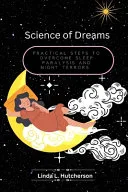
Linda L. Hutcherson’s Science of Dreams offers a sweeping thesis: dreams are the engine of human civilization. This is a bold claim, and the book marshals an impressive array of evidence from anthropology, religion, and history to support it. The exploration of how early cave paintings might reflect dream states, for instance, provides a fascinating starting point. However, the sheer scope of the argument sometimes leads to a diffusion of focus. While the integration of literature and science is commendable, certain connections feel more speculative than substantiated. The assertion that dreams directly spurred the transformation of Earth’s natural home into a human world, while intriguing, requires a more nuanced unpacking of causality. Despite these limitations, the work is undeniably ambitious and prompts a re-evaluation of our understanding of consciousness and its historical impact.
📝 Description
78
Linda L Hutcherson's 2005 book argues dreams drove civilization's development.
Linda L Hutcherson's Science of Dreams investigates the fundamental nature and purpose of human dreaming. The research moves beyond standard psychological views to consider dreams' integral role in civilization's growth and humanity's environmental transformation. Hutcherson posits dreams as a significant force behind human progress and cultural evolution, connecting subjective dream experiences to objective historical changes.
The book is written for readers interested in the intersection of consciousness, anthropology, and history. It appeals to those who question common explanations of sleep and dreaming, seeking a deeper understanding of how these phenomena have shaped human societies. Scholars and independent learners in fields like comparative religion and the history of ideas may find it particularly engaging. Hutcherson integrates diverse fields, drawing connections from early human history to modern scientific inquiry, examining how dream states may have influenced early art, religious beliefs, and societal structures.
This work is situated within occult philosophy traditions that view dreams not as mere biological functions but as vital channels for understanding reality and influencing the material world. It aligns with historical esoteric thought that recognizes dream states as a source of prophecy, inspiration, and even a means of interaction with unseen forces. The book's focus on dreams shaping civilization and human environments connects to ideas found in Hermeticism and certain forms of shamanic traditions, where the inner world is understood to directly impact the outer, manifest reality.
💡 Why Read This Book?
• Understand how dreams have historically acted as catalysts for societal change, a perspective not commonly found in standard sleep science literature, by examining the book's analysis of early human civilization. • Gain insight into the anthropological significance of dream interpretation, exploring specific examples of how ancient cultures utilized dream narratives to shape their worldview and development. • Reframe your personal understanding of dreams by learning about their proposed function as a driving force in human cognitive evolution, as detailed in the book’s multidisciplinary research.
⭐ Reader Reviews
Honest opinions from readers who have explored this book.
❓ Frequently Asked Questions
When was Science of Dreams first published?
Science of Dreams by Linda L. Hutcherson was first published on November 8, 2022. This initial publication date places it within contemporary discourse on consciousness and human development.
What academic fields does Science of Dreams draw upon?
The book integrates research from literature, anthropology, religion, and science. This multidisciplinary approach allows for a comprehensive examination of dream phenomena across various aspects of human culture and history.
Does the book explain the biological function of dreams?
Yes, it investigates how dreams are used by our bodies and minds, exploring their function and importance beyond mere psychological interpretation, as suggested by its research into human evolution.
What is the central argument of Science of Dreams?
The central argument is that dreams have played a pivotal role in human civilization, acting as an impetus for humans to change their natural environment into a human world.
Who is Sidarta Ribeiro mentioned in the blurb?
Sidarta Ribeiro is a neuroscientist whose work on dreams and consciousness is referenced, likely as a contemporary or foundational figure whose research aligns with or is discussed within Hutcherson's broader investigation.
Is Science of Dreams a scientific or esoteric text?
The book presents itself as an extensive investigation that bridges scientific inquiry with broader anthropological and historical perspectives, touching upon esoteric interpretations of dream phenomena's impact on civilization.
🔮 Key Themes & Symbolism
Dreams as Civilizational Engine
This theme posits dreams not as passive mental events but as active agents in human development. The book argues that the insights, narratives, and symbolic languages derived from dream states have historically served as a primary impetus for innovation, cultural formation, and the very transformation of Earth’s natural landscapes into human-fashioned environments. It suggests that without the unique cognitive processes engaged during dreaming, human civilization as we know it might not have emerged.
Anthropological Roots of Dreaming
The work studies the anthropological record to illustrate the pervasive influence of dreams across diverse cultures and historical epochs. It examines how dream interpretation and the integration of dream content into societal belief systems, religious practices, and artistic expressions have been fundamental to human societies. From early symbolic representations in cave paintings to complex mythological structures, dreams are presented as a consistent thread in the human story.
Science Meets Ancient Wisdom
Science of Dreams seeks to bridge the gap between empirical scientific investigation and the more esoteric or intuitive understanding of consciousness. By integrating findings from neuroscience and psychology with studies in comparative religion and literature, the book offers a holistic perspective on the dream state. It suggests that a comprehensive understanding requires acknowledging both the biological mechanisms and the profound, often spiritual, impact dreams have had on human evolution and collective consciousness.
Evolutionary Role of Dream States
This theme explores the evolutionary advantage conferred by the capacity for dreaming. The book investigates how the unique mental range of dreams might have fostered creativity, problem-solving abilities, and complex social bonding. It frames dreaming as a crucial element in the cognitive toolkit that allowed early humans to adapt, thrive, and ultimately reshape their environment, moving from a purely natural existence to a culturally constructed one.
💬 Memorable Quotes
Direct passages from the work, attributed to the author.
“We dream because...”
— This phrase introduces the book's core inquiry into the fundamental 'why' behind dreaming, setting the stage for an investigation into its biological and evolutionary necessity rather than its mere occurrence.
“How are they used by our bodies and minds?”
— This question highlights the book's focus on the functional aspect of dreams, moving beyond descriptive analysis to explore their active role in cognitive processes, memory consolidation, and psychological well-being.
“Dreams acted as the impetus for us to change our natural home on Earth into a human world.”
— This central thesis posits dreams as a direct catalyst for human civilization and environmental alteration, suggesting a powerful, often overlooked, influence on our species' trajectory and development.
“From the earliest cave paintings, where Sidarta Ribeiro disco”
— This fragment suggests the book traces the influence of dreams back to humanity's earliest artistic expressions, linking them to foundational figures in consciousness research like Sidarta Ribeiro to underscore the deep historical roots of the phenomenon.
“An extensive research, it integrates literature, anthropology, religion, and science.”
— This statement emphasizes the book's rigorous, multidisciplinary approach, showcasing its commitment to synthesizing diverse fields of knowledge to provide a comprehensive understanding of dreams.
🌙 Esoteric Significance
Tradition
While not strictly adhering to a single lineage, Science of Dreams engages with the esoteric tradition of viewing dreams as more than mere biological noise. It appeals to Gnostic and Hermetic ideas that consciousness, even in altered states like dreaming, holds keys to understanding humanity's place in the cosmos and its potential for transformation. It departs from strict dogma by grounding these explorations in empirical research across multiple disciplines.
Symbolism
The book implicitly engages with dream symbolism by linking early cave paintings to potential dream imagery, suggesting a universal symbolic language emerging from the unconscious. It also touches upon the transformation of the 'natural home' into a 'human world,' symbolizing the esoteric concept of conscious creation and the imposition of order and meaning upon primal chaos through the power of the mind.
Modern Relevance
Contemporary thinkers exploring consciousness studies, transpersonal psychology, and even certain branches of artificial intelligence research might find Hutcherson's work relevant. The idea of dreams as a generative force for innovation and societal change offers a new lens for understanding creativity and collective consciousness. It provides a conceptual framework for practices that seek to access deeper levels of mind for personal and collective evolution.
👥 Who Should Read This Book
• Researchers in comparative mythology and anthropology seeking to understand the cross-cultural significance of dream narratives and their role in societal development. • Students of consciousness studies and psychology interested in exploring theories that position dreams as foundational to human cognition and evolution beyond standard psychological models. • Individuals engaged with esoteric or philosophical inquiries into the nature of reality and human potential, who are looking for a text that bridges scientific investigation with deeper explorations of the mind's influence on civilization.
📜 Historical Context
Published in 2022, Linda L. Hutcherson's Science of Dreams enters a contemporary landscape where neuroscience increasingly dissects the mechanics of sleep and dreaming. However, Hutcherson's work diverges from purely clinical approaches by re-engaging with older traditions that viewed dreams as vital conduits for meaning and societal direction. The book's ambition to link dream states to the very foundation of human civilization echoes, in spirit, the more holistic inquiries of figures like Carl Jung, who explored the archetypal significance of dreams within the collective unconscious. Unlike the burgeoning field of sleep science focusing on REM cycles and memory consolidation, Hutcherson’s research studies anthropological records and religious texts. This approach might find parallels in the work of scholars like Mircea Eliade, who studied the phenomenology of the sacred and the role of myth in shaping human experience. The book’s reception within academic circles, particularly its bold claims about dreams spurring environmental transformation, will likely position it in dialogue with both anthropological theories of cultural evolution and speculative philosophy of mind.
📔 Journal Prompts
The transformation of the 'natural home' into a 'human world': How might dream imagery have inspired specific environmental modifications?
Reflect on the integration of literature, anthropology, religion, and science in understanding dreams, as proposed by Hutcherson.
Consider the claim that dreams acted as an 'impetus' for human change; identify a personal instance where a dream spurred action.
Analyze the connection between early cave paintings and dream states as presented in the book's historical context.
Explore the concept of dreams being 'used by our bodies and minds' beyond simple processing; what are the potential active roles?
🗂️ Glossary
Impetus
The driving force or motivation behind an action or development. In the context of the book, it refers to the power of dreams to initiate significant changes in human behavior and civilization.
Human World
Refers to the environment and societal structures created and shaped by human beings, distinct from the original 'natural home' or wilderness.
Anthropology
The scientific study of humanity, concerned with human behavior, human biology, cultures, societies, and linguistics, in both the present and past, including extinct hominin relatives.
Dream Phenomena
The occurrences and characteristics associated with dreaming, encompassing the subjective experience, neurological processes, and potential psychological or cultural functions of dreams.
Cognitive Processes
Mental activities associated with thinking, learning, remembering, and understanding. The book investigates how dreaming engages and influences these processes.
Evolutionary Role
The function or contribution of a particular trait or behavior to the survival and reproduction of a species over time. The book explores the evolutionary significance of dreaming.
Cave Paintings
Prehistoric art painted or drawn onto cave walls and ceilings. The book references these as potential early evidence of dream-influenced human expression.