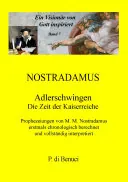
Akhenaton´s DNA
 82
82

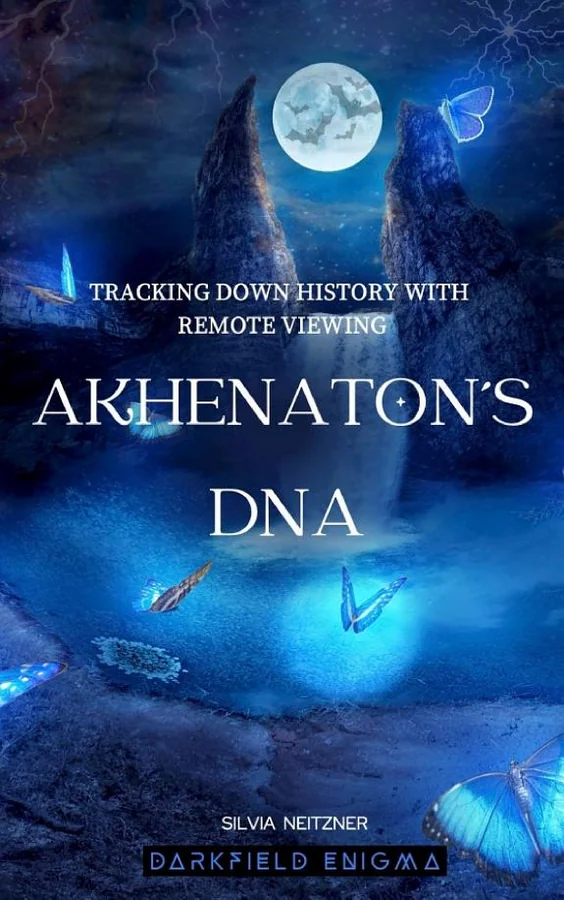
Akhenaton´s DNA
Silvia Neitzner's Akhenaton's DNA takes a bold leap into the speculative. The premise, centering on a remote viewer named Elias Vance who supposedly connects to Pharaoh Akhenaten, is ambitious. Neitzner effectively builds a sense of mystery around the Amarna period, using Dr. Anja Sharma's expedition as a vehicle for uncovering what she posits as Akhenaten's 'genetic legacy.' The integration of remote viewing as a narrative device is an interesting choice, though it sometimes strains credulity, even within the genre. A particular strength lies in the detailed descriptions of the Egyptian landscape and the archaeological process, which lend a pseudo-documentary feel. However, the plot occasionally falters under the weight of its own speculation, with the connection between Vance's abilities and Akhenaten's historical impact feeling more asserted than organically developed. The book's exploration of Atenism as a potential biological anomaly is intriguing but underdeveloped. Ultimately, Akhenaton's DNA offers a peculiar, if uneven, blend of historical intrigue and psychic phenomena.
📝 Description
82
Akhenaton's DNA speculates on a biological and spiritual inheritance behind Pharaoh Akhenaten's religious revolution.
Silvia Neitzner's Akhenaton's DNA imagines a modern scientific expedition into the past. The narrative follows Dr. Anja Sharma and her team as they investigate potential genetic anomalies connected to the reign of the Egyptian pharaoh Akhenaten. Their work suggests a lineage or influence that goes beyond standard historical accounts. The book proposes that Akhenaten's radical monotheism, centered on the sun god Aten, may have stemmed from an extraordinary biological or spiritual inheritance.
This book is for readers interested in alternative histories and esoteric interpretations of ancient Egypt. It appeals to those who enjoy blending scientific inquiry with occult philosophy, especially concerning the Amarna period and figures like Akhenaten and Nefertiti. The narrative also touches on consciousness and human potential as viewed through ancient traditions.
This work fits within esoteric traditions that seek hidden meanings in historical events and figures, particularly those connected to Ancient Egypt. It aligns with theories that suggest advanced ancient knowledge, spiritual awakenings, or even non-human intervention shaped human civilization. The book's focus on a potential 'genetic legacy' connects to ideas about inherited spiritual capacities or unique evolutionary paths for certain individuals or groups within history. It examines how radical shifts in consciousness or religious practice might have biological underpinnings.
💡 Why Read This Book?
• Gain a unique perspective on the Amarna period by exploring how Akhenaten's radical monotheism might be interpreted through a speculative lens of genetic inheritance, as detailed in the book's central premise. • Experience the intersection of historical inquiry and esoteric practices through the character of Elias Vance, a remote viewer whose abilities are central to deciphering Akhenaten's ancient mysteries. • Understand the historical context of Akhenaten's reign (circa 1353–1336 BCE) and his Atenist revolution, presented as a potential catalyst for extraordinary biological or spiritual developments.
⭐ Reader Reviews
Honest opinions from readers who have explored this book.
❓ Frequently Asked Questions
What is the primary theory presented in Akhenaton's DNA regarding the pharaoh?
The book posits that Pharaoh Akhenaten possessed a unique 'genetic legacy' that might explain his radical religious reforms and the singular focus on the Aten. This speculative theory suggests a biological or spiritual inheritance beyond conventional understanding.
Who are the main characters leading the expedition in Akhenaton's DNA?
The central figures are Dr. Anja Sharma, who leads the expedition to uncover historical truths, and Elias Vance, an experienced remote viewer who plays a crucial role in investigating Akhenaten's potential genetic legacy.
What historical period does Akhenaton's DNA focus on?
The narrative is centered on the reign of Pharaoh Akhenaten, a significant period in Ancient Egypt's 18th Dynasty, known for its religious upheaval and distinct artistic style during the Amarna period (circa 1353–1336 BCE).
What esoteric practice is featured in the book?
Remote viewing is a prominent esoteric practice featured in Akhenaton's DNA, utilized by the character Elias Vance to explore the mysteries surrounding Akhenaten and his supposed genetic inheritance.
Does the book offer a scientific explanation for Akhenaten's actions?
While the book uses scientific terminology and methods like genetics and remote viewing, its explanations are speculative and lean heavily into esoteric interpretations rather than established scientific consensus on Akhenaten.
What is the significance of the name 'Akhenaton's DNA'?
The title refers to the book's central hypothesis: that Akhenaten's unique religious and societal innovations might be traceable to a distinctive genetic inheritance or biological blueprint.
🔮 Key Themes & Symbolism
Akhenaten's Genetic Legacy
The core of the book explores the speculative concept of a unique genetic inheritance possessed by Pharaoh Akhenaten. This 'DNA' is presented not just as biological material but as a potential carrier of consciousness, spiritual inclination, or even advanced knowledge that influenced his radical monotheistic reforms and the worship of the Aten. The narrative suggests this legacy could be the key to understanding his departure from Egyptian tradition.
Remote Viewing and Ancient Perception
The work integrates remote viewing, a psychic ability to perceive distant or unseen targets, as a primary investigative tool. Elias Vance, a character adept at this practice, uses it to access impressions and information related to Akhenaten and his era. This theme explores the potential for human consciousness to transcend linear time and space, linking psychic exploration with historical discovery and the uncovering of ancient secrets.
Atenism as a Spiritual Anomaly
Akhenaton's religious revolution, centered on the Aten, is depicted as more than a theological shift. The book treats Atenism as a potential manifestation of an altered state of consciousness or a unique spiritual predisposition, possibly linked to Akhenaten's supposed genetic anomaly. This theme examines how radical spiritual movements in antiquity might have been driven by extraordinary individual insights or biological factors.
Esoteric Interpretation of History
Akhenaton's DNA positions itself within the genre of esoteric history, reinterpreting well-known historical events and figures through a mystical or occult lens. It challenges conventional archaeological and historical narratives by proposing hidden influences, secret knowledge, and extraordinary human capabilities as driving forces behind ancient civilizations, particularly during the Amarna period.
💬 Memorable Quotes
Direct passages from the work, attributed to the author.
“The pharaoh's heresy was not in his gods, but in his very design.”
— This interpretation posits that Akhenaten's religious deviation was not merely a choice of worship but was intrinsically linked to his unique biological makeup or 'design,' hinting at the central theme of a genetic legacy influencing his actions.
“History records the Atenist shift; genetics might explain the architect.”
— This concise statement captures the book's core thesis: while historical records document Akhenaten's monotheistic revolution, the underlying cause might be found in his specific genetic blueprint, bridging historical observation with speculative biology.
“The Amarna light shone differently, a evidence of a lineage apart.”
— This interpretation suggests that the unique artistic and religious expressions of the Amarna period were not merely stylistic but reflected a distinct ancestral line or influence, implying that Akhenaten's family and heritage held something extraordinary.
💡 Key Ideas
Editorial paraphrase of the work's core concepts — not direct quotes.
Vance felt the ancient sun on his skin, not as a distant memory, but as a present force.
This paraphrased concept suggests Elias Vance's remote viewing experience is so vivid it transcends temporal boundaries, allowing him to feel the immediate presence of Akhenaten's era, implying a deep, almost physical connection to the past.
Perception expands when the physical chain is broken.
This paraphrased concept highlights the esoteric premise that human consciousness, particularly through abilities like remote viewing, can achieve greater awareness and insight when freed from the limitations of the physical body and conventional sensory input.
🌙 Esoteric Significance
Tradition
Akhenaton's DNA draws from a confluence of esoteric traditions, primarily blending speculative ancient history with concepts from modern fringe sciences and parapsychology. While not strictly adhering to a single lineage like Hermeticism or Gnosticism, it reflects the Theosophical interest in hidden human potentials and ancient root races. It departs from traditional occultism by focusing on genetic anomalies as the source of spiritual insight, rather than solely on spiritual initiation or divine revelation.
Symbolism
The book likely engages with potent symbols such as the sun disk (Aten), representing life-giving force and divine presence, and the double helix of DNA, symbolizing inherited traits and biological destiny. The pharaoh Akhenaten himself becomes a symbol of radical transformation and divine connection, embodying the potential for humanity to evolve beyond its current limitations, possibly through a unique ancestral inheritance.
Modern Relevance
This work speaks to contemporary interests in the intersection of consciousness studies, genetics, and ancient mysteries. Thinkers and practitioners exploring concepts like ancient aliens, psychic abilities, and the potential for human evolution find resonance in narratives that propose extraordinary origins for historical figures and events. It aligns with online communities and subcultures dedicated to uncovering 'hidden histories' and alternative explanations for humanity's past.
👥 Who Should Read This Book
• Enthusiasts of alternative history and Egyptology seeking unconventional interpretations of the Amarna period and Akhenaten's reign. • Readers interested in the speculative intersection of genetics, consciousness, and ancient spiritual practices, particularly those fascinated by remote viewing. • Fans of esoteric fiction that blends archaeological mystery with theories of hidden human potential and unique ancestral legacies.
📜 Historical Context
Silvia Neitzner's work emerges in an era where interest in ancient Egypt, particularly the Amarna period, remains high. Akhenaten's reign (circa 1353–1336 BCE) was a radical departure from millennia of Egyptian polytheism, focusing solely on the sun disk, Aten. This monotheistic (or henotheistic) shift, coupled with distinct artistic conventions and political upheaval, has long attracted speculative interpretations, from religious innovation to potential foreign influence. While mainstream Egyptology focuses on political, social, and religious drivers, Neitzner taps into a fringe current that seeks more esoteric explanations, often involving lost civilizations or unique human potentials. This approach aligns with a broader resurgence of interest in ancient mysteries and alternative historical theories, sometimes echoing the speculative inclinations of early 20th-century thinkers like Helena Blavatsky, though Neitzner's focus is more on speculative genetics and psychic phenomena than theosophical cosmology.
📔 Journal Prompts
Akhenaten's 'genetic legacy' and its potential influence on his Atenist reforms.
Elias Vance's remote viewing experiences and their connection to the pharaoh's era.
The concept of the Aten as a divine force versus a symbol of biological uniqueness.
Reflections on how ancient religious shifts might be interpreted through modern speculative science.
The implications of a 'design' that drives spiritual deviation, as suggested by the book's premise.
🗂️ Glossary
Akhenaten
An Egyptian pharaoh of the 18th Dynasty (reigned c. 1353–1336 BCE) who introduced a monotheistic or henotheistic worship centered on the sun disk, Aten, and moved the capital to Akhetaten.
Atenism
The religious system established by Akhenaten, focusing on the worship of the Aten as the supreme deity, characterized by its monotheistic or henotheistic principles and distinct artistic representations.
Amarna Period
The historical era of Akhenaten's reign in Ancient Egypt, known for its revolutionary religious changes, unique artistic style (Amarna art), and the establishment of the new capital city, Akhetaten (modern Amarna).
Remote Viewing
A parapsychological technique in which a 'viewer' attempts to perceive information about a distant or unseen target using extrasensory perception (ESP), often employed in speculative investigations of the past.
Genetic Legacy
In the context of the book, this refers to a speculative inheritance of unique biological traits or predispositions passed down through generations, potentially influencing consciousness, spiritual capacity, or behavior, as hypothesized for Akhenaten.
DNA
Deoxyribonucleic acid, the molecule that carries the genetic instructions for the development, functioning, growth, and reproduction of all known organisms. In the book, it is used metaphorically and speculatively.
Esoteric
Intended for or likely to be understood by only a small number of people with a specialized knowledge or interest; relating to occult or mystical subjects.
This book appears in 1 collection
🔮 Readers Also Liked
Browse all →








From the “Remote Viewing” Collection
View all →



More Free Occult Philosophy Books
View all →