The Book of Dragons
 71
71

The Book of Dragons
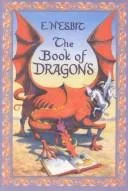
Edith Nesbit's "The Book of Dragons" offers more than just simple children's stories; it presents a surprisingly nuanced look at mythic creatures and human interaction. The collection's strength lies in Nesbit's ability to imbue her dragons with a tangible personality, moving them beyond mere plot devices. For instance, the dragon in "The Cock, the Mouse, and the Little Red Hen" is not just a threat but a character with a clear, if selfish, motivation that drives the narrative. However, the collection occasionally falters in its pacing, with some stories feeling somewhat brief, leaving the reader wanting further development. Despite this, the imaginative scope and Nesbit's characteristic clear prose make it a compelling read for those interested in the evolution of fantasy literature. It's a collection that rewards careful reading with its subtle explorations of character and power dynamics.
📝 Description
71
Edith Nesbit's 'The Book of Dragons' collected fantastical tales, first published in 1973.
This collection gathers fantastical tales by Edith Nesbit, originally published in 1973. While often categorized as children's literature, these stories treat dragons as more than simple monsters. They are presented as beings with their own motivations, frequently engaging with human characters in surprising ways.
Nesbit demonstrates a talent for weaving together ordinary life with magical elements. Her narratives encourage readers to consider where the line between myth and reality blurs. The book is suitable for those who enjoy fairy tales with an undercurrent of social commentary or who have an interest in early 20th-century fantasy writing.
Readers will find narratives that use the fantastical to examine human flaws. Those interested in early works that foreshadow modern fantasy conventions or the development of children's literature with a peculiar, uncanny quality may find 'The Book of Dragons' a worthwhile experience.
Emerging from a period of rich imaginative writing, Nesbit's collection taps into a burgeoning interest in myth and the subconscious. Authors of the era, including Nesbit herself and contemporaries like Rudyard Kipling, were pushing narrative limits. 'The Book of Dragons' reflects this milieu by exploring the power of myth and the uncanny within stories accessible to a younger audience, suggesting an early engagement with themes that would later be prominent in occult and fantasy literature.
💡 Why Read This Book?
• Gain insight into early 20th-century fantasy by examining Nesbit's unique dragon portrayals, deviating from typical monstrous archetypes seen in works predating 1900. • Explore the subversion of fairy tale conventions through specific narratives like 'The Ice Dragon', which challenges predictable outcomes. • Appreciate Nesbit's narrative voice, characterized by wit and an accessible yet sophisticated prose style, offering a distinct reading experience compared to contemporaries like Arthur Conan Doyle.
⭐ Reader Reviews
Honest opinions from readers who have explored this book.
❓ Frequently Asked Questions
When was Edith Nesbit's 'The Book of Dragons' first published as a collection?
While individual stories may have appeared earlier, 'The Book of Dragons' was first published as a collected edition in 1973, bringing together Nesbit's imaginative tales of dragons and magic.
What makes Nesbit's dragons different from typical mythical beasts?
Nesbit's dragons often possess distinct personalities and motivations, moving beyond simple monstrous antagonists to become characters with whom humans interact in complex ways, sometimes even forming alliances.
Are these stories suitable for very young children?
The stories contain fantastical elements and some mild peril, making them suitable for older children and adults who appreciate imaginative literature with a touch of wit and adventure.
Does 'The Book of Dragons' have a central plot or is it a collection of unrelated stories?
It is a collection of distinct, unrelated short stories, each featuring dragons or dragon-like creatures in unique scenarios, showcasing Nesbit's versatility in fantasy.
What literary period does Edith Nesbit's work belong to?
Edith Nesbit was active in the late Victorian and Edwardian eras, and her work is often considered a precursor to modern fantasy, blending traditional fairy tale elements with contemporary sensibilities.
What themes are explored in 'The Book of Dragons'?
The collection explores themes of courage, consequence, the nature of power, and the often surprising outcomes of human-creature interactions, all presented with Nesbit's characteristic charm.
🔮 Key Themes & Symbolism
Unconventional Dragons
Nesbit reinterprets the dragon archetype, presenting them not solely as monsters but as characters with complex personalities and varied roles in her narratives. This departure from monolithic portrayals allows for explorations of interspecies relationships and challenges simplistic notions of good versus evil. For example, the dragon in 'The Ice Dragon' exhibits traits that subvert typical expectations, prompting reflection on prejudice and understanding. This nuanced approach invites readers to reconsider established mythological figures.
The Nature of Courage
Across the collection, Nesbit examines courage not merely as the absence of fear, but as a reasoned response to challenging circumstances, often involving ordinary individuals facing extraordinary beings. The protagonists frequently demonstrate bravery through wit, perseverance, or empathy rather than brute force. This theme is particularly evident in narratives where children must outsmart or negotiate with powerful entities, highlighting the many-sided nature of true valor and its practical application in fantastical settings.
Consequences of Desire
Many stories within "The Book of Dragons" subtly explore the repercussions of unchecked ambition and greed, particularly when interacting with magical forces or creatures. Nesbit illustrates how selfish desires can lead to unforeseen complications or even downfall, serving as cautionary elements within the fantastical framework. This thematic undercurrent encourages readers to consider the ethical implications of their wishes and actions, even in realms governed by magic and myth.
Subverting Fairy Tale Tropes
Nesbit consistently plays with and subverts traditional fairy tale conventions. Her characters often act with a logic that is both magical and surprisingly practical, and the resolutions to conflicts are not always predictable. This deconstruction of familiar narrative patterns invites critical engagement with the genre, offering fresh perspectives on storytelling and the roles of mythical creatures within literature intended for imaginative consumption.
💬 Memorable Quotes
Direct passages from the work, attributed to the author.
“True bravery lies not in the absence of fear, but in facing it.”
— This concept, frequently demonstrated by Nesbit's young protagonists, emphasizes that courage is an active choice made despite apprehension, rather than an innate lack of it, reflecting a pragmatic view of heroism.
“Magic often has unforeseen consequences.”
— This interpretation highlights the theme that wishes or magical interventions in Nesbit's stories rarely unfold exactly as intended, carrying with them a chain of events that require careful navigation by the characters.
“Even the most fearsome creature can be reasoned with.”
— This reflects the narrative approach where dialogue and understanding, rather than immediate conflict, often prove instrumental in resolving situations involving powerful mythical beings.
“The world is full of wonders, if you know where to look.”
— This sentiment suggests an underlying theme of discovery and the potential for enchantment in everyday or overlooked aspects of existence, encouraging a perspective of open-mindedness.
💡 Key Ideas
Editorial paraphrase of the work's core concepts — not direct quotes.
Dragons are not always what they seem.
This paraphrase captures the essence of Nesbit's portrayal of dragons, suggesting they possess deeper meaning and can defy conventional expectations, often leading to surprising narrative developments.
🌙 Esoteric Significance
Tradition
While not explicitly tied to a single esoteric lineage like Hermeticism or Kabbalah, "The Book of Dragons" speaks to the broader tradition of archetype exploration prevalent in Western esotericism. Nesbit's reinterpretation of the dragon figure aligns with symbolic approaches found in Theosophy and Jungian psychology, which view mythical creatures as representations of primal forces or aspects of the human psyche. Her work taps into a universal fascination with primal beings, suggesting an underlying spiritual or psychological reality accessible through imagination.
Symbolism
The dragon in Nesbit's work functions as a potent symbol. It can represent untamed nature, primal power, or even the shadow self – those aspects of existence or personality that are feared or misunderstood. The act of engaging with or taming a dragon often symbolizes the protagonist's journey towards self-mastery or understanding of the world's more formidable forces. The narratives frequently use these interactions to explore themes of courage and the consequences of unchecked desire, embedding deeper psychological meanings within fantastical adventures.
Modern Relevance
Contemporary fantasy authors and scholars of mythology continue to draw inspiration from Nesbit's nuanced characterizations of mythical creatures. Her approach to dragons, emphasizing their potential for complexity beyond simple monstrosity, has influenced modern fantasy's exploration of 'monsters' with relatable traits. Furthermore, her ability to blend imaginative storytelling with subtle social commentary remains relevant for writers seeking to imbue their fantastical works with deeper meaning and resonance for modern audiences interested in psychological archetypes.
👥 Who Should Read This Book
• Aspiring fantasy authors: Gain inspiration from Nesbit's innovative characterizations of classic mythical creatures and her skillful subversion of traditional narrative structures. • Students of folklore and mythology: Analyze how Nesbit reimagines archetypal figures like dragons, offering a unique perspective on their symbolic representation and cultural impact. • Readers interested in early 20th-century children's literature: Discover a foundational work that bridges traditional fairy tales with the emerging genre of modern fantasy, showcasing wit and imaginative depth.
📜 Historical Context
Edith Nesbit's "The Book of Dragons," collected and published in 1973, draws from an era of burgeoning imaginative literature at the turn of the 20th century. Nesbit (1858-1924) was a contemporary of writers like Rudyard Kipling, whose "The Jungle Book" (1894) also featured anthropomorphized animals and complex moralities. The period saw a rise in interest in folklore and theosophy, influencing many authors to explore mythic themes. While not directly engaging with occult movements, Nesbit's work shared a sensibility with writers exploring the subconscious and the power of narrative. Her distinctive blend of fantasy and social commentary, often presented with a democratic and progressive spirit, set her apart. Unlike the more overtly mystical writings of figures like Helena Blavatsky, Nesbit's approach remained grounded in accessible storytelling, though her fantastical elements appealed to a growing readership interested in the imaginative possibilities beyond realism.
📔 Journal Prompts
The dragon's unexpected behavior in 'The Ice Dragon'...
Reflecting on the consequences of the wish in 'The Last Dragon',
The child protagonist's interaction with the dragon in 'Fairy-Blue',
The portrayal of courage by the human characters facing dragons,
Nesbit's use of dialogue with mythical beasts,
🗂️ Glossary
Dragon
In Nesbit's tales, dragons are often depicted with distinct personalities and motivations, transcending the simplistic role of monstrous antagonists to become complex characters.
Fairy-Blue
A specific story within 'The Book of Dragons' featuring a dragon, highlighting Nesbit's varied approaches to the mythical creature.
The Ice Dragon
A notable story from the collection where the dragon's nature challenges conventional expectations, serving as a key example of Nesbit's thematic explorations.
Archetype
A recurring symbol or motif in literature and mythology, such as the dragon, which represents fundamental human experiences or concepts.
Subversion
The act of undermining or overthrowing established conventions or expectations, as Nesbit does with traditional fairy tale elements.
Mythic Creature
An animal or being originating from mythology or folklore, often possessing supernatural qualities, like the dragons featured in Nesbit's work.
Narrative Structure
The framework or organization of a story, which Nesbit often adapts and plays with to create unique and engaging tales.
🔮 Readers Also Liked
Browse all →







More by Edith Nesbit
All books →





More Free Occult Philosophy Books
View all →