Dreamrider
 81
81

Dreamrider
Barry Jonsberg's *Dreamrider* offers an intriguing premise, exploring the potential for conscious navigation of the dreamscape. The novel excels in its imaginative portrayal of dream logic, creating a world that feels both alien and intimately familiar to the reader's own nocturnal experiences. One particular strength lies in its ability to translate abstract psychological concepts into concrete narrative events, making the exploration of identity within dreams feel palpable. However, the book's pacing occasionally falters, with certain passages feeling drawn out as the characters grapple with their discoveries. The central conceit, while fascinating, sometimes leads to repetitive thematic explorations without significant narrative advancement. Despite these limitations, *Dreamrider* serves as a compelling fictional inquiry into the nature of consciousness and the hidden landscapes within the human mind. It is a work that invites contemplation on the boundaries of reality.
📝 Description
81
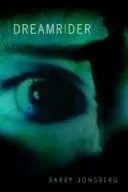
Barry Jonsberg's 2008 novel Dreamrider uses fiction to examine consciousness and the nature of reality.
Dreamrider, published in 2008, tells a story where the lines between waking life and the dream world blur. Characters find themselves moving through altered states of awareness, questioning their perceptions and the reality they inhabit. Jonsberg does not offer a guide to esoteric practices but instead uses the narrative to illustrate ideas relevant to metaphysical thought. The novel follows individuals as they confront these shifting perceptions and the fundamental questions they raise about existence.
This book is for readers who appreciate speculative fiction that engages with philosophical and psychological ideas. Those drawn to stories about the subconscious, the meaning of dreams, and the subjective experience of reality will find much to consider. It suits readers who seek a narrative that encourages reflection on personal identity and how we construct our perceived world. The work prompts contemplation on the nature of consciousness and the subjective construction of reality.
Published in 2008, Dreamrider arrived as popular culture continued its engagement with altered states of consciousness, building on earlier psychological and philosophical inquiries. The early 21st century saw renewed interest in Jungian psychology and dream analysis, alongside ongoing explorations of consciousness in new age and esoteric thought. The novel echoes a literary tradition that questions the solidity of everyday reality, a theme present in philosophical idealism and certain mystical traditions. While it does not directly engage with specific esoteric movements, its ideas touch upon Gnostic concepts of illusory reality and the Hermetic pursuit of inner knowledge.
💡 Why Read This Book?
• Gain a narrative understanding of the dreamscape as a navigable psychic territory, inspired by the book's depiction of 'dreamriding' and its symbolic language. • Explore themes of identity construction and deconstruction within altered states, specifically how characters in *Dreamrider* confront and redefine themselves through dream experiences. • Reflect on the nature of reality and illusion, considering the book's portrayal of the dream world as a potentially more authentic or revealing plane of existence than waking life.
⭐ Reader Reviews
Honest opinions from readers who have explored this book.
❓ Frequently Asked Questions
What is the primary theme of Barry Jonsberg's *Dreamrider*?
The primary theme of *Dreamrider* is the exploration of consciousness, identity, and the nature of reality through the lens of dream navigation. It posits dreams as a tangible realm for self-discovery and understanding.
When was *Dreamrider* by Barry Jonsberg originally published?
*Dreamrider* by Barry Jonsberg was first published in 2008, placing it within the early 21st-century literary landscape interested in psychological and philosophical narratives.
Does *Dreamrider* offer practical techniques for lucid dreaming?
While *Dreamrider* explores the concept of consciously navigating dreams, it functions as a narrative and philosophical inquiry rather than a practical guide to lucid dreaming techniques. It inspires reflection rather than instruction.
What kind of reader would appreciate *Dreamrider*?
Readers who enjoy speculative fiction that delves into psychological and metaphysical themes, particularly those interested in the nature of dreams, consciousness, and identity, would likely appreciate *Dreamrider*.
How does *Dreamrider* relate to esoteric traditions?
The book engages implicitly with esoteric concepts by exploring altered states of consciousness, the symbolic nature of dreams, and the questioning of perceived reality, echoing themes found in Gnostic and Hermetic thought.
Is *Dreamrider* considered a work of fantasy or psychological fiction?
*Dreamrider* can be seen as a blend of speculative fiction and psychological fiction. It uses fantastical elements to explore profound psychological and metaphysical questions about consciousness and reality.
🔮 Key Themes & Symbolism
Dream Navigation
The narrative positions the dream world not as passive experience but as an active territory for exploration. The concept of the 'dreamrider' suggests agency within the subconscious, allowing for interaction with symbolic landscapes and personal archetypes. This theme draws parallels with traditions that view dreams as a form of inner oracle or a gateway to other states of being, encouraging readers to consider the potential for conscious engagement with their own dream lives.
Fluid Identity
Within the shifting reality of dreams, characters in *Dreamrider* confront the malleability of their own identities. The book explores how the self can be deconstructed and reconstructed when the usual anchors of waking life are removed. This appeals to metaphysical inquiries into the nature of the ego and the 'true self,' suggesting that identity is not a fixed entity but a fluid construct shaped by consciousness and experience, both waking and dreaming.
Reality as Construct
A central inquiry of *Dreamrider* is the question of what constitutes reality. By blurring the lines between the dream state and waking life, the novel prompts reflection on the subjective nature of perception. This aligns with philosophical traditions that question the objective existence of the external world and esoteric thought that posits the universe as a manifestation of consciousness, encouraging a re-evaluation of one's own perceived reality.
Symbolic Language of the Psyche
The dreamscapes encountered by the characters are rich with symbolic imagery. *Dreamrider* implicitly explores the idea that these symbols are a form of communication from the deeper psyche, offering insights and guidance. This connects to Jungian psychology and various esoteric systems that interpret dreams and visions as containing profound personal truths, urging readers to consider the symbolic narratives unfolding in their own subconscious minds.
💬 Memorable Quotes
Direct passages from the work, attributed to the author.
“The edges of sleep always felt like a door opening to somewhere else.”
— This statement captures the book's central premise: that the transition into sleep is not an end but a passage to another dimension of experience, a place ripe for exploration.
“He realized his waking thoughts were just another kind of dream, only less vivid.”
— This interpretation challenges the conventional hierarchy of reality, suggesting that the 'real' world might be just as constructed or illusory as a dream, prompting a re-evaluation of perception.
“Working through the dream required a different kind of seeing, one that felt with the mind.”
— This highlights the shift in perception necessary for conscious dream navigation, emphasizing intuition and inner awareness over purely sensory input.
“Each dream was a room in a house he was only just beginning to map.”
— This metaphor illustrates the vastness and complexity of the inner world, framing dream exploration as an ongoing process of discovery and cartography of the self.
“She learned to ride the currents of the dream, not fight them.”
— This conveys a principle of working with the dream state's natural flow rather than imposing rigid control, suggesting surrender and adaptability as keys to deeper engagement.
🌙 Esoteric Significance
Tradition
While not explicitly aligned with a single esoteric tradition, *Dreamrider*'s exploration of conscious dream navigation and the fluid nature of reality can be seen as resonating with Gnostic concerns about illusory worlds and the pursuit of hidden knowledge through altered states. It also touches upon Hermetic principles regarding the correspondence between the inner and outer worlds, suggesting that the dreamscape is a reflection of the psyche's deeper structure.
Symbolism
Key symbols in *Dreamrider* include the 'dreamscape' itself, representing the subconscious mind and its vast, uncharted territories. The 'dreamrider' acts as an archetype of the conscious self capable of navigating this inner realm. Shifting landscapes and recurring motifs within dreams function as symbolic language, communicating psychological truths and offering insights into the dreamer's inner state and potential for transformation.
Modern Relevance
The themes of *Dreamrider* remain highly relevant in contemporary discussions around consciousness, lucid dreaming, and transpersonal psychology. Thinkers and practitioners in fields like consciousness studies and depth psychology continue to explore the therapeutic and revelatory potential of dreams. The book’s narrative approach provides an accessible entry point for those interested in these modern explorations, bridging fictional storytelling with the ongoing inquiry into the subjective experience of reality.
👥 Who Should Read This Book
• Aspiring dream explorers and practitioners of consciousness work seeking narrative inspiration for their own inner journeys. • Readers of speculative fiction who appreciate stories that question the nature of reality and identity, similar to authors like Philip K. Dick. • Individuals interested in psychological and metaphysical themes, looking for a fictional work that prompts reflection on the subconscious and the construction of self.
📜 Historical Context
Published in 2008, Barry Jonsberg's *Dreamrider* entered a literary landscape where interest in consciousness studies and speculative fiction remained robust. The early 21st century saw a continued dialogue between scientific exploration of the brain and more esoteric interpretations of subjective experience. Jonsberg's work implicitly engages with a lineage of thought that questions the solidity of perceived reality, a thread traceable through philosophical idealism and mystical traditions. While not overtly tied to a specific intellectual movement, its exploration of dream states and identity echoes themes prevalent in post-Jungian psychology and the broader New Age milieu of the late 20th and early 21st centuries. Contemporary authors like Haruki Murakami, in works such as *Kafka on the Shore* (2002), also explored surreal dreamscapes and fractured identities, indicating a shared cultural preoccupation. The reception of *Dreamrider* likely aligned with a growing audience seeking narratives that bridge genre fiction with profound psychological and metaphysical questions, moving beyond purely rationalist frameworks.
📔 Journal Prompts
The concept of the 'dreamrider' and conscious dream navigation.
Reflecting on the 'waking thoughts' as a form of dream.
Mapping the symbolic language of your personal dreamscapes.
The malleability of identity within the dream state.
Exploring the 'rooms' within your own psyche as depicted in the book.
🗂️ Glossary
Dreamrider
An individual depicted in the book capable of consciously navigating and interacting within the dream state, treating it as a tangible realm.
Dreamscape
The landscape or environment encountered within a dream, representing the subconscious mind and its symbolic contents. It is portrayed as a fluid and dynamic space.
Waking Thoughts
The narrative concept suggesting that the thoughts and perceptions experienced during waking consciousness can be analogous to dreams, potentially less vivid or more rigidly constructed.
Inner Oracle
The idea that dreams and the subconscious mind can serve as a source of profound wisdom, guidance, and self-knowledge, akin to a mystical source of truth.
Symbolic Language
The interpretation of recurring images, events, and characters within dreams as meaningful representations of psychological states, conflicts, or insights.
Fluid Identity
The concept that personal identity is not fixed but can change and evolve, particularly when confronted with altered states of consciousness or the dissolution of familiar reality anchors.
Reality Construct
The idea that perceived reality is a subjective interpretation or creation of consciousness, rather than an objective, independent existence.
🔮 Readers Also Liked
Browse all →








More by Barry Jonsberg
All books →
More Free Occult Philosophy Books
View all →