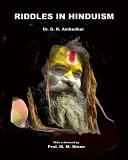
Riddles in Hinduism
 73
73

Riddles in Hinduism
Ambedkar's "Riddles in Hinduism" is less a devotional text and more an intellectual demolition project. His meticulous cataloging of scriptural contradictions, particularly concerning the Puranas, is staggering. He argues with a lawyer's precision that many widely accepted Hindu narratives are riddled with logical inconsistencies, suggesting these were perpetuated through deliberate obfuscation rather than divine revelation. The strength of the book lies in its unsparing rationalism and its attempt to unmask the textual underpinnings of social hierarchies. However, a limitation for some readers might be the sheer density of textual critique, which can feel relentless and occasionally lacks the interpretive nuance that might acknowledge the symbolic or allegorical dimensions of scripture for believers. A particularly striking section details the conflicting genealogies and cosmogonies, highlighting the lack of a unified narrative. This is a vital, albeit challenging, examination for anyone seeking a critical perspective on Hindu texts.
📝 Description
73
In 2008, B.R. Ambedkar's "Riddles in Hinduism" dissected Hindu scriptures for logical fallacies.
Bhimarao Ramji Ambedkar's "Riddles in Hinduism," first published in 2008 from earlier writings, critically examines Hindu scriptures and Puranic narratives. Ambedkar aimed to expose perceived internal contradictions and deliberate obfuscation within religious texts. He argued that these inconsistencies were used to uphold irrational beliefs and maintain a flawed status quo.
The work is intended for scholars of comparative religion, social theorists, and individuals interested in a critical analysis of religious doctrines. It appeals to those seeking historical and sociological critiques of Hinduism, particularly concerning its foundational texts. Readers with an academic or philosophical inclination, who appreciate a rigorous analytical approach to sacred literature, will find value here.
"Riddles in Hinduism" stems from Ambedkar's larger project of social reform and his challenge to religious justifications for caste discrimination. Written in the mid-20th century, it engages with prevailing scriptural interpretations of that time. The book presents a socio-political and rationalist perspective, contrasting with purely devotional or theological analyses. Its critical stance aligns with reformist movements of the era that re-evaluated traditional religious frameworks.
While categorized under Sacred Texts & Gnosticism, Ambedkar's "Riddles in Hinduism" operates outside conventional esoteric traditions. It applies a rationalist and sociological lens to religious texts, seeking logical consistency rather than mystical insight. The book's critique of scriptural authority and interpretation aligns with reformist intellectual currents that questioned established religious dogma, rather than engaging with hidden meanings or secret knowledge often associated with esoteric studies. Ambedkar's focus is on the societal impact of religious narratives.
💡 Why Read This Book?
• Gain a critical perspective on Hindu scriptures, understanding Ambedkar's analysis of contradictions within the Puranas and their impact on social structures. • Analyze Dr. Ambedkar's method of textual critique, learning how he deconstructs religious narratives by examining specific inconsistencies and logical gaps in the texts. • Explore the historical context of religious scholarship in early 20th-century India, understanding how "Riddles in Hinduism" challenged prevailing interpretations and contributed to reformist discourse.
⭐ Reader Reviews
Honest opinions from readers who have explored this book.
❓ Frequently Asked Questions
What is the primary aim of Dr. B.R. Ambedkar in "Riddles in Hinduism"?
The primary aim is to expose the internal contradictions, lack of logical coherence, and manipulative reinterpretations within Hindu scriptures and Puranic literature, arguing that these were used to mislead the common people.
When was "Riddles in Hinduism" first published?
Although Dr. B.R. Ambedkar wrote extensively on the subject, the work "Riddles in Hinduism" was first published in July 2008, compiling his critical analyses of Hindu texts.
What specific types of Hindu texts does Ambedkar focus on in his critique?
Ambedkar primarily focuses his critique on the Puranas and other foundational scriptures of Hinduism, examining their narratives, genealogies, and cosmogonies for inconsistencies.
What does Ambedkar suggest is the purpose behind the inconsistencies in Hindu scriptures?
Ambedkar suggests that the inconsistencies and lack of coherence in scriptures were deliberately maintained through manipulative reinterpretation and circumlocution with the ulterior motive of holding power and confusing the populace.
Is "Riddles in Hinduism" a devotional or academic work?
It is primarily an academic and critical work, employing a rationalist and analytical approach to deconstruct religious texts rather than promoting devotional sentiment.
Who was Dr. B.R. Ambedkar?
Dr. B.R. Ambedkar was a pivotal figure in modern India, a jurist, economist, social reformer, and the chief architect of the Constitution of India, known for his advocacy for Dalits and his critique of the caste system.
🔮 Key Themes & Symbolism
Scriptural Inconsistencies
The work meticulously details the logical fallacies and contradictions embedded within Hindu Puranic literature. Ambedkar argues that these texts often present conflicting accounts of creation, genealogies, and divine actions, suggesting a lack of cohesive authorship or divine inspiration. He highlights how these inconsistencies serve to obscure rather than illuminate, creating riddles that confound rational inquiry and uphold traditional, often irrational, beliefs about the cosmos and society.
Manipulative Interpretation
A central theme is Ambedkar's accusation that religious authorities and scholars have employed manipulative reinterpretation and circumlocution to reconcile or ignore textual contradictions. This technique, he posits, is used to confuse the common populace, present illogical doctrines as divinely ordained truth, and maintain social hierarchies. The book examines how interpretive strategies can function as tools of control, obscuring critical thought in favor of blind faith.
Social and Political Critique
While focused on textual analysis, the underlying current is a profound social and political critique. Ambedkar links the inconsistencies and manipulative interpretations within Hinduism to the perpetuation of social inequalities, particularly the caste system. He implies that the lack of textual coherence is not merely an academic flaw but a deliberate mechanism that has historically supported oppressive social structures by offering a seemingly divine justification.
Rationalist Inquiry
The book champions a strict rationalist approach to religious texts. Ambedkar advocates for applying logic and critical reasoning to understand scriptures, rather than accepting them on faith alone. He challenges the notion that religious texts are beyond scrutiny, positioning his work as an exercise in intellectual honesty and a call for a more coherent and ethically sound understanding of religious tradition.
💬 Memorable Quotes
Direct passages from the work, attributed to the author.
“The purpose of the book is to reveal the contradictions in the Puranas and the scriptures of Hinduism.”
— This statement captures Ambedkar's direct and unvarnished objective: to systematically expose the internal logical flaws and narrative discrepancies within Hindu sacred texts as a foundational step in his broader critique.
“Manipulative reinterpretation and circumlocution are used to confuse common people.”
— Ambedkar identifies specific rhetorical and interpretive tactics employed within religious discourse, asserting they are not for clarification but for obfuscation, designed to prevent critical understanding among the laity.
“There is an utter lack of coherence in the scriptures of Hinduism.”
— This assertion highlights Ambedkar's core finding: that Hindu scriptures, when examined critically, fail to present a unified or logically consistent worldview, suggesting a constructed or compromised textual tradition.
“The aim is to show the contradictions within the mythologies.”
— This emphasizes Ambedkar's focus on the mythological narratives prevalent in Hinduism, suggesting that these stories, often taken as literal truth, are rife with internal conflicts and irrational elements.
“Dr. Ambedkar believed this was with the ulterior motive of holding...”
— This fragmented quote suggests Ambedkar perceived a hidden agenda behind the textual inconsistencies and their perpetuation, implying that the confusion served a specific, potentially power-related, purpose.
🌙 Esoteric Significance
Tradition
While not strictly within a single esoteric lineage like Hermeticism or Gnosticism, Ambedkar's work engages with the philosophical and mythological underpinnings of a major world religion from a rationalist perspective. It aligns with esoteric traditions that seek hidden meanings or underlying truths, but does so through deconstruction rather than esoteric interpretation. His work can be seen as a precursor to modern critical theology and the sociology of religion, fields that often explore the symbolic and societal functions of religious narratives, which are central to many esoteric practices.
Symbolism
The "riddles" themselves function as a primary symbol, representing the deliberate obscurity and logical puzzles embedded within Hindu scriptures. Ambedkar uses this metaphor to suggest that these texts are not straightforward revelations but complex constructs designed to conceal rather than reveal fundamental truths. Another implicit symbol is the "common person" or "masses," who are depicted as being deliberately misled by these scriptural complexities, highlighting the socio-political dimension of religious knowledge dissemination.
Modern Relevance
Ambedkar's critical analysis continues to be relevant for contemporary scholars of religion, sociology, and post-colonial studies. Thinkers examining the intersection of religion, power, and social justice often draw upon his work to deconstruct dominant religious narratives. His rigorous approach to textual criticism informs modern academic study of religious texts and inspires those seeking to understand how religious doctrines have been historically used to maintain social hierarchies, a theme explored in critical religious studies and by scholars of secularism.
👥 Who Should Read This Book
• Students of comparative religion and South Asian studies seeking critical, non-devotional analyses of Hindu scriptures. • Social theorists and activists interested in understanding the historical relationship between religious texts and social stratification, particularly the caste system. • Readers who appreciate rigorous, logical argumentation applied to sacred texts, and who are interested in rationalist critiques of established religious traditions.
📜 Historical Context
Written by Dr. B.R. Ambedkar, a towering figure in 20th-century Indian social and political reform, "Riddles in Hinduism" emerged from his lifelong engagement with the critique of caste and religious dogma. While the compilation and publication occurred in 2008, Ambedkar's writings on these themes date back to the mid-20th century, a period of intense intellectual ferment in India. His rationalist and anti-caste stance placed him in direct opposition to traditionalist interpretations of Hinduism. This work can be seen as a counterpoint to the widespread Hindu Renaissance movements and the devotional Bhakti traditions that often emphasized faith over critical textual analysis. Ambedkar’s approach found resonance with secular scholars and social reformers but was often met with resistance or outright condemnation from orthodox religious circles who viewed his critique as an attack on their faith.
📔 Journal Prompts
The Puranic contradictions identified by Ambedkar, how do they challenge a unified understanding of Hindu cosmology?
Ambedkar's concept of manipulative reinterpretation, what modern parallels exist in how information is presented?
The function of "riddles" in scripture as described by Ambedkar, what purpose might such obscurity serve beyond simple confusion?
Analyze a specific narrative from the Puranas mentioned by Ambedkar, applying his critique of internal coherence.
Reflect on the socio-political implications of textual inconsistencies as argued in "Riddles in Hinduism".
🗂️ Glossary
Puranas
A vast genre of Sanskrit literature of Hinduism, focusing on Hindu cosmology, philosophy, and legend. They often contain genealogies of deities, sages, and kings, and describe creation, destruction, and the cycles of the universe.
Scriptures
Sacred writings or texts considered to be divinely inspired or authoritative within a religious tradition. In Hinduism, this includes the Vedas, Upanishads, Puranas, Epics, and others.
Contradictions
Statements, ideas, or features of a situation that are opposed to one another or cannot logically coexist. In textual analysis, this refers to conflicting information or narratives within the same body of work.
Manipulative Reinterpretation
The act of altering or twisting the meaning of texts or doctrines to serve a particular agenda, often to justify illogical beliefs or maintain power structures, rather than seeking genuine understanding.
Circumlocution
The use of many words where fewer would do, especially in a deliberate attempt to be vague or evasive. In religious discourse, it can be used to obscure difficult truths or inconsistencies.
Coherence
The quality of being logical and consistent; the connection or relation between parts or the whole.
Rationalist
A person who believes that religion should be based on reason and logic rather than faith or divine revelation.