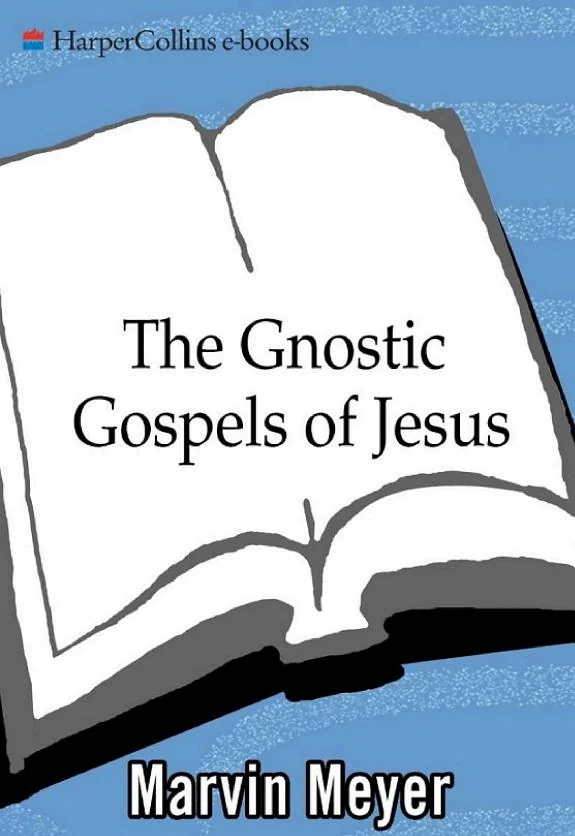
The Gnostic Gospels of Jesus
 82
82

The Gnostic Gospels of Jesus
Meyer’s meticulous compilation, *The Gnostic Gospels of Jesus*, offers a vital resource for anyone wishing to move beyond the standard biblical narrative. The sheer accessibility of texts like the Gospel of Thomas, presented with Meyer's scholarly apparatus, is its primary strength. It allows for direct engagement with sayings and narratives that present a radically different portrait of Jesus. A point of consideration, however, is that the sheer volume and varied nature of the texts, while comprehensive, can sometimes feel overwhelming without significant prior grounding in Gnostic thought. The inclusion of the Secret Book of John, for instance, provides a creation myth that is both complex and profoundly alien to conventional cosmology. Meyer's annotations are invaluable, but they are necessarily dense. This is not a casual read, but a serious scholarly presentation of foundational Gnostic Christian literature.
📝 Description
82
Marvin Meyer's 1984 collection brings together key Gnostic scriptures about Jesus.
Marvin Meyer's *The Gnostic Gospels of Jesus* is a compilation of scriptures that focus on Jesus from early Gnostic traditions. This volume includes well-known texts like the Gospel of Thomas and the Gospel of Mary, alongside less common writings such as the Secret Book of John. Meyer, a scholar of Gnosticism, supplies detailed notes that explain the historical and theological background of these early Christian documents.
This book is for anyone interested in encountering the non-canonical Gospels and the different views of Jesus they present. It will be of use to scholars of early Christianity and Gnosticism, students of religion, and readers curious about the variety of beliefs within the early Christian movement. Those drawn to mystical interpretations of Jesus's teachings and the esoteric traditions of antiquity will find much here to consider.
These Gnostic texts, many discovered at Nag Hammadi in 1945, show a different early Christian outlook compared to the developing orthodox path. They often reflect a dualistic worldview and highlight direct, personal knowledge (gnosis) of the divine. Meyer's collection makes these texts, which are often incomplete and difficult, accessible for readers to engage with the intellectual and spiritual ideas of the first centuries CE and the varied understandings of Jesus's life and message.
The Gnostic Gospels represent a strand of early Christianity that emphasized direct spiritual insight, or 'gnosis,' over reliance on external authority or ritual. These texts often describe a complex cosmology and view the material world as a flawed creation. Jesus is frequently portrayed as a divine messenger who awakens individuals to their true spiritual nature and the illusory nature of worldly existence. Meyer's compilation makes these distinct early Christian perspectives available, allowing readers to compare them with more widely known canonical accounts and understand the intellectual and spiritual diversity of the period.
💡 Why Read This Book?
• Learn about the concept of 'gnosis' as a pathway to salvation, distinct from orthodox Christian dogma, as explored in texts like the Gospel of Philip. • Understand Jesus as a revealer of hidden knowledge, a role emphasized in the Gospel of Thomas's collection of his sayings. • Examine alternative creation narratives and the nature of the material world as presented in texts like the Secret Book of John, offering a different cosmological framework.
⭐ Reader Reviews
Honest opinions from readers who have explored this book.
❓ Frequently Asked Questions
What is the significance of the Nag Hammadi discovery for Gnostic texts?
The discovery of the Nag Hammadi library in 1945 in Egypt brought to light many Gnostic texts, including several Gospels, that had been suppressed or lost for centuries. This find, dated to the 4th century CE, provided scholars with primary source material for understanding Gnostic Christianity.
Are the Gnostic Gospels considered part of the New Testament?
No, the Gnostic Gospels like the Gospel of Thomas and the Gospel of Mary are not part of the New Testament canon recognized by mainstream Christianity. They represent a diversity of early Christian thought that was eventually deemed heretical.
Who was Marvin W. Meyer and why is he an authority on Gnostic Gospels?
Marvin W. Meyer was a leading scholar of Gnosticism and early Christianity. His extensive work in translating, editing, and interpreting Gnostic texts, including this compilation first published in 2009, established him as a preeminent authority in the field.
What does 'gnosis' mean in the context of these Gospels?
In Gnosticism, 'gnosis' refers to esoteric knowledge, often experiential or intuitive, that leads to spiritual liberation. It's a direct knowing of the divine, contrasted with faith or belief alone, and is central to salvation in these texts.
How do the Gnostic Gospels differ from the canonical Gospels?
They differ significantly in content and theological emphasis. Gnostic Gospels often present Jesus as a teacher of secret wisdom, focus on the divine spark within individuals, and offer alternative cosmologies and views on the material world, unlike the canonical Gospels' emphasis on Jesus's historical life, death, and resurrection.
Is the Gospel of Mary considered a Gnostic text?
Yes, the Gospel of Mary is widely considered a significant Gnostic text. It features Mary Magdalene prominently, presenting her as a spiritual leader who receives special revelations from Jesus and teaches them to the other disciples.
🔮 Key Themes & Symbolism
The Inner Divine Spark
A central tenet in these Gnostic texts is the belief that a divine spark or fragment of the Pleroma resides within each human soul. Salvation is understood as the awakening and liberation of this inner divinity. Texts like the Gospel of Philip explore the mystical union and the chambers one must pass through to achieve this realization, emphasizing self-knowledge as the path to divine union. This contrasts sharply with orthodox views that locate divinity primarily outside the individual or through specific sacraments.
Jesus as Revealer of Secret Knowledge
Unlike the public ministry depicted in canonical Gospels, Gnostic texts often portray Jesus as a messenger of hidden truths meant for a select few. The Gospel of Thomas, for instance, presents a collection of Jesus's sayings that unlock esoteric understandings of life, death, and the cosmos. He is a guide, clear the path to gnosis, not merely a redeemer through his sacrifice. This role emphasizes intellectual and spiritual awakening over faith in his earthly mission.
The Material World as Illusion
Many Gnostic traditions view the material universe as a flawed creation, a prison for the spirit, often attributed to a lesser, ignorant deity (the Demiurge). The Secret Book of John elaborates on this, detailing a complex cosmology where the material realm is a deviation from the true, spiritual world. The Gospels within this collection often suggest detachment from worldly concerns and a focus on the transcendent, spiritual reality as the ultimate goal.
Alternative Interpretations of Scripture
Gnostic writers frequently reinterpreted existing Jewish and early Christian scriptures through their own philosophical and mystical lens. They often allegorized biblical narratives and figures, finding hidden meanings that supported their dualistic worldview and emphasis on gnosis. Meyer's collection includes texts that offer these radical reinterpretations, challenging the monolithic understanding of early religious thought and highlighting a vibrant, diverse spiritual landscape.
💬 Memorable Quotes
Direct passages from the work, attributed to the author.
“When you know yourselves, then you will be known, and you will understand that you are the children of the living Father.”
— This saying, echoing themes found in the Gospel of Thomas, points to the Gnostic belief that self-knowledge is intrinsically linked to divine knowledge. Understanding one's true, spiritual self is the key to recognizing one's connection to the ultimate divine source.
“The soul of man is a stranger in the world; it came from the world above.”
— This interpretation captures a common Gnostic sentiment found in various texts, suggesting that the human soul originates from a higher, spiritual realm and is merely a sojourner in the material world, which is seen as alien and often hostile to its true nature.
“The Lord said to me, 'The time of the harvest is come, and the wheat is ripe.'”
— This allegorical statement, potentially from a text like the Gospel of Mary, uses agricultural imagery to signify a central moment of spiritual transformation or revelation, where the fruits of spiritual labor are ready to be gathered.
“The Gospel of Philip speaks of the 'bridal chamber,' a metaphor for spiritual union.”
— This refers to a key concept in the Gospel of Philip, where the 'bridal chamber' represents a mystical union between the soul and the divine, or between Christ and the Church (understood spiritually), achieved through gnosis and sacred rites.
💡 Key Ideas
Editorial paraphrase of the work's core concepts — not direct quotes.
Jesus said, 'Let him who seeks not cease seeking until he finds. When he finds, he will be troubled. When he is troubled, he will marvel, and he will reign over all.
This quote from the Gospel of Thomas highlights the arduous but ultimately rewarding journey of spiritual seeking. The initial 'trouble' signifies the disorientation that comes with challenging ingrained beliefs, leading to profound realization and spiritual sovereignty.
🌙 Esoteric Significance
Tradition
This work is foundational to the study of Gnosticism, a diverse set of religious movements within early Christianity that emphasized salvation through esoteric knowledge (gnosis). While distinct, Gnostic traditions share common threads with Hermeticism and Neoplatonism in their focus on spiritual ascent and the nature of the divine. Meyer's compilation allows direct engagement with these ancient Gnostic scriptures, revealing their unique cosmological frameworks, soteriological paths, and mystical interpretations of Christ.
Symbolism
Key symbols abound, including the Pleroma (the divine fullness), the Demiurge (the flawed creator of the material world), and the Valentinian aeons. Jesus himself is a potent symbol, not just as savior but as revealer of hidden truths and guide to the divine. The 'bridal chamber' in the Gospel of Philip symbolizes the ultimate spiritual union of the soul with the divine, a central mystical aspiration within Gnosticism.
Modern Relevance
Contemporary esoteric traditions, including certain branches of Western esotericism, New Age spirituality, and modern Gnostic revival movements, draw heavily on these texts. Thinkers and practitioners exploring consciousness, mysticism, alternative spiritual paths, and the historical Jesus often engage with Meyer's translations to understand the roots of Gnostic ideas about inner divinity, the nature of reality, and spiritual liberation.
👥 Who Should Read This Book
• Students of comparative religion and early Christianity: Gain direct access to primary texts that reveal the diversity of beliefs in the formative centuries of Christianity, beyond the canonical New Testament. • Seekers of esoteric and mystical traditions: Explore foundational Gnostic teachings on gnosis, the divine spark within, and alternative paths to spiritual awakening. • Scholars and researchers of ancient philosophy: Engage with complex Gnostic cosmologies, dualistic worldviews, and their philosophical underpinnings as presented in these foundational scriptures.
📜 Historical Context
The Gnostic Gospels emerged from a volatile period in early religious history, roughly spanning the 1st to 4th centuries CE. This era saw a proliferation of diverse interpretations of Jesus and his teachings, many of which were later deemed heretical by the developing orthodox Christian church. The discovery of the Nag Hammadi library in 1945 provided scholars with a wealth of primary texts, including the Gospel of Thomas, Gospel of Philip, and the Secret Book of John, that offered a direct window into Gnostic thought. These writings often stood in contrast to nascent forms of Pauline Christianity and other emerging orthodoxies, emphasizing inner spiritual knowledge (gnosis) over external dogma or ritual. While figures like Irenaeus of Lyons wrote polemics against Gnosticism in the late 2nd century, the actual texts remained largely inaccessible until the 20th century, making Meyer's compilation a crucial tool for understanding this complex intellectual and spiritual landscape.
📔 Journal Prompts
The concept of the divine spark within humanity, as presented in the Gospel of Philip.
Jesus as a revealer of secret knowledge, compared to his role in canonical Gospels.
Reflections on the material world as a prison, drawing from the Secret Book of John.
The journey of spiritual seeking and the 'trouble' it entails, as described in the Gospel of Thomas.
Mary Magdalene's role as a spiritual leader and recipient of revelation in the Gospel of Mary.
🗂️ Glossary
Gnosis
A Greek term meaning 'knowledge,' referring in Gnosticism to intuitive, experiential, or esoteric knowledge of divine mysteries, seen as essential for spiritual salvation and liberation from the material world.
Pleroma
In Gnostic cosmology, the spiritual area of divine fullness, inhabited by aeons (divine emanations). The material world is seen as a fallen or imperfect creation, separate from the Pleroma.
Demiurge
A figure in Gnostic cosmology, often identified with the God of the Old Testament, who is seen as a lesser, ignorant, or malevolent creator of the material universe, distinct from the true, supreme God.
Aeon
Emanations or divine beings that proceed from the supreme God and inhabit the Pleroma. They are often depicted in pairs and play roles in the unfolding of the divine plan and the creation of the cosmos.
Sophia
Meaning 'Wisdom,' Sophia is often depicted as an aeon whose desire or fall from grace leads to the creation of the Demiurge and the material world, initiating the cosmic drama.
The Living Father
A term used in Gnostic texts, particularly the Gospel of Thomas, to refer to the ultimate, supreme, and true God, from whom all spiritual beings and the divine spark within humanity originate.
Bridal Chamber
A key symbol in the Gospel of Philip, representing a mystical union between the soul and the divine, or between Christ and the Church (understood spiritually), achieved through gnosis and spiritual integration.
This book appears in 1 collection
🔮 Readers Also Liked
Browse all →







From the “Gnostic Gospels” Collection
View all →







More Free Sacred Texts & Gnosticism Books
View all →