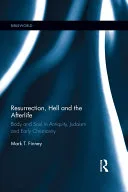
Resurrection, Hell and the Afterlife
 71
71

Resurrection, Hell and the Afterlife
Mark Finney’s "Resurrection, Hell and the Afterlife" presents a compelling argument for a distinct shift in Western eschatological thinking. The author meticulously contrasts the Greek emphasis on the physical body for immortality with the prevalent Jewish and early Pauline Christian view of post-mortem existence as solely soul-based. A notable strength is Finney's rigorous textual analysis, which illuminates the subtle yet significant changes in New Testament thought regarding the physical body's role. However, the work occasionally feels dense, requiring sustained concentration to follow the intricate progression of arguments across different theological traditions. The exploration of how later New Testament texts begin to reintroduce the body's importance is particularly illuminating, demonstrating a fascinating intellectual evolution. Finney offers a scholarly yet accessible account of a crucial development in Western religious thought.
📝 Description
71
Mark Finney's 2018 book tracks Western thought on post-mortem existence from Greek philosophy to early Christianity.
Mark Finney's "Resurrection, Hell and the Afterlife" traces the evolution of Western ideas about what happens after death. The book starts by examining ancient Greek philosophies, which Finney argues viewed the physical body as crucial for any form of continued existence or immortality. He then contrasts this with early Jewish and Pauline Christian thought, which tended to focus more on the soul surviving death without the body.
Finney's analysis covers a period of significant intellectual change, drawing on texts from the Hebrew Bible, Second Temple Judaism, and early Christianity. He highlights how beliefs about the afterlife diverged during these formative centuries. The work details a shift back toward emphasizing the body's importance in later New Testament writings and early Church doctrines. This transition, from a soul-focused to a body-inclusive understanding of the afterlife, is the central subject of Finney's study.
This work engages with the long-standing Western tradition of speculating on the nature of the soul and the fate of the dead. It situates itself within the academic study of religious history, specifically looking at how philosophical ideas from classical antiquity were adopted and transformed by emerging religious traditions. The book examines the intellectual currents that shaped early Christian doctrines, a period where spiritualism and the afterlife were subjects of intense debate and theological development.
💡 Why Read This Book?
• Understand the foundational divergence between Greek and early Judeo-Christian views on the afterlife, as presented through Finney's analysis of early Greek philosophy and Hebrew Bible texts. • Trace the specific theological shift in the later New Testament, examining how the importance of the physical body in post-mortem existence began to be re-emphasized. • Gain insight into the intellectual currents that shaped early Church doctrines by exploring the transition from soul-centric to body-inclusive afterlife concepts.
⭐ Reader Reviews
Honest opinions from readers who have explored this book.
❓ Frequently Asked Questions
What is the primary focus of Mark Finney's "Resurrection, Hell and the Afterlife"?
The book focuses on the historical evolution of Western thought regarding the afterlife, contrasting early Greek ideas emphasizing the physical body with Jewish and early Christian concepts centered on the soul's existence after death.
When was "Resurrection, Hell and the Afterlife" first published?
The book was first published on February 22, 2016.
Which ancient texts does Finney analyze in his discussion of the afterlife?
Finney analyzes a wealth of texts including early Greek philosophical reflections, Hebrew Bible scriptures, Second Temple Jewish literature, and early Pauline Christian writings.
Does the book discuss the concept of 'Hell' in detail?
While the title includes 'Hell,' the primary focus is on the broader concept of post-mortem existence and resurrection, examining the differing views on the soul and body across historical periods.
Who would benefit most from reading this book?
Scholars of religious studies, comparative theology, ancient philosophy, and students of biblical history seeking to understand the development of eschatological beliefs will find this book particularly valuable.
What key transition does the book highlight regarding the afterlife?
It highlights the transition from an early emphasis on the soul alone in post-mortem existence to a later re-emergence of the physical body's importance, particularly in later New Testament and early Church thought.
🔮 Key Themes & Symbolism
Body vs. Soul Dichotomy
The work critically examines the historical tension between conceptualizing the afterlife as solely a spiritual realm for the soul versus one that necessitates the resurrection or continuity of the physical body. Finney contrasts the early Greek philosophical leaning towards the body's integral role in immortality with the prevalent early Jewish and Pauline Christian perspective that post-mortem existence was primarily disembodied. This dichotomy is central to understanding the evolution of Western eschatology and its theological underpinnings.
Evolution of Christian Eschatology
Finney traces the development of Christian beliefs about the afterlife, noting a significant pivot point in the later New Testament where the importance of the physical body for resurrection begins to resurface. This shift is crucial for understanding the formation of early Church doctrines and how they synthesized or diverged from earlier Jewish and Hellenistic ideas about death and immortality. The book details this transition from soul-centric to a more corporeal understanding of eternal life.
Hellenistic Influence on Religious Thought
The book explores the wide impact of Greek philosophical traditions, particularly regarding the body and soul, on the development of religious thought in the ancient world. It highlights how early Greek reflections on immortality insisted on the physical form, creating a distinct conceptual framework. This analysis sets the stage for understanding how subsequent Jewish and Christian thinkers engaged with, adopted, or reacted against these established Hellenistic ideas about the nature of existence beyond death.
Second Temple Jewish Views
A significant portion of Finney's argument is dedicated to the diverse perspectives on the afterlife prevalent during the Second Temple period of Judaism. The work emphasizes that many texts from this era understood post-mortem existence as pertaining to the soul alone, distinct from the later Christian emphasis on bodily resurrection. Examining these views provides essential context for the later theological developments within early Christianity and their relationship to preceding Jewish thought.
💬 Memorable Quotes
Direct passages from the work, attributed to the author.
“Early Greek reflection on the afterlife and immortality insisted on the importance of the physical body.”
— This statement captures the book's foundational argument regarding Hellenistic thought, highlighting its corporeal focus as a key differentiator from later Judeo-Christian perspectives on post-mortem existence.
“A wealth of Jewish texts from the Hebrew Bible, Second Temple Judaism and early (Pauline) Christianity understood post-mortem existence to be that of the soul alone.”
— This highlights the contrast Finney draws between Greek thought and early Judeo-Christian views, emphasizing a period where the soul's disembodied state was the dominant understanding of afterlife.
“Changes begin to appear in the later New Testament where the importance of the afterlife of the physical body became essential.”
— This points to a critical transition within Christian theology, marking the re-introduction and growing significance of the physical body in discussions of resurrection and eternal life.
“Such thoughts continued into the period of the early Church.”
— This indicates the lasting impact of the shift observed in the later New Testament, showing how the body's role in the afterlife became a foundational doctrine for subsequent Christian theology.
💡 Key Ideas
Editorial paraphrase of the work's core concepts — not direct quotes.
The importance of the physical body became essential in later New Testament eschatology.
This paraphrase emphasizes the growing theological weight given to the corporeal aspect of resurrection in the formative period of Christian doctrine, moving beyond solely soul-centric beliefs.
🌙 Esoteric Significance
Tradition
While Finney's work is primarily academic, it touches upon themes resonant with Gnostic and Hermetic traditions that explore the dualistic nature of spirit and matter, and the soul's journey. The contrast between corporeal and incorporeal existence, and the transformative potential of the afterlife, are concepts frequently explored in esoteric philosophy. Finney's historical tracing offers a critical lens for understanding how these fundamental questions about existence and embodiment have been historically framed within Abrahamic religions.
Symbolism
The book implicitly deals with the potent symbolism of the resurrected body, a central motif in Christian iconography and theology. This symbol represents not just physical restoration but spiritual renewal and the overcoming of death's finality. Furthermore, the concept of the disembodied soul can be seen as symbolizing transcendence or the ethereal realm, a concept explored in various mystical traditions that seek union with the divine beyond material limitations.
Modern Relevance
Contemporary discussions in comparative religion and philosophical theology continue to grapple with the body-soul problem and the nature of consciousness after death. Thinkers and practitioners in fields ranging from transhumanism to certain New Age spiritualities engage with ideas of embodied or disembodied existence, echoing the historical debates Finney illuminates. Understanding these ancient conceptual shifts provides a crucial framework for evaluating modern perspectives on mortality, consciousness, and the potential for post-mortem existence.
👥 Who Should Read This Book
• Academic researchers in religious studies and ancient history seeking a scholarly analysis of eschatological development. • Students of comparative theology interested in the divergence and convergence of Greek, Jewish, and early Christian afterlife beliefs. • Individuals with a deep interest in biblical studies looking to understand the historical context and evolution of doctrines concerning resurrection and the soul.
📜 Historical Context
Mark Finney's "Resurrection, Hell and the Afterlife" emerges from a rich field of late 20th and early 21st-century scholarship examining the historical Jesus and the development of Christian doctrine. Published in 2016, it engages with ongoing academic debates about the diverse eschatological views within ancient Judaism and their influence on early Christianity. The work situates itself against a backdrop where scholars like E.P. Sanders had already mapped the field of Jewish beliefs, and N.T. Wright was re-evaluating Pauline theology. Finney's specific contribution lies in meticulously tracing the conceptual shift from a Greek emphasis on the physical body for immortality to the early Judeo-Christian focus on the soul, and then the subsequent re-integration of the body's importance in later New Testament and early Church thought. This analysis provides a nuanced counterpoint to earlier works that might have presented a more monolithic view of afterlife beliefs.
📔 Journal Prompts
The Greek insistence on the physical body for immortality versus the early Jewish focus on the soul alone.
The shift in the later New Testament towards the importance of the physical body in the afterlife.
Early Church doctrines on resurrection and their intellectual antecedents.
The concept of post-mortem existence as soul-centric in Second Temple Judaism.
The philosophical implications of the body-soul dichotomy in ancient Greek thought.
🗂️ Glossary
Eschatology
The branch of theology concerned with death, judgment, and the final destiny of the soul and of humankind. It involves beliefs about the end times and the afterlife.
Second Temple Judaism
The period of Jewish history from the rebuilding of the Second Temple in Jerusalem around 516 BCE to its destruction by the Romans in 70 CE.
Pauline Christianity
The early Christian movement and theology as influenced by the Apostle Paul's teachings and epistles, particularly concerning salvation, the nature of Christ, and the resurrection.
Corporeal
Bodily; relating to or having a physical form. In the context of afterlife beliefs, it refers to the importance or continuation of the physical body.
Hellenistic
Relating to Greek history, culture, or language from the time of Alexander the Great to the Roman Empire. Often refers to philosophical and cultural influences stemming from this period.
Disembodied Existence
A state of being or consciousness that is separate from a physical body. Often refers to the soul or spirit existing after death without a physical form.
Immortality
The ability to live forever; eternal life. In philosophical and religious contexts, it can refer to the soul's eternal nature or the potential for continued existence beyond death.







![Brahmandic Gyanum [Universal Knowledge]](/img/thumb/brahmandic-gyanum-universal-knowledge-vashisht-vaid-346050.webp)