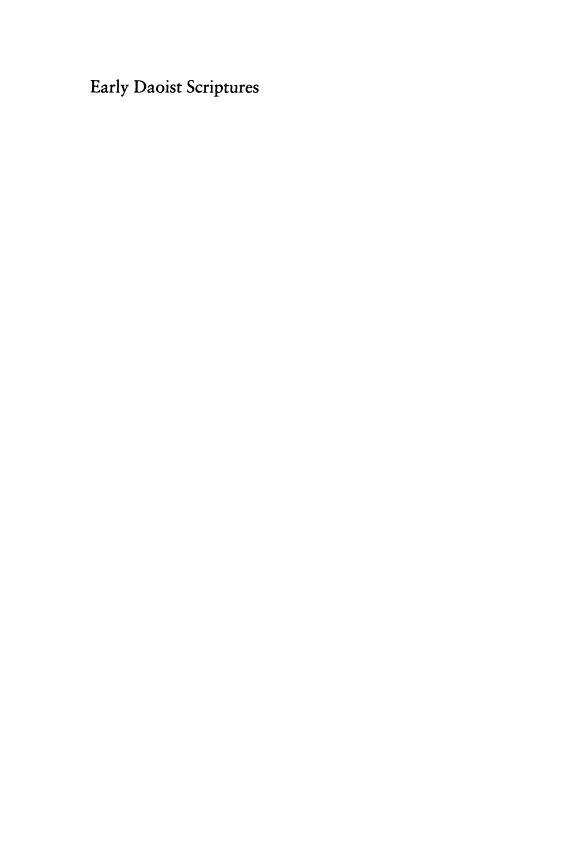
Early Daoist Scriptures
 78
78

Early Daoist Scriptures
Stephen R. Bokenkamp and Peter Nickerson’s *Early Daoist Scriptures* is a monumental scholarly achievement, offering fluent and comprehensive translations of six foundational texts. The introductions accompanying each scripture are particularly illuminating, providing essential historical and philosophical context that aids significantly in appreciating the nuances of early Daoist thought. Russell Kirkland’s assessment of the work opening "a whole new world of ancient religious life" is accurate. The translation of the *Xiang'er* commentary, for instance, is invaluable for understanding its influence on later Daoist cosmology. A limitation, however, lies in the sheer density of the material, which may present a steep learning curve for complete novices. Despite this, the book serves as an indispensable resource for serious students of Daoism. It is an essential primary source for understanding the genesis of Daoist practice and belief.
📝 Description
78
Stephen R. Bokenkamp and Peter Nickerson translated six early Daoist scriptures first published in 1997.
This collection presents English translations of six significant early Daoist texts. Edited by scholars Stephen R. Bokenkamp and Peter Nickerson, the volume aims to make these primary sources available to a wider audience. The book emerged in 1997, a time when interest in Daoism was growing. It fills a need for scholarly translations of these foundational documents, offering insight into the development of Daoist thought after the Han Dynasty.
The texts included cover central Daoist ideas. Readers will encounter discussions of the Dao, concepts like emptiness (xu) and non-action (wu wei), and various paths toward immortality. The scriptures also illustrate the complex worldview and the varied practices found within early Daoist groups.
This book engages directly with early Daoist scriptures, texts that articulate the foundational cosmology, metaphysics, and practices of what would become religious Daoism. These writings reveal a complex system of belief that developed in parallel with, and sometimes in reaction to, other philosophical and religious movements in ancient China. They detail specific methods for spiritual cultivation, understanding the cosmos, and achieving longevity or immortality, positioning them within a lineage of esoteric traditions focused on transformation and direct experience of the fundamental principles of reality.
💡 Why Read This Book?
• Gain direct access to six foundational Daoist scriptures, including the *Xiang'er* commentary, allowing for a unique understanding of early religious Daoism not available in generalized overviews. • Grasp key early Daoist concepts like *wu wei* and the Dao through their original textual expressions, moving beyond abstract definitions to concrete scriptural examples. • Understand the historical development of Daoism by examining texts that informed its cosmology and practices, providing a scholarly foundation for further study from 1997 onward.
⭐ Reader Reviews
Honest opinions from readers who have explored this book.
❓ Frequently Asked Questions
What are the six main Daoist scriptures translated in this book?
The book features translations of the *Taiping jing* (Scripture of Great Peace), the *Xiang'er* commentary on the *Dao De Jing*, the *Lingbao jing* (Scripture of Numinous Treasure), the *Zhen'gao* (Declarations of the Perfected), and two texts from the *Daozang* canon.
Who is Stephen R. Bokenkamp and why is his work significant?
Stephen R. Bokenkamp is a renowned scholar of Daoism whose previous works are highly regarded. His expertise brings deep textual understanding and historical context to the translations, making complex early Daoist thought accessible.
What is the significance of the *Xiang'er* commentary?
The *Xiang'er* commentary, included in this volume, is crucial for understanding how the *Dao De Jing* was interpreted and integrated into early religious Daoism, influencing its cosmology and ethical frameworks.
When was *Early Daoist Scriptures* first published?
This significant collection of early Daoist texts was first published in 1997, providing scholars and students with access to key scriptures at that time.
Are these texts suitable for beginners in Daoism?
While comprehensive, the texts are scholarly in nature. Beginners might benefit from starting with introductory materials before engaging with these primary sources, though the introductions provide valuable context.
What historical period do these scriptures primarily represent?
The scriptures generally represent the period of early religious Daoism, primarily from the Han Dynasty (206 BCE – 220 CE) through the Six Dynasties period (220–589 CE), offering insights into their formative centuries.
🔮 Key Themes & Symbolism
Cosmological Origins
These scriptures look at the nascent cosmological frameworks of early Daoism, exploring concepts of the primordial Dao, the generation of the cosmos, and the relationship between the celestial realms and the human world. Texts like the *Lingbao jing* reveal intricate pantheons and celestial hierarchies that were central to the developing religious Daoist worldview, offering a stark contrast to the more philosophical interpretations found in earlier texts.
Practices for Longevity and Immortality
A significant focus within these early texts is the pursuit of longevity and, ultimately, immortality. This is explored through various practices, including internal alchemy (neidan), meditative techniques, and the ingestion of elixirs. The *Taiping jing*, for example, links longevity to ethical conduct and cosmic harmony, suggesting a holistic approach to achieving extended life and spiritual transcendence.
The Role of the Perfected
The concept of the 'Perfected' (zhen) is central to several texts, particularly the *Zhen'gao*. These scriptures describe a hierarchy of celestial beings and spiritual adepts who have achieved immortality through rigorous practice and spiritual cultivation. They serve as exemplars and intermediaries, guiding practitioners on the path to spiritual attainment and communion with the divine.
Scriptural Authority and Transmission
The collection implicitly addresses the establishment of scriptural authority within early Daoism. The careful translation and annotation of these texts, first compiled in the late 20th century, highlight their importance as foundational documents. The very act of translating and presenting these scriptures as a unified work underscores their role in defining and preserving Daoist doctrine and practice across generations.
💬 Memorable Quotes
Direct passages from the work, attributed to the author.
“The Dao gives birth to the One, the One gives birth to the Two, the Two give birth to the Three, and the Three give birth to the myriad things.”
— This foundational statement, echoing the *Dao De Jing*, outlines the Daoist cosmology of creation from undifferentiated unity to manifest multiplicity, a concept explored and elaborated upon in various early scriptures.
“To govern without acting is the principle of the ruler.”
— This interpretation of *wu wei* (non-action) highlights its application not just in personal spiritual cultivation but also in governance and social order, as discussed in commentaries and philosophical Daoist texts.
“The Perfected are those who have undergone transformation.”
— This points to the transformative process central to achieving spiritual immortality in Daoism, emphasizing that the 'Perfected' are not born but made through dedicated practice and spiritual discipline.
“The Way is formless and nameless.”
— This describes the ineffable and transcendent nature of the Dao itself, emphasizing its existence beyond conceptualization and empirical understanding, a core tenet in early Daoist philosophy.
“The scripture states that the heavens are established by the Dao.”
— This highlights the scriptural assertion of the Dao as the ultimate source of cosmic order, including the celestial realms, underscoring its role as the fundamental principle of existence.
🌙 Esoteric Significance
Tradition
This work is foundational for understanding religious Daoism, a distinct lineage within the broader spectrum of esoteric traditions. It departs from purely philosophical Daoism by emphasizing ritual, cosmology, and the pursuit of immortality through specific practices. It aligns with esoteric traditions that posit pathways to transcendence through disciplined engagement with hidden principles of the universe, differing from Hermeticism or Kabbalah in its specific cosmology and soteriology.
Symbolism
Key symbols include the *Dao* itself, representing the ineffable source and underlying reality of all existence, often depicted through natural metaphors. The concept of *qi* (vital energy) is fundamental, with scriptures detailing how its cultivation leads to health and longevity. Celestial realms and their associated deities, often depicted in intricate hierarchies, symbolize spiritual planes of existence accessible through practice and transformation.
Modern Relevance
Contemporary Daoist practitioners and scholars draw heavily on these translated scriptures to understand the historical roots of their lineage and practices. Modern schools of internal alchemy and Qigong often trace their lineage back to the practices described in these texts. Thinkers in comparative religion and consciousness studies also utilize this work to explore diverse models of spiritual development and cosmology.
👥 Who Should Read This Book
['• Scholars of East Asian religions: To gain direct access to primary source materials that illuminate the development of Daoist thought and practice from the Han Dynasty onwards.', '• Students of comparative mythology and cosmology: To explore the unique creation narratives and celestial hierarchies present in early Chinese religious traditions.', '• Serious practitioners of Daoism: To deepen their understanding of the scriptural foundations underpinning their chosen path and the historical context of their practices.']
📜 Historical Context
Published in 1997, *Early Daoist Scriptures* arrived at a time when academic interest in Daoism had matured beyond initial explorations of Laozi and Zhuangzi. The late 20th century saw a burgeoning field dedicated to religious Daoism, its history, and its complex textual traditions. This collection directly addressed a need for accessible, scholarly translations of key primary texts that had previously been difficult to study outside of specialized academic circles or the original Chinese. It engaged with ongoing scholarly debates about the dating and development of these scriptures, particularly the *Taiping jing* and the *Lingbao jing*, which are crucial for understanding the evolution of Daoist cosmology and ritual from the Han Dynasty into the Six Dynasties period. The work provided scholars with reliable English versions, facilitating comparative studies with other religious traditions and philosophical schools present in ancient China, such as Buddhism and Confucianism.
📔 Journal Prompts
The concept of the Dao as the formless and nameless source.
The transformative process described for achieving the status of the 'Perfected'.
The relationship between ethical conduct and cosmic harmony as presented in the *Taiping jing*.
The cosmological generation from the Dao to the myriad things.
The role of *wu wei* in governance and personal life as interpreted in early commentaries.
🗂️ Glossary
Dao (Tao)
The fundamental principle and source of all existence in Daoism, often translated as 'The Way.' It is considered ineffable, formless, and the underlying reality of the universe.
Wu Wei
Literally 'non-action' or 'effortless action.' It refers to acting in accordance with the natural flow of the Dao, without forcing or artificiality, often applied to governance and personal conduct.
Qi (Chi)
Vital energy or life force that permeates all things. Its cultivation through various practices is central to Daoist health, longevity, and spiritual development.
Zhen (Chên)
Often translated as 'Perfected' or 'Realized.' Refers to spiritual adepts who have achieved immortality or transcendent states through rigorous practice and spiritual cultivation.
Neidan
Internal alchemy, a Daoist practice focused on cultivating the body's vital energies (*qi*, essence, spirit) through meditation, breath control, and visualization to achieve longevity and immortality.
Cosmology
The study of the origin, evolution, and structure of the universe. Early Daoist scriptures present distinct cosmological models detailing the creation and order of the cosmos.
Lingbao
Literally 'Numinous Treasure.' Refers to a major scriptural canon and lineage within religious Daoism, known for its elaborate cosmology, rituals, and emphasis on salvation.
This book appears in 1 collection
🔮 Readers Also Liked
Browse all →






From the “Taoism” Collection
View all →







More Free Esoteric History & Biography Books
View all →