Brightest and Best
 82
82

Brightest and Best
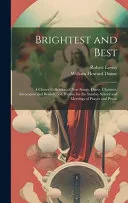
The collection 'Brightest and Best' presents a curated selection of sacred music, a genre often overlooked by contemporary esoteric studies but crucial for understanding historical spiritual practices. Lowry and Doane’s work, particularly its intended use in Sunday Schools, reveals music’s role as a didactic tool for disseminating faith-based principles. The original blurb’s assertion of cultural importance, citing its selection by scholars, anchors it within the canon of civilization’s knowledge base. However, the collection’s focus remains squarely within orthodox religious expression, offering little by way of unconventional or esoteric philosophy. While valuable as a historical artifact of religious pedagogy and musical composition, its direct relevance to esoteric inquiry is limited to its function as a study of historical belief systems through their musical artifacts. The work is a competent assemblage of its kind, but not a source of esoteric revelation.
📝 Description
82
Published around the turn of the 20th century, Brightest and Best compiles religious music for devotional use.
Brightest and Best is a collection of religious music, attributed to Robert Lowry and William Howard Doane. It gathers hymns and sacred songs primarily intended for devotional purposes, especially within Sunday School settings and larger religious gatherings. The music aims to encourage spiritual thought and shared worship, with lyrics covering various theological subjects. Its presence in academic collections points to its historical importance in religious music publishing. The work is in the public domain.
This volume suits individuals engaged in religious education, church music leadership, or those who enjoy historical hymnals. Pastors, Sunday School teachers, choirmasters, and congregations looking to enhance worship services with traditional sacred music will find it useful. Students of religious history, musicology, or American cultural studies may examine this work to understand how devotional music developed and its function in community life during the time it was created. It appeals to those interested in the connection between faith, music, and historical practices.
While not strictly esoteric in the occult sense, this collection reflects a specific devotional tradition within Protestant Christianity prevalent in the late 19th and early 20th centuries. The emphasis on spiritual reflection, communal worship, and theological themes through music served as a common practice for adherents seeking deeper connection and understanding of their faith. These hymns were a vehicle for shared spiritual experience and the transmission of religious doctrine, forming a core element of religious life for many.
💡 Why Read This Book?
• Gain insight into the pedagogical use of music in 19th-century religious education, as exemplified by the collection’s suitability for Sunday Schools, revealing how faith was taught through song. • Understand the collaborative process between lyricists like Robert Lowry and composers like William Howard Doane in creating devotional music, a standard practice documented in hymnological studies. • Access a piece of American cultural history, recognized as culturally important and part of the public domain, offering a window into the spiritual and musical landscape of its era.
⭐ Reader Reviews
Honest opinions from readers who have explored this book.
❓ Frequently Asked Questions
What is the primary purpose of the music in Brightest and Best?
The music in Brightest and Best is primarily intended for religious settings, such as Sunday Schools and other worship services. Its purpose is to inspire, uplift, and facilitate spiritual reflection and communal expression among participants.
Who are Robert Lowry and William Howard Doane?
Robert Lowry was a prominent Baptist minister and hymn writer, known for composing lyrics. William Howard Doane was a successful businessman and a prolific composer of church music, often collaborating with lyricists to create popular hymns.
Is Brightest and Best still under copyright?
No, Brightest and Best has been identified as being in the public domain. This means its contents are freely available for use, study, and adaptation without copyright restrictions.
What kind of themes are covered in the songs?
The songs cover a range of religious themes, typically focusing on aspects of Christian doctrine and devotional practice. These often include divine love, redemption, faith, and the virtues associated with religious life.
Why is this work considered culturally important?
Its cultural importance stems from its selection by scholars as representative of religious music's role in American society and education. It forms part of the historical knowledge base concerning religious expression and cultural practices.
Where can I find Brightest and Best?
As a public domain work, Brightest and Best is often available through digital archives, libraries specializing in religious or historical music, and potentially through online repositories of public domain texts and music.
🔮 Key Themes & Symbolism
Music as Spiritual Pedagogy
The collection emphasizes music's function as a tool for religious instruction, particularly within Sunday School settings. The hymns are crafted not only for worship but also to impart theological concepts and moral lessons. This approach highlights how communal singing was historically employed to reinforce doctrine and foster spiritual understanding among congregants, especially the young. The selection and arrangement of songs reflect a deliberate strategy to educate through melody and verse, making faith accessible and memorable.
Collaborative Creation of Devotional Art
Brightest and Best showcases the synergistic relationship between lyricists like Robert Lowry and composers such as William Howard Doane. Their collaboration represents a formalized process of creating sacred music that aimed for both spiritual depth and popular appeal. This partnership between word and tune was instrumental in producing widely adopted hymns that resonated with congregations, demonstrating how artistic collaboration could serve religious and educational aims effectively.
The Hymnal as a Cultural Artifact
Recognized by scholars for its cultural significance, this work is more than just a songbook; it is a historical document. It offers insights into the musical and spiritual life of the period it represents, reflecting prevailing theological currents and societal values. Its inclusion in broader cultural knowledge bases underscores the role of religious music in shaping community identity and expressing collective spiritual aspirations during its time.
Public Domain Accessibility
The status of Brightest and Best as a public domain work is a critical aspect, ensuring its preservation and widespread availability for study. This accessibility allows contemporary researchers, musicians, and enthusiasts to engage directly with the material without legal encumbrance. It facilitates scholarly analysis, performance, and integration into modern religious or educational contexts, promoting the continued relevance of these historical compositions.
💬 Memorable Quotes
Direct passages from the work, attributed to the author.
“The songs cover a range of themes and are designed to inspire and uplift those who engage in religious practice.”
— This statement captures the dual purpose of the collection: thematic breadth in its religious content and a direct aim to foster positive spiritual and emotional states in the user.
“A wonderful addition to any hymnal collection.”
— This suggests the compilation's quality and utility, positioning it as a valuable resource for individuals or institutions maintaining a library of sacred music for worship or study.
“This work has been selected by scholars as being culturally important.”
— This endorsement highlights the book's academic recognition, indicating its value beyond mere religious use, serving as a subject of study for its historical and cultural contributions.
“This work is in the 'public domain i”
— This declaration signifies the complete freedom to use, share, and adapt the content of Brightest and Best, marking it as a freely accessible cultural resource.
“perfect for use in Sunday Schools or other religious settings.”
— This points to the practical application and intended audience of the musical pieces, emphasizing their suitability for educational and communal worship environments.
🌙 Esoteric Significance
Tradition
While Brightest and Best is firmly rooted in orthodox Christian hymnody, its value from an esoteric perspective lies in its function as a historical record of devotional practice. It represents a mainstream expression of spiritual aspiration within a specific cultural context. Its significance is not in esoteric doctrine but in how a dominant spiritual tradition utilized music for communal edification and the propagation of its worldview, which can be studied for comparison with more overtly esoteric musical traditions.
Symbolism
The symbolism within these hymns generally adheres to standard Christian iconography: the 'brightest and best' itself can symbolize divine perfection or the ideal spiritual state. 'Light' frequently represents divine presence, truth, or salvation, contrasting with 'darkness' as ignorance or sin. References to the 'cross,' 'shepherd,' or 'lamb' carry established theological weight, signifying sacrifice, guidance, and innocence respectively. These symbols, while common, were potent vehicles for conveying complex spiritual ideas in accessible forms.
Modern Relevance
Contemporary interest in Brightest and Best from an esoteric viewpoint is primarily historical and comparative. Scholars of religious music, cultural historians, and those studying the evolution of spiritual expression may reference it. While not a direct source for modern esoteric practices, it serves as a point of reference for understanding the broader spiritual landscape from which certain esoteric traditions emerged or with which they interacted, offering context for the development of musical mysticism.
👥 Who Should Read This Book
• Students of American religious history: To understand the role of music in 19th-century Protestantism and its impact on social and educational movements. • Musicologists and hymnology enthusiasts: To analyze the compositional styles and lyrical themes of prominent religious music creators like Lowry and Doane. • Researchers of cultural transmission: To examine how a society's spiritual beliefs and values were disseminated through accessible forms like Sunday School songs.
📜 Historical Context
Brightest and Best emerged within the fertile ground of 19th-century American Protestantism, a period marked by fervent religious revivalism and the widespread use of music in evangelism and education. Figures like Robert Lowry and William Howard Doane were key contributors to a burgeoning industry of hymnody designed for accessibility and spiritual impact. This era saw a proliferation of hymnals and songbooks, often compiled for specific purposes like Sunday Schools or missionary work, aiming to disseminate religious teachings effectively. The collaboration between a lyricist and a composer was a common and successful model, exemplified by the prolific output of individuals like Fanny Crosby, who frequently partnered with Doane. While this work focuses on orthodox Christian themes, it existed alongside a growing interest in spiritualism and other less conventional movements, though its reception was firmly within mainstream religious circles. Its selection by scholars as culturally important underscores its role in documenting the musical landscape that shaped American religious identity during this foundational period.
📔 Journal Prompts
The concept of 'religious music' as a didactic tool within the context of Brightest and Best.
Robert Lowry's lyrical approach to conveying spiritual themes suitable for Sunday Schools.
William Howard Doane's compositional choices for hymns intended to 'inspire and uplift'.
The cultural significance attributed to this compilation by scholarly selection.
Interpreting the symbolism of 'light' and 'darkness' as presented in the hymns.
🗂️ Glossary
Hymnody
The practice of composing, singing, or collecting hymns. In the context of Brightest and Best, it refers to the compilation of religious songs designed for congregational or educational use.
Sunday School
An educational program, typically associated with Christian churches, providing religious instruction, often on Sunday mornings. This collection was specifically designed for such settings.
Public Domain
Works whose intellectual property rights have expired, have been forfeited, or are inapplicable. Content in the public domain can be used freely by anyone without permission.
Devotional Music
Music intended to aid in prayer, meditation, or worship. The hymns in this collection aim to facilitate a connection with the divine and encourage spiritual reflection.
Cultural Importance
Significance attributed to a work based on its impact or representation of a particular society's values, history, or artistic achievements, often recognized by academic or scholarly consensus.
Compilation
A collection of pre-existing or newly created pieces brought together into a single volume. In this case, it refers to the gathering of religious songs by Lowry and Doane.
Sacred Music
Music composed or designated for religious ceremonies, rites, or personal devotion. This term broadly encompasses the genre of the works within Brightest and Best.