The Signature of All Things
 74
74

The Signature of All Things
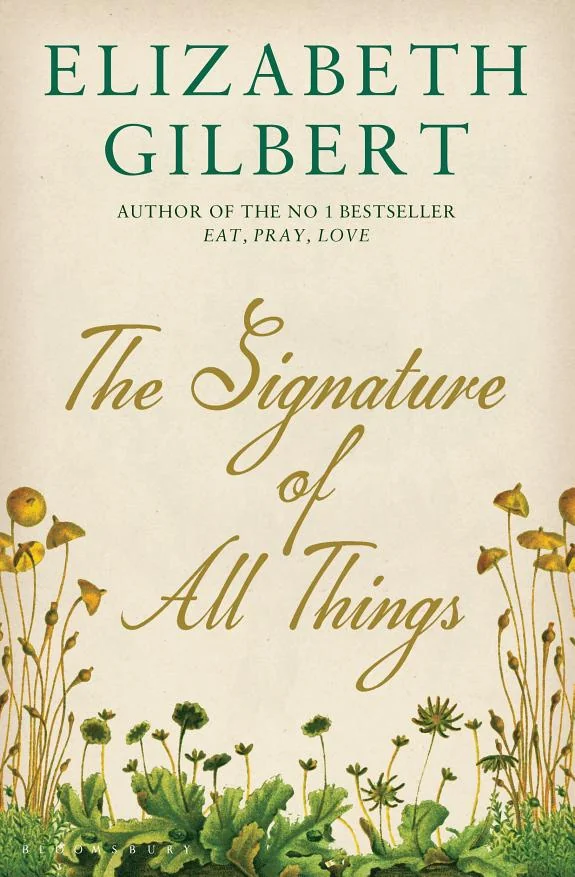
Elizabeth Gilbert's "The Signature of All Things" presents a vast, ambitious canvas, bringing to life the 19th-century botanist Alma Whittaker with remarkable detail. Gilbert excels at rendering Alma's intellectual world, her meticulous cataloging of plants and her passionate pursuit of knowledge feel palpable. The novel’s greatest strength lies in its immersive historical atmosphere and the deeply realized character of Alma, a woman driven by an insatiable curiosity in a world not always ready for her intellect. However, the sheer scope of the narrative occasionally leads to pacing issues, particularly in its later sections where the generational saga feels somewhat less focused than Alma's personal journey. A particularly striking passage involves Alma's contemplation of the "signature" of a newly discovered orchid, a moment where scientific observation meets a sense of profound, almost spiritual, recognition of inherent form. Despite its occasional longueurs, the novel is a powerful portrait of a woman's life devoted to understanding the secrets of the natural world.
📝 Description
74
Elizabeth Gilbert's 2013 novel centers on Alma Whittaker, a 19th-century botanist.
The novel follows Alma Whittaker, a brilliant botanist born in 1800, across her life. It details her intellectual development and her scientific work in a male-dominated field. The story unfolds against a backdrop of major scientific discoveries and social changes in the 19th and early 20th centuries.
Alma's personal life, including her relationships and her quest for understanding, is woven through her dedication to botany. The narrative touches on themes of ambition, the pursuit of knowledge, and finding one's place in the natural world. Gilbert depicts Alma's experiences during a time of significant shifts in scientific thought and global exploration.
While primarily historical fiction, "The Signature of All Things" touches on esoteric ideas through its exploration of the interconnectedness of all living things. The concept of a universal 'signature' or pattern underlying nature hints at older philosophical traditions that sought hidden correspondences in the world. Alma's scientific pursuits, though grounded in empirical observation, mirror the alchemical and hermetic quests to understand the fundamental principles of existence and the divine spark within the natural world.
💡 Why Read This Book?
• Gain insight into the intricate world of 19th-century botany, learning about the methods and discoveries of figures like Alma Whittaker, which offers a specific window into scientific history. • Understand the philosophical concept of "the signature of all things" as explored in the novel, providing a unique lens through which to view the inherent patterns and interconnectedness of life. • Experience the compelling narrative of a determined female scientist navigating societal constraints, offering a distinct portrayal of ambition and intellectual pursuit unlike contemporary accounts.
⭐ Reader Reviews
Honest opinions from readers who have explored this book.
❓ Frequently Asked Questions
What is the central concept of "the signature of all things"?
The "signature of all things" is an idea explored in the novel, suggesting that every living organism possesses an inherent, unique pattern or essence that defines its identity and its place in the natural order. It implies a form of intrinsic knowledge or design.
Who is Alma Whittaker and what is her role in the book?
Alma Whittaker is the protagonist of "The Signature of All Things." She is a brilliant and self-taught botanist living in the 19th century, dedicated to scientific study, exploration, and understanding the natural world through meticulous observation and research.
What historical period does "The Signature of All Things" cover?
The novel primarily spans the mid-19th century through the early 20th century. This era was a time of significant scientific advancement, global exploration, and evolving societal norms regarding women's roles in intellectual and professional spheres.
Does Elizabeth Gilbert draw on real scientific history in the book?
Yes, the novel is deeply informed by the history of botany and scientific exploration during the 19th century. While Alma Whittaker is a fictional character, her pursuits and the scientific context reflect the actual intellectual currents and discoveries of the era.
What are the main themes explored in the novel?
The novel explores themes of scientific ambition, the thirst for knowledge, inheritance (both biological and intellectual), the nature of perception, and the deep, often solitary, connection between individuals and the natural world.
Is "The Signature of All Things" related to "Eat, Pray, Love"?
While both books are by Elizabeth Gilbert, "The Signature of All Things" is a work of historical fiction, whereas "Eat, Pray, Love" is a memoir. This novel offers a different kind of exploration, focusing on intellectual and historical narratives.
🔮 Key Themes & Symbolism
Botanical Discovery and Classification
The novel meticulously details the process of botanical discovery, classification, and scientific inquiry in the 19th century. Alma Whittaker's life is dedicated to understanding plants, their origins, and their properties. This theme highlights the era's burgeoning scientific rigor, the thrill of cataloging the unknown, and the systematic approach to understanding the natural world, even touching upon early ideas of heredity and plant intelligence.
The Concept of Innate Essence
Central to the book is the titular concept, "the signature of all things," which suggests an intrinsic, unique essence or pattern within all living beings. This idea bridges scientific observation with a more philosophical or even mystical understanding of life. It posits that understanding this signature is key to comprehending an organism's true nature, hinting at a hidden order or inherent meaning in the biological world.
Inheritance and Legacy
The novel deeply explores the concept of inheritance, not just in terms of genetics and biological traits passed down through generations, but also intellectual inheritance. Alma grapples with her own legacy, the knowledge she acquires, and the impact of her family's history and obsessions on her life. This theme examines how past lives and discoveries shape present understanding and future possibilities.
Ambition and Solitude
"The Signature of All Things" portrays the intense ambition that drives scientific pursuit and the profound solitude that often accompanies such singular focus. Alma's dedication to her work isolates her, highlighting the personal sacrifices required for groundbreaking discovery. The narrative examines the internal drive for knowledge and the emotional toll it can take, particularly for women in intellectual fields.
💬 Memorable Quotes
Direct passages from the work, attributed to the author.
“The ambition of the mind is a terrible thing.”
— This phrase captures the novel's exploration of intellectual drive. It suggests that the relentless pursuit of knowledge, while potentially rewarding, can also be all-consuming and lead to personal sacrifices or even destructive obsession, a theme central to Alma's character.
“All things are connected.”
— This simple yet profound statement reflects the core esoteric notion of interconnectedness within the natural world. It suggests that every element, from the smallest organism to the grandest system, plays a part in a larger, unified whole, a concept Alma grapples with through her botanical studies.
“The signature of all things is a divine idea.”
— This interpretation links the concept of inherent patterns in nature to a higher, possibly divine, order. It suggests that the unique essence of each thing is not arbitrary but part of a grander design, imbuing the scientific study of life with a sense of sacred purpose.
“Knowledge is a burden and a blessing.”
— This concept highlights the dual nature of intellectual pursuit. Acquiring knowledge brings understanding and power (a blessing), but it also brings responsibility, awareness of ignorance, and the potential for isolation (a burden), reflecting Alma's complex relationship with her own vast learning.
“The world is a garden waiting to be understood.”
— This metaphor frames the entire natural world as a complex, intricate system akin to a garden, full of wonders to be discovered and comprehended. It speaks to the inherent order and beauty that drives botanical exploration and the desire to decipher nature's secrets.
🌙 Esoteric Significance
Tradition
While not strictly adhering to a single esoteric lineage, "The Signature of All Things" draws heavily on Hermetic and Neoplatonic concepts, particularly the idea of correspondence and the underlying unity of creation. The notion of a 'signature' in nature echoes Hermetic principles that all things bear the imprint of their divine origin or essence. It reflects a worldview where the material world is a manifestation of spiritual truths, inviting a deeper, symbolic reading of natural phenomena beyond mere scientific classification.
Symbolism
The primary symbol is the 'signature' itself, representing the inherent, unique pattern or essence within all living things, a concept that bridges empirical observation with intuitive understanding. Plants, as the focus of Alma's study, symbolize the vast diversity and intricate interconnectedness of life, each species holding its own unique 'signature.' The botanical garden serves as a microcosm of the world, a place where order is imposed upon diversity, reflecting humanity's attempt to understand and categorize the divine order.
Modern Relevance
The novel's exploration of interconnectedness and inherent patterns in nature appeals to contemporary ecological thought and systems thinking. Modern thinkers in fields like deep ecology, biosemiotics, and even certain branches of spirituality find parallels in Alma's quest to understand the fundamental essence of life. The book's nuanced portrayal of scientific pursuit also informs discussions on the philosophy of science and the potential for integrating empirical data with broader, holistic understandings of the universe.
👥 Who Should Read This Book
• Aspiring botanists and historians of science: Gain a rich, character-driven narrative that contextualizes 19th-century botanical research and the personal drive behind scientific discovery. • Readers interested in philosophical explorations of nature: Explore the concept of "the signature of all things" and its implications for understanding life's inherent patterns and interconnectedness. • Fans of immersive historical fiction: Experience a meticulously crafted portrait of the 19th century, brought to life through the detailed world-building and the compelling journey of a remarkable female protagonist.
📜 Historical Context
Elizabeth Gilbert's "The Signature of All Things" is set against the vibrant backdrop of 19th-century scientific revolution, a period marked by radical shifts in understanding the natural world. The novel immerses readers in the era of Linnaean classification, early evolutionary thought, and intensive botanical exploration fueled by colonialism and scientific curiosity. Alma Whittaker's life unfolds amidst contemporaries whose work challenged existing paradigms, though the novel focuses more on the meticulous, empirical side of botany and its philosophical implications. This era also saw the formalization of scientific disciplines and the establishment of botanical gardens as centers of research. The work implicitly engages with the burgeoning field of heredity, predating the formal rediscovery of Mendel's work in 1900. While not a direct engagement with a competing school of thought, the novel contrasts the systematic, empirical approach with more speculative or vitalistic ideas about life, reflecting broader intellectual debates of the time. The reception of 19th-century scientific ideas, particularly those concerning evolution and inheritance, was often contentious, though this book focuses on the internal world of science rather than public controversy.
📔 Journal Prompts
Alma Whittaker's dedication to botany and the concept of the 'signature of all things.'
The ambition of the mind as a driving force in scientific discovery.
Reflections on inheritance, both biological and intellectual, within your own lineage.
The balance between rigorous scientific observation and intuitive understanding of nature.
The experience of solitude when pursuing a life's singular passion.
🗂️ Glossary
Signature of All Things
A concept suggesting that every natural object possesses a unique, inherent pattern or essence that reveals its true nature and place in the cosmos. It implies a divine or intrinsic design waiting to be deciphered.
Botanical Classification
The scientific system of naming, defining, and grouping plants based on shared characteristics. In the 19th century, this involved meticulous observation, comparison, and the establishment of hierarchical systems, like those pioneered by Linnaeus.
Heredity
The passing of traits and characteristics from parents to offspring. While the mechanisms were not fully understood in the 19th century, the concept was central to understanding inheritance and biological patterns.
Empirical Observation
Knowledge acquired through direct sensory experience and experimentation, forming the bedrock of the scientific method. It emphasizes verifiable data and objective measurement.
Vitalism
A philosophical viewpoint that living organisms are fundamentally different from non-living entities because they contain some non-physical element or are governed by different principles than inanimate things. It contrasts with purely mechanistic explanations.
Taxonomy
The scientific discipline concerned with naming, defining, and classifying groups of biological organisms on the basis of shared characteristics. It is a key aspect of botanical study.
Epigenetics (precursor concept)
While not termed as such, the novel touches upon how environmental factors and experiences might influence inherited traits or expressions, hinting at concepts that later informed the field of epigenetics.
This book appears in 1 collection
🔮 Readers Also Liked
Browse all →![Qigong =: [Chi kung]](/img/thumb/qigong-chi-kung-wu-runjin-523499.webp)









From the “Enlightenment” Collection
View all →






More Free Occult Philosophy Books
View all →