Meeting the Buddhas
 79
79

Meeting the Buddhas
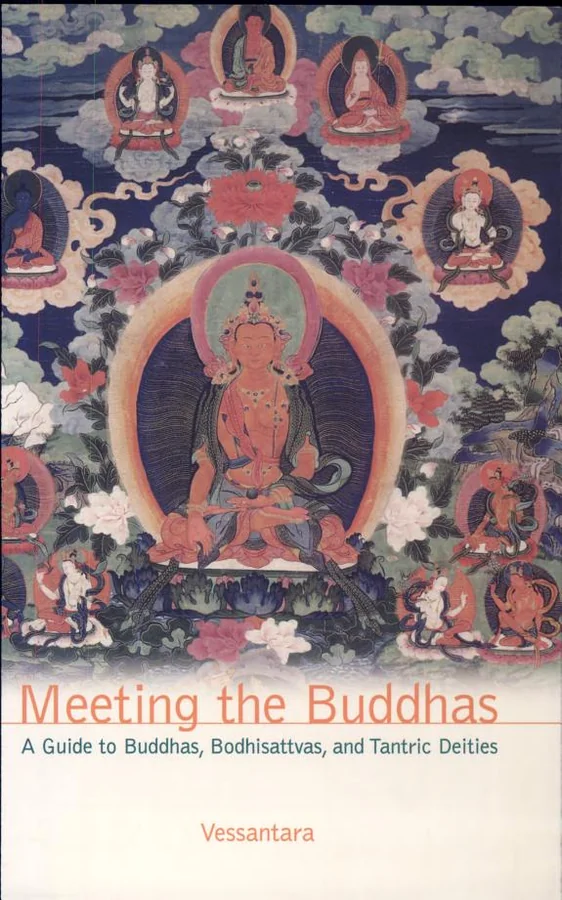
Vessantara's 'Meeting the Buddhas' offers a commendable effort to distill the vast iconography of Mahayana Buddhism into a digestible format for Western audiences. The book's strength lies in its systematic approach, presenting each deity or enlightened being with a consistent structure: characteristics, symbolism, visualization, and myth. This makes complex figures like the fierce protector deity Hayagriva, often depicted with multiple heads and legs, more approachable than they might appear in purely academic texts. However, the very accessibility that serves as its primary virtue can also be a limitation. The depth of philosophical nuance or the historical evolution of these figures is necessarily streamlined, sometimes presenting a simplified, almost static, view. The section on Tara, for instance, effectively outlines her various forms and associated mantras, but one wishes for a deeper exploration of her specific role within different tantric lineages. Ultimately, 'Meeting the Buddhas' functions effectively as a curated introductory guide, offering a valuable starting point for those unfamiliar with Buddhist sacred imagery.
📝 Description
79
Vessantara's 1993 book, Meeting the Buddhas, makes Buddhist sacred figures accessible.
Meeting the Buddhas, published in 1993, introduces readers to the diverse figures within Buddhist traditions. Vessantara details their iconic attributes, mythologies, and symbolic meanings. The book includes practical elements like visualizations and mantras, aiming to make these enlightened beings and their teachings more understandable for those new to Buddhist iconography and philosophy.
This volume is suitable for meditation practitioners seeking to deepen their understanding of archetypes. It also serves as a reference for scholars of comparative religion interested in the visual and narrative aspects of Mahayana Buddhism. The work emerged during a time of increased Western interest in Eastern spirituality, offering a structured, visually oriented guide to complex doctrines.
In the context of Western engagement with Buddhist traditions after the 1960s, Meeting the Buddhas appeared as a guide to understanding the archetypal forms of enlightened beings. It presented these figures not just as historical individuals but as emanations of consciousness, a concept central to Mahayana and Vajrayana traditions. The book's focus on visualization and mantra connects it to contemplative practices that aim to internalize these archetypal energies.
💡 Why Read This Book?
• Gain practical tools for personal practice by learning specific visualization techniques and mantras associated with key figures like Avalokiteshvara, enabling a more direct engagement with Buddhist archetypes. • Understand the symbolic language of Buddhist art and practice through detailed explanations of iconography, such as the lotus flower representing purity and enlightenment, which enhances appreciation of temple art and meditation imagery. • Discover the narratives and characteristics of important Buddhist figures, including the wisdom associated with Manjushri, providing context for Buddhist philosophy and a framework for personal ethical development.
⭐ Reader Reviews
Honest opinions from readers who have explored this book.
❓ Frequently Asked Questions
What is the original publication year of Vessantara's 'Meeting the Buddhas'?
The book 'Meeting the Buddhas' by Vessantara was first published in 1993, aiming to introduce readers to important Buddhist deities and sacred figures.
Which key Buddhist figures are introduced in 'Meeting the Buddhas'?
The book introduces prominent figures such as Avalokiteshvara, Manjushri, and Tara, detailing their characteristics, symbols, and myths for the reader.
Does 'Meeting the Buddhas' include elements for personal practice?
Yes, Vessantara's work includes visualizations, symbols, and mantras for each figure, designed to help readers engage with Buddhist concepts on a personal level.
Who is the author, Vessantara, and what is his background?
Vessantara is known for his work within the Triratna Buddhist Community, focusing on making Buddhist teachings and practices accessible, particularly through his writings.
What is the primary audience for 'Meeting the Buddhas'?
The book is aimed at individuals new to Buddhist iconography and philosophy, offering an accessible introduction to its principal deities and enlightened beings.
Are illustrations included in 'Meeting the Buddhas'?
Yes, the book features illustrations alongside descriptions of each figure, aiding in visualization and understanding their symbolic representations.
🔮 Key Themes & Symbolism
Archetypal Forms of Enlightenment
The work presents Buddhas and Bodhisattvas not merely as historical figures but as archetypal expressions of enlightened qualities. Figures like Manjushri embody wisdom, while Avalokiteshvara represents compassion. This approach allows readers to connect with these qualities within themselves. The book emphasizes that these beings are accessible through focused meditation and visualization, serving as potent symbols for spiritual development within Buddhist practice.
Iconography and Symbolism
A central theme is the interpretation of Buddhist iconography. Each deity is described with specific attributes—mudras (hand gestures), implements, and symbolic colors—that convey profound philosophical concepts. For instance, the blue lotus associated with certain figures signifies purity and spiritual awakening. Understanding these visual cues is presented as essential for grasping the deeper meaning behind the representations and for facilitating accurate visualization.
Mythic Narratives
The book revitalizes the myths surrounding Buddhist sacred figures, presenting them as dynamic stories that illustrate core Buddhist principles. These narratives often depict the overcoming of obstacles, the manifestation of compassion, or the attainment of wisdom. By detailing the stories of figures like Tara, the book makes abstract concepts like skillful means and boundless activity more comprehensible and relatable.
Mantra and Visualization Practice
Meeting the Buddhas integrates practical elements for meditation and contemplation. Mantras, sacred syllables believed to possess spiritual power, are provided for key figures. These are paired with visualization exercises designed to help the reader connect with the essence of the deity. This practical dimension underscores the book's aim to bridge theoretical knowledge with lived spiritual experience.
💬 Memorable Quotes
Direct passages from the work, attributed to the author.
“Each Buddha and Bodhisattva represents a particular aspect of the enlightened mind.”
— This highlights the core concept that these figures are not just deities to be worshipped, but symbolic representations of universal qualities like wisdom, compassion, and skillful means inherent within the enlightened consciousness.
“Visualizing a figure helps to internalize their qualities.”
— This emphasizes the pedagogical approach of the book, suggesting that the act of mentally picturing a Buddha or Bodhisattva is a method for cultivating the spiritual attributes that figure embodies.
“Mantras are sound forms that can help evoke the presence of a deity.”
— This explains the function of mantras within the context of the book's practice-oriented introductions, framing them as sonic tools for connecting with the energetic or spiritual essence of specific enlightened beings.
“The myths surrounding these figures illustrate the path to awakening.”
— This points to the narrative function of the stories presented, suggesting that the trials, triumphs, and characteristics of Buddhas and Bodhisattvas offer allegorical guidance for the reader's own spiritual journey.
“Symbols associated with each deity unlock deeper meanings.”
— This underscores the importance of iconography in Buddhist traditions, indicating that the objects, colors, and gestures related to each figure are not arbitrary but carry specific doctrinal significance.
🌙 Esoteric Significance
Tradition
While rooted in Mahayana Buddhism, the work functions as an esoteric bridge by presenting sacred figures as potent archetypes accessible through psychological and meditative means. It aligns with Western esoteric traditions that utilize visualization and correspondences to access spiritual realities, albeit framing it within a distinctly Buddhist cosmology. This approach echoes Theosophical interests in Eastern figures as embodiments of divine principles, but Vessantara's presentation remains more grounded in traditional Buddhist practice.
Symbolism
Key symbols like the lotus flower, representing purity and enlightenment, and the Dharma wheel, signifying the Buddha's teachings, are explained. Figures like Avalokiteshvara, often depicted with multiple arms holding various implements, symbolize the boundless capacity for compassion and the skillful means to aid all beings. The wrathful iconography of some deities, like Mahakala, represents the fierce aspect of wisdom that cuts through delusion.
Modern Relevance
Contemporary mindfulness and meditation movements, often secularized, draw implicitly on the archetypal understanding of figures like the Buddha presented here. Psychologists and spiritual teachers exploring archetypes, akin to Carl Jung's work, find value in the symbolic depth of Buddhist deities. Furthermore, Western practitioners of Vajrayana Buddhism continue to use Vessantara's work as a foundational text for understanding the iconography central to their tantric practices.
👥 Who Should Read This Book
['• Newcomers to Buddhist philosophy and iconography seeking a clear, structured introduction to key enlightened figures and their symbolic meanings.', '• Meditation practitioners interested in deepening their practice through understanding and visualizing specific Buddhas and Bodhisattvas like Tara and Manjushri.', '• Students of comparative religion or mythology looking for accessible explanations of Buddhist deities, their attributes, and associated narratives.']
📜 Historical Context
Published in 1993, Vessantara's "Meeting the Buddhas" arrived during a significant period of Buddhist expansion in the West. The preceding decades had witnessed a growing interest in Eastern philosophies, leading to a proliferation of accessible texts aimed at Western practitioners. This era saw figures like the Dalai Lama becoming more visible internationally, and authors such as Thich Nhat Hanh were making Vietnamese Zen traditions comprehensible to a global audience. "Meeting the Buddhas" fits within this trend of demystification and practical application, offering a structured introduction to Mahayana iconography that contrasted with more academic or strictly devotional approaches. Its publication occurred at a time when Western esoteric circles were also exploring Eastern systems, often synthesizing them with existing traditions like Theosophy or Western Hermeticism, though Vessantara’s work maintains a more direct focus on traditional Buddhist figures.
📔 Journal Prompts
The symbolic meaning of the lotus flower as presented for Buddhas.
Visualization of Avalokiteshvara's compassionate gaze.
The narrative arc of a chosen Bodhisattva's myth.
Personal resonance with the qualities embodied by Manjushri.
Application of Tara's principles of active compassion in daily life.
🗂️ Glossary
Buddha
An awakened being who has achieved enlightenment and liberation from the cycle of rebirth (samsara). The term often refers specifically to Siddhartha Gautama but also to archetypal manifestations of enlightenment.
Bodhisattva
An enlightened being who delays their own final nirvana out of compassion to help all sentient beings achieve enlightenment. Figures like Avalokiteshvara and Manjushri are prominent examples.
Iconography
The visual symbolic images and attributes used in Buddhist art and practice to represent deities, concepts, and teachings. This includes gestures (mudras), objects, colors, and posture.
Mantra
Sacred syllables or phrases, often in Sanskrit, believed to possess spiritual power when recited. They are used in meditation to focus the mind and invoke the presence or qualities of a particular deity or enlightened being.
Visualization
A meditation technique involving the mental creation and focus on specific images, often of deities or symbolic forms, to cultivate particular qualities or insights.
Samsara
The cycle of birth, death, and rebirth, characterized by suffering and ignorance, from which enlightenment offers liberation.
Tara
A prominent female Bodhisattva or deity in Mahayana and Vajrayana Buddhism, embodying active compassion, protection, and skillful means. She is often depicted in various forms, representing different aspects of enlightened activity.
This book appears in 1 collection
🔮 Readers Also Liked
Browse all →








From the “Visualization” Collection
View all →









More Free Sacred Texts & Gnosticism Books
View all →