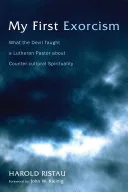
My First Exorcism
 79
79

My First Exorcism
Harold Ristau’s *My First Exorcism* offers a sober, grounded account of a subject often shrouded in sensationalism. Ristau, writing from the perspective of an ordained minister, avoids lurid detail in favor of theological reflection and pastoral wisdom. His strength lies in presenting exorcism not as a dramatic spectacle, but as a serious, albeit challenging, aspect of spiritual ministry. The book is most compelling when Ristau discusses the discernment process, differentiating between psychological distress and what he identifies as spiritual attack. A limitation, however, is the work's primary focus on a specific Christian theological framework, which may leave readers from other traditions seeking broader comparative analysis. The passage discussing the "dark realm" as an active spiritual reality, rather than a mere metaphor, is particularly arresting. Ultimately, Ristau provides a valuable, if narrowly focused, theological perspective on spiritual warfare.
📝 Description
79
Harold Ristau's 2016 book, My First Exorcism, addresses demonic possession from a Christian theological perspective.
First published in 2016, Harold Ristau's My First Exorcism examines demonic possession, a subject often dismissed as superstition. Ristau, an ordained minister, writes from a pastoral and theological viewpoint, drawing on his personal experiences. The book aims to clarify spiritual warfare and the practice of exorcism within a Christian framework, distinguishing it from psychological issues.
While clergy and theology students form the primary audience, the reflections are also useful for laypeople concerned with spiritual warfare, deliverance, and the influence of malevolent spiritual forces. It offers guidance on the theological basis and practical aspects of spiritual discernment and intervention within a religious context. Those interested in the history of exorcism or comparative religion may also find it valuable.
Ristau's work contrasts with the scientific community's tendency to interpret possession experiences as dissociative disorders. It engages with historical Christian thought on demonology and exorcism, reaching back to early church writings and medieval texts. However, Ristau seeks to connect these traditions with contemporary pastoral needs, placing his work within modern discussions on spiritual warfare.
This book situates itself within the long Christian tradition of engaging with spiritual warfare and demonic influence. It implicitly references centuries of theological discourse, from early church fathers to later medieval texts. Ristau's approach, however, is framed by contemporary pastoral concerns and modern debates within Christian theology, particularly concerning spiritual discernment and intervention. It operates on the premise of a tangible spiritual reality beyond psychological interpretation, a concept explored across various esoteric and religious traditions throughout history.
💡 Why Read This Book?
• Gain practical theological insight into the discernment of spiritual oppression, as Ristau details specific life lessons derived from his experiences with exorcism. • Understand the theological framework for spiritual warfare within Christianity, moving beyond sensationalized portrayals to a more grounded pastoral approach. • Explore the concept of the "dark realm" as presented by Ristau, offering a Christian perspective on malevolent spiritual forces and their perceived influence.
⭐ Reader Reviews
Honest opinions from readers who have explored this book.
❓ Frequently Asked Questions
What is the primary focus of Harold Ristau's "My First Exorcism"?
The book focuses on the theological and pastoral aspects of exorcism from a Christian perspective, exploring the nature of demonic activity and Ristau's personal experiences in ministering to those he believed were afflicted.
Who is the intended audience for "My First Exorcism"?
While primarily intended for clergy and theological students, the book is also suitable for lay individuals interested in spiritual warfare, discernment, and the Christian understanding of demonic possession.
How does Ristau differentiate between possession and mental illness?
Ristau approaches the subject by drawing from his own experiences, attempting to discern spiritual affliction from conditions recognized by the scientific community as mental disorders, emphasizing a spiritual interpretation.
When was "My First Exorcism" originally published?
The book was first published on April 14, 2016.
What kind of wisdom does Ristau share from his encounters?
Ristau shares spiritual applications and religious wisdom gained from his personal encounters with what he identified as the "dark realm," offering guidance for both ministers and those seeking spiritual understanding.
Does the book offer a comparative religious perspective on exorcism?
The book centers on a Christian theological framework and Ristau's personal experiences within that context, rather than offering a broad comparative religious analysis of exorcism practices across different faiths.
🔮 Key Themes & Symbolism
Spiritual Warfare Discernment
Ristau's work centers on the critical process of discerning between genuine spiritual oppression and psychological ailments. He outlines how clergy can approach individuals exhibiting distress, emphasizing prayer, scripture, and theological grounding as primary tools. This theme underscores the active nature of spiritual conflict as perceived within certain Christian traditions, providing a pastoral framework for intervention and deliverance.
The Nature of the Dark Realm
The book posits the existence of a "dark realm" not as a metaphor but as a tangible spiritual reality inhabited by malevolent forces. Ristau draws upon his personal encounters to describe the perceived influence and activity of these entities. This perspective invites readers to consider a spiritual dimension to human suffering and struggle, informed by his specific religious experiences and interpretations.
Pastoral Application of Exorcism
Beyond theoretical discussion, Ristau focuses on the practical application of exorcism within a pastoral context. He shares life lessons and spiritual wisdom derived from his ministry, aiming to equip clergy with a better understanding of their role in spiritual deliverance. The emphasis is on responsible, faith-based intervention rather than sensationalism.
Faith and Deliverance
Central to Ristau's account is the role of faith, prayer, and religious wisdom in confronting and overcoming spiritual afflictions. The book implicitly argues that a strong spiritual foundation is crucial for both the afflicted and the minister. This theme highlights the power attributed to divine intervention within the Christian framework for achieving spiritual freedom and well-being.
💬 Memorable Quotes
Direct passages from the work, attributed to the author.
“What the scientific community dismisses as a mental disorder, Christians have often labeled "demon possession."”
— This opening statement frames the central tension Ristau addresses: the conflict between empirical, scientific explanations for certain human experiences and traditional religious interpretations, particularly within Christianity.
“Ristau explores the nature and meaning of demonic activity by drawing from his own experiences with exorcism.”
— This highlights the autobiographical and experiential basis of Ristau's theological reflections, emphasizing that his insights are rooted in practical engagement with the subject matter rather than purely theoretical study.
“Ristau shares life lessons, spiritual applications, and religious wisdom from his personal encounters with the dark realm.”
— This indicates the book's intent to offer practical guidance and spiritual enrichment derived from the author's direct involvement in what he terms "the dark realm," suggesting valuable takeaways for readers.
“Primarily intended for clergy, his reflections offer a springboard into...”
— This clarifies the intended primary audience while suggesting the book's purpose is to stimulate further thought and practice among religious leaders concerning spiritual matters.
“While classifications may offer limited help in explanation...”
— This implies that conventional diagnostic categories, whether scientific or religious, are insufficient on their own to fully explain or address the phenomena Ristau discusses, necessitating a deeper exploration.
🌙 Esoteric Significance
Tradition
While rooted in a specific Christian pastoral tradition, Ristau's work touches upon themes of spiritual warfare and unseen realms that resonate with broader esoteric interests. It departs from purely dogmatic approaches by emphasizing personal experience and practical application, aligning with the experiential emphasis found in many esoteric paths. The focus on discerning spiritual influences and engaging with malevolent forces echoes concerns present in various occult traditions, though Ristau frames it strictly within a Christian theological context.
Symbolism
The "dark realm" itself functions as a potent symbol in Ristau's work, representing the perceived spiritual opposition to divine will and human well-being. While not explicitly studying codified esoteric symbolism, the concept implies a spiritual topography where distinct forces operate. The act of exorcism, as described, symbolizes the reclaiming of spiritual territory and the restoration of divine order over perceived chaos or corruption.
Modern Relevance
Contemporary interest in spiritual warfare, deliverance ministries, and the discernment of spiritual influences within certain evangelical and charismatic Christian circles finds a direct echo in Ristau's work. Thinkers and practitioners focusing on spiritual disciplines, prayer, and the perceived reality of demonic opposition may draw upon his practical insights. It also speaks to a broader cultural fascination with the paranormal and spiritual realities that exists outside traditional religious structures.
👥 Who Should Read This Book
• Clergy and theological students seeking to understand the pastoral and theological dimensions of spiritual warfare and deliverance within a Christian framework. • Individuals interested in comparative religion or the history of religious practices, particularly concerning exorcism and the interpretation of spiritual affliction. • Laypersons within Christian communities who are grappling with questions about demonic activity, spiritual discernment, and faith-based responses to perceived malevolent forces.
📜 Historical Context
Published in 2016, Harold Ristau's *My First Exorcism* enters a cultural landscape where the discourse on "possession" is largely dominated by psychological explanations, such as dissociative identity disorder, as championed by figures like the American Psychiatric Association. This contrasts sharply with historical Christian views and practices concerning demonology and exorcism, which have a lineage stretching back to early church councils and medieval theological texts. While the Catholic Church maintained its Rite of Exorcism, its public engagement waned significantly during the Enlightenment and subsequent periods of scientific rationalism. Ristau's work can be seen as part of a contemporary resurgence of interest in spiritual warfare and deliverance ministries within various Protestant denominations, seeking to reclaim or re-emphasize these aspects of faith. He implicitly engages with the ongoing dialogue between religious belief and scientific understanding, offering a pastoral perspective distinct from both the purely clinical and the highly sensationalized portrayals common in popular culture.
📔 Journal Prompts
The nature of demonic activity as presented by Ristau.
Spiritual applications derived from encounters with the "dark realm."
The process of discerning spiritual affliction versus mental disorder.
Personal reflections on faith as a tool against perceived spiritual opposition.
The role of clergy in spiritual warfare and deliverance.
🗂️ Glossary
Demonic Possession
A state where an individual is believed to be under the control or influence of a malevolent spiritual entity, interpreted within a Christian theological framework.
Spiritual Warfare
The concept of conflict between spiritual forces of good and evil, often understood as a struggle involving prayer, faith, and divine intervention.
The Dark Realm
Ristau's term for the perceived spiritual dimension inhabited by malevolent entities, from which spiritual opposition or affliction may originate.
Discernment
The ability to distinguish between spiritual influences, particularly in identifying potential demonic activity versus psychological conditions.
Deliverance Ministry
A form of pastoral care focused on freeing individuals from spiritual oppression or demonic influence through prayer and religious rites.
Clergy
Ordained ministers or religious officials authorized to conduct services and provide spiritual guidance within a religious community.
Spiritual Applications
Practical uses or lessons derived from spiritual experiences or theological understanding, intended for personal growth or ministry.