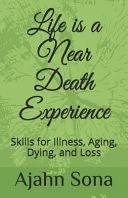
Life Is a Near Death Experience
 82
82

Life Is a Near Death Experience
Ajahn Sona’s Life Is a Near Death Experience offers a bracingly direct, yet compassionate, manual for confronting physical illness and existential dread. Her opening gambit, "Don't worry, everything is out of control," is not a platitude but a philosophical anchor, designed to dismantle the very engine of anxiety. The book’s strength lies in its unflinching honesty and its grounding in Buddhist principles, particularly the concept of impermanence, presented without jargon. Sona’s personal experience, hinted at throughout, lends authenticity to her advice. However, the text occasionally feels so distilled that it might leave those completely new to Buddhist thought wanting more practical, step-by-step guidance on cultivating the described equanimity. A passage discussing the mind’s tendency to create narratives around suffering, thereby compounding it, is particularly potent. Ultimately, this is a valuable, albeit austere, companion for those seeking a profound shift in perspective when facing physical hardship.
📝 Description
82
Ajahn Sona's 2021 book reframes suffering during illness by challenging mortality anxieties.
Life Is a Near Death Experience puts forth a different way to understand human suffering, especially when illness strikes. Ajahn Sona, a Buddhist nun, draws on her own experiences and Buddhist thought to provide practical advice. The book questions common fears about death and physical decline. It suggests that changing how we perceive these states can greatly reduce the emotional pain associated with them.
The work encourages accepting the present moment and recognizing that everything, including our health, is temporary. It is aimed at people dealing with illness, ongoing pain, or the deep worry that serious diagnoses can bring. Readers looking for an approach to suffering that moves beyond simple good or bad outcomes will find it useful. Those interested in Buddhist psychology, mindfulness, and how spiritual practice connects with physical health will gain fresh perspectives.
Published in 2021, this book enters a renewed Western interest in contemplative practices applied to health. Ajahn Sona's teachings align with Mahayana Buddhist principles, particularly concepts of non-attachment. Her emphasis on direct experience and the nature of reality can be seen in dialogue with traditions like Zen Buddhism. The approach implicitly contrasts with Western medical models that often prioritize disease eradication over the subjective experience of being unwell.
💡 Why Read This Book?
• Learn a practical framework for reducing emotional suffering during illness by understanding Ajahn Sona's concept of 'everything is out of control,' which reframes perceived helplessness into a path for liberation from anxiety. • Discover mindful responses to physical vulnerability, drawing from Buddhist psychology to cultivate equanimity and peace, as discussed in the chapters addressing illness. • Gain a new perspective on mortality, viewing challenging life events not as aberrations but as opportunities for deeper insight, mirroring the book's central metaphor of life as a 'near death experience'.
⭐ Reader Reviews
Honest opinions from readers who have explored this book.
❓ Frequently Asked Questions
What is the core message of Ajahn Sona's 'Life Is a Near Death Experience'?
The core message is that accepting the inherent uncontrollability of existence, particularly during illness, can liberate individuals from worry and fear, leading to greater peace.
How does the book relate illness to a 'near death experience'?
It frames illness as a profound, life-altering event that, much like a near-death experience, can strip away superficial concerns and bring ultimate truths into sharp focus.
Who is Ajahn Sona?
Ajahn Sona is a Buddhist nun and respected meditation teacher known for her clear and direct teachings, particularly on applying Buddhist principles to everyday life and suffering.
What are the 'skillful ways' mentioned in the book for dealing with illness?
These 'skillful ways' involve cultivating mindfulness, acceptance of impermanence, and non-attachment to outcomes, thereby reducing the emotional suffering that accompanies physical ailments.
Is this book a guide to Buddhist meditation?
While rooted in Buddhist philosophy and mindfulness, the book focuses more on the philosophical and psychological approach to suffering during illness rather than detailed meditation instruction.
When was 'Life Is a Near Death Experience' first published?
The book was first published on May 14, 2021, making it a contemporary exploration of these themes.
🔮 Key Themes & Symbolism
Acceptance of Impermanence
The work emphasizes that all phenomena, including the body and its states of health, are impermanent. This understanding, central to Buddhist thought, is presented not as a passive resignation but as an active recognition that diminishes the sting of suffering. By acknowledging that illness, like all conditions, will eventually change or pass, individuals can loosen their grip on fear and attachment, fostering a more peaceful engagement with their present reality.
The Illusion of Control
A recurring theme is the futility of resisting the uncontrollable nature of existence. Sona suggests that much suffering arises from the mind's desperate attempts to maintain control over situations that are inherently beyond our command. The phrase 'everything is out of control' serves as a potent reminder to release this struggle, freeing up mental and emotional energy to deal with reality as it is, rather than as we wish it to be.
Illness as a Spiritual Catalyst
Rather than viewing illness solely as a physical affliction to be overcome, the book proposes it can be a profound opportunity for spiritual growth. The 'near death experience' metaphor highlights how such crises can clarify priorities, reveal deeper truths about existence, and motivate a more authentic and less fear-driven way of living. It encourages seeing vulnerability not as a weakness, but as a gateway to essential insights.
Reducing Emotional Suffering
The primary focus is on alleviating the mental and emotional distress that often accompanies physical illness. Sona offers practical, mindful approaches to reacting to challenging circumstances. By shifting the focus from the external event (illness) to the internal response (fear, anxiety, resistance), the book provides tools to reduce suffering, even when the physical condition remains unchanged.
💬 Memorable Quotes
Direct passages from the work, attributed to the author.
“'Don't worry, everything is out of control.'”
— This foundational statement challenges the human tendency to strive for control, suggesting that true peace comes from recognizing and accepting the inherent unpredictability of life and external circumstances.
“Life is a Near Death Experience focuses primarily on illness and a handful of skillful ways to reduce the emotional suffering that can occur in its presence.”
— This highlights the book's practical application, aiming to provide actionable strategies derived from Buddhist principles to manage the psychological impact of physical ailments.
“Once you really and truly get that, you will stop worrying, you will stop being fearful, because those negative feelings won't change the existential situation we are all in.”
— This emphasizes the liberating power of radical acceptance. By internalizing the idea of uncontrollability, the mind can cease its anxious efforts, thereby diminishing fear and worry associated with unavoidable realities.
“In these pages you will learn healthy, mindful choices about how to react to illness, and the prospective...”
— This points to the book's instructional nature, promising guidance on making conscious, aware decisions about one's internal response to physical challenges, aiming for well-being beyond mere physical recovery.
💡 Key Ideas
Editorial paraphrase of the work's core concepts — not direct quotes.
The work explores skillful ways to reduce the emotional suffering that can occur in its presence.
This paraphrased concept underscores the book's therapeutic aim: to equip readers with effective methods, rooted in mindful awareness, to lessen the psychological burden of physical sickness.
🌙 Esoteric Significance
Tradition
The work is deeply rooted in the Mahayana Buddhist tradition, particularly its emphasis on emptiness (sunyata) and the nature of suffering (dukkha). While not explicitly labeled 'esoteric' within Buddhism, its focus on direct realization and the transformation of consciousness aligns with contemplative practices often considered 'inner paths'. Sona's approach departs from ritualistic or devotional forms, focusing instead on philosophical inquiry and mindful awareness as the primary means for liberation from suffering.
Symbolism
The central metaphor of 'Life is a Near Death Experience' functions symbolically, representing a profound shift in perspective. A 'near death experience' often strips away worldly concerns, bringing ultimate realities into sharp focus—a state Sona advocates cultivating through mindful practice even without a literal brush with death. The concept of 'control' itself becomes a symbol for the ego's illusionary grip on reality, the release of which symbolizes spiritual freedom.
Modern Relevance
Sona's teachings resonate with contemporary mindfulness-based stress reduction (MBSR) programs and secular Buddhist movements that adapt ancient wisdom for modern psychological well-being. Thinkers and practitioners in fields like somatic experiencing and transpersonal psychology, who explore the mind-body connection and altered states of consciousness, find value in her direct approach to suffering and acceptance. Her work provides a philosophical counterpoint to technologically driven health solutions, emphasizing internal resources.
👥 Who Should Read This Book
• Individuals experiencing chronic illness or significant health challenges: This book offers a framework for reducing the psychological burden of sickness by reframing one's relationship to physical vulnerability and impermanence. • Students of Buddhist philosophy and psychology: Readers interested in applying core concepts like non-attachment, impermanence, and the nature of suffering to real-life crises will find practical, non-dogmatic guidance. • Those seeking to overcome anxiety and fear: Anyone grappling with existential dread or fear of uncontrollable circumstances will benefit from Ajahn Sona's perspective on liberation through acceptance.
📜 Historical Context
Published in May 2021, Ajahn Sona's 'Life Is a Near Death Experience' arrived during a period of heightened global awareness of mortality and vulnerability, amplified by the COVID-19 pandemic. While Buddhist teachings on suffering and impermanence have a long history, Sona's work engages contemporary Western audiences seeking practical spiritual tools outside traditional religious frameworks. It contributes to a growing body of literature blending mindfulness, psychology, and existential philosophy, often drawing from Mahayana Buddhist traditions. Unlike purely secular self-help books, Sona's text directly addresses the limitations of ego-driven control and the profound peace found in non-attachment, concepts central to Madhyamaka philosophy. The work implicitly contrasts with the often aggressive, control-oriented approaches found in some Western medical paradigms, offering instead a path of internal acceptance and equanimity.
📔 Journal Prompts
The existential situation of 'everything is out of control': How does this concept challenge your usual coping mechanisms?
Reflecting on illness as a 'near death experience': What superficial concerns does it strip away for you?
Mindful reactions to physical vulnerability: Identify one specific physical sensation and practice observing it without judgment.
The nature of fear: How does the desire for control amplify your fear of illness or loss?
Skillful ways of responding: What is one small, mindful choice you can make today to reduce emotional suffering?
🗂️ Glossary
Dukkha
A fundamental concept in Buddhism, often translated as 'suffering,' 'stress,' or 'dissatisfaction.' It encompasses the inherent unsatisfactoriness of conditioned existence, including pain, loss, and the anxiety arising from impermanence.
Impermanence (Anicca)
The Buddhist doctrine stating that all conditioned phenomena are in a constant state of flux and change. Recognizing impermanence helps to loosen attachment and reduce suffering caused by clinging to transient states.
Non-attachment
The practice of letting go of craving and aversion, understanding that attachment to outcomes, possessions, or states of being leads to suffering. It is not indifference, but a balanced perspective free from clinging.
Equanimity
A state of mental balance and composure, especially in difficult situations. It involves maintaining a stable and peaceful mind, free from agitation, regardless of external circumstances.
Skillful Means (Upaya)
In Buddhism, methods or techniques used to help sentient beings achieve enlightenment. These are practical approaches tailored to individual needs and circumstances, aimed at alleviating suffering and fostering wisdom.
Existential Situation
Refers to the fundamental conditions of human existence, such as freedom, responsibility, mortality, and the search for meaning, particularly when confronted with life's inherent uncertainties and limitations.
Mindfulness
A mental state achieved by focusing one's awareness on the present moment, while calmly acknowledging and accepting one's feelings, thoughts, and bodily sensations. It is a key practice for reducing suffering.
This book appears in 1 collection
🔮 Readers Also Liked
Browse all →









From the “Mindfulness” Collection
View all →







More Free Occult Philosophy Books
View all →