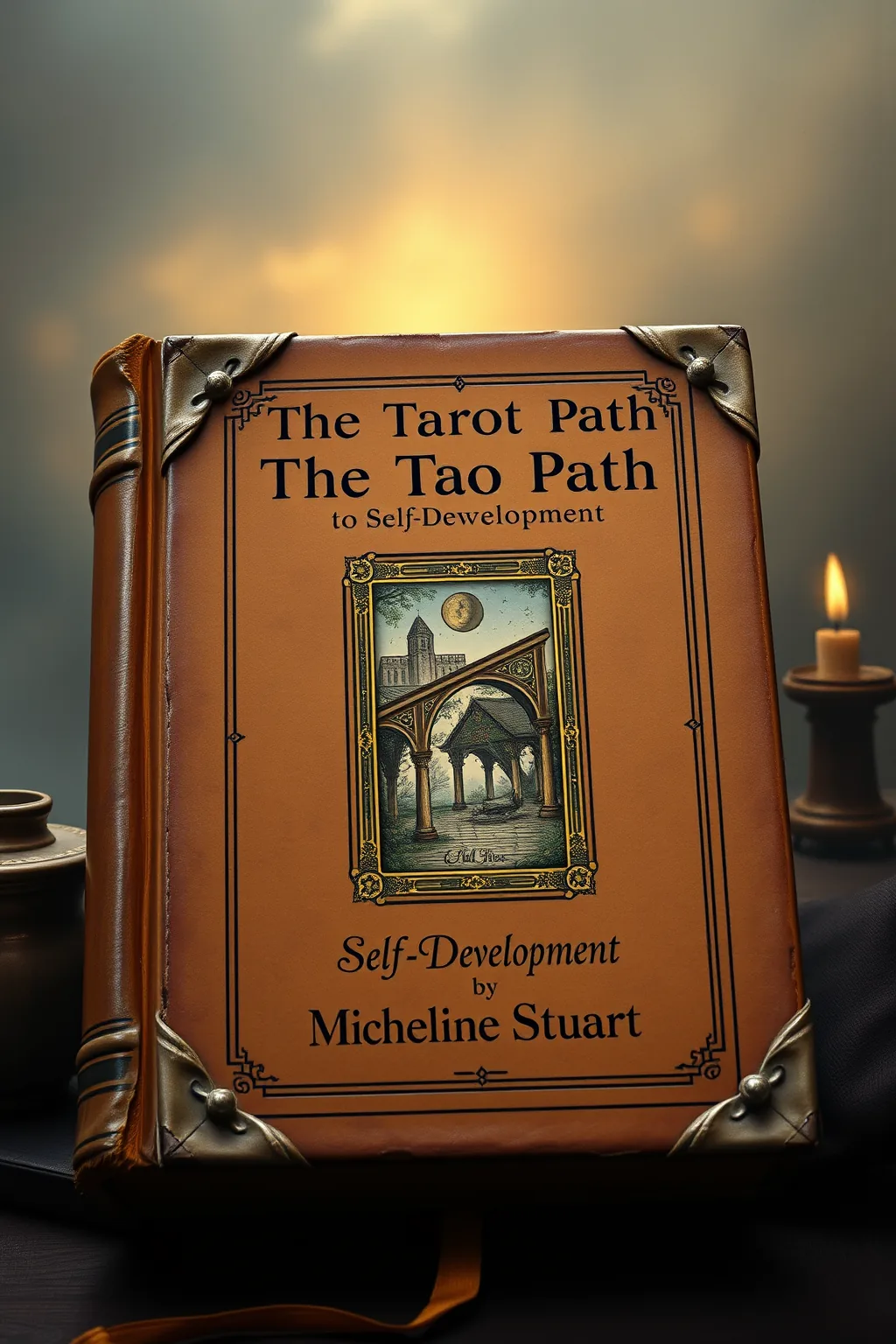
The tarot path to self development
 61
61

The tarot path to self development



Isolde Whitaker, Sacred Texts Editor, hails 'The Tarot Path to Self-Development' as a luminous guide for the serious seeker. Micheline Stuart's profound understanding of Tarot symbolism, interwoven with the profound insights of Advaita Vedanta, offers a truly unique perspective. This is not a book for casual diviners, but for those who yearn to explore the deeper philosophical and spiritual underpinnings of the Major Arcana. Stuart's eloquent prose and insightful interpretations unlock the potential for profound self-realization, making this an indispensable addition to any occult or metaphysical library.
📝 Description
61
Micheline Stuart wrote 'The Tarot Path to Self-Development' to show how Tarot cards symbolize spiritual evolution.
Micheline Stuart's 'The Tarot Path to Self-Development' examines the Tarot beyond simple fortune telling. Stuart interprets the Major Arcana as symbols for personal and spiritual growth. She connects these symbols to concepts of spiritual awakening and self understanding. The book uses the Tarot as a way to reflect inner potential and guide spiritual development. It aims to help readers achieve a clearer sense of purpose in their spiritual lives.
This work is for individuals interested in combining esoteric studies with their personal development. It suggests a way to achieve conscious awareness and a stronger link to universal consciousness. The author's approach treats the Tarot as a tool for inner reflection and understanding the self. It is intended for those who seek to deepen their connection to spiritual principles through symbolic interpretation.
This book places the Tarot within a tradition that views symbolic systems as keys to spiritual understanding. By drawing on Vedanta and Advaita Vedanta, it frames the Tarot not as a divinatory tool, but as a map of consciousness. This perspective aligns with esoteric thought that sees archetypes within systems like the Tarot as reflections of universal principles and the structure of the human psyche. The goal is to use these archetypes to understand the underlying reality of existence, as described in non-dualistic philosophies.
💡 Why Read This Book?
Uncover the profound spiritual wisdom of the Tarot beyond simple prediction. 'The Tarot Path to Self-Development' offers a unique lens, integrating Advaita Vedanta and the concept of the Absolute with the Major Arcana's archetypal journey. Ideal for seekers of truth, students of esoteric philosophy, and practitioners aiming for deeper self-awareness and spiritual growth.
⭐ Reader Reviews
Honest opinions from readers who have explored this book.
❓ Frequently Asked Questions
How does this book connect Tarot to self-development?
It interprets Tarot cards, particularly the Major Arcana, as symbolic representations of spiritual archetypes and stages of inner evolution, guiding personal growth and self-awareness.
What is Advaita Vedanta, and how is it relevant here?
Advaita Vedanta is a non-dualistic school of Hindu philosophy emphasizing the oneness of the individual soul (Atman) and the universal consciousness (Brahman). It provides a philosophical framework for understanding the 'Absolute' within the Tarot's journey.
Is this book suitable for beginners in Tarot?
While it offers profound insights, beginners may find the philosophical depth challenging. It's best suited for those with some foundational Tarot knowledge or a strong interest in spiritual philosophy.
Does the book offer practical exercises for self-development?
Yes, the book is designed to guide the reader through a personal journey, implicitly encouraging introspection and the application of Tarot symbolism to one's life for growth and understanding.
What makes this approach to Tarot unique?
Its unique strength lies in its synthesis of Western esoteric Tarot with Eastern Advaita philosophy, viewing the cards as a map to realizing the divine within, rather than solely for predictive purposes.
🔮 Key Themes & Symbolism
The Major Arcana as Archetypal Journeys
This theme explores how the 22 Major Arcana cards serve as profound metaphors for the soul's journey through life's challenges and triumphs. Each card represents a distinct stage of spiritual evolution, from the Fool's innocent leap into the unknown to the World's ultimate integration and enlightenment. Stuart guides readers to recognize these archetypes within their own experiences, fostering self-understanding and providing a roadmap for personal transformation.
Advaita Vedanta and the Absolute
The book intricately combines the principles of Advaita Vedanta, particularly the concept of the non-dualistic Absolute (Brahman), into the Tarot's symbolism. This philosophical integration reveals the Tarot not as a system of external forces, but as a mirror reflecting the inherent divinity and oneness of all existence. Readers are encouraged to perceive the 'Absolute' within themselves and the universe, leading to a deeper sense of peace and unity.
Spiritual Life and Self-Realization
Fundamentally, , 'The Tarot Path to Self-Development' is a treatise on conscious spiritual living. It posits that true self-realization is achieved through understanding one's true nature, free from illusion and egoic identification. The Tarot acts as a sacred guide, offering insights and practices that facilitate this awakening, empowering individuals to navigate their spiritual path with wisdom, intention, and a profound connection to their inner being.
💬 Memorable Quotes
Direct passages from the work, attributed to the author.
“Each card is a step on the path to the Absolute.”
— This highlights the spiritual journey aspect, linking the Tarot's symbolic progression to the Advaita concept of ultimate reality.
“Know thyself, and you know the universe.”
— A classic Advaita principle, emphasized here to show how inner understanding leads to cosmic awareness through Tarot study.
“Wisdom is not acquired, but realized.”
— This emphasizes the experiential nature of spiritual development, suggesting that true insight comes from within, aided by the Tarot.
💡 Key Ideas
Editorial paraphrase of the work's core concepts — not direct quotes.
The Tarot is a mirror to the soul.
This quote expresses the book's central thesis: the Tarot's primary function is introspection and self-discovery, reflecting our inner landscape.
The Fool's leap is the courage to begin.
This quote speaks to the initial stages of spiritual growth, emphasizing the importance of faith and beginning the unknown path.
🌙 Esoteric Significance
Tradition
This work draws deeply from the Western esoteric tradition, particularly its use of the Tarot as a symbolic map for spiritual development. It also significantly integrates the philosophical underpinnings of Advaita Vedanta, a prominent school of Hindu philosophy focused on non-dualism and the realization of the Absolute. This fusion creates a unique bridge between two rich spiritual lineages.
Symbolism
The core symbolism revolves around the Major Arcana, viewed as archetypal representations of the soul's journey. Stuart unpacks the rich imagery of each card, connecting them to concepts of consciousness, spiritual evolution, and the ultimate unity of existence as taught in Advaita. The symbolism transcends mere prediction, becoming a language for inner exploration.
Modern Relevance
In an age often characterized by fragmentation and a search for meaning, 'The Tarot Path to Self-Development' offers a profound and integrated approach to personal growth. Its emphasis on self-realization, the inherent divinity within, and the interconnectedness of all things provides a timeless antidote to existential unease. The book remains relevant for those seeking a spiritual framework that fosters wisdom and inner peace.
👥 Who Should Read This Book
This book is ideally suited for the dedicated spiritual seeker ready to delve beyond superficial interpretations of the Tarot. Tarot practitioners looking to deepen their understanding of the Major Arcana's philosophical and spiritual dimensions will find invaluable insights. Scholars of esoteric traditions and comparative religion will appreciate its unique synthesis of Western and Eastern thought. Beginners with a strong inclination towards metaphysics and self-inquiry may also benefit, provided they approach it with an open and studious mind.
📜 Historical Context
Published in an era when Western esoteric traditions were experiencing a resurgence of interest, 'The Tarot Path to Self-Development' emerged as a significant contribution to the evolving discourse on spiritual growth and divination. The mid-to-late 20th century saw a growing fascination with Eastern philosophies like Vedanta and a desire to integrate them with Western occult practices. Micheline Stuart's work stands as a proof of this cross-pollination, offering a sophisticated synthesis that resonated with seekers looking for deeper meaning beyond superficial interpretations. The book reflects a broader cultural movement towards introspection and personal empowerment through ancient wisdom.
📔 Journal Prompts
Reflect on the 'Fool's Journey' within your own life. Where have you taken leaps of faith, and what were the outcomes?
How does the concept of 'The Absolute' resonate with your current understanding of reality and your place within it?
Choose a Major Arcana card that you feel drawn to today. What aspects of its symbolism speak to your current inner state or spiritual path?
Consider the lessons of 'The Hermit' or 'The High Priestess.' How can solitude and inner wisdom guide your self-development?
In what ways can you apply the principle of non-duality (Advaita) to dissolve perceived separations in your daily life?
🗂️ Glossary
The Absolute
In Advaita Vedanta, the ultimate, unchanging reality that is the sole existence; often synonymous with Brahman, the supreme consciousness.
Advaita Vedanta
A non-dualistic school of Hindu philosophy asserting the oneness of the individual soul (Atman) and the supreme reality (Brahman).
Major Arcana
The 22 trump cards of a Tarot deck, representing significant life lessons, archetypal energies, and spiritual milestones.
Archetype
A universal, inherited pattern of thought or imagery derived from the experiences of the human race, often appearing in myths and symbolic representations like the Tarot.
Self-Realization
The ultimate spiritual attainment of recognizing one's true nature as divine or identical with the Absolute, transcending egoic limitations.
This book appears in 3 collections
🔮 Readers Also Liked
Browse all →







More by Micheline Stuart
All books →
From the “Tarot” Collection
View all →







More Free Divination & Tarot Books
View all →