Elixir
 79
79

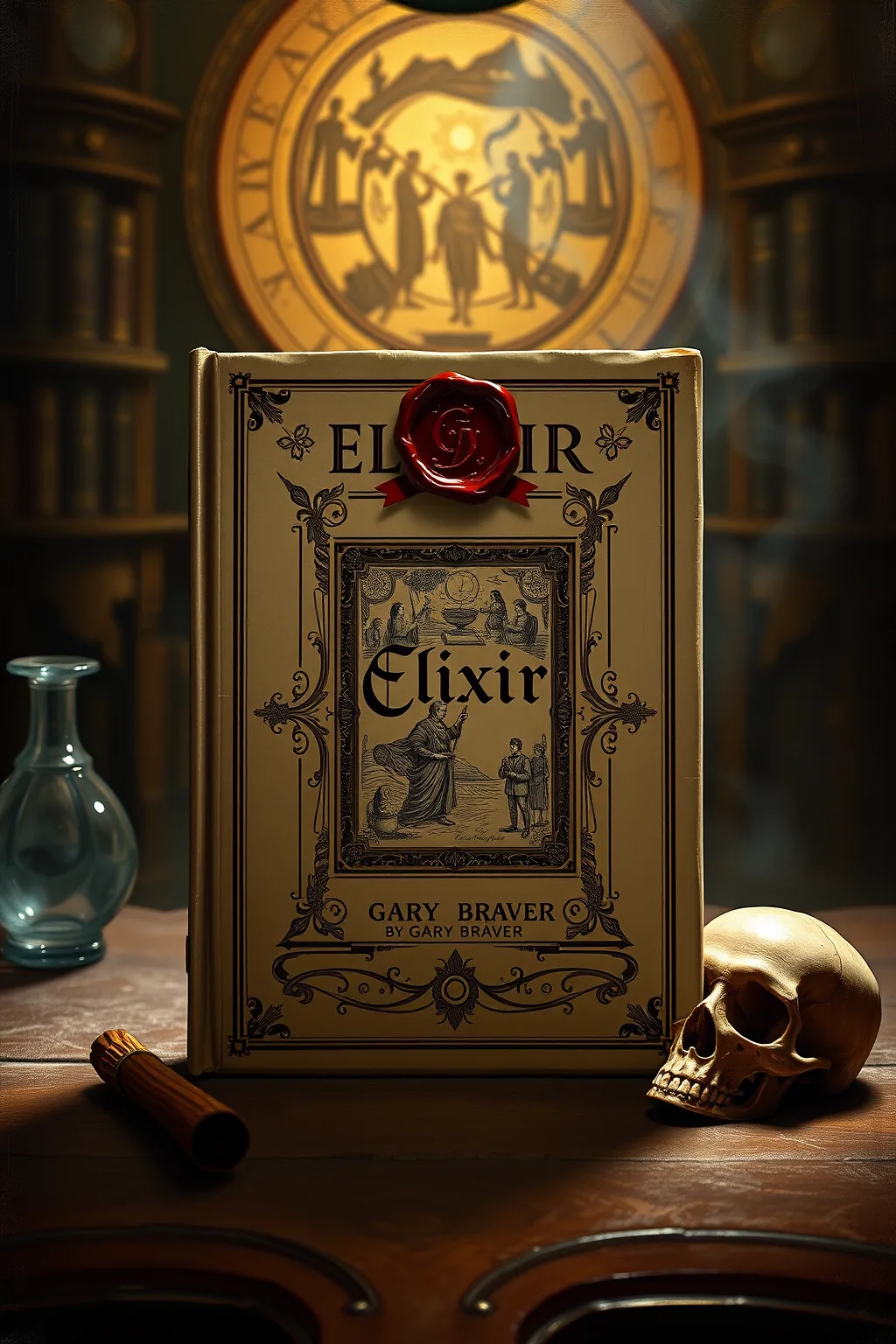
Elixir
Gary Braver’s Elixir, from its 2000 debut, attempts to bottle the potent, often elusive, essence of alchemical pursuit. The narrative centers on the quest for a transformative substance, moving beyond mere metallurgy to explore profound personal and spiritual change. A notable strength lies in its ability to ground abstract alchemical principles within a narrative framework, making the arcane accessible without oversimplifying it. However, the pacing occasionally falters, particularly in the mid-section, where the intricate plotting risks overshadowing the thematic exploration. The depiction of the protagonist's internal struggle in Chapter 7, grappling with the ethical weight of achieving the titular elixir, provides a compelling moment of character depth. Despite its narrative complexities, Elixir offers a satisfying fictional engagement with age-old questions of transformation and hidden knowledge. It provides a thoughtful, if sometimes dense, fictional exploration of the alchemist's dream.
📝 Description
79
Gary Braver's 2000 novel "Elixir" uses alchemy as a fictional framework for spiritual transformation.
Published in 2000, Gary Braver's novel "Elixir" is not a scholarly text but a fictional narrative that engages with alchemy, transformation, and the search for hidden knowledge. The story centers on the possibility of achieving ultimate states of being or material change through occult methods. It draws on the historical tradition of texts that explored the transmutation of base metals into gold, extending this to the personal and spiritual refinement of the individual.
This book will attract readers who enjoy seeing esoteric ideas adapted into fictional stories. Those who like a blend of historical mystery and speculative philosophical questions will find it engaging. It is especially suited for people interested in the connections between science, spirituality, and humanity's deep desire to understand life's fundamental questions. The premise appeals to readers looking for an imaginative take on ancient alchemical concepts within a modern or near-modern setting.
Elixir emerged during a time of growing public interest in esoteric traditions, amplified by the internet's accessibility to diverse texts. The late 20th and early 21st centuries saw a rise in popular occultism and a renewed look at historical groups like the Rosicrucians. Braver's novel fits within this cultural moment, using a fictional approach to examine persistent questions about existence and change, much like earlier literary works by authors such as Italo Calvino or Umberto Eco.
💡 Why Read This Book?
• You will gain a fictional perspective on the alchemical concept of the Philosopher's Stone, understanding its symbolic representation of spiritual purification and enlightenment as explored in the narrative's central quest. • You will learn how the pursuit of hidden knowledge, as depicted in the book’s plot concerning ancient secrets, can impact individual morality and societal dynamics, offering a unique narrative insight into ethical dilemmas. • You will feel the imaginative power of blending historical esoteric traditions with contemporary storytelling, specifically how the year 2000 publication context influences the portrayal of timeless alchemical aspirations.
⭐ Reader Reviews
Honest opinions from readers who have explored this book.
❓ Frequently Asked Questions
When was Elixir first published?
Elixir was first published in the year 2000, placing it at the cusp of a new millennium and a period of renewed interest in esoteric and philosophical themes.
What is the central theme explored in Gary Braver's Elixir?
The central theme revolves around the alchemical quest for transformation, symbolized by the "elixir," which encompasses not only the transmutation of matter but also spiritual and personal refinement.
Does Elixir focus on historical alchemy or a fictional interpretation?
While drawing heavily on historical alchemical concepts, Elixir presents a fictional narrative that interprets and explores these ideas through its characters and plot, rather than being a historical account.
Who is Gary Braver, the author of Elixir?
Gary Braver is the author of Elixir, a novel first published in 2000. Information about his other works or background can provide further context for this book's themes.
What kind of reader would enjoy Elixir?
Readers interested in speculative fiction that engages with philosophical and esoteric concepts, particularly alchemy, and who appreciate narratives that explore hidden knowledge and personal transformation, would likely enjoy Elixir.
Where does Elixir fit within the broader genre of esoteric literature?
Elixir fits within esoteric literature by using the framework of alchemy to explore themes of transformation and hidden wisdom, offering a fictional narrative that resonates with the symbolic language of these traditions.
🔮 Key Themes & Symbolism
The Nature of Transformation
Elixir posits that transformation is not merely a physical process but a deeply spiritual and psychological one. The "elixir" serves as a potent symbol for achieving an elevated state of being, whether through the transmutation of base metals or the refinement of the human spirit. The narrative explores the arduous path, the sacrifices required, and the potential dangers inherent in seeking such radical change, reflecting ancient alchemical philosophies that viewed the Great Work as a mirror to the soul's own purification.
Pursuit of Hidden Knowledge
The book studies humanity's perennial fascination with secrets and forbidden knowledge. It examines the lengths to which individuals will go to uncover what is hidden, suggesting that such quests can lead to profound self-discovery or utter ruin. This theme speaks to the historical mystique surrounding alchemical texts, often encoded with symbolic language and guarded by esoteric societies, highlighting the tension between the desire to know and the responsibility that comes with it.
Ethical Dimensions of Power
Central to the narrative is the ethical quandary presented by the potential attainment of ultimate power or knowledge, embodied by the elixir. The work probes whether humanity is truly equipped to handle such capabilities, questioning the morality of seeking to control fundamental aspects of existence. This exploration aligns with esoteric traditions that often emphasize the importance of ethical development alongside spiritual or magical advancement, warning against the misuse of power.
Symbolism of Alchemy
Braver employs the rich symbolic language of alchemy not just as a plot device but as a philosophical underpinning. Concepts like the Prima Materia, the four elements, and the stages of calcination, dissolution, separation, and coagulation are likely woven into the fabric of the story, representing the stages of personal growth and spiritual realization. The book invites readers to consider these ancient metaphors as keys to understanding deeper truths about life, death, and rebirth.
💬 Memorable Quotes
Direct passages from the work, attributed to the author.
“The Great Work begins not in the crucible, but within the heart.”
— This concept highlights the alchemical principle that true transformation, the 'Great Work,' is primarily an inner journey of spiritual and psychological refinement, rather than solely an external manipulation of matter.
“Gold is but the shadow of a greater perfection.”
— This interpretation posits that the alchemical goal of turning lead into gold is merely a material manifestation of a deeper, more significant spiritual or existential perfection that the true adept seeks.
“The secrets are not hidden, but merely unseen by the unprepared mind.”
— This concept suggests that esoteric knowledge is not deliberately concealed but is instead inaccessible to those who lack the proper mental, spiritual, or intellectual preparation to perceive it.
“Every transmutation leaves its mark, both on the substance and the soul.”
— This interpretation reflects the idea that significant change, whether in alchemy or personal growth, has consequences. It implies that the process of transformation itself alters the agent of change, leaving an indelible impact on the individual.
💡 Key Ideas
Editorial paraphrase of the work's core concepts — not direct quotes.
Seeking the elixir is a path that demands purity of intent, lest the seeker become corrupted by their own desire.
This paraphrased idea underscores the ethical considerations inherent in profound quests for knowledge or power, suggesting that unchecked ambition can lead to moral decay, a common cautionary theme in esoteric lore.
🌙 Esoteric Significance
Tradition
Elixir operates within the broad umbrella of Western esotericism, drawing heavily from the alchemical tradition. It engages with concepts that have roots in Hermeticism and Gnosticism, particularly the idea of achieving a higher state of consciousness or material perfection through a hidden process. While not adhering strictly to any single historical school, the work uses alchemical symbolism as a vehicle to explore themes of spiritual evolution and the quest for ultimate truth, aligning with the perennialist strand of esoteric thought that sees common threads across various mystical traditions.
Symbolism
The most prominent symbol is the "elixir" itself, representing not just the legendary Philosopher's Stone capable of transmuting base metals into gold, but also symbolizing spiritual immortality, enlightenment, or profound personal transformation. Another likely motif is the "Great Work" (Major work), the arduous and multi-stage process of alchemical creation, which symbolically mirrors the soul’s journey towards spiritual perfection and integration. The interplay of opposites—such as spirit and matter, male and female, sun and moon—is also a core symbolic structure within alchemy that the work likely explores.
Modern Relevance
Contemporary practitioners of Jungian psychology often interpret alchemical symbolism, as explored in works like Elixir, as a map of the unconscious mind and the process of individuation. Modern New Age spirituality and various forms of occultism continue to draw on alchemical metaphors for personal growth and self-realization. Thinkers and artists interested in the intersection of science, spirituality, and mythology find enduring relevance in alchemical narratives for understanding humanity's search for meaning and transcendence in a complex world.
👥 Who Should Read This Book
• Aspiring practitioners of Western esotericism interested in fictional explorations of alchemical symbolism and its connection to personal growth. • Readers of philosophical fiction who enjoy narratives that tackle profound questions about existence, knowledge, and transformation through imaginative storytelling. • Students of comparative religion and mythology seeking to understand how ancient esoteric traditions are reinterpreted and presented in contemporary literature.
📜 Historical Context
Published in 2000, Gary Braver's Elixir emerged during a period of renewed popular interest in esotericism, spurred by increased internet access and a cultural appetite for mysteries. This era saw figures like Aleister Crowley and the practices of Western Hermeticism gain traction beyond niche circles. The late 20th century also witnessed a scholarly re-engagement with alchemy, moving beyond simplistic views of it as mere proto-chemistry to acknowledging its philosophical and psychological dimensions, influenced by scholars like Carl Jung. While not directly engaging with a specific contemporary author, Elixir taps into the broader zeitgeist that also saw fictional works by authors such as Umberto Eco exploring historical conspiracies and secret knowledge. The reception of such works often involved discussions about their perceived accuracy regarding historical occult movements and their philosophical implications, rather than formal academic debates.
📔 Journal Prompts
The metaphorical 'elixir' and its representation of ultimate attainment.
The ethical implications of seeking hidden or powerful knowledge.
Personal parallels to the alchemical stages of purification and transformation.
The role of symbolism in understanding esoteric concepts.
The balance between inner spiritual work and external manifestation.
🗂️ Glossary
Alchemy
An ancient philosophical and proto-scientific tradition concerned with the transmutation of matter, the creation of the elixir of life, and the attainment of spiritual perfection. It employs strong symbolism.
Elixir
In alchemical lore, a substance (often the Philosopher's Stone) believed to grant immortality, perfect health, or the ability to transmute base metals into gold. In fiction, it often symbolizes profound transformation.
Great Work (Major work)
The central process in alchemy, involving the creation of the Philosopher's Stone. Symbolically, it represents the spiritual journey of the alchemist towards enlightenment and wholeness.
Transmutation
The alchemical process of changing one element or substance into another, most famously lead into gold. Symbolically, it refers to the transformation of the self or consciousness.
Prima Materia
The primordial, undifferentiated substance from which all matter is believed to originate in alchemical philosophy. It represents potentiality and the raw material for transformation.
Hermeticism
A philosophical and religious tradition based on the writings attributed to Hermes Trismegistus, emphasizing divine wisdom, the interconnectedness of all things, and spiritual ascent.
Gnosticism
Ancient religious movements emphasizing personal spiritual knowledge (gnosis) for salvation. Often posits a dualistic worldview and a complex cosmology involving divine emanations.
🔮 Readers Also Liked
Browse all →








More by Gary Braver
All books →

More Free Occult Philosophy Books
View all →