Breathe In, Breathe Out
 82
82

Breathe In, Breathe Out
Dori Elys’s *Breathe In, Breathe Out* attempts a noble goal: to distill complex mindfulness techniques into a sensory experience for the youngest minds. Its strength lies in the thoughtful integration of tactile elements; the heat-sensitive strips and crinkly flaps are genuinely engaging for infants, offering a sophisticated approach to early emotional regulation. However, the book occasionally leans too heavily on the 'board book' format, sometimes sacrificing deeper conceptual exploration for simple sensory engagement. The core idea of using breath as a calming agent, while present, could be more explicitly articulated even within the simplified framework. The passage describing the feeling of a "warm hug after a long day" effectively captures the book’s intended emotional resonance. Ultimately, *Breathe In, Breathe Out* succeeds as a tactile introduction to calm, though its pedagogical depth is limited by its format.
📝 Description
82
Published in 2025, Breathe In, Breathe Out uses tactile elements to introduce mindfulness to infants.
This board book, Breathe In, Breathe Out, aims to guide very young children toward calm through sensory engagement. Its design incorporates tactile elements meant to replicate the soothing sensation of a parental hug, encouraging relaxation and a quiet state of mind. The book is intended for parents, caregivers, and educators who want to introduce basic self-soothing and emotional awareness to infants and toddlers. Its interactive features support shared reading experiences, building connection and a sense of security. The book's principles connect with a wider interest in child development and contemplative practices. It aligns with a growing trend for accessible introductions to mindfulness techniques, particularly those emerging after 2000. This work simplifies these ideas into a sensory approach, contrasting with more complex psychological texts on emotional intelligence.
While presented as a modern board book, its core concepts draw from ancient contemplative traditions that recognize the power of focused breathing for calming the nervous system. The practice of using sensory input, such as touch, as an anchor for attention is a common thread in many meditation practices designed to ground the individual. This book translates these principles into an accessible format for the youngest learners, connecting early childhood development with age-old methods of cultivating inner peace.
💡 Why Read This Book?
• Learn a novel approach to early childhood mindfulness, specifically how interactive touch-and-feel elements like crinkly flaps can be used to introduce the concept of "finding your zen" to infants. • Understand the practical application of sensory engagement for emotional regulation, drawing parallels to the book's 2025 publication context and the growing interest in mindfulness for all ages. • Discover how the book uses tactile experiences, such as heat-sensitive strips, to help very young children experience the calming effect of deep breaths, mirroring the book's aim to feel like a "warm hug."
⭐ Reader Reviews
Honest opinions from readers who have explored this book.
❓ Frequently Asked Questions
What age group is "Breathe In, Breathe Out" best suited for?
This board book is designed for infants and toddlers, generally from birth up to age 3. The tactile elements and simple concepts make it accessible and engaging for the youngest learners.
How does "Breathe In, Breathe Out" teach mindfulness?
It introduces mindfulness through sensory engagement. The "touch-and-feel" elements and the concept of "taking deep breaths" are used to help children learn to "unwind" and "calm our minds" in a gentle, experiential way.
What kind of interactive features are in the book?
The book includes various soft, brain-tingling touch-and-feel elements on each page. These can include crinkly flaps and heat-sensitive strips designed to provide sensory input and enhance the calming experience.
Is "Breathe In, Breathe Out" part of a larger series?
As of its first publication in 2025, "Breathe In, Breathe Out" is presented as a standalone board book. Its focus is on a singular, foundational introduction to calming techniques for young children.
What is the primary goal of the book?
The primary goal is to introduce the concept of "finding your zen" and keeping calm by taking deep breaths. It aims to provide a soothing, comforting experience for young children, akin to a "warm hug."
Who is the author of "Breathe In, Breathe Out"?
The author is Dori Elys. The book was first published on August 12, 2025, marking its entry into contemporary children's literature focused on emotional well-being.
🔮 Key Themes & Symbolism
Sensory Calm
The book's core lies in its innovative use of sensory elements to cultivate a sense of calm. Features like "brain-tingling touch-and-feels," crinkly flaps, and heat-sensitive strips are not mere novelties but deliberate tools. They aim to ground young children by providing gentle, non-overwhelming tactile input. This approach connects to therapeutic practices that use sensory integration to soothe the nervous system, making the abstract concept of "finding your zen" tangible for infants and toddlers.
Early Emotional Regulation
By introducing the idea of "taking deep breaths" and "keeping calm," the book serves as an early primer on emotional regulation. It equips caregivers with a tool to guide children through moments of overstimulation or distress, fostering self-soothing skills from a very young age. The metaphor of the book feeling like a "warm hug" underscores its intent to provide comfort and security, essential components in developing emotional resilience.
Mindful Engagement
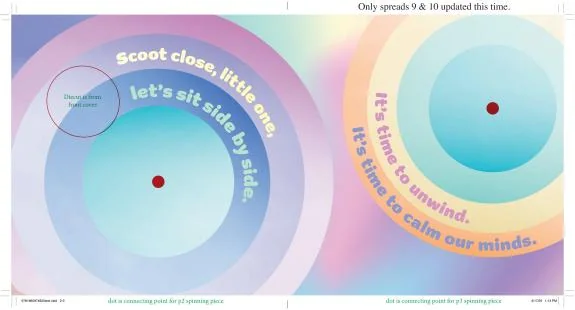
The act of reading itself becomes a mindful practice. The book encourages close physical proximity between caregiver and child, fostering connection. The "scoop close, little one, let’s sit side by side" invitation sets a tone of shared presence. This focus on present-moment awareness, facilitated through interactive pages and simple instructions to "unwind" and "calm our minds," lays the groundwork for mindful habits.
The Power of Breath
At its heart, the book champions the breath as a primary tool for achieving tranquility. It simplifies the profound physiological and psychological effects of deep breathing into an accessible concept for toddlers. The repetitive action of breathing in and out is presented as a natural, innate mechanism for restoring balance, a principle echoed across numerous ancient contemplative traditions and modern wellness practices.
💬 Memorable Quotes
Direct passages from the work, attributed to the author.
“Scoot close, little one, let’s sit side by side.”
— This phrase sets an immediate tone of intimacy and shared experience, emphasizing the importance of physical closeness and focused attention in the reading process. It invites connection before exploring the book's themes.
“It’s time to unwind. It’s time to calm our minds.”
— This pair of statements directly introduces the book's core purpose: to facilitate relaxation and mental quietude. It acts as a gentle cue for both the child and the caregiver to transition into a calmer state.
“Little ones can relax and wind down with this gentle book that feels like a warm hug after a long day.”
— This captures the emotional essence of the book, likening the experience of reading it to receiving comforting physical affection. It highlights the book's role as a soothing presence.
“This novelty board book introduces the concept of finding your zen, keeping calm, and taking deep breaths with the aid of soft, brain-tingling touch-and-feels on every page.”
— This statement captures the book's unique methodology, blending mindfulness concepts with interactive sensory features specifically designed for very young children.
“interactive elements on each page including crinkly flaps, heat-sensitive strips, and more!”
— This highlights the specific tactile components that differentiate the book, promising a multi-sensory experience intended to engage and calm the child.
🌙 Esoteric Significance
Tradition
While not explicitly rooted in a single esoteric lineage, *Breathe In, Breathe Out* draws upon universal principles found across contemplative traditions, such as Hinduism (Yoga's pranayama), Buddhism (Zen's emphasis on breath awareness), and Taoism (cultivating inner harmony). Its modern interpretation focuses on the physiological benefits of breathwork for calming the nervous system, making these ancient concepts accessible through sensory play, rather than theological or metaphysical doctrine.
Symbolism
The primary 'symbol' is the breath itself, representing life force (prana) and the connection between the physical and mental states. The "warm hug" serves as a symbol of unconditional safety and presence, crucial for emotional security. The "touch-and-feels" act as grounding anchors, symbolizing the present moment and the tangible reality that can counter overwhelming internal states.
Modern Relevance
This work speaks to contemporary mindfulness educators, early childhood psychologists, and parents seeking non-pharmacological approaches to childhood anxiety and overstimulation. It aligns with modern applications of contemplative practices in secular settings, influencing the design of therapeutic toys and educational materials aimed at fostering emotional intelligence from infancy.
👥 Who Should Read This Book
• Parents and caregivers seeking accessible tools to introduce mindfulness and emotional regulation to infants and toddlers, using sensory engagement as a primary method. • Early childhood educators and therapists looking for age-appropriate resources to support social-emotional learning, particularly for children who benefit from tactile and sensory input. • Individuals interested in the intersection of modern child development psychology and ancient contemplative practices, observing how concepts like breathwork are adapted for the youngest learners.
📜 Historical Context
Published in 2025, *Breathe In, Breathe Out* arrives in an era saturated with mindfulness resources for all ages. Its approach, however, distinguishes itself by targeting the pre-verbal and early-verbal stages of development through a board book format. This follows a trend accelerated in the 2010s and 2020s, where contemplative practices, previously confined to adult spiritual traditions or clinical settings, became mainstream educational tools. The work carries the child-centric philosophies that gained traction following figures like Maria Montessori, emphasizing experiential learning. While not directly engaging with esoteric lineages in its presentation, its focus on breath and inner calm aligns with perennial philosophies found in traditions like Yoga and Zen Buddhism, which have seen increased popularization and adaptation for Western audiences. The book's reception is likely to be within the burgeoning market for early childhood social-emotional learning (SEL) tools, a field heavily influenced by psychological research and educational policy.
📔 Journal Prompts
The sensation of "brain-tingling touch-and-feels" and its role in "finding your zen."
Reflecting on the "warm hug" metaphor and its connection to calming the mind.
The practice of "taking deep breaths" as a method to "unwind" during moments of transition.
How the "crinkly flaps" and "heat-sensitive strips" facilitate the book's goal of "keeping calm."
Exploring the concept of "sitting side by side" as a foundation for mindful interaction.
🗂️ Glossary
Finding your zen
A colloquial term referring to achieving a state of mental calm, inner peace, and emotional balance. In the context of the book, it's introduced through simple sensory experiences and breathing.
Touch-and-feels
Interactive elements in a book designed to provide tactile sensory experiences. These can include various textures, materials, or temperature-sensitive patches intended to engage a child's sense of touch.
Brain-tingling
A descriptive term suggesting a stimulating yet pleasant sensory experience, often associated with novel textures or gentle sensations that capture a child's attention.
Unwind
To relax and release tension. The book suggests this state can be achieved through gentle activities and focused breathing.
Calm our minds
To quiet mental chatter and reduce feelings of agitation or anxiety. The book presents simple methods, like deep breathing, to achieve this state.
Warm hug
A metaphor used to describe the comforting, secure, and soothing feeling the book aims to evoke in young readers through its gentle approach and sensory features.
Board book
A type of children's book printed on thick, sturdy cardstock pages. Designed for durability, it is ideal for infants and toddlers who may handle books roughly.
This book appears in 1 collection
🔮 Readers Also Liked
Browse all →








From the “Mindfulness” Collection
View all →





More Free Occult Philosophy Books
View all →