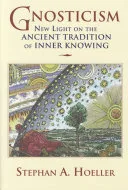
Gnosticism
 81
81

Gnosticism
Stephan A. Hoeller’s *Gnosticism* offers a compelling, if sometimes dense, overview of a spiritual current often misunderstood. Hoeller’s strength lies in his deep familiarity with Gnostic texts and traditions, presenting the material with an insider’s perspective. He successfully argues for Gnosticism’s enduring relevance beyond its historical context, particularly in its emphasis on personal spiritual discovery over blind faith. A passage discussing the Gnostic view of the Old Testament as the work of a flawed demiurge, rather than the supreme God, is particularly illuminating for understanding its radical divergence from orthodox thought. However, the book occasionally assumes a level of familiarity with esoteric terminology, which may present a hurdle for newcomers. While the historical narrative is thorough, it sometimes sacrifices narrative flow for academic detail. Despite these minor drawbacks, *Gnosticism* serves as an essential, authoritative guide to a complex spiritual landscape.
📝 Description
81
Stephan A. Hoeller's "Gnosticism" presents the tradition not as a relic, but a living spiritual impulse.
This work defines Gnosticism through its central tenet: the direct, experiential apprehension of the divine, known as 'gnosis.' This immediate spiritual knowing contrasts with faith-based traditions that rely on mediated belief. The book details how this pursuit of direct knowledge often placed Gnostics in opposition to established religious and political authorities. It is written for those seeking a personal connection with the sacred, beyond dogma. Readers interested in the esoteric foundations of Western spirituality, early Christianity, comparative religion, and mystical traditions will find this volume valuable. It also appeals to those who appreciate historical accounts of spiritual movements marked by intellectual struggle and persecution.
The book situates Gnosticism within the Hellenistic period, where it developed alongside early Judeo-Christianity. It highlights Gnosticism's emergence as a distinct path that challenged prevailing religious orthodoxies. The narrative follows its course through different eras, showing its enduring presence despite periods of intense suppression and misunderstanding by dominant religious institutions. Central concepts examined include gnosis, the Demiurge, and the divine spark within the human soul. The study also covers the dualistic worldview common in Gnostic systems, the role of salvific figures, and the goal of spiritual liberation and return to the Pleroma.
Hoeller's work places Gnosticism within the broader context of Western esotericism, specifically as a vital current that has persisted through history. It is presented as a counterpoint to exoteric, institutionalized religion, emphasizing inner experience and direct divine contact. The book connects Gnostic thought to other mystical and philosophical traditions that arose during the Hellenistic period and continued to influence later movements. This perspective frames Gnosticism not merely as a historical phenomenon but as a perennial spiritual impulse concerned with transcendence and liberation from material limitations.
💡 Why Read This Book?
• Learn about the radical Gnostic concept of 'gnosis' as direct spiritual knowing, differentiating it from faith-based traditions, as explored in the historical context of its development alongside early Judeo-Christianity. • Understand the Gnostic cosmological framework, including the role of the Demiurge and the divine spark within humanity, providing a unique lens for interpreting spiritual texts and experiences. • Discover the historical struggle and resilience of Gnostic movements, from their origins in the Hellenistic period to their influence on later esoteric thought, offering insights into spiritual persecution and survival.
⭐ Reader Reviews
Honest opinions from readers who have explored this book.
❓ Frequently Asked Questions
What is the primary difference between Gnosticism and traditional Christianity?
The core distinction lies in the emphasis on 'gnosis,' or direct spiritual knowledge, versus faith. Gnosticism posits that salvation or liberation comes through immediate personal experience of the divine, rather than through belief in dogma or mediation by religious authorities.
When did Gnosticism emerge as a distinct spiritual movement?
Gnosticism developed concurrently with early Judeo-Christianity, flourishing particularly during the Hellenistic period, roughly from the 1st century BCE to the 3rd century CE.
Who was Stephan A. Hoeller and what is his contribution to Gnostic studies?
Stephan A. Hoeller is a prominent scholar and bishop in the Ecclesia Gnostica. His work, including *Gnosticism* (first published in 2012), is renowned for its scholarly depth and authoritative perspective on Gnostic history and philosophy.
What is the concept of the Demiurge in Gnosticism?
The Demiurge is typically understood in Gnosticism as a lesser, often flawed, creator deity responsible for the material world. This figure is distinct from the supreme, transcendent God and is often associated with ignorance or even malevolence.
How has Gnosticism influenced later spiritual or philosophical movements?
Gnostic ideas have resurfaced throughout history, influencing various esoteric traditions, mystical interpretations of Christianity, and even modern philosophical thought, particularly concerning dualism, the nature of reality, and the individual's spiritual quest.
Is Gnosticism a religion or a philosophy?
Gnosticism is often described as both a religion and a philosophical system. It possesses distinct cosmological beliefs, soteriological goals, and spiritual practices, while also engaging with profound metaphysical and existential questions.
🔮 Key Themes & Symbolism
The Primacy of Gnosis
This theme centers on the Gnostic emphasis on direct, intuitive, and experiential knowledge of the divine, or 'gnosis.' It posits this immediate apprehension as the ultimate path to spiritual liberation, contrasting it with faith-based or creedal approaches. The work details how this pursuit of inner knowing shaped Gnostic communities and their interactions with the wider world, often leading to persecution due to its challenge to established religious hierarchies.
Cosmological Dualism and the Demiurge
A central theme is the Gnostic understanding of the cosmos, often characterized by a radical dualism between a transcendent spiritual realm and a flawed material world. The figure of the Demiurge, a lesser creator responsible for the material universe, is explored as a key concept. This perspective challenges orthodox views of creation and divine perfection, framing the material existence as a prison from which the divine spark within humanity seeks escape.
The Divine Spark and Liberation
The book explores the Gnostic belief in an inherent divine spark or fragment of the supreme God dwelling within certain individuals. This inner divinity is seen as the true self, trapped within the material body and world. The overarching narrative of Gnosticism, therefore, becomes the awakening and liberation of this divine spark, its ascent back to the Pleroma, the area of divine fullness.
Historical Persecution and Resilience
This theme traces the historical trajectory of Gnosticism, highlighting its development alongside early Christianity and its subsequent suppression by nascent orthodox churches. The work illustrates the passion, martyrdom, and enduring mystery surrounding Gnostic movements, demonstrating their resilience despite centuries of condemnation and misunderstanding by dominant religious and political powers.
💬 Memorable Quotes
Direct passages from the work, attributed to the author.
“Gnosticism being derived from the Greek word gnosis, meaning 'knowledge.'”
— This foundational definition underscores the essence of the Gnostic path: the pursuit and attainment of direct spiritual understanding, positioning it as an experiential rather than doctrinal system.
“It emphasizes, not faith, but direct perception of God.”
— This highlights the core differentiator of Gnosticism from many other religious traditions. It champions an immediate, personal encounter with the divine as the primary means of spiritual realization and salvation.
“Given the controversial premise that one can know God directly, the history of Gnosticism is an unfolding drama of passion, political intrigue, martyrdom, and mystery.”
— This statement frames the historical narrative of Gnosticism as inherently dramatic and conflict-ridden, stemming directly from its radical claim to direct divine knowledge and its subsequent clashes with established powers.
“Gnosticism developed alongside Judeo-Christianity over two thousand years ago.”
— This anchors Gnosticism historically, placing its origins within the same fertile intellectual and spiritual milieu as early Christianity, while implicitly suggesting its distinctiveness from the orthodox development.
“The work explores how Gnosticism has in [various forms throughout history].”
— This suggests the book’s comprehensive scope, indicating that it traces the evolution and persistent influence of Gnostic ideas across different eras and cultural contexts, beyond its initial emergence.
🌙 Esoteric Significance
Tradition
This work firmly situates Gnosticism within the Western esoteric tradition, specifically as a foundational lineage that profoundly influenced later Hermeticism, Kabbalah, and Christian mysticism. While distinct from Hermeticism's focus on correspondence and ritual, Gnosticism shares its emphasis on hidden knowledge and the divine potential within humanity. It departs from orthodox Christianity by positing a radical critique of creation and the creator, and by prioritizing immediate, personal gnosis over faith and sacraments.
Symbolism
Key symbols explored include the 'divine spark'—a fragment of the supreme God trapped within the material human form, symbolizing the hidden divine potential. The 'Pleroma' represents the ultimate spiritual reality, the fullness of God from which the material world emanates or falls away. The 'Demiurge,' often depicted as a serpent or a lesser, ignorant creator, symbolizes the flawed architect of the material universe, distinct from the true, transcendent God.
Modern Relevance
Contemporary thinkers and spiritual movements continue to draw from Gnostic thought. Its emphasis on individual experience and critique of authoritarian structures appeals to modern existentialism and counter-cultural movements. Esoteric practitioners in various paths, including some branches of Hermeticism and modern Gnostic churches, actively engage with Gnostic cosmology and psychology, seeking personal liberation and a deeper understanding of consciousness.
👥 Who Should Read This Book
• Students of comparative religion and early Christian history seeking to understand a major spiritual current that diverged from orthodox development. • Individuals interested in esoteric philosophy and mystical traditions who are drawn to concepts of direct spiritual knowledge and the critique of material reality. • Seekers dissatisfied with dogma and traditional religious structures, looking for a framework that emphasizes personal spiritual discovery and inner experience.
📜 Historical Context
The emergence of Gnosticism in the Hellenistic period, roughly from the 1st century BCE to the 4th century CE, occurred within a vibrant intellectual and religious landscape. It developed in parallel with, and often in reaction to, early Judeo-Christianity and Hellenistic philosophy. Key contemporaries included figures like Philo of Alexandria, who sought to synthesize Jewish thought with Greek philosophy, and later, early Church Fathers such as Irenaeus of Lyons. Irenaeus, in his *Adversus Haereses* (Against Heresies) around 175 CE, was a primary source for critiquing and defining Gnostic doctrines, inadvertently preserving much of what we know about them. Gnosticism’s emphasis on secret knowledge and its dualistic cosmology set it apart from the developing orthodox Christian narrative, leading to significant doctrinal disputes and eventual condemnation as heresy by the early Church councils.
📔 Journal Prompts
The Gnostic concept of 'gnosis' as direct perception.
The role of the Demiurge in Gnostic cosmology.
Personal reflections on the divine spark within.
The historical tension between Gnosticism and established religious authority.
Contrasting the emphasis on faith versus direct knowledge in spiritual seeking.
🗂️ Glossary
Gnosis
Greek for 'knowledge.' In Gnosticism, it refers to direct, intuitive, experiential knowledge of the divine, seen as the key to spiritual liberation.
Demiurge
A lesser creator-god, often depicted as ignorant or malevolent, responsible for the material world. Distinct from the supreme, transcendent God.
Pleroma
The divine fullness; the totality of divine powers and beings in the supreme God's realm, from which the material world is seen as a deviation or fall.
Divine Spark
A fragment of the supreme God or divine essence believed to be trapped within the material human being, representing their true spiritual nature.
Aeons
Emanations or divine beings from the supreme God within the Pleroma, often involved in the unfolding of the spiritual cosmos and the creation of the material world.
Archons
Rulers or powers, often associated with the Demiurge, who govern the material world and seek to keep humanity ignorant of its divine origin.
Soteriology
The doctrine of salvation. In Gnosticism, it concerns the process by which the divine spark is liberated from the material world and returns to the Pleroma.