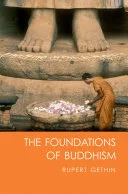
The Foundations of Buddhism
 79
79

The Foundations of Buddhism
Rupert Gethin's "The Foundations of Buddhism" provides a remarkably clear and systematic introduction to a tradition often perceived as overwhelmingly complex. Gethin's strength lies in his ability to distill the common threads binding diverse Buddhist schools, from the ancient Pali Canon traditions to later Mahayana and Vajrayana developments. He skillfully guides the reader through the narrative of the Buddha's life, presenting it not just as a biographical account but as the originating context for core doctrines. A particularly lucid section discusses the concept of *anatta* (no-self), effectively explaining its philosophical implications without resorting to overly esoteric language. While the book excels in its academic rigor and broad scope, its sheer density of information might present a challenge for absolute beginners unfamiliar with religious studies terminology. Nevertheless, "The Foundations of Buddhism" stands as an authoritative and essential resource for serious students of the Dharma.
📝 Description
79
Rupert Gethin's 1998 book clarifies the common ground across Buddhist traditions.
Published in 1998, The Foundations of Buddhism by Rupert Gethin addresses a growing Western academic interest in Eastern religions. The book aims to synthesize complex Buddhist traditions by focusing on their shared heritage, rather than on specialized studies of individual schools. Gethin traces the development of Buddhist thought from the life of Siddhartha Gautama, the Buddha, to key philosophical ideas and ethical systems that have persisted for over two thousand years.
This work is suited for readers who want a solid academic introduction to Buddhism, moving beyond surface-level understanding. It is especially useful for students of comparative religion, philosophy, and history. Those interested in the practical aspects of Buddhist principles, and the evolution of spiritual traditions in Asia, will find Gethin's methodical approach informative. It serves as a good primer for anyone intending to engage with more specialized Buddhist texts or practices.
Gethin's book fits within the tradition of scholarly engagement with Buddhist philosophy and practice that gained momentum in the latter half of the 20th century. As Western academia increasingly turned its attention to non-Western spiritual systems, there arose a need for rigorous, yet accessible, syntheses of major traditions. This work responds to that need by identifying the core doctrines and historical threads that unite diverse schools of Buddhism, offering a framework for understanding its long history and widespread influence.
💡 Why Read This Book?
• Gain a foundational understanding of Buddhist cosmology and ethics, including the Four Noble Truths and the Eightfold Path, as presented in Gethin's comprehensive analysis of the tradition's common heritage. • Grasp the significance of the Buddha's life narrative, as detailed in the early chapters, and its role in shaping core Buddhist doctrines and practices across various schools. • Understand the concept of *anatta* (no-self) and its philosophical underpinnings, as explored by Gethin, offering a unique perspective on Buddhist ontology distinct from Western thought.
⭐ Reader Reviews
Honest opinions from readers who have explored this book.
❓ Frequently Asked Questions
When was Rupert Gethin's 'The Foundations of Buddhism' first published?
Rupert Gethin's "The Foundations of Buddhism" was first published on July 15, 1998, by Oxford University Press, establishing it as a significant academic introduction to the subject.
What is the primary focus of 'The Foundations of Buddhism'?
The book concentrates on the core ideas and practices shared by the major traditions of Buddhism, such as Theravada, Tibetan, and East Asian Buddhism, rather than focusing on a single school.
Does the book cover Buddhist meditation practices?
Yes, Gethin discusses various Buddhist practices, including meditation, within the context of the Eightfold Path and the ethical frameworks common to Buddhist traditions.
Is 'The Foundations of Buddhism' suitable for beginners?
While academic, the book is designed as an introduction. It is well-suited for serious beginners who desire a thorough, scholarly overview of Buddhism's foundational elements.
What historical period does the book reference regarding Buddhism?
The book covers Buddhism's history stretching over 2,500 years, from the life of the Buddha to the contemporary global presence of its various traditions.
What are some key philosophical concepts explored in the book?
Key concepts include karma, rebirth, the Four Noble Truths, the Eightfold Path, and *anatta* (no-self), presented as the common heritage of Buddhist thought.
🔮 Key Themes & Symbolism
The Buddha's Narrative
Gethin anchors the entire tradition in the life story of Siddhartha Gautama, presenting his enlightenment and subsequent teachings as the origin point for Buddhist philosophy and practice. This narrative serves as a historical and spiritual blueprint, illustrating the path to liberation and the core tenets that would branch into diverse schools. The work emphasizes how this foundational story provides a common heritage, even as interpretations and practices evolve across Theravada, Mahayana, and Vajrayana Buddhism.
Common Heritage of Buddhist Practice
A central thesis is the identification of shared principles across Buddhist traditions. Gethin meticulously outlines concepts like karma, rebirth, the Four Noble Truths, and the Eightfold Path, demonstrating their pervasive influence. This approach allows readers to see the interconnectedness of Buddhist thought, moving beyond sectarian divisions to appreciate the universal ethical and philosophical frameworks that have guided millions for over 2,500 years.
Philosophical Underpinnings
The book studies the profound philosophical ideas that distinguish Buddhism. It offers clear explanations of concepts such as *anatta* (no-self), impermanence (*anicca*), and suffering (*dukkha*). Gethin examines these doctrines not in isolation but as integral components of the path to enlightenment, providing a scholarly yet accessible analysis of their implications for understanding reality and the human condition.
Evolution of Traditions
While focusing on commonalities, Gethin acknowledges the historical development and diversification of Buddhism. The work implicitly traces the evolution from early Indian Buddhism to its spread and adaptation across Asia. By understanding the foundational elements, readers are better equipped to appreciate the distinct characteristics and developments within major traditions like Theravada, Tibetan Buddhism, and the various schools of East Asian Buddhism.
💬 Memorable Quotes
Direct passages from the work, attributed to the author.
“The story of the Buddha...”
— This highlights Gethin's approach of using the narrative of Siddhartha Gautama's life as the bedrock upon which Buddhist doctrines and practices are built and understood across different schools.
“The common heritage of the different traditions of Buddhism...”
— This emphasizes the book's core objective: to identify and explain the shared foundational principles that unite diverse Buddhist schools, providing a unified perspective on the tradition.
“The Four Noble Truths and the Eightfold Path...”
— These represent central doctrines that Gethin explores as fundamental to Buddhist practice and philosophy, serving as pillars of understanding for the tradition's ethical and soteriological aims.
“The concept of *anatta* (no-self)...”
— This points to a key philosophical tenet discussed in the book, illustrating Gethin's examination of profound Buddhist concepts and their implications for selfhood and reality.
“Karma and rebirth...”
— These concepts are presented as crucial elements of the Buddhist worldview, illustrating the interconnectedness of actions, consequences, and the cycle of existence explored within the text.
🌙 Esoteric Significance
Tradition
While "The Foundations of Buddhism" is primarily an academic text, its rigorous examination of core doctrines positions it as a vital resource for esoteric practitioners seeking a deep understanding of Buddhist principles. It doesn't align strictly with Western esoteric lineages like Hermeticism or Kabbalah but provides the essential philosophical and historical backdrop for those exploring Buddhist contemplative practices, which are often integrated into broader esoteric paths focused on consciousness and liberation.
Symbolism
The book implicitly engages with Buddhist symbolism by explaining foundational concepts. For instance, the narrative of the Buddha's enlightenment under the Bodhi Tree symbolizes the overcoming of ignorance and the attainment of wisdom. The Wheel of Dharma (Dharmachakra) represents the Buddha's teachings and the path to liberation, while the concept of the lotus flower symbolizes purity and spiritual unfolding amidst the defilements of the world.
Modern Relevance
Contemporary thinkers and practitioners, particularly those in mindfulness and secular Buddhist movements, draw heavily on the foundational concepts Gethin outlines. Scholars and teachers seeking to understand Buddhism's global appeal and its philosophical underpinnings continue to cite his work. Furthermore, individuals exploring comparative spirituality or seeking to integrate Buddhist ethics and contemplative techniques into their existing frameworks find Gethin's systematic approach indispensable.
👥 Who Should Read This Book
• Students of comparative religion and philosophy: Gain a solid academic grounding in Buddhist doctrines, history, and the commonalities across its diverse traditions. • Aspiring practitioners of Buddhist meditation: Develop a deeper intellectual understanding of the ethical and philosophical frameworks, such as the Eightfold Path, that underpin meditative practices. • Readers interested in Eastern spirituality: Acquire a comprehensive overview of Buddhism's foundational elements, moving beyond superficial understandings to appreciate its historical depth and philosophical richness.
📜 Historical Context
Published in 1998, Rupert Gethin's "The Foundations of Buddhism" arrived at a time when academic study of Buddhism was becoming increasingly sophisticated and globalized. The late 20th century saw a surge in Western interest in Eastern religions, moving beyond earlier, often romanticized, perceptions. Gethin's work emerged within a scholarly landscape shaped by figures like Edward Conze and Richard Gombrich, who had already laid crucial groundwork in understanding Buddhist texts and history. Unlike studies focusing intensely on specific schools like Zen Buddhism or Tibetan Vajrayana, Gethin's contribution was to synthesize the common threads. His focus on the shared heritage was particularly important in an era where comparative religion studies were gaining prominence, offering a unified view that contrasted with the more specialized analyses prevalent in monastic traditions. The book's reception was largely positive within academic circles, lauded for its clarity and comprehensive scope.
📔 Journal Prompts
The Four Noble Truths as a framework for understanding suffering.
The implications of *anatta* (no-self) for personal identity.
Siddhartha Gautama's narrative as a source of inspiration.
The role of karma and rebirth in Buddhist ethics.
The Eightfold Path as a practical guide for ethical living.
🗂️ Glossary
Anatta
A core Buddhist doctrine signifying 'no-self' or 'non-essence.' It asserts that there is no permanent, unchanging, independent self or soul in any phenomenon, challenging conventional notions of identity.
Eightfold Path
The fourth of the Four Noble Truths, outlining the path to the cessation of suffering. It consists of eight interconnected practices: Right Understanding, Right Thought, Right Speech, Right Action, Right Livelihood, Right Effort, Right Mindfulness, and Right Concentration.
Four Noble Truths
The foundational teachings of Buddhism, presenting the reality of suffering (*dukkha*), its cause (craving and ignorance), its cessation (nirvana), and the path leading to its cessation (the Eightfold Path).
Karma
The principle of cause and effect, where volitional actions (physical, verbal, or mental) have consequences that influence an individual's present and future experiences, often within the cycle of rebirth.
Nirvana
The ultimate goal of Buddhist practice, signifying the cessation of suffering, the extinguishing of craving and ignorance, and liberation from the cycle of rebirth (samsara).
Rebirth (Samsara)
The cycle of birth, death, and rebirth driven by karma and ignorance. It is characterized by suffering and impermanence, from which Buddhists seek liberation through enlightenment.
Theravada
A major school of Buddhism, often considered the 'Doctrine of the Elders,' that adheres closely to the earliest recorded teachings of the Buddha, primarily found in the Pali Canon.