The spirit-rapper; an autobiography
 68
68

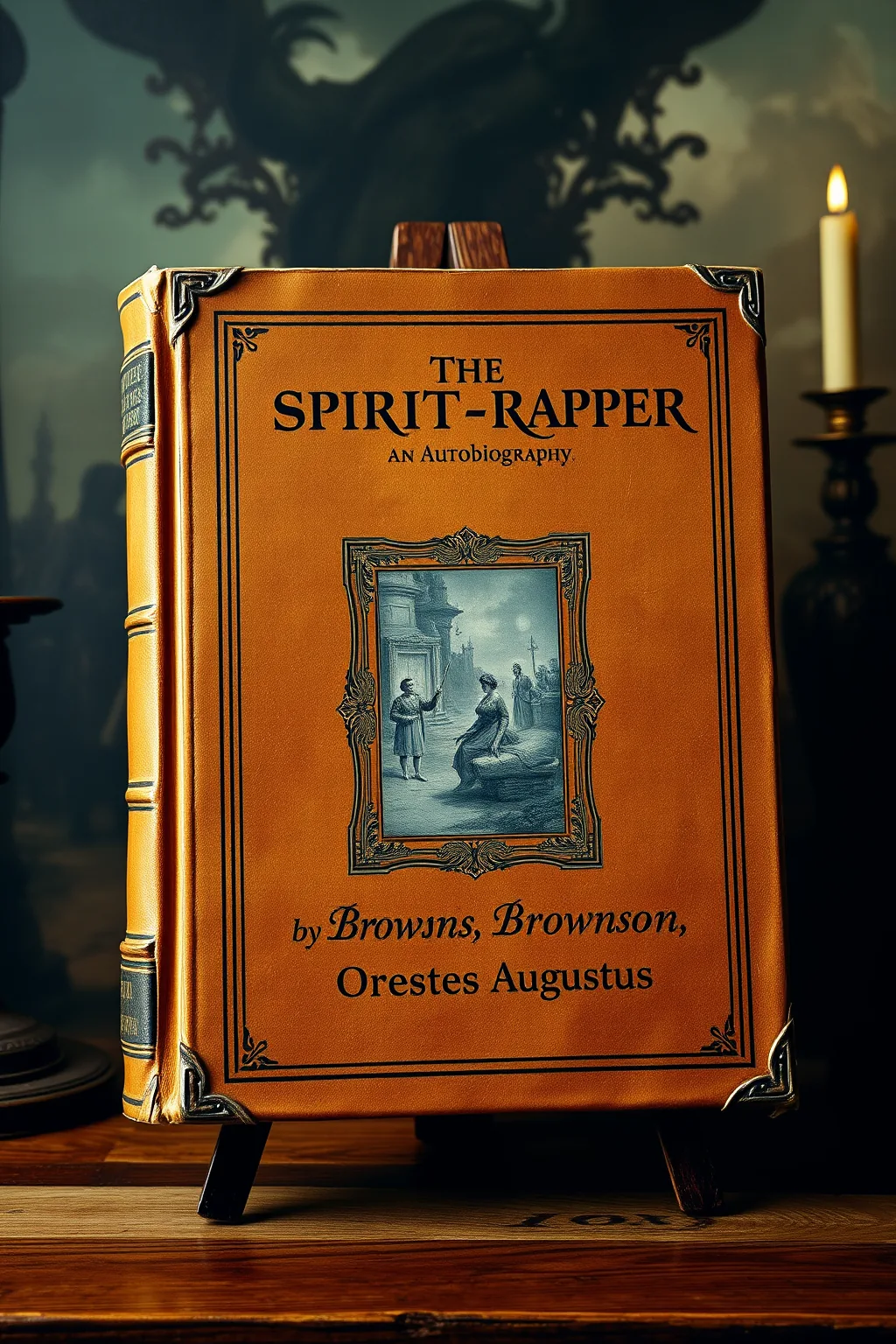
The spirit-rapper; an autobiography



Sophia Crane (Associate Editor) — "The Spirit-Rapper" is a rare gem, offering a window into the fervent spiritual and intellectual landscape of the 19th century through the introspective lens of Orestes Augustus Brownson. Brownson's candid account of his engagement with spirit phenomena and Mesmerism provides invaluable insights into early occult practices and their philosophical underpinnings. The text vibrates with an earnest, almost alchemical pursuit of understanding the soul's journey beyond the veil. Its strength lies in its detailed, yet deeply personal, exploration of complex metaphysical concepts, making it a compelling read for serious students of spiritualism and the history of consciousness.
📝 Description
68
Orestes Augustus Brownson recounted his experiences with spiritualist phenomena in "The Spirit-Rapper" published in 1854.
Orestes Augustus Brownson's "The Spirit-Rapper: An Autobiography" details his encounters with spiritualism and related esoteric practices in the mid-19th century. Brownson, a prominent intellectual, recounts his engagement with phenomena such as spirit communication and Mesmerism. The book moves beyond simple autobiography, blending personal narrative with philosophical reflection on these subjects. He examines the symbolic meanings and hidden knowledge associated with these movements, framing them as part of a larger search for truth. The work invites readers to consider the relationship between the material world and spiritual forces, touching upon concepts of the soul and the afterlife.
This autobiography offers a unique perspective on Brownson's intellectual and spiritual development during a time of significant interest in spiritualist and occult phenomena. It provides insight into how a prominent thinker of the era grappled with experiences that challenged conventional understanding. The narrative serves as a record of his personal journey through these controversial topics, presenting his observations and conclusions.
This work enters the historical currents of 19th-century spiritualism and mesmerism, movements that sought to explain or harness unseen forces. Brownson's engagement places his autobiography within a broader transatlantic conversation about the nature of consciousness, the afterlife, and the potential for direct communication with spiritual entities. It reflects a period where scientific and religious paradigms were being challenged by experiences interpreted through esoteric frameworks. The book contributes to understanding how intellectuals of the era processed such phenomena, moving beyond mere sensationalism to philosophical consideration.
✍️ Author
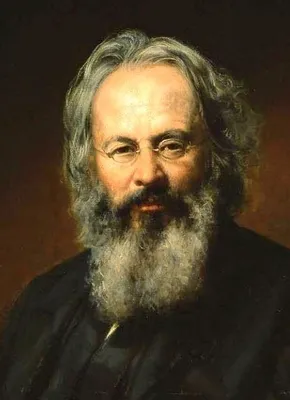
Brownson, Orestes Augustus
Orestes Augustus Brownson (September 16, 1803 – April 17, 1876) was an American intellectual, activist, preacher, labor organizer, and writer. Brownson was also a noted Catholic convert.
💡 Why Read This Book?
Uncover the personal journey of a 19th-century intellectual grappling with the spectral and the subconscious. "The Spirit-Rapper" offers a unique, autobiographical perspective on the dawn of spiritualism and Mesmerism, revealing hidden philosophical insights and esoteric symbolism. Ideal for seekers of occult history, practitioners of spiritual disciplines, and scholars interested in the evolution of consciousness studies.
⭐ Reader Reviews
Honest opinions from readers who have explored this book.
❓ Frequently Asked Questions
What is "The Spirit-Rapper" about?
It is an autobiography detailing Orestes Augustus Brownson's personal experiences and philosophical reflections on spiritualism, Mesmerism, and the nature of the afterlife during the 19th century.
Is this a fictional account?
While presented as an autobiography, it delves into subjective experiences and philosophical interpretations, offering a narrative that has elements of autobiographical fiction due to its speculative and introspective nature.
Who was Orestes Augustus Brownson?
Brownson was a prominent American journalist, philosopher, and theologian who underwent significant intellectual and spiritual transformations throughout his life, famously transitioning through various religious and philosophical movements.
What is Mesmerism in this context?
In "The Spirit-Rapper," Mesmerism refers to the early practices of animal magnetism and hypnotic suggestion, often explored for its potential to access altered states of consciousness and communicate with unseen forces.
Is this book suitable for beginners in esotericism?
The book offers a historical and personal perspective that can be accessible, but its depth of philosophical and esoteric discussion may be best appreciated by those with some prior interest or familiarity with metaphysical concepts.
🔮 Key Themes & Symbolism
The Veil Between Worlds
This theme explores the permeable boundary between the material and spiritual realms, as experienced and interpreted by Brownson. It explores the nature of spirit communication, hauntings, and the possibility of direct interaction with entities beyond physical embodiment. The narrative examines the subjective and objective evidence for life after death, and the psychological and spiritual implications of believing in a tangible afterlife. It questions the conventional understanding of death and consciousness, inviting readers to consider the vast, unseen dimensions that coexist with our everyday reality.
The Alchemical Journey of the Soul
Brownson's autobiography functions as an allegorical account of spiritual transformation, akin to an alchemical process. His intellectual and spiritual evolution, marked by encounters with diverse philosophies and phenomena, represents a purification and refinement of the soul. The text suggests that through confronting the unknown, grappling with doubt, and seeking higher truths, an individual can achieve a profound inner metamorphosis. This theme highlights the personal quest for enlightenment, the integration of the shadow self, and the ultimate realization of one's divine potential through conscious exploration.
The Power of Suggestion and the Unconscious Mind
Central to "The Spirit-Rapper" is the exploration of Mesmerism and its connection to the latent powers of the human mind. Brownson investigates how suggestion, trance states, and concentrated will can influence perception, facilitate healing, and potentially bridge the gap to spiritual realms. This theme touches upon early understandings of the subconscious, the power of belief, and the mind's capacity to interact with subtle energies. It invites contemplation on the extent to which our reality is shaped by our internal states and the untapped potential residing within the human psyche.
💬 Memorable Quotes
Direct passages from the work, attributed to the author.
“My soul sought converse with the departed.”
— This highlights Brownson's personal yearning and active pursuit of communication with spirits, framing his journey as a profound spiritual quest for connection beyond the earthly plane.
“The slumbering mind holds vast, untapped reservoirs.”
— This points to the author's fascination with the potential of the unconscious and altered states of consciousness, suggesting that profound knowledge and power lie dormant within us.
“Truth is a mirror reflecting the eternal.”
— This philosophical statement suggests that true understanding is not found in transient phenomena but in the timeless, unchanging essence of reality, accessible through spiritual insight.
“The veil thins for the earnest seeker.”
— This implies that dedication and sincere spiritual effort can lead to a greater perception of the spiritual world, making the unseen more accessible to those who truly strive.
💡 Key Ideas
Editorial paraphrase of the work's core concepts — not direct quotes.
The unseen is more potent than the seen.
This quote expresses the book's core message: that the spiritual, psychic, and metaphysical forces are the true drivers of existence, often far more influential than tangible, material reality.
🌙 Esoteric Significance
Tradition
This work is deeply embedded within the Western Esoteric Tradition, particularly the branches concerned with spiritualism, mediumship, and the exploration of consciousness. It bridges the gap between philosophical idealism and emergent occult practices of the 19th century, touching upon elements reminiscent of Swedenborgianism, early parapsychology, and the burgeoning interest in theurgy and vitalism.
Symbolism
The 'spirit-rapper' itself is a potent symbol of direct communication with the unseen, representing the breaking of barriers between worlds. Mesmerism symbolizes the power of the will and the subconscious mind, while the act of rapping signifies a tangible, albeit subtle, manifestation of spiritual presence and agency in the material world.
Modern Relevance
In an age increasingly fascinated by neuroscience, consciousness studies, and the nature of reality, "The Spirit-Rapper" offers a historical and philosophical counterpoint. It reminds us of earlier, more mystical approaches to understanding the mind and spirit, encouraging a holistic view that integrates the psychological, spiritual, and potentially paranormal dimensions of human existence.
👥 Who Should Read This Book
This profound autobiography is essential for several distinct groups. For the **beginner seeker**, it provides an accessible, narrative entry point into the historical field of 19th-century spiritualism and its philosophical underpinnings. **Scholars of esoteric history** will find invaluable primary source material, offering nuanced insights into the intellectual milieu of the time. **Practitioners of spiritual disciplines** will appreciate the detailed accounts of altered states and psychic phenomena, potentially informing their own practices. **Disillusioned rationalists** may find an intriguing challenge to their worldviews, presented through the earnest quest for truth by a respected intellectual.
📜 Historical Context
Written during the fervent spiritual awakening of the mid-19th century, "The Spirit-Rapper" emerges from an era captivated by séances, mediums, and the scientific and philosophical exploration of the afterlife. The Transcendentalist movement, the rise of Spiritualism as a widespread phenomenon, and debates surrounding Mesmerism and hypnosis created a fertile ground for works like Brownson's. This period saw a significant questioning of traditional religious dogma and a burgeoning interest in empirical investigation of the supernatural. Brownson, a complex intellectual figure who navigated various philosophical and religious terrains, provides a unique, firsthand account of this transformative time, reflecting the anxieties, hopes, and profound curiosity surrounding humanity's place in the cosmos.
📔 Journal Prompts
Reflect on a time you felt a presence or intuition that defied logical explanation. How did you process this experience?
Consider the concept of the 'veil' between worlds. What does this metaphor mean to you, and how might it influence your perception of reality?
Brownson explores Mesmerism. How do you understand the power of suggestion and the unconscious mind in your own life and beliefs?
If you could communicate with spirits, what would be your primary questions, and why?
How has your understanding of life, death, and consciousness evolved, and what role has personal experience or belief played in this evolution?
🗂️ Glossary
Spirit-Rapper
An individual who claims to communicate with spirits through rapping or other subtle physical manifestations, a common practice in 19th-century Spiritualism.
Mesmerism
A pseudoscientific practice developed by Franz Mesmer, involving the use of suggestion and induced trance states (hypnosis) to influence the body and mind, often explored for therapeutic and spiritual purposes.
Spiritualism
A religious movement that held a strong belief in the ability to communicate with the spirits of the dead, popular in the 19th century, often involving mediums and séances.
Metaphysical
Relating to the branch of philosophy that examines the fundamental nature of reality, including the relationship between mind and matter, identity, time, and causality.
Esoteric
Intended for or likely to be understood by only a small number of people with a specialized knowledge or interest; relating to mystical, occult, or arcane subjects.
This book appears in 2 collections
🔮 Readers Also Liked
Browse all →

From the “Spiritualism” Collection
View all →






More Free Spiritualism & Afterlife Books
View all →