What is Mesmerism?
Mesmerism, also known as animal magnetism, is a theory and practice developed by Franz Mesmer in the late 18th century. It posits the existence of a natural, universal fluid or force that can be manipulated through a process involving passes and direct contact to influence the health and well-being of others. Practitioners aimed to restore a supposed balance of this fluid within the body to alleviate ailments. The practice faced significant controversy and scientific scrutiny, leading to its eventual decline but paving the way for later developments in hypnotism and psychotherapy.
Best Books for Complete Beginners
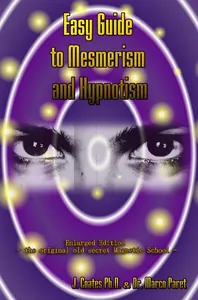
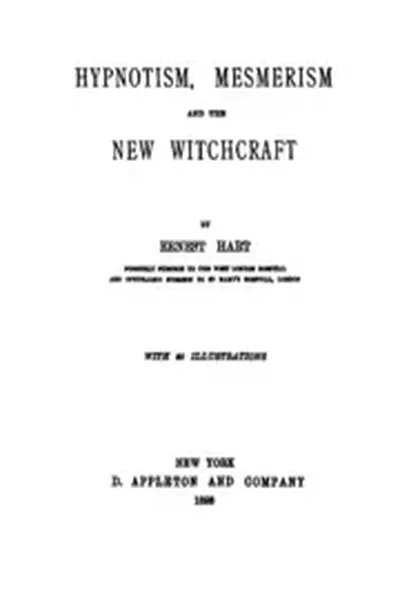
For those new to mesmerism, starting with practical guides is recommended. Alpheus A.'s 'Complete Hypnotism, Mesmerism, Mind-Reading and Spiritualism' provides a direct introduction to the methods and applications. Marco Paret and James Coates' 'Easy Guide to Mesmerism and Hypnotism' offers a clear, accessible overview of techniques and principles. Ernest Abraham Hart's 'Hypnotism, Mesmerism and the New Witchcraft' (1898) offers historical context on the public perception and scientific debate surrounding the practice in its later stages, providing a balanced early perspective.
Intermediate Reading
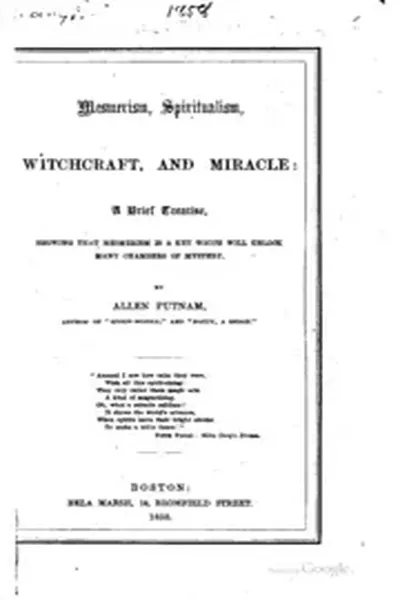
Moving beyond introductory concepts, intermediate texts delve deeper into the theory and historical context. William Benjamin Carpenter's 'Mesmerism, Spiritualism, Etc.' provides a critical examination of the phenomena, distinguishing between genuine effects and fraud. Allen Putnam's 'Mesmerism, Spiritualism, Witchcraft, and Miracle: A Brief Treatise' (1858) further explores the intersections and societal interpretations of these practices. James Braid's 'Magic, witchcraft, animal magnetism [&c.]' (1852) is crucial for understanding the transition from Mesmer's theories to the scientific study of hypnotism.
Classical / Advanced Texts
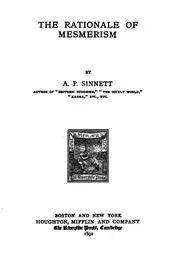
Advanced study requires engagement with primary sources and scholarly analysis. Harriet Martineau's writings, such as 'Feats on the Fiord' (1841) and her other works, offer insights into the Victorian era's engagement with mesmerism. Walter J. Kilner's 'The Human Atmosphere' (1894) presents a unique perspective on the 'aura' and its relation to mesmerism, bridging into early parapsychology. 'The Rationale Of Mesmerism' by Alpheus A. (1892) offers a more detailed theoretical and practical exploration, often considered a reference for serious students.
Reading Order — Step by Step
Begin with practical introductions like 'Easy Guide to Mesmerism and Hypnotism' by Paret and Coates. Follow with 'Complete Hypnotism, Mesmerism, Mind-Reading and Spiritualism' by Alpheus A. for comprehensive methods. In Month 2, explore historical critiques and context with Carpenter's 'Mesmerism, Spiritualism, Etc.' and Braid's 'Magic, witchcraft, animal magnetism [&c.]'. Month 3 should focus on deeper theoretical works like 'The Rationale Of Mesmerism' by Alpheus A. and Kilner's 'The Human Atmosphere' for a thorough understanding.
Frequently Asked Questions
Which Mesmerism book should I read first?
For a clear starting point, 'Easy Guide to Mesmerism and Hypnotism' by Marco Paret and James Coates is recommended. It breaks down the core concepts and practical techniques in an accessible manner for newcomers.
What is the difference between Mesmerism and Hypnotism?
Mesmerism, developed by Franz Mesmer, focused on 'animal magnetism' and therapeutic passes. Hypnotism, as studied by James Braid and others, evolved from these ideas but uses different terminology and often focuses on suggestion and focused attention rather than a magnetic fluid.
Is Mesmerism still practiced today?
While the term 'mesmerism' is less common, its principles and techniques have influenced modern hypnotherapy and psychotherapy. Some practitioners still use the term or focus on its historical methods.
Were Mesmerists considered scientists or charlatans?
Mesmerists were often viewed with suspicion. While some pursued it scientifically, many were accused of fraud or charlatanism, leading to official investigations and public debate throughout the 18th and 19th centuries.
What was the 'animal magnetism' theory?
Franz Mesmer proposed that a universal, invisible fluid ('animal magnetism') existed and could be manipulated by a practitioner to influence the health of another person, often inducing sleep-like states or alleviating symptoms.
How did Mesmerism relate to Spiritualism?
In the 19th century, Mesmerism and Spiritualism were often intertwined. Mediums and spiritualists sometimes used mesmeric techniques to induce trance states or claimed their spirit communications were facilitated by mesmeric principles.











![Magic, witchcraft, animal magnetism [&c.].](/img/thumb/magic-witchcraft-animal-magnetism-c-james-braid.webp)