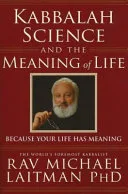
Kabbalah, Science and the Meaning of Life
 76
76

Kabbalah, Science and the Meaning of Life
Michael Laitman’s *Kabbalah, Science and the Meaning of Life* attempts a grand synthesis, positing that the ancient Kabbalistic framework offers answers to the existential questions science alone cannot address. Laitman, uniquely positioned as both a scientist and a practicing kabbalist, argues that the universe's perceived fragmentation is an illusion, a concept he finds mirrored in quantum physics. He references the "Sod Ha'Tzimtzum" (the mystery of contraction) as the foundational Kabbalistic principle behind this division, suggesting it’s akin to the Big Bang or quantum field theory. While the ambition is laudable, the execution sometimes falters. The book’s strength lies in its earnest attempt to translate complex Kabbalistic ideas into accessible language, particularly for those steeped in scientific paradigms. However, the parallels drawn between Kabbalistic concepts and specific scientific theories can feel tenuous at times, occasionally bordering on speculative interpretation rather than direct correlation. A particularly illustrative passage discusses the interconnectedness of all things, drawing parallels between the Kabbalistic "Kli" (vessel) and quantum entanglement. The limitation here is the potential for oversimplification of both complex scientific principles and profound mystical doctrines. The work ultimately serves as an introduction to a Kabbalistic worldview framed through a scientific lens, rather than a rigorous interdisciplinary study. It is an accessible, if sometimes strained, bridge between two seemingly disparate domains of human inquiry.
📝 Description
76
Michael Laitman's 2006 book connects Kabbalah and science to address life's purpose.
Michael Laitman's "Kabbalah, Science and the Meaning of Life" seeks to unify the spiritual insights of Kabbalah with contemporary scientific understanding. The author, who holds academic backgrounds in both Kabbalah and science, argues that Kabbalistic principles offer a framework for comprehending existence that complements scientific discovery. He presents these ideas not as historical dogma, but as a living tradition capable of engaging with modern thought.
The book targets readers who feel traditional religious explanations fall short and who find scientific materialism insufficient for understanding life's deeper questions. It is for those interested in how concepts from quantum physics and cosmology might align with mystical traditions. The work addresses fundamental inquiries about consciousness, reality, and our place in the universe, aiming to provide a cohesive perspective.
This work draws from the Kabbalistic tradition, referencing figures like Isaac Luria and Baal HaSulam, who explored the hidden nature of reality and creation. Kabbalah posits a unified spiritual source from which all existence emanates, often described through a system of emanations and divine attributes. Laitman engages with this ancient mystical framework, seeking parallels in modern physics to illuminate these esoteric concepts. The book situates itself within a lineage of thinkers who have attempted to reconcile spiritual cosmology with rational inquiry.
💡 Why Read This Book?
• Gain insight into the Kabbalistic concept of "Sod Ha'Tzimtzum" (the mystery of contraction) and how it proposes a unified origin for the universe, potentially aligning with modern cosmological theories. • Understand the Kabbalistic view of "separateness" as an illusion, exploring how this esoteric principle offers a framework for interpreting the subjective experience of individual consciousness. • Discover the author's interpretation of the Kabbalistic "Kli" (vessel) and its potential parallels with scientific notions of interconnectedness, providing a unique lens for contemplating reality.
⭐ Reader Reviews
Honest opinions from readers who have explored this book.
❓ Frequently Asked Questions
What is the core argument of Michael Laitman's "Kabbalah, Science and the Meaning of Life"?
The book's core argument is that Kabbalah, an ancient esoteric tradition, offers profound insights into the purpose of life that science cannot fully explain. It seeks to synthesize Kabbalistic principles with contemporary scientific understanding, suggesting a unified view of reality.
Who is Michael Laitman, the author?
Michael Laitman, PhD, is presented as a kabbalist and a scientist. He is the founder and leader of the Bnei Baruch Kabbalah Education and Research Center, dedicated to the dissemination of authentic Kabbalah.
When was "Kabbalah, Science and the Meaning of Life" first published?
The book was first published on January 1, 2006.
What is the relationship between Kabbalah and science as presented in the book?
Laitman posits that Kabbalah explains the 'why' of life's existence, while science explains the 'how.' He argues that cutting-edge scientific discoveries, particularly in quantum physics, echo Kabbalistic ideas about a single, divided entity comprising the world.
What is the "Sod Ha'Tzimtzum" mentioned in the book?
Sod Ha'Tzimtzum, or the mystery of contraction, is a central Kabbalistic concept referring to the initial act of divine concealment or withdrawal that created the space for a separate creation to exist.
Does the book offer practical advice or is it purely theoretical?
The book primarily offers a theoretical framework for understanding life's meaning through the lens of Kabbalah and science. While it discusses principles that could inform practice, its main focus is on conceptual synthesis and philosophical exploration.
🔮 Key Themes & Symbolism
Unified Source of Reality
The book centers on the Kabbalistic tenet that the universe originates from a single, indivisible spiritual source. This concept, often described through the "Sefirot" or divine emanations, is presented as a precursor to modern scientific theories suggesting a unified field or a singular origin point for the cosmos, like the Big Bang. Laitman argues that the perceived multiplicity and fragmentation of existence are a result of this initial creative act, suggesting a fundamental interconnectedness underlies all phenomena.
The Illusion of Separateness
A core theme is the Kabbalistic understanding that individual consciousness and the apparent separation between beings are illusory. This is linked to the idea that the ultimate reality is a singular, unified entity. The work explores how the human ego, or "Kli" (vessel), creates a sense of distinctness, obscuring our true connection to the greater whole. Understanding this illusion is presented as key to comprehending life's purpose and achieving spiritual fulfillment.
Kabbalah as a Scientific Framework
Laitman positions Kabbalah not merely as a mystical tradition but as a science of spirituality, capable of investigating the underlying laws of reality. He draws parallels between Kabbalistic terminology and concepts (e.g., "desire to receive," "Sod Ha'Tzimtzum") and those found in quantum physics and cosmology. This approach aims to demonstrate that ancient esoteric teachings can offer verifiable insights into the nature of existence, complementing empirical scientific methods.
The Purpose of Life
The overarching question of life's meaning is explored through the Kabbalistic lens. The book suggests that the purpose of creation is for the "desire to receive" (the created being) to attain the "desire to bestow" (the Creator), thereby achieving spiritual equivalence. This journey involves recognizing the unified nature of reality and overcoming the illusion of separateness, leading to a state of spiritual attainment and connection.
💬 Memorable Quotes
Direct passages from the work, attributed to the author.
“Science explains the mechanisms that sustain life; Kabbalah explains why life exists.”
— This statement captures the book's thesis: that scientific inquiry and esoteric wisdom address different, yet complementary, aspects of reality. While science details the 'how,' Kabbalah purports to reveal the fundamental 'why' behind existence.
“For thousands of years kabbalists have been writing that the world is made of a single entity divided into separate beings.”
— This highlights a foundational Kabbalistic principle that Laitman seeks to align with modern scientific theories, suggesting that the perception of discrete entities is a phenomenon arising from a unified underlying reality.
“Today the cutting edge science of quantum physics states a very similar idea: that at the most fundamental level, reality is not made of separate objects.”
— This directly links Kabbalistic cosmology to contemporary physics, implying that scientific observation is beginning to validate ancient esoteric claims about the non-dualistic nature of the universe.
“Rav Michael Laitman, PhD, a kabbalist and a scientist, combines science and spirituality in a captivating dialogue that reveals life's meaning.”
— This describes the author's unique position and the book's approach, emphasizing the synthesis of empirical and spiritual methodologies to address existential questions.
“The world is made of a single entity divided into separate beings.”
— This core Kabbalistic concept, presented as a fundamental truth about reality, is central to Laitman's argument for the interconnectedness of all things and the illusory nature of individual separation.
🌙 Esoteric Significance
Tradition
This work is firmly rooted in the tradition of Kabbalah, specifically the Lurianic and contemporary Ashlagian schools of thought. It presents Kabbalah not as a mystical or religious practice in the conventional sense, but as a spiritual science concerned with the fundamental structure and purpose of reality. Laitman departs from purely mystical interpretations by explicitly seeking alignment with empirical scientific findings, framing Kabbalah as a verifiable system for understanding existence.
Symbolism
A key symbol is the "Sod Ha'Tzimtzum" (the mystery of contraction), representing the divine act of withdrawal that created space for creation. This act is interpreted as the origin of perceived separateness. Another significant concept is the "Kli" (vessel), symbolizing the created being's desire to receive, which forms the basis of individual consciousness and the illusion of separation from the Creator.
Modern Relevance
Laitman's approach appeals to contemporary thinkers and movements seeking to integrate spiritual or metaphysical insights with scientific understanding. It speaks to a modern audience, particularly those disillusioned with purely materialistic worldviews, who are drawn to holistic explanations of reality. The emphasis on interconnectedness and the critique of perceived separateness aligns with certain trends in consciousness studies and systems thinking.
👥 Who Should Read This Book
• Individuals interested in comparative cosmology and the philosophical implications of quantum physics, seeking to understand how esoteric traditions might offer complementary perspectives. • Students of Kabbalah, particularly those initiated into the Lurianic or Ashlagian schools, who wish to explore a modern interpretation that engages directly with scientific discourse. • Seekers of meaning who find traditional religious or purely scientific explanations insufficient, desiring a unified framework that addresses both the mechanics and the purpose of existence.
📜 Historical Context
Published in 2006, *Kabbalah, Science and the Meaning of Life* emerged during a period when the dialogue between science and spirituality was gaining significant traction in popular culture and academic circles. Thinkers like Dean Radin were publishing on parapsychology, and books like Danah Zohar's *The Quantum Self* (1990) had already explored connections between quantum physics and consciousness. Laitman's work specifically engages with the Kabbalistic tradition, drawing heavily on the interpretations of Isaac Luria and, more directly, the 20th-century kabbalist Baal HaSulam (Yehuda Ashlag). While Laitman presents his synthesis as a novel bridging of disciplines, it echoes earlier attempts, such as those by P.D. Ouspensky in *Tertium Organum* (1912), to reconcile esoteric frameworks with emerging scientific paradigms. The book's reception likely occurred within the context of the Bnei Baruch organization's global outreach efforts, positioning Kabbalah as a relevant system for understanding modern life, distinct from traditional religious interpretations.
📔 Journal Prompts
The concept of "Sod Ha'Tzimtzum" as the origin of perceived reality.
Reflections on the "Kli" and the illusion of separateness.
How might Kabbalistic principles of unity inform one's understanding of scientific theories?
The relationship between the desire to receive and the search for life's meaning.
Interpreting the "single entity divided into separate beings" in daily life.
🗂️ Glossary
Sod Ha'Tzimtzum
Literally 'the mystery of contraction.' A fundamental Kabbalistic concept describing the divine act of withdrawal or concealment that created the space for a separate creation to exist, initiating the process of emanation.
Kli
Hebrew for 'vessel.' In Kabbalah, it refers to the created being or the desire to receive pleasure. It is often used to describe the apparatus of perception and the ego that creates the illusion of separateness.
Sefirot
The ten divine emanations or attributes through which the infinite light (Ein Sof) is expressed and manifests in the created worlds. They form the structure of spiritual reality.
Ein Sof
The Kabbalistic term for the absolute, infinite, unknowable Godhead or Divine essence that exists beyond all creation and conception.
Desire to Receive
The fundamental nature of all created beings, representing the innate drive to receive pleasure or sustenance. Kabbalah teaches that the purpose of existence is to transform this desire into a 'desire to bestow.'
Desire to Bestow
The nature of the Creator, characterized by unconditional giving and love. The ultimate spiritual goal is for the created being to attain the desire to bestow, achieving equivalence of form with the Creator.
Baal HaSulam
An honorific title for Rabbi Yehuda Ashlag (1884–1954), a prominent 20th-century kabbalist whose interpretations and commentaries form the basis of much contemporary Kabbalah study, including Laitman's work.