Fool's Kabbalah
 61
61

Fool's Kabbalah

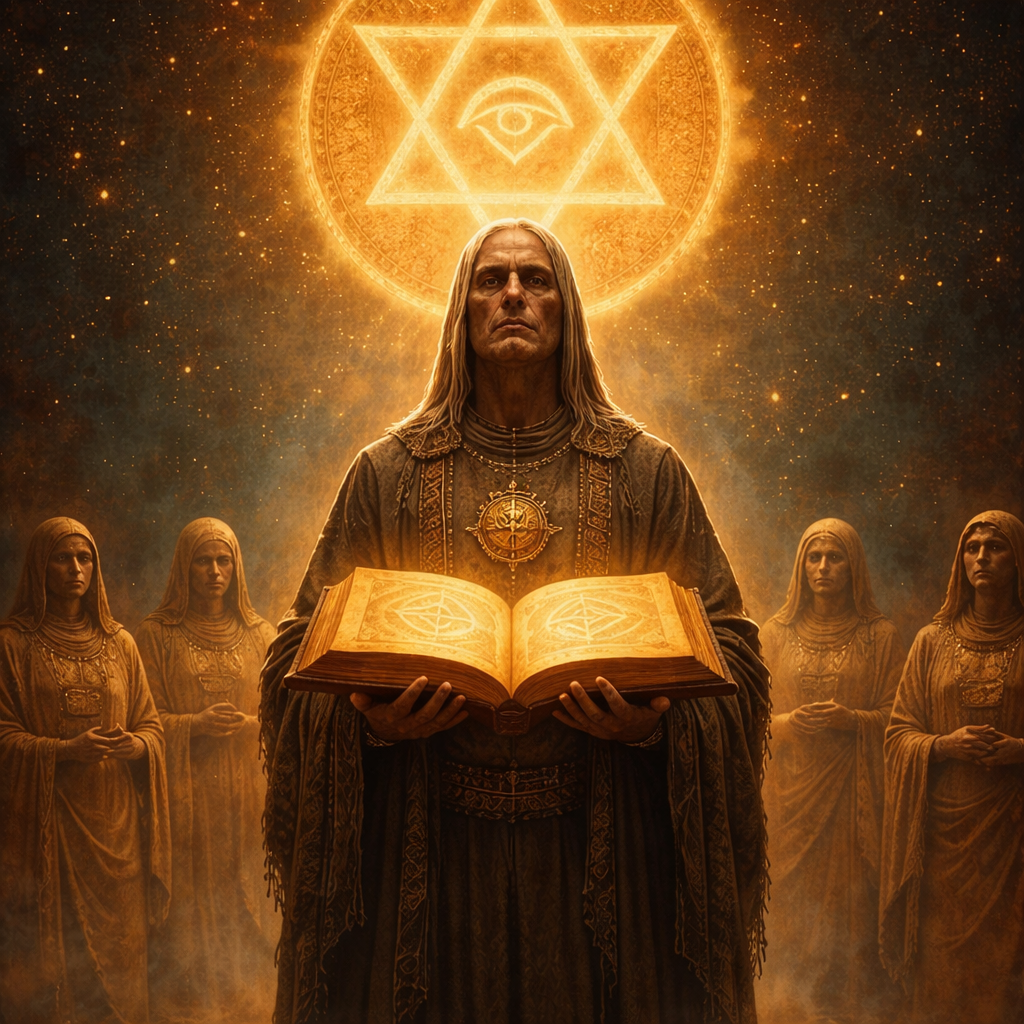

Celeste Moreau (Divination & Symbolism Reviewer) — Steve Stern's "Fool's Kabbalah" is a luminous beacon for contemporary seekers of Kabbalistic lore. Stern navigates the complex currents of Jewish mysticism with clarity and profound insight, demystifying concepts that often remain obscure. His ability to weave historical context with practical application makes this text exceptionally valuable. The book excels in its detailed exploration of the Tree of Life, divine names, and the esoteric interpretations of scripture. "Fool's Kabbalah" is an indispensable resource for students of Kabbalah, hermeticism, and anyone yearning for a deeper, more mystical understanding of existence. It resonates with the earnest seeker and the seasoned practitioner alike.
📝 Description
61
Steve Stern's 2003 book, Fool's Kabbalah, aims to make Kabbalistic concepts accessible.
Steve Stern's Fool's Kabbalah examines Kabbalistic ideas through the lens of the "fool" archetype. The book discusses how this figure, often seen as simple or foolish, can actually be a conduit for deeper spiritual insight. Stern connects this concept to various Kabbalistic schools and practices, suggesting that a naive or unburdened perspective can sometimes lead to truths hidden from more learned individuals.
The text looks at how symbols, divine emanations, and archetypes function within Kabbalistic thought. It attempts to show a link between abstract philosophical concepts and personal spiritual experience. The book suggests that understanding the interconnectedness of all things is central to this wisdom. It posits that even basic elements like letters and numbers carry significant meaning for those seeking deeper understanding.
Fool's Kabbalah engages with the tradition of Jewish mysticism, specifically Kabbalah. This esoteric system, which developed from the 12th century onwards, uses symbolic interpretation of the Torah and Hebrew alphabet to understand God, creation, and the human soul. Stern's work appears to draw on various Kabbalistic texts and concepts, including divine emanations (sefirot) and mystical ascent, but frames them through the unusual perspective of the 'fool,' a figure not typically central to mainstream Kabbalistic discourse.
💡 Why Read This Book?
Embark on an illuminating journey into the heart of Jewish mysticism. "Fool's Kabbalah" offers a unique lens through which to understand the divine architecture of the cosmos and the intricate pathways of the soul. Ideal for spiritual seekers, students of esotericism, and practitioners interested in unlocking the profound symbolism embedded within ancient wisdom traditions. Discover hidden meanings and elevate your spiritual practice.
⭐ Reader Reviews
Honest opinions from readers who have explored this book.
❓ Frequently Asked Questions
Is "Fool's Kabbalah" suitable for beginners?
Yes, while it delves into complex concepts, Steve Stern's accessible prose and clear explanations make it an excellent starting point for those new to Kabbalah, guiding them gently into its profound mysteries.
What is the primary focus of this book?
The book's primary focus is on unraveling the esoteric meanings and practical applications of Kabbalistic principles, particularly through the lens of the Tree of Life and its symbolic language.
Does the book cover practical Kabbalistic exercises?
While primarily a theoretical exploration, "Fool's Kabbalah" provides a foundational understanding that can inform and enrich practical spiritual disciplines and meditations.
What distinguishes "Fool's Kabbalah" from other Kabbalah books?
Stern's unique approach emphasizes the 'fool' archetype as a gateway to divine wisdom, offering an unconventional yet deeply insightful perspective on traditional Kabbalistic teachings.
What is the 'Fool' in the context of Kabbalah?
In this context, the 'Fool' represents the uninitiated seeker, the innocent consciousness that, through its journey on the Tree of Life, can achieve profound spiritual realization and understanding.
🔮 Key Themes & Symbolism
The Tree of Life as a Cosmic Map
The book meticulously unpacks the Sephiroth and their interconnected pathways on the Tree of Life, presenting it not just as a diagram, but as a living, breathing map of divine emanation and human consciousness. It explores how each Sephirah represents a stage of creation and a facet of the divine, offering insights into the structure of the universe and the soul's potential for ascent. The intricate symbolism and numerological significance of each Sephirah are revealed, providing a framework for understanding the divine will and its manifestation in the material world.
The Archetype of the Fool's Journey
Stern introduces the concept of the 'Fool' as a powerful archetype for spiritual awakening and the seeker's journey. This archetype represents innocence, unbound potential, and the courage to step into the unknown, mirroring the initial stages of spiritual initiation. The book explores how the Fool's path through the Sephiroth leads to profound self-discovery and the eventual attainment of divine wisdom, emphasizing that true insight often comes from humility and a willingness to embrace mystery.
Symbolism and Divine Language
A core theme is the exploration of the rich symbolic language inherent in Kabbalistic texts, including Hebrew letters, gematria, and mystical imagery. Stern elucidates how these elements are not mere decorative features but are potent conduits for divine revelation, acting as keys to unlock deeper layers of meaning. The book demonstrates how understanding this symbolic lexicon is essential for deciphering the universe's hidden messages and for engaging in meaningful dialogue with the divine.
💬 Memorable Quotes
Direct passages from the work, attributed to the author.
“Each Sephirah is a divine whisper, a facet of the infinite song.”
— This poetic phrasing highlights the interconnectedness and divine origin of the ten Sephiroth, portraying them as distinct yet harmonious expressions of the divine essence.
“The letters of the Torah are not just words, but blueprints of creation.”
— This emphasizes the Kabbalistic view of the Hebrew alphabet as a fundamental building block of reality, holding the very patterns and energies that shaped the cosmos.
“To know the Fool is to know the beginning of all knowing.”
— This suggests that embracing the qualities of the Fool—innocence, humility, and openness—is a prerequisite for authentic spiritual understanding and the commencement of true wisdom.
“The veil between worlds is thinnest at the point of true surrender.”
— This highlights the mystical principle that relinquishing ego-driven control and embracing vulnerability allows for greater connection to the spiritual realms and deeper insight.
💡 Key Ideas
Editorial paraphrase of the work's core concepts — not direct quotes.
The path to wisdom begins where certainty ends.
This quote suggests that true spiritual growth arises not from rigid adherence to known doctrines, but from embracing the unknown and questioning established beliefs, much like the 'fool' archetype.
🌙 Esoteric Significance
Tradition
This book is deeply rooted in the Kabbalistic tradition, a mystical interpretive tradition within Judaism. It explores the esoteric dimensions of Jewish scripture and theology, focusing on divine emanations, the structure of the cosmos, and the soul's journey towards union with the divine.
Symbolism
Central to its esoteric significance is the exploration of strong symbolism, particularly the Tree of Life (Etz Chaim), Hebrew letters, gematria (numerological interpretation), and divine names. These symbols are presented not as mere academic constructs but as living keys to understanding the universe's hidden architecture and the divine mind.
Modern Relevance
In contemporary times, "Fool's Kabbalah" offers a profound antidote to materialism and spiritual alienation. It provides a framework for personal growth, self-discovery, and a deeper connection to the sacred, enabling readers to find meaning and purpose through the timeless wisdom of Jewish mysticism.
👥 Who Should Read This Book
This book is an invaluable guide for spiritual seekers yearning for a deeper understanding of the universe and their place within it. Students of comparative religion and esoteric philosophy will find its insights informative. Practicing mystics and meditators can use its teachings to enrich their contemplative disciplines. Beginners to Kabbalah will appreciate Stern's clear, accessible approach, while those with prior knowledge will discover fresh perspectives and profound nuances within this ancient wisdom tradition.
📜 Historical Context
Written during a period of renewed interest in esoteric traditions, "Fool's Kabbalah" emerges from a lineage deeply rooted in the mystical interpretations of Judaism that flourished in medieval Spain and later in Safed. The Kabbalistic movement, with its intricate cosmology and symbolic language, sought to understand the divine nature and the mechanics of creation through contemplative practices and scriptural exegesis. The Zohar, a foundational text, greatly influenced subsequent generations. Stern's work builds upon this rich heritage, making these ancient, often complex, ideas accessible to a modern audience grappling with existential questions and seeking deeper spiritual meaning in a secularizing world. It appeals to the ongoing human quest for transcendence and connection to the sacred.
📔 Journal Prompts
Reflect on a time you felt like a 'fool' in your spiritual journey. What lessons did you learn?
Meditate on the first Sephirah, Kether, and its representation of pure potential. How does this concept resonate with your own aspirations?
Explore the symbolism of a Hebrew letter that calls to you. What might its esoteric meaning reveal about your current path?
Consider how the concept of divine emanation can help you view challenges in your life as opportunities for growth.
Write about a moment where you experienced a profound sense of interconnectedness with the universe. How does this relate to Kabbalistic principles?
🗂️ Glossary
Sephirah (plural: Sephirot)
The ten divine emanations or attributes of God in Kabbalistic cosmology, forming the structure of the Tree of Life and representing stages of divine manifestation.
Tree of Life (Etz Chaim)
A central diagram in Kabbalah, depicting the ten Sephirot and their interconnections, serving as a map of creation, divine consciousness, and the path of spiritual ascent.
Gematria
A system of Jewish numerology that assigns numerical values to Hebrew letters, used to find hidden meanings and connections within sacred texts.
Ein Sof
The Kabbalistic concept of the 'Infinite' or 'Without End,' representing God in His absolute, unknowable, and transcendent essence before any manifestation.
Tzimtzum
The Kabbalistic concept of 'contraction' or 'withdrawal,' describing God's self-limitation to create a space for the existence of the universe and all beings.
This book appears in 1 collection
🔮 Readers Also Liked
Browse all →







From the “Kabbalah” Collection
View all →






More Free Kabbalah & Jewish Mysticism Books
View all →