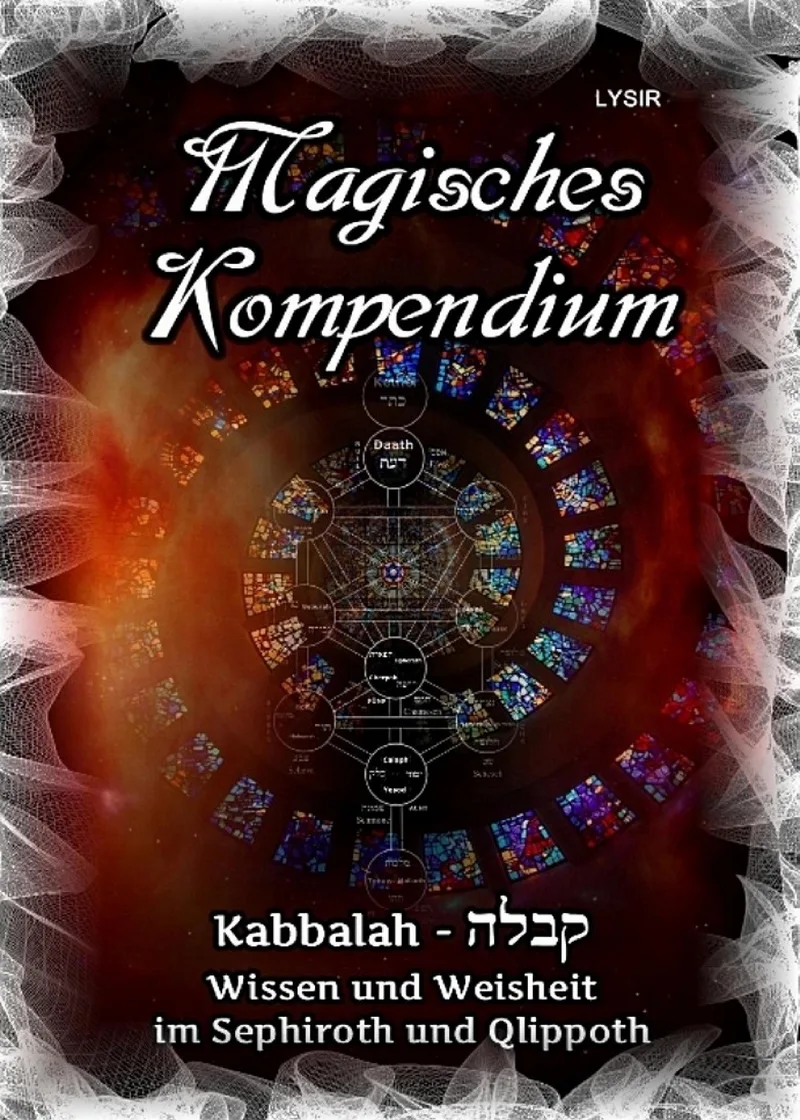
Magisches Kompendium - Kabbalah - Wissen und Weisheit im Sephiroth und Qlippoth
 74
74

Magisches Kompendium - Kabbalah - Wissen und Weisheit im Sephiroth und Qlippoth
Frater Lysir's "Magisches Kompendium" attempts to provide a practical manual for navigating Kabbalistic principles, particularly the Sephiroth and Qlippoth. The author's stated goal is to offer a "Schablone"—a template—for understanding and employing Kabbalistic concepts across various magical disciplines. This ambition is commendable, and the work does succeed in presenting a coherent, if somewhat dense, overview. The strength lies in its systematic approach, attempting to break down complex ideas into manageable components for the student. However, the reliance on German technical vocabulary, even when translated in the blurb, can create a barrier for non-German speakers, potentially limiting its accessibility. The book's treatment of the Qlippoth, while present, feels less developed than its exploration of the Sephiroth, which is a missed opportunity for a more balanced view of the totality of the Kabbalistic Tree. Ultimately, the compendium offers a structured, albeit specialized, entry point into Kabbalistic magic for dedicated students.
📝 Description
74
Published in 2019, Frater Lysir's Magisches Kompendium offers a structured Kabbalistic guide.
Frater Lysir's "Magisches Kompendium - Kabbalah - Wissen und Weisheit im Sephiroth und Qlippoth" details the Kabbalistic systems of the Sephiroth and Qlippoth. It provides a framework for magical practice and esoteric study, aiming to clarify complex Kabbalistic ideas for those interested in occult knowledge. The book suggests Kabbalah is a universal model applicable across various magical traditions.
This compendium targets students and practitioners of Western esotericism involved with Kabbalistic magic. It appeals to individuals seeking a systematic method for occult studies, mapping the spiritual cosmos through Kabbalistic cosmology. Researchers of esoteric history and philosophy will also find material here. The work is suitable for those wishing to integrate Kabbalistic frameworks into their own magical systems.
This 2019 work connects to a long tradition of Kabbalistic literature, referencing texts from the Zohar to modern interpretations by figures like Aleister Crowley and Dion Fortune. Frater Lysir treats Kabbalah as a dynamic system for magical operations, not a historical relic. The book contributes to the current reinterpretation of Kabbalistic concepts within modern occultism, bridging older teachings with contemporary practice.
💡 Why Read This Book?
• Gain a structured understanding of the Sephiroth and Qlippoth, using the Kabbalah as a universal "Erklärungsschablone" (explanatory template) as detailed in the book's framework. • Master essential Kabbalistic "Fachvokabeln" (technical vocabulary) necessary for effective engagement with esoteric texts and practices, moving beyond superficial understanding. • Explore the 2019 publication context, which positions this work within contemporary occultism's effort to revitalize and adapt ancient Kabbalistic wisdom for modern magical applications.
⭐ Reader Reviews
Honest opinions from readers who have explored this book.
❓ Frequently Asked Questions
What is the primary purpose of Frater Lysir's "Magisches Kompendium"?
The book serves as a guide to Kabbalistic principles, specifically the Sephiroth and Qlippoth, presenting them as a universal template for understanding and practicing magic across different traditions.
Is prior knowledge of Kabbalah required to read this book?
While helpful, the book aims to make complex Kabbalistic concepts accessible. It introduces necessary "Fachvokabeln" (technical vocabulary) for those new to the subject.
What distinguishes the Sephiroth and Qlippoth according to this compendium?
The Sephiroth represent divine emanations and the path of spiritual ascent, while the Qlippoth are their shadowed counterparts, often associated with challenges and the 'unmanifest' aspects of existence.
How does this book relate to other magical systems?
It positions the Kabbalah as a foundational 'Schablone' (template) that can explain and unify principles found in various magical directions and esoteric studies.
When was "Magisches Kompendium - Kabbalah" first published?
The original publication date for this work by Frater Lysir was May 26, 2019.
What is the significance of the term 'Qlippoth' in Kabbalah?
Qlippoth, often translated as 'husks' or 'shells,' refers to the negative or external forces in Kabbalistic cosmology, representing the inverse of the Sephiroth and the forces of imbalance.
🔮 Key Themes & Symbolism
The Kabbalistic Tree of Life
The central organizing principle explored is the Kabbalistic Tree of Life, encompassing both the ten Sephiroth and the associated Qlippoth. The work details how these spheres and paths function as a cosmic map and a blueprint for spiritual development and magical operations. It emphasizes the interconnectedness of these divine emanations and their shadow counterparts, presenting a dynamic model of creation and consciousness as understood within esoteric traditions.
Kabbalah as a Magical Framework
This compendium posits the Kabbalah not merely as a philosophical or mystical system, but as a practical 'Schablone' (template) for all forms of magic. It argues that understanding the Sephiroth and Qlippoth provides a universal language and methodology applicable to diverse magical aims, from self-transformation to influencing external events. The book aims to equip readers with the specific 'Fachvokabeln' (technical vocabulary) required to engage effectively with this framework.
Duality of Creation: Sephiroth and Qlippoth
A core theme is the interplay between the ascending forces of the Sephiroth and the descending or challenging aspects represented by the Qlippoth. The work studies how this inherent duality shapes existence and spiritual progression. It suggests that mastery involves understanding and working with both the luminous emanations and their darker, often misunderstood, counter-aspects within the Kabbalistic cosmology.
Esoteric Knowledge and Wisdom
The book frames its content as 'Wissen und Weisheit' (knowledge and wisdom), positioning Kabbalah as a profound source of esoteric understanding. It guides the reader toward unlocking deeper insights into the nature of reality, consciousness, and the divine by studying the intricate structure of the Sephiroth and Qlippoth. The goal is to foster not just intellectual comprehension but practical application of this wisdom.
💬 Memorable Quotes
Direct passages from the work, attributed to the author.
“Das magische Werkzeug, welches im System der Kabbalah existiert, bietet für alle magische Richtungen eine Erklärungsschablone.”
— This statement highlights the author's central thesis: that the Kabbalistic system serves as a universal explanatory framework, a 'template,' applicable across diverse magical disciplines and practices.
“sodass man sich viel einfacher und auch viel effektiver die verschiedensten Dinge erschließen kann, wenn man sich der kabbalistischen Weisheits- und Arbeitsmethode zuwenden will.”
— This conveys the practical benefit of studying Kabbalah, suggesting it simplifies and enhances one's ability to understand and achieve goals by adopting its methods of wisdom and work.
“Natürlich gibt es hierbei einige Fachvokabeln, die man für sich lernen, identifizieren und durchaus auch im Kontext nutzen muss.”
— This acknowledges the learning curve associated with Kabbalah, emphasizing the necessity of mastering its specific technical vocabulary ('Fachvokabeln') for proper comprehension and application.
“Doch dies gilt für alle Fachrichtu[ngen].”
— This concluding fragment from the blurb implies that the requirement to learn specialized terminology is not unique to Kabbalah but is a common feature across all specialized fields of study or practice.
“Wissen und Weisheit im Sephiroth und Qlippoth”
— This phrase from the title expresses the book's core subject matter: imparting both factual knowledge ('Wissen') and deeper understanding ('Weisheit') concerning the divine emanations (Sephiroth) and their shadowy counterparts (Qlippoth).
🌙 Esoteric Significance
Tradition
This work firmly belongs within the Western Esoteric Tradition, specifically focusing on Hermetic Kabbalah as developed and adapted from its Jewish mystical roots. It draws upon the Neoplatonic and Gnostic influences that permeated Renaissance Kabbalah and later occult revival movements. Frater Lysir's approach aims to synthesize theoretical understanding with practical application, positioning the Kabbalah as a 'magical tool' rather than solely a religious or philosophical doctrine.
Symbolism
The primary symbols are the Sephiroth and Qlippoth, forming the structure of the Kabbalistic Tree of Life. The Sephiroth (e.g., Kether, Chokmah, Binah) represent divine attributes and stages of creation, often depicted as spheres of light. The Qlippoth represent the inverse, chaotic, or shadowed aspects, often associated with the 'husks' or forces that block spiritual attainment. The interplay between these constitutes a fundamental symbolic dialectic within the book's framework.
Modern Relevance
Contemporary practitioners of ceremonial magic, Western occultism, and even some branches of modern Paganism continue to utilize Kabbalistic frameworks derived from texts like this. Thinkers and groups focused on practical Qabalah, energy work, and consciousness exploration often reference the Sephiroth and Qlippoth as essential models for understanding spiritual dynamics and psychological processes. The book's approach supports modern efforts to integrate esoteric knowledge into daily life and personal development.
👥 Who Should Read This Book
• Students of Western Esotericism seeking a structured introduction to Kabbalistic cosmology, particularly the Sephiroth and Qlippoth, as a foundational element of occult study. • Practitioners of ceremonial magic interested in understanding how Kabbalistic principles can serve as an 'Erklärungsschablone' (explanatory template) for their magical operations and rituals. • Researchers of comparative religion and mysticism looking to analyze how modern authors interpret and adapt classical Kabbalistic concepts for contemporary esoteric applications.
📜 Historical Context
Frater Lysir's "Magisches Kompendium," published in 2019, enters a contemporary occult landscape marked by both renewed interest in traditional systems and the challenges of information overload. While Kabbalah has been a core part of Western esotericism since the Renaissance, and significantly popularized by figures like Eliphas Lévi in the 19th century and later by the Hermetic Order of the Golden Dawn, modern works like this aim to distill and adapt its complex structures for current practitioners. The book emerges in an era where digital access to esoteric texts is widespread, yet systematic guides that bridge theory and practice are still sought after. It contributes to a lineage of Kabbalistic scholarship that includes figures such as Gershom Scholem, who meticulously studied Jewish mysticism, and more practically oriented occultists like Dion Fortune, who integrated Kabbalistic concepts into her magical system. The work implicitly addresses a need for clear, structured instruction, contrasting with more fragmented or overly academic approaches.
📔 Journal Prompts
The Kabbalistic 'Erklärungsschablone' as a lens for personal challenges.
Mapping the essential 'Fachvokabeln' learned from the Sephiroth and Qlippoth sections.
Reflecting on the duality presented by the Sephiroth and Qlippoth in one's own experience.
Identifying potential applications of the Kabbalistic framework to a specific magical goal.
Considering the 'Wissen und Weisheit' gained regarding the Qlippoth beyond common misconceptions.
🗂️ Glossary
Sephiroth
The ten divine emanations or attributes described in Kabbalistic cosmology, forming the Tree of Life and representing stages of creation and divine manifestation.
Qlippoth
Literally 'husks' or 'shells,' these are the negative or shadowed counterparts to the Sephiroth in Kabbalistic lore, often associated with imbalance, chaos, and the forces that obscure divine light.
Kabbalah
A system of Jewish mysticism and esoteric thought that seeks to understand the nature of God and creation, often represented visually by the Tree of Life.
Erklärungsschablone
German term meaning 'explanatory template' or 'framework,' used here to describe the Kabbalah's function as a universal model for understanding esoteric phenomena.
Fachvokabeln
German term for 'technical vocabulary' or 'specialized terminology,' referring to the specific language required to understand and discuss Kabbalistic concepts accurately.
Magisches Werkzeug
German for 'magical tool,' emphasizing the practical, instrumental aspect of the Kabbalistic system as presented in the book.
Weisheit
German for 'wisdom,' denoting a deeper, often intuitive or experiential understanding, as distinct from mere knowledge ('Wissen').