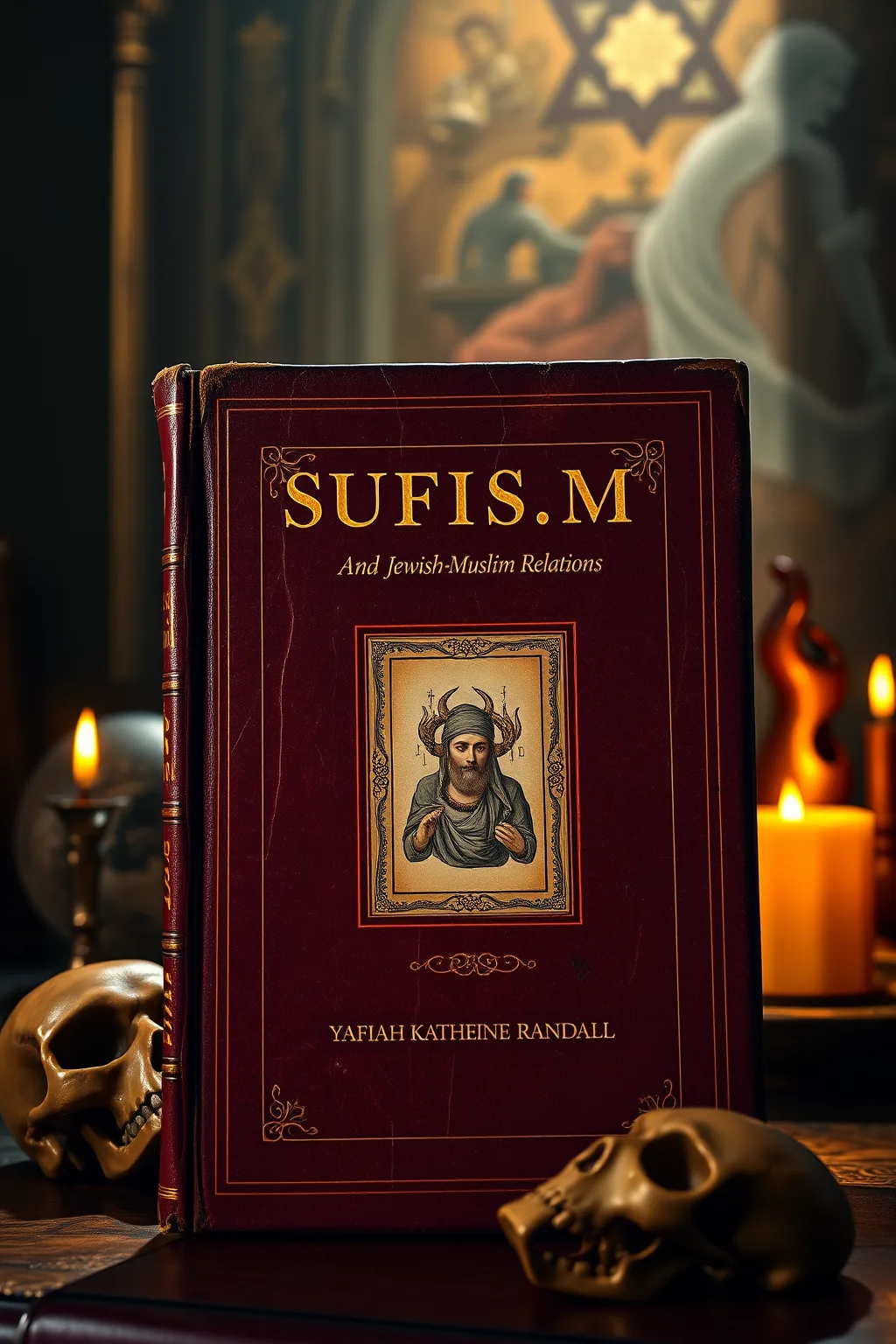
Sufism and Jewish-Muslim Relations
 61
61

Sufism and Jewish-Muslim Relations


Celeste Moreau, Divination & Symbolism Reviewer — Yafiah Katherine Randall's "Sufism and Jewish-Muslim Relations" is a revelation for serious students of esoteric thought. Randall masterfully navigates the complex spiritual landscape, illuminating the profound, often overlooked, resonances between Sufi wisdom and Kabbalistic teachings. Her analysis of shared symbolism and mystical methodologies is both insightful and elegantly presented. This work doesn't merely juxtapose traditions; it reveals their inherent dialogue, offering a rare glimpse into a shared pursuit of the divine. Essential for scholars of comparative mysticism and practitioners seeking deeper understanding of interfaith spiritual connections.
📝 Description
61
Yafiah Katherine Randall's "Sufism and Jewish-Muslim Relations" examines the historical dialogue between these two mystical traditions.
This book investigates the historical connections between Sufism and Kabbalah. Randall demonstrates how these traditions, often viewed separately, engaged in mutual spiritual exchange. The work draws on sacred texts, biographies of saints, and philosophical writings to trace shared themes.
It highlights a common vocabulary of divine love, symbolic views of the cosmos, and the human aspiration for spiritual union. The book reveals how these paths, despite their differences, recognized commonalities in their spiritual quests. Randall's research uncovers the subtle yet significant ways these traditions influenced each other, fostering a deeper understanding of interfaith spiritual dialogue.
This work situates itself within studies of comparative mysticism, specifically looking at the esoteric dimensions of Abrahamic faiths. It addresses the historical interactions and shared philosophical underpinnings between Sufi and Kabbalistic thought. The book’s focus is on the hidden continuities and mutual influences that arose from direct engagement between practitioners of these traditions, rather than solely on parallel development.
💡 Why Read This Book?
Uncover the hidden mystical dialogue between Sufism and Kabbalah. Discover shared esoteric wisdom, symbolism, and paths to divine union. Ideal for seekers of interfaith understanding, scholars of mysticism, and practitioners yearning for a deeper connection across traditions. This book offers a unique perspective on spiritual kinship and universal truths.
⭐ Reader Reviews
Honest opinions from readers who have explored this book.
❓ Frequently Asked Questions
What is the primary focus of this book?
The book primarily focuses on the historical and mystical connections between Sufism and Jewish mysticism (Kabbalah), exploring their shared themes, dialogues, and mutual influences.
Who is the intended audience for this book?
This book is intended for scholars of comparative religion and mysticism, students of Kabbalah and Sufism, and spiritual seekers interested in interfaith dialogue and esoteric traditions.
Does the book discuss contemporary Jewish-Muslim relations?
While it primarily delves into historical and mystical connections, the insights gained offer a foundation for understanding contemporary interfaith dynamics through a spiritual lens.
Are there any specific Sufi or Kabbalistic orders mentioned?
Yes, the book specifically references the Derekh Avraham Order as an example of a group engaged in this interfaith dialogue and shared mystical practice.
Is this book suitable for beginners in mysticism?
While it offers profound insights, a foundational understanding of basic mystical concepts would enhance the reader's appreciation. However, it is written accessibly enough for dedicated beginners.
🔮 Key Themes & Symbolism
The Luminous Bridge of Divine Love
This theme explores the shared concept of Divine Love as the ultimate unifying force in both Sufism and Kabbalah. It examines how ecstatic states, devotional practices, and the aspiration for direct experience of the Divine are articulated through similar symbolic language and mystical frameworks across these traditions. The focus is on the inner journey, the heart's role as a vessel for divine light, and the transformative power of love in bridging spiritual divides.
Symbolic Language of the Infinite
Randall explores the wide range of symbols common to both Sufi and Kabbalistic thought, such as light, divine names, cosmic emanations, and the interconnectedness of all creation. This theme highlights how these symbolic systems serve as keys to unlocking deeper metaphysical truths, offering a shared vocabulary for describing the ineffable nature of God and the structure of reality. The interpretation of these symbols reveals a profound, underlying unity in their esoteric philosophies.
The Mystic's Path of Union
This theme illuminates the shared quest for *tawhid* (unity) in Sufism and *devekut* (cleaving) in Kabbalah. It examines the practical disciplines, meditative techniques, and ethical imperatives that guide the mystic toward experiential union with the Divine. The exploration focuses on the ascetic practices, the purification of the soul, and the development of spiritual discernment as essential components of the spiritual journey, emphasizing the universal human drive for ultimate connection.
💬 Memorable Quotes
Direct passages from the work, attributed to the author.
“In the silence of the soul, the Divine whispers its secrets.”
— This speaks to the importance of inner stillness and contemplation as the primary means of receiving divine revelation and esoteric knowledge.
“Each star in the celestial dome reflects a spark of the Creator's essence.”
— This highlights the interconnectedness of the cosmos and the divine immanence, suggesting that all of creation holds a fragment of the divine presence.
“The journey inward is the greatest pilgrimage.”
— This emphasizes that true spiritual progress and discovery occur through introspection and self-awareness rather than external travel or worldly pursuits.
“Wisdom is a garden watered by tears of devotion.”
— This beautifully illustrates that profound spiritual understanding is cultivated through sincere emotional commitment and heartfelt spiritual longing.
💡 Key Ideas
Editorial paraphrase of the work's core concepts — not direct quotes.
The veil between hearts is thinner than the thread of a spider's web.
This quote emphasizes the ease with which genuine spiritual connection can be achieved when ego and worldly distractions are set aside, highlighting the intimacy possible in the spiritual realm.
🌙 Esoteric Significance
Tradition
The book's esoteric significance lies primarily in its exploration of comparative mysticism, drawing deeply from the traditions of Kabbalah (Jewish mysticism) and Sufism (Islamic mysticism). It uncovers a shared esoteric grammar, revealing how both traditions utilize symbolic language, contemplative practices, and spiritual disciplines to achieve direct experience of the Divine and understand the hidden architecture of reality. The focus is on the inner gnosis and the paths to enlightenment common to both mystical lineages.
Symbolism
Key symbols explored include the Tree of Life (Kabbalah) and the concept of *wahdat al-wujud* (Unity of Being) in Sufism, the divine names, the emanations of light, and the journey of the soul. These symbols are not merely decorative but represent profound metaphysical concepts. The book interprets them as shared keys to unlocking esoteric understanding, illustrating how both traditions perceive the universe as a divinely ordered emanation, with humanity holding a central role in realizing its divine potential through symbolic interpretation and spiritual practice.
Modern Relevance
In an era often marked by division, the esoteric significance of this book lies in its demonstration of profound historical and spiritual commonalities between Jewish and Muslim mystics. It offers a model for interfaith dialogue rooted in shared wisdom and a universal yearning for the Divine. This resonates powerfully today, encouraging a deeper appreciation for the spiritual heritage of both traditions and fostering a sense of global spiritual kinship. The insights into contemplative practice and symbolic understanding remain vital for contemporary seekers of inner peace and universal truth.
👥 Who Should Read This Book
This book is a treasure for a diverse audience. **Scholars of comparative religion and mysticism** will find rigorous analysis and novel connections. **Students of Kabbalah and Sufism** will gain a richer, more integrated understanding of their respective traditions. **Spiritual seekers** drawn to esoteric wisdom and interfaith dialogue will discover useful insights into universal truths and the shared human quest for the Divine. **Practitioners of contemplative disciplines** will find inspiration and new perspectives on paths to spiritual realization and inner peace.
📜 Historical Context
This study is situated within the rich historical range of Jewish and Islamic civilizations, particularly during periods of significant intellectual and spiritual exchange, from the medieval era through the early modern period. It acknowledges the complex geopolitical realities and occasional tensions between these communities, but crucially focuses on the more intimate, often clandestine, intellectual and mystical dialogues that transpired. This era witnessed the flourishing of both Kabbalah and Sufism, with scholars and mystics actively engaging with each other’s philosophical and practical insights, often through shared philosophical language and a common pursuit of divine truth. The influence of Neoplatonism and other shared intellectual currents provided fertile ground for this cross-pollination, leading to a unique synthesis of spiritual understanding.
📔 Journal Prompts
Reflect on a symbol that holds deep personal meaning for you. How might this symbol be interpreted within a broader mystical context?
Consider the concept of 'Divine Love' in your own spiritual understanding. How does this concept connect you to others, regardless of their beliefs?
What does the idea of 'inner pilgrimage' mean to your spiritual journey? Describe a time you felt you made significant progress by looking inward.
Imagine a silent dialogue between a Kabbalist and a Sufi mystic. What questions might they ask each other about the nature of God and reality?
How can the pursuit of spiritual unity, as explored in the book, inform your daily interactions with people from different backgrounds?
🗂️ Glossary
Kabbalah
A system of Jewish mysticism that explores the nature of God, the creation of the universe, and the spiritual purpose of human existence, often through symbolic interpretation of the Torah.
Sufism
The mystical dimension of Islam, focused on the direct, personal experience of God through asceticism, contemplation, and love, often associated with ecstatic states and esoteric knowledge.
Derekh Avraham Order
A specific Jewish spiritual order, mentioned in the text, that engages in the dialogue and shared practices between Jewish and Sufi mystical traditions.
Ta'wil
In Sufism, the esoteric interpretation of scripture or symbols, aiming to uncover hidden meanings beyond the literal text.
Gematria
A Kabbalistic method of interpreting the Hebrew Bible by calculating the numerical value of words and their components, finding hidden connections and meanings.
This book appears in 1 collection
🔮 Readers Also Liked
Browse all →







From the “Kabbalah” Collection
View all →








More Free Kabbalah & Jewish Mysticism Books
View all →