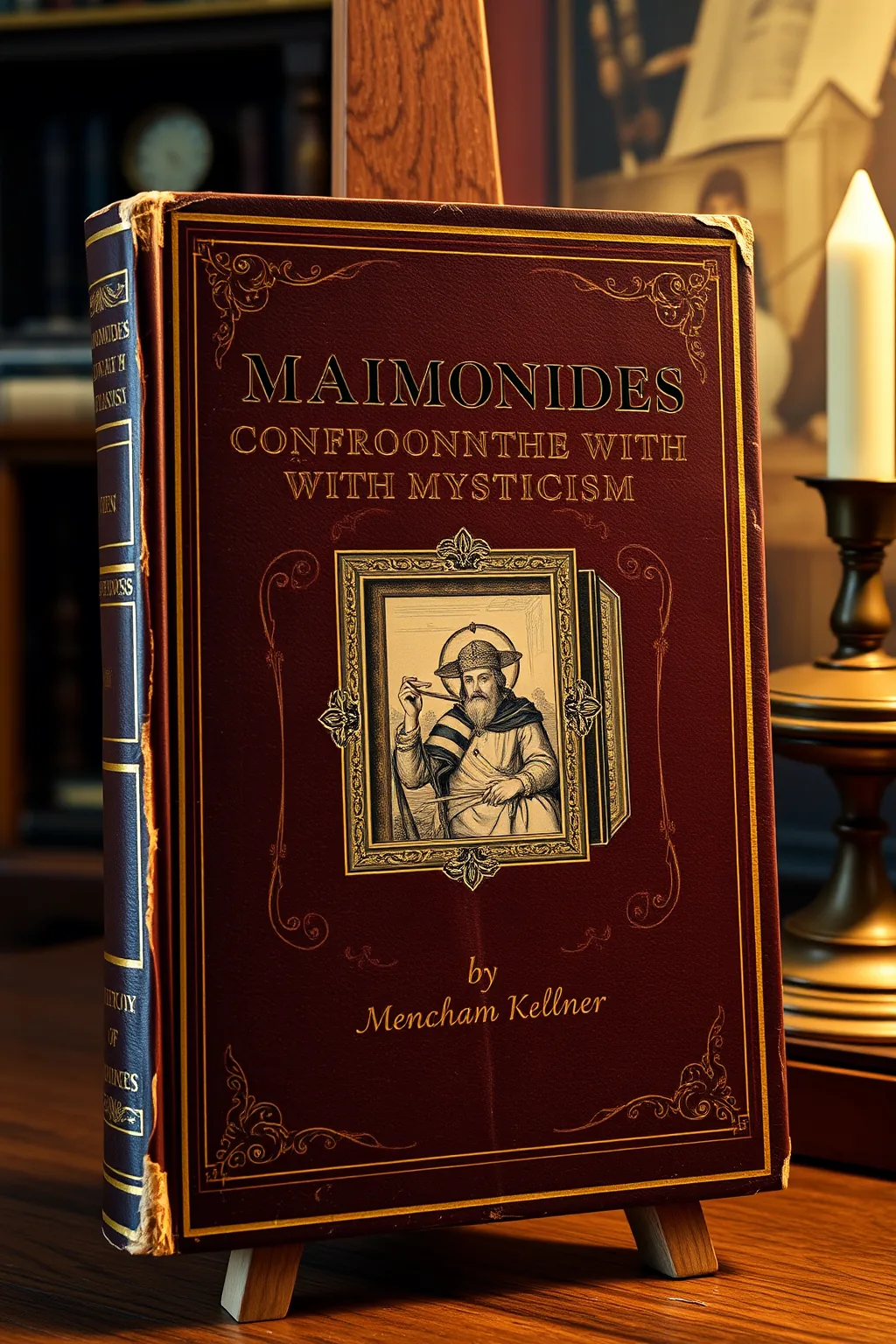
Maimonides Confrontation With Mysticism (Littman Library of Jewish Civilization)
 61
61

Maimonides Confrontation With Mysticism (Littman Library of Jewish Civilization)

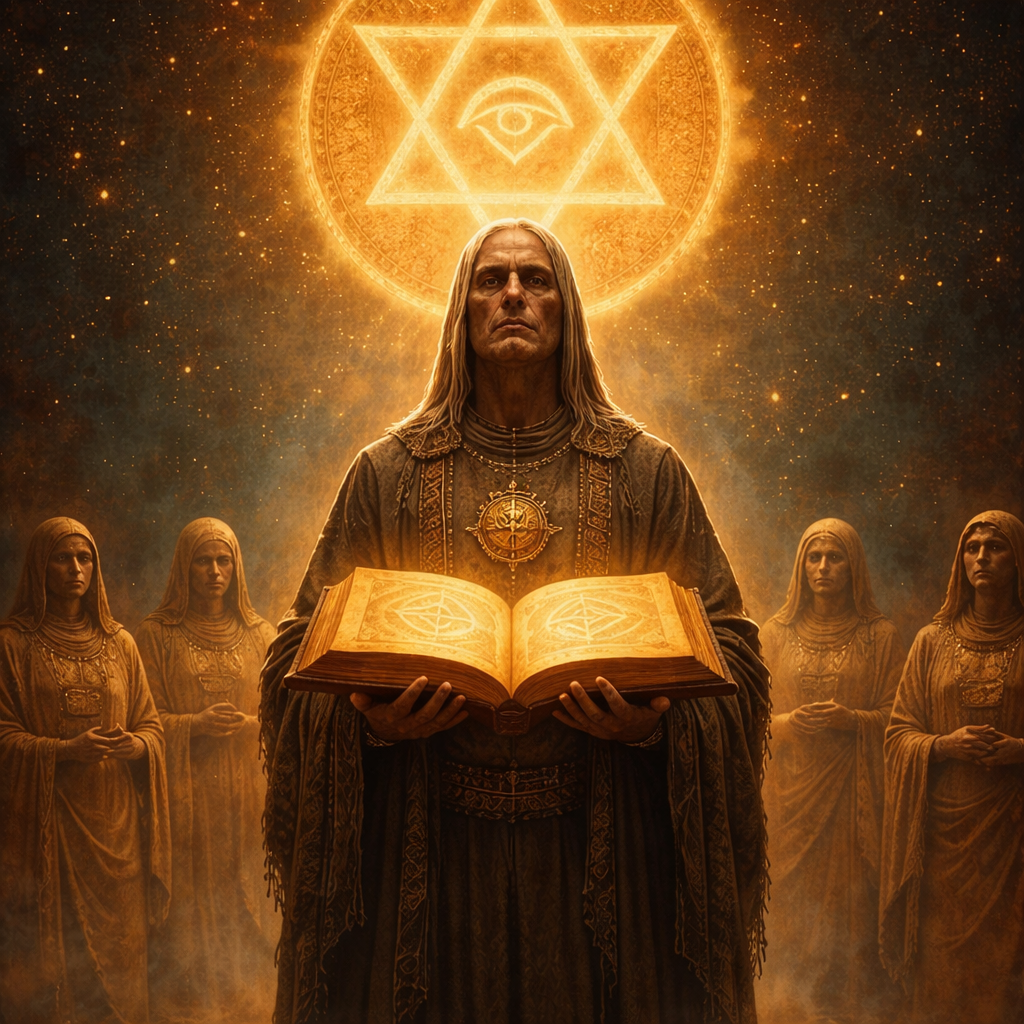

Sophia Crane (Associate Editor) — Menachem Kellner's "Maimonides Confrontation With Mysticism" is a landmark exploration of a complex intellectual nexus. Kellner brilliantly dissects the apparent dichotomy between Maimonides' philosophical rationalism and the emergent Kabbalistic currents, uncovering profound points of convergence and subtle engagement. The book excels in its nuanced analysis of how Maimonides' concepts, often interpreted solely through a rational lens, can be re-contextualized within a mystical framework. This is a vital text for scholars and serious practitioners of Jewish mysticism seeking to understand the foundational philosophical underpinnings of their tradition.
📝 Description
61
Menachem Kellner examines Maimonides' complex relationship with Jewish mysticism in this 1990 study.
Menachem Kellner's 1990 book, "Maimonides Confrontation With Mysticism," investigates the often-unacknowledged connections between the rationalist philosophy of Moses Maimonides and the esoteric traditions of Kabbalah. Kellner argues that Maimonides' thought, while primarily Aristotelian, contains elements that resonate with mystical concepts.
The study scrutinizes Maimonides' writings for veiled mystical dimensions and symbolic meanings. It looks at how Maimonides approached divine knowledge and the language used to describe it. Kellner seeks to uncover a spiritual understanding within Maimonides' philosophy that transcends a purely rational interpretation. This work aims to illuminate the spiritual underpinnings of medieval Jewish thought.
This book engages with the esoteric currents within medieval Judaism, particularly the development of Kabbalah. It positions Maimonides, often seen as a rationalist bulwark against mystical speculation, within a broader intellectual milieu where such traditions held sway. Kellner's work suggests that the boundary between rationalism and mysticism was not always as stark as commonly perceived, and that even figures like Maimonides were influenced by or engaged with these deeper spiritual inquiries.
💡 Why Read This Book?
Uncover the hidden mystical dimensions within Maimonides' rationalist philosophy. This book is for seekers of deeper meaning in Jewish thought, scholars of philosophy and mysticism, and practitioners who wish to understand the esoteric roots of their tradition. It offers a unique perspective on the intricate interplay between reason and revelation.
⭐ Reader Reviews
Honest opinions from readers who have explored this book.
❓ Frequently Asked Questions
Did Maimonides himself practice Kabbalah?
The book explores the *influence* and potential *points of contact* between Maimonides' thought and mystical traditions, rather than asserting he was a practicing Kabbalist in the modern sense. It examines how his ideas were interpreted and utilized by mystics.
What is the 'Littman Library of Jewish Civilization'?
The Littman Library is a highly respected academic publisher dedicated to producing scholarly works on all aspects of Jewish civilization, known for its rigorous research and high-quality scholarship.
Is this book suitable for beginners in Kabbalah?
While it is a scholarly work, it is written in an accessible manner for those with a general interest in Jewish philosophy and mysticism. Beginners may benefit from some foundational knowledge, but the book provides ample context.
What are the main differences between Maimonides' philosophy and Kabbalah?
Maimonides emphasized Aristotelian logic and rational inquiry, seeking to reconcile faith with reason. Kabbalah, conversely, delves into divine emanations, symbolism, and esoteric interpretations of scripture, focusing on direct spiritual experience.
How does this book shed light on medieval Jewish thought?
It reveals the dynamic intellectual environment of the Middle Ages, demonstrating that seemingly disparate philosophical and mystical approaches were often in dialogue, influencing and shaping one another in complex ways.
🔮 Key Themes & Symbolism
The Hermeneutics of the Divine Intellect
This theme studies how Maimonides' concept of the Divine Intellect, a core part of his philosophical system, can be interpreted through a mystical lens. It examines how the pursuit of intellectual perfection, as outlined by Maimonides, aligns with Kabbalistic aspirations for closeness to God and the understanding of divine emanations. The book explores the symbolic language used to describe this intellectual ascent and its implications for achieving spiritual illumination, highlighting the shared quest for transcendent knowledge.
Symbolic Language of Creation and Revelation
Here, the focus shifts to the symbolic underpinnings of creation and scriptural interpretation. The study investigates how Maimonides' rational explanations of the natural world and divine law can be seen as allegorical expressions of deeper, esoteric truths. It explores the Kabbalistic tendency to view every letter and word of the Torah as holding profound mystical significance, and how Maimonides' systematic approach might have inadvertently provided a framework for such symbolic readings, bridging the gap between literal and hidden meanings.
The 'Confrontation' as Dialogue, Not Conflict
This theme re-frames the perceived conflict between Maimonides' rationalism and mysticism as a dynamic intellectual dialogue. The book argues that rather than being mutually exclusive, these traditions engaged in a complex interplay, with mystics drawing upon Maimonides' philosophical vocabulary and Maimonides himself potentially being influenced by the spiritual currents of his time. It highlights how this 'confrontation' spurred intellectual innovation and a richer, more nuanced understanding of Jewish theology and practice.
💬 Memorable Quotes
Direct passages from the work, attributed to the author.
“Hidden knowledge lurks within the well-ordered universe.”
— Suggests that the seemingly rational structures of the cosmos, as described by Maimonides, are imbued with deeper, esoteric meanings waiting to be unveiled by the diligent seeker.
“Symbolism is the bridge between the finite and the infinite.”
— Highlights the crucial role of allegorical and symbolic interpretation in bridging the gap between human understanding and the ineffable nature of the divine realm.
“Reason can illuminate the path, but the soul must tread it.”
— Emphasizes that while intellectual understanding is vital, the ultimate spiritual journey requires inner experience and a connection to the soul's deeper dimensions.
“The true philosopher is also a mystic in disguise.”
— Implies that even the most rational thinkers may harbor or engage with esoteric insights, suggesting a universal human drive towards transcendental understanding.
💡 Key Ideas
Editorial paraphrase of the work's core concepts — not direct quotes.
The path to understanding God is paved with both reason and revelation.
This quote expresses the core argument: that true comprehension of the divine requires integrating philosophical inquiry with the insights gleaned from mystical and scriptural traditions.
🌙 Esoteric Significance
Tradition
This work is deeply rooted in the esoteric traditions of Jewish mysticism, primarily Kabbalah. It explores how Maimonides' philosophical concepts, often perceived as purely rational, can be understood as possessing hidden, symbolic meanings that resonate with Kabbalistic doctrines concerning divine emanations (sefirot), the nature of the En Sof (the Infinite), and the mystical structure of the cosmos.
Symbolism
The book studies the strong symbolism inherent in Maimonides' philosophical lexicon, reinterpreting terms like 'Divine Intellect' and 'Active Intellect' through a mystical lens. It examines how his descriptions of prophecy and divine providence can be seen as veiled references to Kabbalistic concepts, highlighting the symbolic language used to articulate ineffable spiritual truths and the hidden architecture of reality.
Modern Relevance
In contemporary spiritual and philosophical discourse, "Maimonides Confrontation With Mysticism" offers a crucial bridge between rationalism and mysticism. It demonstrates that the pursuit of knowledge need not be confined to empirical or logical methods, but can also embrace intuitive, symbolic, and experiential dimensions. This work is vital for understanding the ongoing dialogue between reason and spirituality in the modern world.
👥 Who Should Read This Book
This informative study is essential for a diverse audience. **Scholars of Jewish philosophy and religious studies** will find a rigorous and nuanced analysis that recontextualizes a foundational thinker. **Practitioners of Kabbalah and Jewish mysticism** will discover a deeper understanding of the philosophical underpinnings that informed their tradition. **Students of comparative religion and intellectual history** will appreciate the exploration of cross-cultural philosophical dialogue. Even **serious seekers of spiritual wisdom** with a background in philosophy will find clear insights into the enduring quest for meaning and the complex relationship between reason and the transcendent.
📜 Historical Context
Written in the 12th century, "Maimonides Confrontation With Mysticism" emerges from a vibrant intellectual milieu in the Islamic world, a period of intense philosophical and theological discourse within Judaism. Maimonides, writing during a time of both intellectual flourishing and societal challenges for Jewish communities, sought to synthesize Aristotelian philosophy with Jewish tradition, aiming to provide a rational framework for faith. Simultaneously, nascent Kabbalistic ideas, with their emphasis on divine emanations, the symbolic power of Hebrew letters, and esoteric interpretations of scripture, were beginning to take root. This era was characterized by a dynamic tension and fascinating interplay between these seemingly divergent approaches, as thinkers grappled with the nature of God, creation, and humanity's relationship with the divine.
📔 Journal Prompts
How does Maimonides' concept of the Divine Intellect resonate with your personal understanding of spiritual enlightenment?
Identify a passage in Maimonides' works that you previously interpreted rationally, and explore its potential mystical implications.
Consider the role of symbolism in your own spiritual journey. How does it help you connect with concepts beyond empirical understanding?
Reflect on the 'confrontation' between reason and mysticism. Where do you see this dialogue playing out in contemporary thought or your own life?
What hidden knowledge or esoteric truths do you believe are encoded within the natural world or sacred texts?
🗂️ Glossary
Divine Intellect
In Maimonides' philosophy, this refers to the highest aspect of God, the source of all existence and knowledge, often understood through an Aristotelian framework as the ultimate cause.
Active Intellect
A concept borrowed from Aristotelianism, which Maimonides identifies with prophecy and the means by which humans receive divine knowledge and inspiration, acting as an intermediary.
Sefirot
In Kabbalah, these are the ten divine emanations or attributes through which God reveals Himself and interacts with creation, forming a mystical structure of the divine realm.
En Sof
The Kabbalistic term for God in His absolute, infinite, and unknowable essence, prior to any manifestation or emanation.
Hermeneutics
The theory and methodology of interpretation, especially the interpretation of biblical texts, literary works, or philosophical concepts.
This book appears in 1 collection
🔮 Readers Also Liked
Browse all →







From the “Kabbalah” Collection
View all →









More Free Kabbalah & Jewish Mysticism Books
View all →