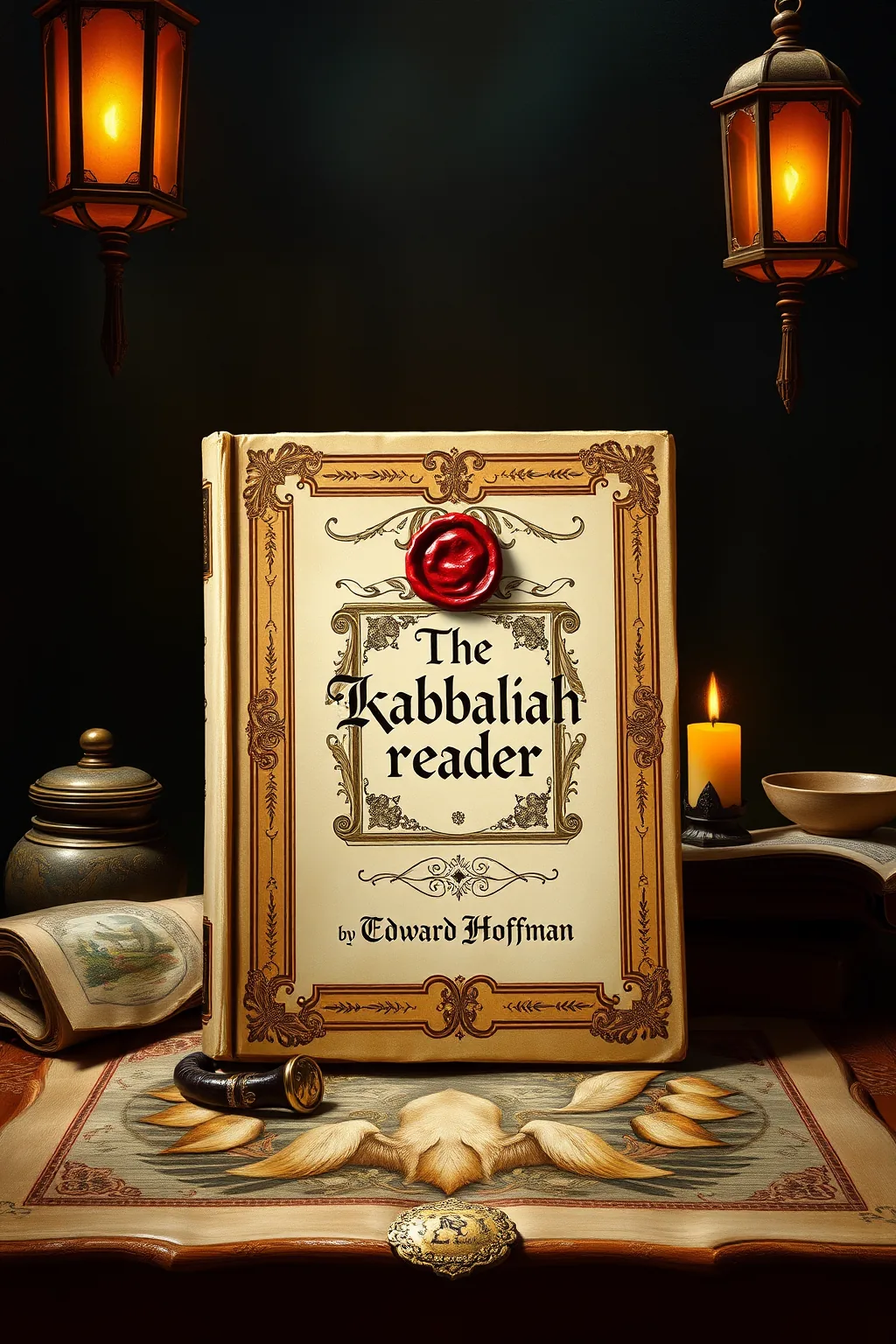
The kabbalah reader
 61
61

The kabbalah reader


Silas Hawthorne (Hermetic Studies Editor) — "The Kabbalah Reader" is a seminal work for anyone seeking to penetrate the veils of Jewish mysticism. Hoffman masterfully navigates the labyrinthine pathways of Kabbalistic thought, offering a coherent and deeply insightful exploration of this ancient tradition. His unique perspective, blending psychological acumen with scholarly rigor, reveals the profound and often overlooked relevance of Kabbalah to contemporary spiritual seekers. The curated selection of texts is exceptional, providing access to voices rarely encountered elsewhere. This book is an indispensable guide for those yearning to understand the divine emanations, the Tree of Life, and the esoteric underpinnings of creation. It is a true treasure for the serious student of mysticism.
📝 Description
61
Edward Hoffman's 1997 anthology gathers Kabbalistic texts spanning sixteen centuries.
Edward Hoffman compiled "The Kabbalah Reader" in 1997, bringing together writings on Jewish mysticism from a wide range of sources. The book includes texts from prominent figures and lesser-known mystics, covering a period of sixteen hundred years. Hoffman, a psychologist and scholar, aimed to make this complex tradition accessible.
The collection goes beyond historical presentation. Hoffman connects Kabbalistic ideas to contemporary concerns, suggesting their relevance for ethical questions, personal well-being, intuition, and spiritual exploration. The book aims to help readers understand complex symbolism and the structure of existence as conceived within Kabbalah. It positions itself as more than a simple historical account, encouraging a deeper spiritual engagement.
This book situates itself within the tradition of Kabbalah, a Jewish mystical practice that developed over centuries. Its origins are often traced to early texts like the Sefer Yetzirah and the Bahir. Later developments, particularly during the medieval period, saw the emergence of influential works such as the Zohar and the teachings of Isaac Luria, which further shaped Kabbalistic thought. The reader samples this lineage, presenting concepts related to divine emanations, cosmology, and the nature of the soul within a Jewish framework. It engages with the esoteric dimensions of these texts, which often involve symbolic interpretation and contemplative practices.
💡 Why Read This Book?
Unveil the ancient secrets of Jewish mysticism with "The Kabbalah Reader." This essential volume offers a comprehensive, accessible entry into 1,600 years of profound thought, featuring rare texts and insightful commentary. Ideal for seekers of hidden knowledge, scholars of comparative religion, and practitioners looking to deepen their understanding of spiritual principles, it reveals Kabbalah's surprising relevance to modern ethical and psychological concerns, offering a path to enhanced intuition and emotional health.
⭐ Reader Reviews
Honest opinions from readers who have explored this book.
❓ Frequently Asked Questions
Is "The Kabbalah Reader" suitable for beginners?
Absolutely. Edward Hoffman's accessible prose and thoughtful curation make this an excellent starting point for those new to Kabbalah, demystifying complex concepts without sacrificing depth.
What is the primary focus of this book?
The book focuses on presenting a comprehensive overview of Jewish mystical thought across 1,600 years, highlighting its esoteric nature, symbolism, and relevance to contemporary life.
Does the book include original Kabbalistic texts?
Yes, it features a diverse collection of writings from various Kabbalistic thinkers, many of which are not readily available elsewhere.
How does this book connect Kabbalah to modern life?
Hoffman demonstrates how Kabbalistic principles can inform ethical decision-making, enhance emotional well-being, and sharpen intuitive capacities, making ancient wisdom practically applicable today.
What makes this collection unique?
Its unique strength lies in its comprehensive scope, including obscure thinkers alongside renowned ones, and its insightful bridge between historical esoteric knowledge and modern personal growth.
🔮 Key Themes & Symbolism
The Tree of Life and Divine Emanations
Explore the central metaphor of the Kabbalistic Tree of Life, exploring its ten Sefirot as divine emanations that form the structure of reality. Understand how these archetypal energies manifest in the cosmos and within the human soul, offering a map for spiritual ascent and a framework for comprehending God's relationship with creation. This theme unravels the intricate divine architecture, revealing the hidden pathways that connect the mundane to the sacred.
Esoteric Interpretation and Hidden Meanings
Discover the art of esoteric interpretation, where biblical texts and Jewish tradition are viewed through a mystical lens to reveal deeper, concealed layers of meaning. This theme explores the methods of gematria, notarikon, and temurah, demonstrating how letters and words are not merely linguistic tools but divine keys capable of unlocking profound spiritual truths. It emphasizes the pursuit of hidden knowledge and the transformative power of understanding the universe's underlying symbolic language.
The Soul's Journey and Spiritual Transformation
Journey into the Kabbalistic understanding of the human soul, its origins, its descent into the material world, and its ultimate potential for spiritual ascent. This theme examines concepts like the divine spark within, the process of tikkun (rectification), and the quest for union with the divine. It highlights how Kabbalah offers a roadmap for personal growth, ethical development, and the realization of one's highest spiritual potential through introspection and conscious engagement with cosmic forces.
💬 Memorable Quotes
Direct passages from the work, attributed to the author.
“The universe is a divine conversation.”
— Suggests that all existence is imbued with meaning and interconnectedness, a profound dialogue between the Creator and creation, waiting to be understood.
“Within the microcosm, the macrocosm resides.”
— Highlights the principle of correspondence, asserting that the human being (microcosm) contains the essence and structure of the entire universe (macrocosm).
“Seek the patterns, find the path.”
— Encourages the reader to look for underlying order and symbolic connections in reality as a means to navigate their spiritual journey.
“Emotions are elements of the divine.”
— Connects the inner emotional landscape to spiritual realities, suggesting that our feelings can be indicators of deeper, divine currents within us.
💡 Key Ideas
Editorial paraphrase of the work's core concepts — not direct quotes.
Wisdom is the light that illuminates the hidden.
This quote emphasizes Kabbalah's core pursuit: uncovering profound truths that are not immediately apparent, likening wisdom to a divine illumination.
🌙 Esoteric Significance
Tradition
This book delves deeply into the esoteric tradition of Kabbalah, a mystical interpretation of Judaism that seeks to understand the nature of God, creation, and the human soul through symbolic language and meditative practices. It explores the Kabbalistic cosmology, particularly the Tree of Life, and the intricate relationships between divine emanations and the material world, offering a framework for spiritual ascent and a deeper connection to the divine.
Symbolism
Central to Kabbalah is its rich symbolic language, and this reader meticulously unpacks key symbols such as the Tree of Life (Etz Chaim) with its ten Sefirot, the Hebrew alphabet as a blueprint for creation, and the divine names. These symbols are not mere representations but active forces and pathways that guide the practitioner towards understanding the divine structure of reality and their place within it, revealing hidden meanings in scripture and existence.
Modern Relevance
Edward Hoffman masterfully bridges the gap between ancient Kabbalistic teachings and contemporary concerns. He demonstrates how the pursuit of spiritual understanding, the exploration of the psyche, and the ethical frameworks inherent in Kabbalah offer profound tools for navigating modern life. The book reveals how Kabbalistic insights can foster emotional intelligence, enhance intuition, and provide a deeper sense of purpose and connection in an often fragmented world, making esoteric wisdom accessible and actionable.
👥 Who Should Read This Book
This comprehensive reader is designed for a diverse audience. **Beginners** will find an accessible entry point into the complex world of Jewish mysticism, guided by Hoffman's clear explanations. **Scholars** of religion and philosophy will appreciate the breadth of thinkers covered and the scholarly depth of the analysis. **Spiritual seekers** will discover clear insights into the nature of reality, the divine, and the human soul, offering a path for personal growth and a deeper connection to the sacred. **Practitioners** of contemplative disciplines will find valuable concepts and techniques to enrich their spiritual journey and enhance their understanding of esoteric principles.
📜 Historical Context
Spanning from the early medieval period to the modern era, "The Kabbalah Reader" traverses a rich historical range of Jewish mystical development. Its origins are often traced to the Sefer Yetzirah (Book of Formation) around the 3rd to 6th century CE, a foundational text exploring creation through letters and numbers. The major flourishing of Kabbalah occurred in medieval Spain and Provence, with seminal works like the Zohar (Book of Splendor) emerging in the late 13th century, offering complex allegorical interpretations of the Torah. Later centuries saw the development of Lurianic Kabbalah in Safed, with Isaac Luria's teachings on tzimtzum (contraction) and tikkun (rectification), profoundly influencing subsequent mystical thought and practice. The Enlightenment and its challenges led to new interpretations and applications, including the integration of Kabbalistic ideas into broader philosophical and psychological frameworks, as seen in Hoffman's work.
📔 Journal Prompts
Reflect on a time you experienced a profound sense of intuition. How might Kabbalistic concepts of divine emanations explain this experience?
Consider the Tree of Life as a map of your own inner landscape. Which Sefirah do you feel most connected to currently, and why?
How can understanding the symbolic nature of language, as explored in Kabbalah, deepen your interpretation of everyday experiences or sacred texts?
If the universe is a 'divine conversation,' what messages do you believe are being communicated to you daily?
In what ways can the Kabbalistic pursuit of 'tikkun' (rectification) be applied to your personal ethical challenges or societal issues?
🗂️ Glossary
Sefirot
The ten divine attributes or emanations described in Kabbalah, forming the structure of the Tree of Life and representing different aspects of God's manifestation in creation.
Ein Sof
The Kabbalistic concept of the 'Infinite' or 'Without End,' representing God in His absolute, unknowable, and transcendent essence before any emanation or creation.
Tzimtzum
The Kabbalistic doctrine of 'contraction' or 'withdrawal,' describing God's self-limitation to create a space for existence and the emergence of the material world.
Gematria
A system of Jewish numerology that assigns numerical values to Hebrew letters, used in Kabbalah to find hidden meanings and connections between words and concepts.
Tikkun
A central Kabbalistic concept meaning 'rectification' or 'repair.' It refers to the process of mending the cosmic and spiritual brokenness, often through human action and spiritual practice.
This book appears in 1 collection
🔮 Readers Also Liked
Browse all →









More by Edward Hoffman
All books →




From the “Kabbalah” Collection
View all →





More Free Kabbalah & Jewish Mysticism Books
View all →