Qabalah
 72
72

Qabalah
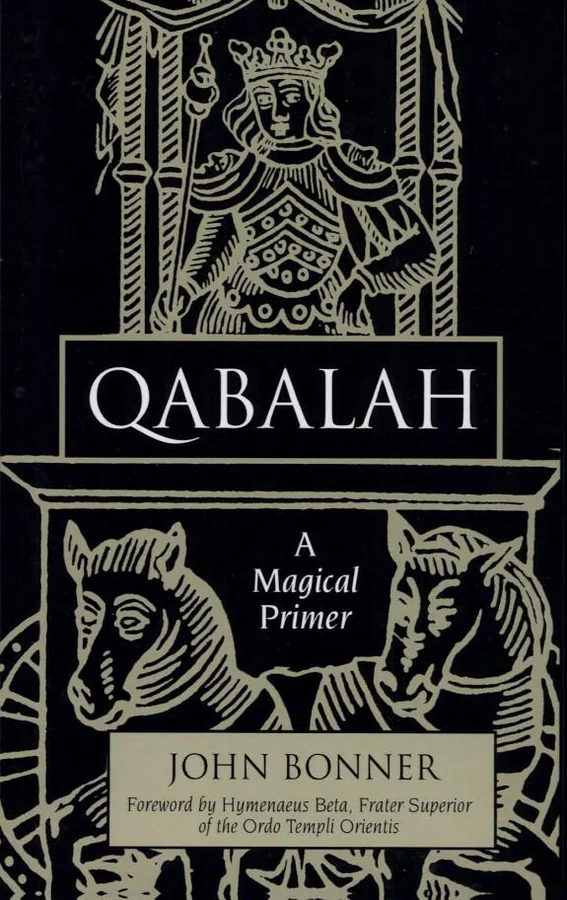
Bonner's "Qabalah" offers a cogent exposition of a system often veiled in dense, archaic language. He succeeds admirably in presenting it as a dynamic philosophy rather than a static doctrine. The strength lies in its clear articulation of Qabalah's metaphysical aims and its role in personal development. However, the book could benefit from more extensive engagement with specific Kabbalistic texts or schools of thought beyond the Hermetic Order of the Golden Dawn's influence, which is heavily emphasized. A notable passage is the introduction's direct assertion of Qabalah as a theosophy seeking answers to existential questions, setting a clear objective for the reader. The work effectively bridges historical roots with contemporary esoteric application. It is a solid primer for those seeking a philosophical understanding of the Qabalah.
📝 Description
72
John Bonner's "Qabalah" examines this mystical philosophy not just as history, but as a living system for personal growth.
John Bonner's "Qabalah" presents the Kabbalistic system as a metaphysical philosophy and theosophy, aiming to answer fundamental questions about the divine, creation, and humanity's place in the cosmos. The book treats Qabalah as an active discipline for personal development, noting its influence on many contemporary Western magical traditions. It is written for practitioners seeking to grasp the core principles of Qabalah for spiritual growth and self-discovery. Students of comparative religion and Western esotericism will also find value in tracing the lineage of ideas that have shaped modern occult thought. Those interested in the philosophical basis of magick will find relevant discussions.
Bonner acknowledges Qabalah's origins as a Jewish mystical interpretation and its later integration into Western esoteric orders. The book traces this development, particularly its adoption by groups like the Hermetic Order of the Golden Dawn, which was instrumental in spreading Kabbalistic ideas in the late 19th and early 20th centuries. The text uses Qabalah as a framework for understanding existence, extending beyond scriptural interpretations to a comprehensive cosmology. It details concepts like divine emanations, spiritual ascent pathways, and the interconnectedness of all things.
This work situates Qabalah within the broader currents of Western esotericism, detailing its adaptation and integration beyond its Jewish mystical roots. It highlights the specific role of late 19th and early 20th-century organizations like the Hermetic Order of the Golden Dawn in synthesizing Kabbalistic concepts with other traditions. The book therefore addresses not only the internal structure of Qabalah but also its historical transmission and syncretic evolution within magical and occult philosophies.
💡 Why Read This Book?
• Understand Qabalah as a "metaphysical philosophy" and "theosophy," as articulated in the introduction, providing a framework for existential questions about God and creation. • Trace the influence of Qabalah on "contemporary Western magick," as detailed in the text, revealing its foundational role in traditions like the Hermetic Order of the Golden Dawn. • Explore Qabalah as a "living, growing system of personal development," offering practical avenues for spiritual growth and self-discovery beyond academic study.
⭐ Reader Reviews
Honest opinions from readers who have explored this book.
❓ Frequently Asked Questions
What is the primary focus of John Bonner's "Qabalah"?
Bonner's "Qabalah" presents the system as a "metaphysical philosophy" and "theosophy" focused on understanding God, creation, and humanity's place within a divine plan, emphasizing its role in personal development.
When was John Bonner's "Qabalah" first published?
The book "Qabalah" by John Bonner was first published on March 15, 2002.
Does this book cover the historical origins of Qabalah?
Yes, the book acknowledges Qabalah's origins as a "mystical interpretation of Jewish scriptural texts" before exploring its broader metaphysical and esoteric applications.
Is "Qabalah" by John Bonner suitable for beginners?
The work aims to present Qabalah as a "living, growing system of personal development," suggesting it is accessible to those new to its philosophical aspects, though it also delves into its influence on Western magick.
Which esoteric traditions are discussed in relation to Qabalah in this book?
The book highlights the foundational role of Qabalah in "contemporary Western magick," particularly referencing its influence through orders like the Hermetic Order of the Golden Dawn.
What is the author's view on Qabalah's nature?
John Bonner defines Qabalah as a "metaphysical philosophy, or rather a theosophy," aiming to answer fundamental questions about existence and the divine.
🔮 Key Themes & Symbolism
Theosophical Framework
Bonner frames Qabalah not just as religious mysticism but as a "theosophy" aiming to elucidate the nature of God, the cosmos, and humanity's purpose. This approach positions the system as a tool for profound inquiry into existence, bridging theological speculation with philosophical exploration. The work suggests Qabalah offers answers to vital questions about the divine plan and our place within it, encouraging a holistic understanding of reality.
Personal Development System
Central to Bonner's exposition is Qabalah's function as a "living, growing system of personal development." This highlights its practical application for individual spiritual evolution and self-awareness. The book implies that by understanding its principles, practitioners can start a path of inner transformation, aligning themselves with the metaphysical structures of the universe for greater insight and attainment.
Influence on Western Esotericism
The text emphasizes Qabalah's crucial role as a foundation for "contemporary Western magick." It acknowledges how systems like those developed by the Hermetic Order of the Golden Dawn integrated Kabbalistic concepts, disseminating them widely. This perspective positions Bonner's work as essential for understanding the lineage and theoretical underpinnings of modern occult practices that draw heavily on this ancient tradition.
Metaphysical Philosophy
Bonner defines Qabalah as a "metaphysical philosophy," setting it apart from purely religious dogma. This perspective invites readers to consider its broader implications for understanding reality, consciousness, and the nature of being. The book explores how Qabalah offers a coherent worldview that addresses fundamental existential inquiries, making it relevant for those seeking intellectual and spiritual understanding.
💬 Memorable Quotes
Direct passages from the work, attributed to the author.
“Much of contemporary Western magick is founded on the work of the Hermetic Order of the G...”
— This statement highlights the significant impact of Qabalah, particularly as interpreted by esoteric orders like the Hermetic Order of the Golden Dawn, on modern occult practices and philosophies.
“The work explores Qabalah as a framework for understanding existence.”
— This interpretation focuses on the book's presentation of Qabalah as a comprehensive worldview, offering structures and concepts to comprehend the nature of reality and consciousness.
💡 Key Ideas
Editorial paraphrase of the work's core concepts — not direct quotes.
"Qabalah is a metaphysical philosophy, or rather a theosophy, that sets out to answer a series of vital questions regarding the nature of God, His creation, and the place of man in His divine plan."
This quote directly establishes the book's central thesis: viewing Qabalah as a comprehensive system of thought addressing ultimate questions of existence, divinity, and humanity's cosmic role.
It is a living, growing system of personal development.
This paraphrased concept emphasizes Qabalah's dynamic nature and its practical utility for individual spiritual growth, suggesting it is not merely an academic subject but a path for active transformation.
While it began as a mystical interpretation of Jewish scriptural texts, today Qabalah is much more.
This paraphrased concept acknowledges the historical roots of Qabalah within Jewish tradition while asserting its expansive evolution into a broader philosophical and esoteric system.
🌙 Esoteric Significance
Tradition
Bonner's work aligns with the Western Esoteric tradition, specifically its Kabbalistic and Hermetic branches. It interprets Qabalah not solely through its traditional Jewish lens but as a universal "theosophy" and "metaphysical philosophy." This perspective carries the syncretic approach favored by late 19th and early 20th-century occult revival movements, which sought to integrate diverse mystical systems into a coherent framework for spiritual development and magical practice.
Symbolism
While specific symbols are not detailed in the provided blurb, Bonner's approach implies an engagement with core Qabalistic motifs such as the Tree of Life (Sephiroth and Paths), divine emanations, and the Hebrew alphabet as symbolic language. These elements function as a cosmic map and a tool for understanding the divine structure of reality and the human soul's journey.
Modern Relevance
Contemporary practitioners of Western magick, ceremonial magic, and modern occultism frequently draw upon Qabalistic frameworks. Thinkers and groups exploring consciousness, spiritual psychology, and comparative mysticism often reference Qabalistic concepts for their structured approach to cosmology and inner transformation, continuing the legacy influenced by figures associated with the Hermetic Order of the Golden Dawn.
👥 Who Should Read This Book
• Students of Western Esotericism: Those seeking to understand the foundational role of Qabalah in movements like the Hermetic Order of the Golden Dawn and its subsequent influence on modern occultism. • Aspiring Metaphysical Philosophers: Individuals interested in exploring Qabalah as a "theosophy" that addresses fundamental questions about God, creation, and humanity's cosmic significance. • Practitioners of Personal Development: Readers looking for a system that offers a structured approach to spiritual growth, self-discovery, and inner transformation through metaphysical principles.
📜 Historical Context
John Bonner's "Qabalah," published in 2002, emerges in an era where esoteric traditions were increasingly accessible and subject to academic and popular interest. The book situates Qabalah within its evolution from Jewish mysticism to a core part of Western esotericism. It specifically references the Hermetic Order of the Golden Dawn, a key 19th and early 20th-century movement that synthesized Kabbalistic ideas with Hermeticism, ceremonial magic, and other occult philosophies. This order was instrumental in popularizing Qabalistic concepts among a Western audience, influencing figures like Aleister Crowley and Dion Fortune. Bonner's work acknowledges this syncretic trajectory, contrasting with purely religious or historical analyses of Qabalah and placing it firmly within the lineage of esoteric thought that flourished in the wake of movements like Theosophy and Anthroposophy.
📔 Journal Prompts
The concept of Qabalah as a "metaphysical philosophy" and "theosophy": How does this framing alter your understanding of its purpose?
Humanity's place in the "divine plan": Reflect on how Qabalah's framework might offer a new perspective on individual purpose.
The "living, growing system of personal development": Identify one aspect of Qabalah that could be applied to your own growth journey.
The influence of Qabalah on "contemporary Western magick": Consider the implications of its integration into modern occult practices.
Theosophical inquiry: What "vital questions" about God and creation does Qabalah propose to answer?
🗂️ Glossary
Qabalah
A system of Jewish mysticism and esoteric philosophy concerned with the divine nature, creation, and humanity's relationship with God, which has also been adopted and adapted within Western esoteric traditions.
Theosophy
A religious philosophy that claims to derive its knowledge of God and the universe from spiritual insight or mystical experience, often synthesizing elements from various religions and philosophies.
Metaphysical Philosophy
A branch of philosophy that explores the fundamental nature of reality, including the relationship between mind and matter, substance and attribute, and potentiality and actuality.
Western Magick
A broad category of esoteric practices and beliefs within Western culture, often involving ritual, symbolism, and the invocation of spiritual or elemental forces, heavily influenced by traditions like Hermeticism and Qabalah.
Hermetic Order of the Golden Dawn
A late 19th-century secret society that was influential in the development of modern Western esoteric traditions, particularly in magic and ritual, known for its synthesis of Kabbalistic, Hermetic, and Rosicrucian teachings.
Divine Plan
In a theological or philosophical context, the idea that the universe and human history are unfolding according to a preordained purpose or intention established by a divine being or force.
Personal Development
A lifelong process that involves self-reflection, identifying one's values, setting goals, and taking action to achieve one's full potential, often with a focus on spiritual, intellectual, or emotional growth.
This book appears in 1 collection
🔮 Readers Also Liked
Browse all →








From the “Qabalah” Collection
View all →








More Free Kabbalah & Jewish Mysticism Books
View all →