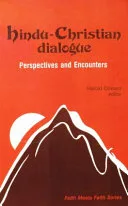
Hindu-Christian Dialogue
 72
72

Hindu-Christian Dialogue
Harold G. Coward’s Hindu-Christian Dialogue offers a sober, analytical approach to a subject ripe for facile generalization. Coward excels at dissecting the theological frameworks, particularly the concept of *moksha* and its parallels with Christian salvation, demonstrating a keen eye for distinguishing subtle but crucial differences. His strength lies in his methodical, almost clinical, presentation of doctrines, which, while not always lending itself to exciting prose, provides a solid academic foundation. A limitation, however, is the text's occasional dryness; the dense philosophical arguments, while accurate, can sometimes obscure the lived spiritual experience for readers less familiar with academic theological discourse. The exploration of Advaita Vedanta alongside Christian mysticism, particularly the concept of the indwelling Christ, highlights moments of potential connection, yet the fundamental divergences remain starkly clear. This book is a valuable resource for scholars and those seeking precise theological comparisons.
📝 Description
72
Harold G. Coward's 1989 book examines Hindu-Christian dialogue.
Published in 1989, Harold G. Coward's Hindu-Christian Dialogue offers a detailed comparison of these two major religious traditions. The work analyzes their theological, philosophical, and experiential aspects, identifying both commonalities and differences. Coward's approach is academic, focusing on critical inquiry rather than devotional practice. This book is suited for readers interested in comparative religion and interfaith studies who appreciate thorough textual analysis.
Coward's study appeared at a time of increasing global engagement and academic attention to Eastern religions in the West. The late 20th century saw a growing academic need for comparisons that went beyond surface-level observations. The book engages with the developing scholarly discussions on religious pluralism and the possibilities for mutual understanding among different spiritual paths, a conversation that gained traction in academic circles during the 1980s.
This book fits within the broader academic study of comparative religion, particularly focusing on interfaith dialogue. While not strictly an esoteric text itself, it analyzes traditions that contain deeply spiritual and philosophical dimensions often considered esoteric by outsiders. Coward's work engages with the intellectual currents that sought to understand diverse spiritual experiences and doctrines in a globalized world. It contributes to a scholarly tradition of mapping the connections and divergences between different religious worldviews, including those that emphasize mystical or transcendental knowledge.
💡 Why Read This Book?
• Gain a precise understanding of the theological distinctions between Brahman/Atman and the Christian Trinity, learning how these foundational concepts shape differing views on existence and salvation, as explored in the book's analysis of Hindu metaphysics. • Comprehend the historical and philosophical milieu of interfaith dialogue in the late 20th century, as Coward situates his comparative study within the intellectual currents of the 1980s. • Grasp the nuanced interpretations of spiritual liberation and salvation as presented through specific doctrines of Hinduism and Christianity, offering a framework for deeper comparative theological study.
⭐ Reader Reviews
Honest opinions from readers who have explored this book.
❓ Frequently Asked Questions
What is the primary focus of Harold G. Coward's Hindu-Christian Dialogue?
The book's primary focus is a scholarly comparison of Hindu and Christian theological and philosophical systems. It examines concepts like Brahman, Atman, salvation, and grace to identify both commonalities and significant differences between the two traditions.
When was Hindu-Christian Dialogue first published and by whom?
Harold G. Coward's Hindu-Christian Dialogue was first published in 1989. It represents a significant contribution to comparative religious studies from that era.
What are some key Hindu concepts discussed in relation to Christianity?
Key Hindu concepts explored include Brahman (the ultimate reality) and Atman (the self), which are often contrasted with the Christian understanding of God and the soul. The book also addresses concepts like karma and moksha.
Is this book suitable for a general audience or more academic readers?
While accessible to anyone with an interest in comparative religion, the book's rigorous analysis and detailed theological discussions are particularly suited for academic readers, theologians, and students of philosophy or religious studies.
What does the book aim to achieve regarding interfaith relations?
The book aims to foster deeper understanding and more informed dialogue between Hindus and Christians by clearly outlining their respective doctrines and philosophical underpinnings, moving beyond superficial similarities.
Does the book suggest that Hinduism and Christianity are ultimately the same?
No, the book does not suggest they are the same. Instead, it meticulously details both the points of potential convergence and the fundamental divergences, emphasizing the importance of understanding these distinctions for authentic dialogue.
🔮 Key Themes & Symbolism
The Nature of the Divine
The work scrutinizes the Hindu concept of Brahman, the impersonal, all-pervading ultimate reality, and its relationship to Atman, the individual soul. This is juxtaposed with the Christian doctrine of a personal God, often understood as a Trinity, and the concept of the soul's creation in God's image. Coward meticulously unpacks how these differing ontological frameworks influence each tradition's worldview and spiritual practices, highlighting the profound philosophical chasm that often exists despite superficial overlaps in devotional language.
Pathways to Liberation/Salvation
Central to the dialogue is an examination of how Hindus and Christians conceive of achieving ultimate spiritual fulfillment. For Hinduism, concepts like moksha (liberation from the cycle of rebirth) through various yogas or jnana (knowledge) are explored. This is contrasted with Christian notions of salvation through faith in Jesus Christ, divine grace, and redemption from sin. The book looks at the soteriological differences, analyzing the role of works, faith, and divine intervention in each path to spiritual attainment.
Scriptural Authority and Revelation
Coward addresses the distinct ways in which each tradition approaches its sacred texts and the concept of divine revelation. Hinduism's vast canon, including the Vedas, Upanishads, and Puranas, is examined alongside its emphasis on direct spiritual experience and realization. This is compared with Christianity's reliance on the Bible as divinely inspired scripture and the role of prophets and Jesus Christ as unique revelatory figures. The work analyzes how these differing views on revelation shape theological interpretation and practice.
The Role of the Human Person
The book investigates the understanding of the human being within both traditions. Hinduism's emphasis on the eternal nature of the Atman, often seen as identical with Brahman, is contrasted with the Christian view of humanity created by God, possessing free will, and susceptible to sin. Coward explores the implications of these differing anthropological views for ethics, purpose, and the ultimate destiny of the individual, particularly in relation to concepts of karma and divine judgment.
💬 Memorable Quotes
Direct passages from the work, attributed to the author.
“The concept of Brahman is not easily equated with the Christian idea of God.”
— This statement underscores the core challenge of Hindu-Christian dialogue: the fundamental differences in understanding ultimate reality. It implies that direct translation of theological terms often fails to capture the distinct ontological and metaphysical frameworks of each religion.
“Christianity posits salvation through the mediation of Jesus Christ.”
— This interpretation points to the centrality of Christ in Christian theology for achieving salvation. It sets up a contrast with Hindu paths to liberation, which often emphasize self-effort, knowledge, or devotion to various deities.
“The Atman is often understood as identical with Brahman.”
— This is a crucial tenet of Advaita Vedanta, one of the prominent Hindu philosophies discussed. It suggests an immanent, non-dualistic understanding of the self and ultimate reality, posing a significant contrast to dualistic or relational conceptions of God and humanity in Christianity.
“Distinguishing the roles of grace and karma is essential for comparative theology.”
— This statement emphasizes the need for careful analysis when comparing Hindu and Christian frameworks for spiritual progress. It highlights the tension between divine favor (grace) and the law of cause and effect (karma) in understanding spiritual causality.
💡 Key Ideas
Editorial paraphrase of the work's core concepts — not direct quotes.
Moksha involves liberation from the cycle of samsara.
This paraphrased concept highlights a key Hindu goal, emphasizing freedom from reincarnation. It serves as a point of comparison for Christian concepts of salvation, prompting an examination of differing views on the afterlife and spiritual destiny.
🌙 Esoteric Significance
Tradition
While not strictly an esoteric text in the vein of Hermeticism or Kabbalah, *Hindu-Christian Dialogue* touches upon concepts that resonate with esoteric traditions focused on inner spiritual realization. Its exploration of Brahman and Atman, particularly in relation to Advaita Vedanta, aligns with non-dualistic philosophies found in various mystical paths. The work's analytical approach to spiritual liberation can inform esoteric practitioners seeking to understand the philosophical underpinnings of their own paths, even as it maintains an academic, rather than overtly mystical, tone.
Symbolism
The concept of Brahman itself can be viewed as an esoteric symbol for the ultimate, ineffable Source, often understood as the 'All-in-All' or the ground of being. The Atman, as the inner Self, symbolizes the divine spark within each individual, a core tenet in many esoteric systems that emphasize inner divinity. The dialogue implicitly explores the symbolic representation of the divine in both traditions – the impersonal Absolute versus the personal God – and how these symbolic frameworks shape human experience and spiritual aspiration.
Modern Relevance
Contemporary thinkers and spiritual seekers engaged with non-dualistic philosophies, integral spirituality, and comparative mysticism find value in Coward's foundational work. It provides a clear, academic framework for understanding the philosophical underpinnings of traditions that influenced figures like Swami Vivekananda and later proponents of Vedanta in the West. Modern interfaith initiatives and scholars of religious pluralism continue to draw upon such analyses to foster mutual respect and deeper comprehension between diverse global religions.
👥 Who Should Read This Book
• Students of comparative religion and theology seeking a structured academic comparison of Hindu and Christian doctrines. • Philosophers and scholars interested in exploring the ontological and epistemological differences between Eastern and Western metaphysical systems. • Individuals involved in interfaith dialogue who require a nuanced understanding of theological divergences and potential points of convergence between these two major world religions.
📜 Historical Context
Published in 1989, Harold G. Coward's *Hindu-Christian Dialogue* emerged during a period of burgeoning academic interest in interfaith relations and comparative religious studies. The late 20th century witnessed a global shift towards acknowledging and exploring the plurality of religious experiences and doctrines. Coward's work contributed to a more sophisticated understanding of Hinduism within Western academia, moving beyond earlier, often Orientalist, interpretations. It engaged with the intellectual currents of post-Vatican II Catholic dialogue and the broader Theosophical and academic interest in Eastern thought that had gained traction since the mid-19th century. While not a direct engagement, it operated within a scholarly landscape shaped by figures like Mircea Eliade and Paul Tillich, who grappled with the nature of myth, religion, and universal spiritual experiences. The book’s methodical approach offered a counterpoint to more syncretistic or New Age interpretations that were also prevalent at the time, grounding the dialogue in rigorous theological and philosophical analysis.
📔 Journal Prompts
The concept of Brahman and its comparison to the Christian Trinity.
Differentiating the paths to moksha and Christian salvation.
Reflecting on the Atman's relationship to Brahman.
Analyzing the role of scripture in Hindu and Christian traditions.
Comparing the Christian concept of grace with Hindu notions of karma.
🗂️ Glossary
Brahman
In Hinduism, the ultimate, unchanging reality that is the source and sustainer of all existence. It is often described as impersonal, infinite, and beyond human comprehension.
Atman
The individual soul or self in Hinduism. In many schools, particularly Advaita Vedanta, the Atman is considered identical with Brahman.
Moksha
Liberation or release from the cycle of birth, death, and rebirth (samsara) in Hinduism. It is considered the ultimate spiritual goal.
Samsara
The continuous cycle of birth, death, and reincarnation in Hindu, Buddhist, Jain, and Sikh traditions, driven by karma.
Karma
The principle of cause and effect where actions in one life influence the circumstances of future lives. It is a fundamental concept in Indian religions.
Grace (Christian)
The unmerited favor of God, often understood as a divine assistance or power that enables humans to live a righteous life and achieve salvation.
Trinity (Christian)
The Christian doctrine that God is one God in three co-equal, co-eternal persons: the Father, the Son (Jesus Christ), and the Holy Spirit.