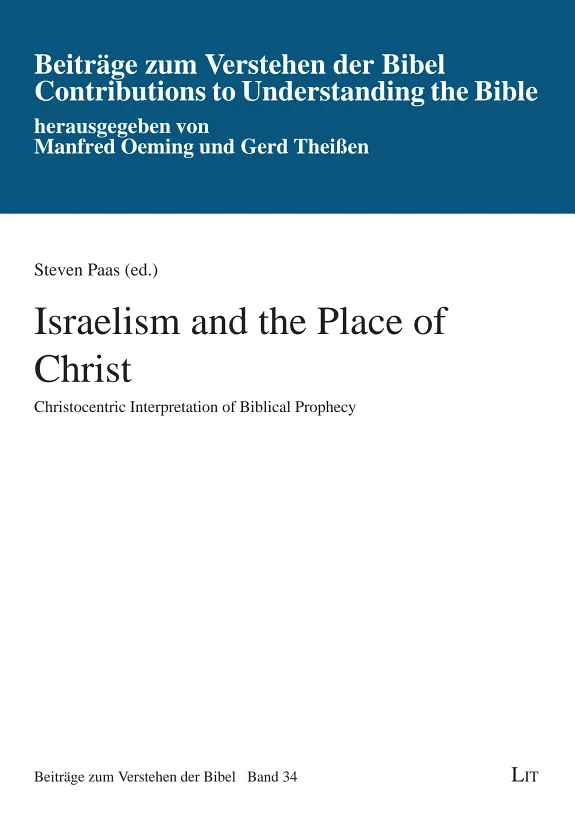
Israelism and the Place of Christ
 80
80

Israelism and the Place of Christ
Paas's "Israelism and the Place of Christ" offers a much-needed theological recalibration. Rather than succumbing to the prevailing political currents, Paas firmly anchors his inquiry in the core tenets of Christian theology, specifically the nature of God's covenantal relationship with humanity. The book’s strength lies in its disciplined approach to exegesis, particularly its insistence on reading the Old Testament through the lens of the New, a perspective often obscured in contemporary discourse. A notable limitation, however, is the dense academic prose which, while precise, may present a barrier to readers unfamiliar with theological jargon. The discussion around the "impartiality of God" as applied to peoples, rather than solely individuals, is particularly illuminating. Paas argues compellingly that a consistent theological reading demands a reevaluation of how national identities intersect with divine election. This work is a vital contribution for those seeking theological clarity on a contentious subject.
📝 Description
80
Steven Paas's 2018 book questions divine partiality toward peoples.
Published in 2018, Steven Paas's "Israelism and the Place of Christ" examines how the concept of Israel functions within Christian theology. The book confronts the idea of divine partiality, posing the question of whether God's favor applies to nations as well as individuals. Paas analyzes the connection between the Old and New Testaments, suggesting the latter offers a way to interpret the former.
This work is for theologians, biblical scholars, and students of Christian doctrine who are engaged with the identity of Israel in current Christian thought. It aims to illuminate the origins of theological stances on Israel and their effects on belief. Paas's study emerges within a complex theological arena where discussions of Israel's role are often tied to political and social issues. The book tackles long-standing theological questions, debated since early Christianity, particularly those concerning continuity and difference between God's covenant with ancient Israel and the Christian church.
This book engages with Gnostic interpretations of scripture, particularly concerning the nature of divine election and the relationship between different covenants. It probes the hermeneutical challenges in reconciling seemingly disparate biblical narratives, a concern shared by esoteric traditions that seek hidden meanings or a unified spiritual truth underlying diverse religious expressions. The focus on a Christological lens for understanding the Old Testament aligns with certain Gnostic approaches that view Christ as the key to unlocking the true meaning of earlier revelations.
💡 Why Read This Book?
• Gain a Christ-centered hermeneutic for understanding biblical Israel, moving beyond nationalistic interpretations, as explored in Paas's analysis of New Testament hermeneutics. • Grasp the theological distinction between God's impartiality towards individuals and potential favor towards peoples, a core debate within Christian doctrine since the early Church. • Understand the theological underpinnings of "Israelism" and how it shapes contemporary Christian thought, providing a critical framework for engagement with the subject.
⭐ Reader Reviews
Honest opinions from readers who have explored this book.
❓ Frequently Asked Questions
What is "Israelism" according to Steven Paas?
In "Israelism and the Place of Christ," "Israelism" refers to a theological framework that defines the relationship between God, the people of Israel, and the Christian Church. Paas examines how this framework has evolved and its implications for contemporary Christian theology.
Does the book discuss contemporary political issues related to Israel?
While the book addresses theological questions that have implications for political discourse, its primary focus is on Christian theology and biblical interpretation. It seeks to ground discussions in faith and doctrine rather than contemporary political analysis.
How does the book relate the Old and New Testaments?
Paas proposes using the New Testament as a hermeneutical lens for understanding the Old Testament. This approach aims to provide a unified theological reading of Scripture, emphasizing the continuity and fulfillment of God's promises in Christ.
Who is the intended audience for this book?
The book is intended for theologians, biblical scholars, pastors, and serious students of Christian theology who are interested in the doctrinal implications of Israel's place within Christian faith and interpretation.
When was "Israelism and the Place of Christ" first published?
The book "Israelism and the Place of Christ" by Steven Paas was first published in 2018.
What core theological question does the book tackle?
The book tackles the core theological question of whether God shows partiality to peoples, not just individuals. It explores how this concept of divine favor impacts the understanding of Israel's unique role within Christian theology.
🔮 Key Themes & Symbolism
Divine Impartiality
The work critically examines the biblical concept of God's impartiality, specifically questioning its application beyond individuals to encompass entire peoples. Paas probes whether the New Testament dictum that "God shows no favoritism" applies equally to nations, challenging interpretations that suggest a continued, exclusive divine preference for a specific ethnic group. This theological exploration aims to reconcile differing scriptural accounts of divine election and covenant, proposing that a consistent theological framework finds its coherence in Christ.
Christological Hermeneutics
A central theme is the necessity of a Christological hermeneutic for interpreting the Bible. Paas argues that the Old Testament finds its ultimate meaning and fulfillment in Jesus Christ. The book advocates for reading the earlier scriptures through the lens of the New Testament, suggesting this is the most faithful approach to understanding God's redemptive plan. This method seeks to unify the biblical narrative, demonstrating how Christ is the key to unlocking the complexities of Israel's historical and theological significance.
Theology of Peoples
Paas addresses the theological status of 'peoples' in God's plan, moving beyond a purely individualistic understanding of salvation. The book grapples with how to interpret passages that speak of God's covenant with Israel as a nation, especially in light of the universal claims of the Gospel. It seeks to articulate a coherent theology that accounts for both the particularity of God's historical dealings with Israel and the inclusivity of the New Covenant established through Christ, impacting how Christians view national identity and divine purpose.
Biblical Interpretation
The book offers a rigorous examination of biblical interpretation, particularly concerning the relationship between the Old and New Testaments. It challenges common approaches that may isolate or misapply Old Testament texts. By emphasizing the New Testament as the interpretive key, Paas guides readers toward a more integrated understanding of Scripture. This focus on hermeneutics is crucial for addressing theological controversies surrounding Israel and its place in Christian doctrine and eschatology.
💬 Memorable Quotes
Direct passages from the work, attributed to the author.
“How does God relate to the peoples in this world?”
— This question expresses the book's central inquiry into the nature of divine election and covenant. Paas uses this to pivot from individual salvation to the broader theological significance of national groups within God's overarching plan.
“Does the dictum that with God there is no partiality apply only to individuals, or also to peoples?”
— This is a central question posed by Paas, directly challenging interpretations that might suggest God favors specific ethnic or national groups. It forms the bedrock of his argument for a consistent theological understanding of divine impartiality.
“How do we read the Bible? To what extent should we use the New Testament as a lens for the Old Testament?”
— Paas frames the challenge of biblical interpretation around the relationship between the two testaments. He advocates for a Christ-centered hermeneutic, where the New Testament illuminates and fulfills the Old, providing a unified scriptural narrative.
“Does He still favour a people?”
— This direct question confronts the reader with the enduring theological debate about God's relationship with Israel and other nations. Paas explores the implications of affirming or denying such continued favor within Christian theology.
“Speaking about Israel not only touches on issues of international politics or social convictions but also on the core questions of faith and theology.”
— This statement highlights the profound theological weight of the subject of Israel. Paas asserts that discussions about Israel are not merely geopolitical but strike at the heart of Christian doctrine concerning God, salvation, and Scripture.
🌙 Esoteric Significance
Tradition
While not explicitly aligned with a singular esoteric tradition like Hermeticism or Kabbalah, Paas's work engages with deep theological questions that have historically been explored within esoteric thought. The focus on hidden meanings within scripture, the relationship between divine will and human history, and the search for a unified understanding of God's plan echo concerns found in Gnostic and Kabbalistic traditions. Paas's emphasis on Christ as the key to scriptural understanding can be seen as a form of Christocentric mysticism, seeking a transcendent truth within the biblical narrative.
Symbolism
The primary symbolic concept explored is 'Israel' itself, functioning not merely as a historical nation but as a complex theological symbol representing divine election, covenant, and the unfolding of God's redemptive purpose. The 'place of Christ' within this framework signifies the ultimate fulfillment and redefinition of these covenantal promises. The tension between 'peoples' and 'individuals' can be seen as symbolic of the universal (all humanity) versus the particular (specific covenant groups) within divine revelation.
Modern Relevance
Contemporary thinkers and movements concerned with post-colonial theology, interfaith dialogue, and critical biblical studies may find Paas's work relevant. His rigorous approach to hermeneutics challenges simplistic or politically charged interpretations of scripture, offering a method for theological reflection that prioritizes a unified, Christological reading. This can inform current discussions on identity, divine justice, and the interpretation of sacred texts in a pluralistic world, particularly among theological scholars seeking to move beyond ideological divides.
👥 Who Should Read This Book
• Theological scholars and students of Christian doctrine seeking a rigorous examination of the concept of Israel within faith. • Pastors and church leaders grappling with the theological implications of biblical texts concerning Israel and its relationship to the Church. • Readers interested in advanced biblical hermeneutics and the philosophical underpinnings of theological interpretation, particularly concerning Old and New Testament relations.
📜 Historical Context
Steven Paas's "Israelism and the Place of Christ," published in 2018, enters a theological discourse marked by ongoing debates about Israel's identity and role within Christianity. The post-World War II era saw a resurgence of theological interest in the relationship between the Church and Judaism, partly as a response to the Holocaust, influencing thinkers like Karl Barth and Jürgen Moltmann. Paas's work engages with these historical currents but critically re-examines the foundations of "Israelism" itself. He implicitly responds to dispensationalist interpretations prevalent in some evangelical circles, as well as covenant theology's various formulations. The book's challenge to established views on divine partiality towards nations places it in dialogue with a long tradition of theological wrestling, dating back to early Church Fathers grappling with the integration of Jewish and Gentile believers. While not directly citing contemporary figures in its blurb, the work's focus on hermeneutics and covenantal theology positions it within broader academic conversations concerning biblical interpretation.
📔 Journal Prompts
The nature of divine impartiality towards peoples.
The New Testament as a hermeneutical lens for the Old Testament.
Reconciling national identity with universal salvation.
The theological significance of 'Israelism'.
Core questions of faith and theology concerning peoples.
🗂️ Glossary
Israelism
A theological framework concerning the identity, role, and divine relationship of the people of Israel within Christian doctrine, often debated in relation to the Church and Gentile believers.
Hermeneutics
The theory and methodology of interpretation, especially the interpretation of biblical texts, focusing on understanding the meaning and principles of exegesis.
Divine Impartiality
The theological principle that God shows no favoritism or prejudice, treating all individuals and peoples equitably in His dealings.
Christological Lens
An interpretive approach to Scripture that views Jesus Christ as the central key to understanding the meaning and fulfillment of all biblical texts, particularly the Old Testament.
Covenant
A solemn agreement or promise, particularly between God and humanity, as established in biblical history with figures like Noah, Abraham, and Moses, and ultimately fulfilled in Christ.
Peoples
In this theological context, refers to groups of people, nations, or ethnic communities, distinct from a purely individualistic understanding of faith and salvation.
Old Testament
The first section of the Christian Bible, comprising the sacred scriptures of the Jewish people, which Christians interpret in light of the New Testament.
This book appears in 1 collection
🔮 Readers Also Liked
Browse all →









From the “Biblical Prophecy” Collection
View all →







More Free Sacred Texts & Gnosticism Books
View all →