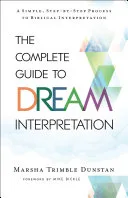
The Complete Guide to Dream Interpretation
 71
71

The Complete Guide to Dream Interpretation
Marsha Trimble Dunstan’s guide presents a refreshingly direct method for deciphering dreams, cutting through the often-dense prose found in similar works. Her commitment to a biblically grounded interpretation is its strongest asset, offering a clear framework for those who seek spiritual meaning in their nocturnal visions. The book’s structure, particularly its step-by-step plan and comprehensive symbol dictionary, makes it exceptionally practical. However, the very simplicity that makes it accessible might also be seen as a limitation by those seeking deeper, more nuanced psychological exploration. For instance, the interpretation of a common symbol like 'water' is presented with a consistent scriptural lens, which, while clear, might overlook the multifaceted personal or archetypal resonances explored by figures like Carl Jung. The work’s strength lies in its focused, spiritual approach, providing a solid foundation for a particular type of dream analysis. Dunstan’s guide is a valuable primer for the spiritually-minded interpreter, though less so for the purely psychologistic one.
📝 Description
71
Marsha Trimble Dunstan's 2018 guide offers a structured method for understanding dream symbols.
Published in May 2018, The Complete Guide to Dream Interpretation presents a clear system for analyzing dreams. Marsha Trimble Dunstan developed a method that focuses on practical application and biblical sources, moving away from complex psychological theories or vague spiritual ideas. The book aims to be accessible to anyone wanting a straightforward way to interpret their dreams. It provides a reproducible process and a lexicon of common dream symbols, with particular attention paid to spiritual or prophetic meanings.
This guide is for readers who prefer a direct, scripture-based approach to dream analysis. It speaks to those who have found other books on the subject either too academic, unclear, or lacking in detail. The work is structured around a step-by-step process and a dictionary of symbols intended to offer consistent interpretations. Dunstan grounds her teachings in Scripture, aligning dream imagery with biblical narratives. The author's engaging style is also a notable aspect, making the material approachable.
Dunstan's work enters the field of dream interpretation, a practice with roots across many cultures and spiritual traditions. While modern psychology, particularly Freudian and Jungian schools, has analyzed dreams through empirical lenses, other traditions have long viewed dreams as messages or spiritual insights. This book stands apart by explicitly grounding its interpretive framework in Scripture, distinguishing it from purely psychological analyses or more generalized New Age approaches to dream symbolism. Its 2018 publication reflects a continued interest in curated knowledge within spiritual practices, even in an age of abundant digital information.
💡 Why Read This Book?
• Gain a biblically grounded, step-by-step method for dream interpretation, moving beyond vague symbolism to concrete understanding, as outlined in Dunstan's "simple, dynamic plan." • Access a comprehensive dictionary of dream symbols, allowing for consistent and reliable interpretation based on scriptural principles, a key feature since its 2018 publication. • Understand dreams through a spiritual lens that integrates scriptural teachings, offering a unique perspective distinct from purely psychological or esoteric approaches.
⭐ Reader Reviews
Honest opinions from readers who have explored this book.
❓ Frequently Asked Questions
What is the primary approach to dream interpretation in Marsha Trimble Dunstan's book?
The book champions a simple, dynamic, and biblically grounded plan for dream interpretation. It provides a comprehensive dictionary of symbols alongside a step-by-step method, prioritizing clarity and scriptural alignment.
Who is Marsha Trimble Dunstan?
Marsha Trimble Dunstan is an expert in dream interpretation, known for her warm and witty style. She first published this comprehensive guide in May 2018, focusing on a scripturally informed approach.
How does this guide differ from other dream interpretation books?
Unlike books that employ complicated techniques or clinical language, Dunstan's work offers a straightforward, comprehensive, and biblically rooted system. It avoids excessive jargon and provides a clear, reproducible process.
What does 'biblically grounded' mean in the context of this book?
It means the interpretation methods and symbol meanings presented are thoroughly aligned with and derived from Scripture. The book grounds its teachings in biblical narratives and principles for understanding dreams.
When was 'The Complete Guide to Dream Interpretation' first published?
The book was first published on May 1, 2018. This publication date places it within contemporary literature on esoteric and spiritual subjects.
Is this book suitable for beginners in dream study?
Yes, the book is designed for accessibility, offering a simple plan and comprehensive dictionary. Its straightforward, scripturally focused approach makes it ideal for those new to dream interpretation.
🔮 Key Themes & Symbolism
Biblical Dream Symbolism
This theme explores how biblical narratives and figures inform the interpretation of dream imagery. Dunstan emphasizes that dreams can carry prophetic or spiritual messages, consistent with biblical accounts of Joseph or Daniel. The approach grounds symbolic meanings in Scripture, offering a framework where common dream elements like animals, numbers, or natural phenomena are understood through a specific theological lens. This contrasts with purely psychological or mythological interpretations, providing readers with a method to connect their dream experiences to a foundational spiritual text.
Structured Interpretation Method
Dunstan provides a 'simple, dynamic plan' and a 'comprehensive dictionary' as the core of her interpretive system. This emphasis on structure moves away from subjective or intuitive guesswork. The book aims to equip readers with reproducible steps and consistent symbol meanings derived from a scriptural basis. This methodical approach is designed to explain dream analysis, making it accessible even to those without prior esoteric training, and ensuring a consistent application of interpretive principles across different dreams.
Spiritual Communication
A central idea is that dreams can serve as a form of divine communication. The work posits that God or the spiritual realm can use dreams to convey messages, warnings, or guidance. By understanding the symbolic language within a scriptural context, readers can better discern these communications. This perspective encourages an attentive and prayerful approach to dreams, viewing them not merely as random neurological events but as potential encounters with spiritual truths or directives relevant to one's life path.
Accessible Esotericism
While dealing with esoteric concepts like dream symbolism, the book strives for accessibility through its 'wit and warmth' and straightforward language. It makes the practice of dream interpretation, often perceived as complex or arcane, available to a wider audience. By grounding esoteric interpretation in a widely recognized religious text like the Bible, Dunstan bridges the gap between conventional spirituality and deeper mystical exploration, offering a unique entry point for those seeking spiritual growth.
💬 Memorable Quotes
Direct passages from the work, attributed to the author.
“Too often, books on dream interpretation can wander off into complicated interpretation techniques, clinical language, or an incomplete 'CliffsNotes' set of information.”
— This observation highlights Dunstan's intention to create a guide that is both thorough and easy to understand, differentiating her work from academic or superficial treatments of the subject.
“With wit and warmth, dream interpretation expert Marsha Trimble Dunstan gives readers a truly simple, comprehensive, and biblical approach to interpreting their dreams.”
— This statement expresses the book's core promise: a user-friendly, thorough method that integrates spiritual wisdom, making dream analysis accessible and meaningful.
“Thoroughly grounding her teaching in Scripture, Dunstan lays out a concise step-by-step plan.”
— This points to the book's foundational methodology, emphasizing the scriptural basis and the structured, actionable process offered to the reader.
“A Simple, Dynamic Plan and Comprehensive Dictionary for Dream Interpretation”
— This phrase, likely from the original blurb or subtitle, underscores the book's dual focus on providing both a usable framework (plan) and a resource for symbols (dictionary).
“The work explores a biblical approach to interpreting dreams.”
— This succinctly describes the unique theological perspective that underpins the entire interpretive system presented in the book.
🌙 Esoteric Significance
Tradition
This work aligns with a specific strand of esoteric thought that seeks to harmonize mystical interpretation with established religious doctrines, in this case, Christianity. It operates within the broader Hermetic principle of 'As Above, So Below,' applying it to the inner field of dreams as a reflection of divine or spiritual realities. While not strictly Hermetic, Kabbalistic, or Gnostic in its core texts, it draws upon the universal esoteric understanding of symbolism as a language of the soul and spirit, making it accessible to those within a traditional faith framework.
Symbolism
Key symbols likely explored include common biblical motifs such as water (representing purification, spirit, or overwhelming emotion), light (divine presence, truth, revelation), and animals (often carrying specific moral or spiritual attributes within scriptural contexts). Dunstan's approach would interpret these symbols not just psychologically, but as carriers of divine meaning, akin to parables or allegories found within the Bible itself. The emphasis is on uncovering the spiritual message embedded within the dream imagery.
Modern Relevance
In contemporary spirituality, there's a growing interest in integrating personal spiritual experiences with established traditions. Dunstan's work appeals to individuals seeking a structured, faith-based approach to understanding their inner lives, including dreams. It offers a counterpoint to purely secular psychological interpretations and speaks to those in charismatic or evangelical Christian circles who believe in the ongoing relevance of divine revelation through dreams. It provides a framework for discernment in an era saturated with diverse spiritual information.
👥 Who Should Read This Book
["• Individuals seeking a spiritually grounded approach to dream interpretation: Those who wish to understand their dreams through a biblical lens will find Dunstan's method particularly relevant and reassuring.", "• Beginners in dream analysis: The book's simple, step-by-step plan and comprehensive dictionary make it an accessible entry point for anyone new to exploring the meaning of their dreams.", "• Students of comparative spirituality: Readers interested in how different traditions approach dream interpretation will find value in this work's unique integration of biblical scholarship and esoteric symbolism."]
📜 Historical Context
Marsha Trimble Dunstan's *The Complete Guide to Dream Interpretation*, published in 2018, entered a field already rich with diverse approaches to dream analysis. The mid-20th century saw the dominance of psychoanalytic theories, particularly Sigmund Freud's *The Interpretation of Dreams* (1899) and Carl Jung's work on archetypes and the collective unconscious. Dunstan's book consciously diverges from these psychological frameworks, and also from the more New Age or purely esoteric traditions that often lack a consistent methodology. Her explicit grounding in Scripture places her work within a lineage of biblical dream interpretation, reminiscent of figures like Joseph in the Old Testament or early Christian writers who saw dreams as divine communication. The 2018 publication date suggests a response to a contemporary spiritual hunger for meaning that integrates faith traditions with personal experience, offering a structured, biblically-aligned alternative to secular psychology and less structured mystical practices.
📔 Journal Prompts
Reflect on the 'simple, dynamic plan' presented for interpreting your recent dreams.
Analyze the biblical context for the symbol of 'water' as described in the comprehensive dictionary.
Consider how Dunstan's 'wit and warmth' influences your engagement with the scripture-based teachings.
Document a dream and apply the step-by-step method outlined by Marsha Trimble Dunstan.
Explore personal associations with a symbol that appears in both your dreams and biblical narratives.
🗂️ Glossary
Dynamic Plan
Refers to Marsha Trimble Dunstan's structured, step-by-step methodology for dream interpretation, designed to be adaptable and effective.
Comprehensive Dictionary
A key component of Dunstan's guide, providing meanings for dream symbols, grounded in scriptural understanding.
Biblical Grounding
The principle of basing dream interpretation methods and symbol meanings explicitly on the teachings and narratives found within the Bible.
Scripture
Refers to the canonical texts of the Christian Bible, which serve as the authoritative source for interpretation in this guide.
Spiritual Communication
The concept that dreams can be a means by which the divine or spiritual realm communicates messages, guidance, or warnings to individuals.
Symbolism
The use of images, figures, or actions to represent abstract ideas or spiritual truths, particularly as applied to the interpretation of dream content.
Esoteric
Relating to or being concerned with the mystery or elucidation of what is inscrutable; intended for or likely to be understood by only a small number of people with a specialized knowledge or interest.