Yoruba Mythen und Legenden
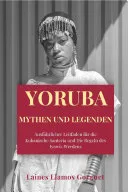
 82
82

Yoruba Mythen und Legenden
Laines Llamos Gorguet’s Yoruba Mythen und Legenden offers a clear, if somewhat generalized, overview of a profoundly complex spiritual system. The author’s strength lies in presenting the Yoruba pantheon and its associated myths in a digestible format, particularly for those unfamiliar with the tradition. The section detailing the Orishas and their individual domains provides a useful starting point for understanding their distinct energies. However, the book’s exploration of the religion’s spread to Cuba and its transformation into Santería feels less deeply researched than the foundational myths. While it touches upon the syncretism, it doesn't fully capture the nuanced evolution of these practices under colonial pressures. The work’s primary limitation is its lack of engagement with primary source materials or scholarly debates concerning the Orishas' specific attributes and historical interpretations, often relying on broadly accepted narratives. Despite this, for readers seeking an introductory text on Yoruba cosmology and its divine figures, the book serves its purpose adequately, though it falls short of offering novel scholarly perspectives.
📝 Description
82
Laines Llamos Gorguet's Yoruba Mythen und Legenden, published in 2024, details the myths and pantheon of the Yoruba religion.
This work presents the rich spiritual heritage of the Yoruba people, meticulously detailing their foundational myths, cosmologies, and pantheon. It serves as an accessible introduction to the belief systems that have shaped cultures across continents. The book is intended for students of comparative religion, practitioners of Santería and Ifá, and anyone curious about the origins of Afro-Caribbean spiritual traditions. Readers interested in understanding the divine beings known as Orishas, their attributes, and their influence on human life will find this text illuminating.
The genesis of this book lies in the ongoing global interest in African indigenous religions and their diasporic expressions. The Yoruba faith, transplanted to the Americas via the transatlantic slave trade, developed into syncretic traditions like Santería in Cuba and Candomblé in Brazil. Gorguet's work situates itself within this historical continuum, tracing the religion's journey from its West African roots to its manifestations in the New World, a process accelerated by forced migrations and cultural resilience.
Yoruba Mythen und Legenden situates itself within the study of indigenous African religions and their manifestations in the diaspora. The Yoruba spiritual system, forcibly transplanted during the transatlantic slave trade, formed the basis for syncretic traditions like Santería and Candomblé. This book traces the religion's evolution from its West African origins to its vibrant expressions in the Americas, reflecting a process of cultural resilience and adaptation. It examines core concepts such as the supreme creator Olodumare and the Orishas, divine intermediaries whose roles in creation and human affairs are central to Yoruba cosmology.
💡 Why Read This Book?
• Gain foundational knowledge of the Orishas, such as Obatala and Yemaya, understanding their specific roles and mythologies as detailed in the text, which is crucial for grasping Yoruba cosmology. • Comprehend the historical diaspora of the Yoruba faith, tracing its journey to Cuba and its subsequent development into Santería, a key aspect of Afro-Caribbean religious history. • Explore the concept of Olodumare and the intricate relationships between divine forces and humanity, offering insights into a worldview centered on balance and divine intervention.
⭐ Reader Reviews
Honest opinions from readers who have explored this book.
❓ Frequently Asked Questions
What is the central deity in Yoruba mythology according to this book?
The book identifies Olodumare as the supreme creator deity in Yoruba mythology. Olodumare is described as the distant, all-powerful source from whom all existence emanates, with the Orishas acting as intermediaries between the divine and the human realms.
How did the Yoruba religion spread to Cuba?
According to Yoruba Mythen und Legenden, the Yoruba religion primarily spread to Cuba through the forced migration of enslaved Africans during the transatlantic slave trade. These individuals brought their spiritual practices, which later evolved into traditions like Santería.
Who are the Orishas and what is their role?
The Orishas are divine beings or manifestations of Olodumare, central to Yoruba belief. The book explains they govern aspects of nature and human life, acting as intermediaries and embodying specific powers and characteristics that influence the world.
What is Santería and how is it related to the Yoruba religion?
Santería, as explored in the book, is a syncretic religion that emerged in Cuba from the fusion of Yoruba religious beliefs and practices with elements of Roman Catholicism. It retains many Yoruba Orishas and concepts.
When was Yoruba Mythen und Legenden first published?
Yoruba Mythen und Legenden by Laines Llamos Gorguet was first published on February 20, 2024. This makes it a contemporary work examining ancient traditions.
Does the book explain Yoruba divination practices?
Yes, the book touches upon divination practices central to the Yoruba faith, including the significance of the Odù Ifá. These are presented as methods for seeking guidance from the Orishas and understanding divine will.
🔮 Key Themes & Symbolism
The Orisha Pantheon
This work meticulously details the pantheon of Orishas, the divine forces central to Yoruba religion. Each Orisha, from the primordial Obatala to the sea goddess Yemaya, is presented with their unique myths, attributes, and spheres of influence. The book emphasizes their role not merely as deities but as active participants in creation and the governance of the cosmos, offering readers a structured understanding of these powerful entities and their intricate relationships within the divine hierarchy.
Diaspora and Syncretism
A significant focus is placed on the historical transmission of Yoruba spiritual traditions to Cuba. The book examines how, under the duress of slavery, these beliefs were preserved and transformed, notably through syncretism with Catholicism. This section illuminates the resilience of spiritual heritage and the dynamic process by which indigenous faiths adapt and survive in new cultural contexts, giving rise to vibrant traditions like Santería.
Cosmology and Creation Myths
The foundational cosmology of the Yoruba is explored, beginning with the supreme creator, Olodumare. The text examines the creation myths that explain the origin of the universe, humanity, and the distinct roles of the Orishas. It highlights the Yoruba worldview, which often emphasizes balance, destiny, and the interconnectedness of all things, providing a framework for understanding the spiritual underpinnings of daily life and ritual.
Ritual and Divination
The importance of ritual practice and divination within the Yoruba tradition is a recurring theme. The book discusses how adherents interact with the Orishas through various ceremonies and the significance of divination systems, such as Ifá, for seeking guidance and understanding the will of the divine. This aspect underscores the practical application of Yoruba beliefs in navigating life's challenges and maintaining spiritual harmony.
💬 Memorable Quotes
Direct passages from the work, attributed to the author.
“Olodumare is the supreme creator, the source from which all reality flows.”
— This statement expresses the monotheistic underpinnings of Yoruba cosmology, positioning Olodumare as the ultimate, albeit often transcendent, divine authority from which the more accessible Orishas derive their power and existence.
“The Orishas govern the forces of nature and human destiny.”
— This highlights the functional role of the Orishas within the Yoruba spiritual framework, presenting them as active agents who manage the world's elements and influence the course of individual lives and collective fate.
“Understanding Obatala requires recognizing his role as the father of humanity and purity.”
— This interpretation points to the specific characteristics attributed to Obatala, one of the most significant Orishas, framing him as a paternal, creative force associated with wisdom, justice, and the very essence of human form.
“Santería in Cuba represents a powerful fusion of African spirituality and European influence.”
— This statement frames Santería not as a mere replication of Yoruba practices, but as a distinct, syncretic tradition born from the specific historical and cultural encounter between Yoruba adherents and the dominant European (primarily Catholic) culture in Cuba.
💡 Key Ideas
Editorial paraphrase of the work's core concepts — not direct quotes.
Yoruba faith journeyed across the ocean, transforming but not disappearing.
This paraphrased concept emphasizes the resilience and adaptability of the Yoruba religion, particularly its diaspora, illustrating how its core elements persisted and evolved into new forms like Santería despite the traumatic historical circumstances.
🌙 Esoteric Significance
Tradition
This work engages with the esoteric lineage of African Traditional Religions, specifically the Yoruba faith, which possesses a rich, internally consistent cosmology and spiritual practice. While not strictly aligning with Western Hermeticism, Kabbalah, or Theosophy, its exploration of divine hierarchies, creation myths, and the interconnectedness of the cosmos offers parallels to these traditions in its structured approach to understanding the unseen forces governing reality.
Symbolism
Key symbols include the white beads often associated with Obatala, representing purity, creation, and peace. The serpent, frequently linked to the Orisha Oshosi or sometimes seen as a primordial force, symbolizes transformation, healing, and connection to the earth. Water, particularly the ocean, is deeply symbolic, representing Yemaya’s domain of motherhood, fertility, and the boundless unconscious from which life emerges.
Modern Relevance
Contemporary practitioners of Santería and Ifá globally continue to draw directly from the foundational myths and pantheon detailed in this book. Furthermore, scholars of comparative religion, cultural anthropologists, and spiritual seekers interested in Afro-Caribbean spirituality find such texts useful for understanding the roots of these living traditions and their ongoing influence on diasporic identity and practice.
👥 Who Should Read This Book
• Beginning students of comparative religion and African diaspora studies seeking a clear introduction to Yoruba cosmology and its global manifestations. • Practitioners of Santería or Ifá looking for a foundational text that outlines the core myths and Orisha relationships relevant to their practice. • Cultural historians and anthropologists interested in understanding the impact of the transatlantic slave trade on religious development and cultural resilience in the Americas.
📜 Historical Context
The publication of Laines Llamos Gorguet's work in 2024 situates it within a contemporary academic and popular resurgence of interest in African indigenous religions and their global impact. The Yoruba faith, originating in present-day Nigeria and Benin, experienced a profound diaspora through the transatlantic slave trade, beginning in earnest in the 16th century. Its transplantation to the Americas, particularly Cuba and Brazil, led to the development of complex syncretic traditions like Santería and Candomblé. These faiths often integrated Yoruba deities (Orishas) with Catholic saints, a survival strategy under colonial rule. While this book emerges in an era of increased academic study and popular engagement, the Yoruba religion historically faced suppression and misunderstanding. Early ethnographers and colonial administrators often viewed these practices through a lens of primitivism or superstition. Gorguet’s work benefits from decades of scholarship that have worked to decolonize the study of these traditions, moving beyond earlier biased accounts and engaging with practitioners and oral traditions, though the book itself does not appear to engage directly with specific critical reception events from the past.
📔 Journal Prompts
The role of Olodumare as the supreme creator and its implications for understanding divine will.
Obatala's attributes as the father of humanity and their connection to concepts of purity.
How the historical journey of Yoruba faith to Cuba shaped the emergence of Santería.
The symbolic meaning of water and the ocean in relation to Yemaya's domain.
Personal reflections on the Orishas' influence on natural forces and human destiny.
🗂️ Glossary
Olodumare
The supreme creator deity in Yoruba religion, often considered transcendent and the ultimate source of all existence. The Orishas are seen as manifestations or intermediaries of Olodumare.
Orisha
Divine beings or spirits in the Yoruba pantheon, each associated with specific aspects of nature, human activities, and cosmic forces. They act as intermediaries between humans and Olodumare.
Santería
An Afro-Caribbean religion, primarily practiced in Cuba and other parts of the Caribbean and North America, that developed from the syncretism of Yoruba religion and Roman Catholicism.
Ifá
A complex divination system central to Yoruba religion and its diaspora. It involves intricate verses (Odù Ifá) used by priests to provide guidance and insight.
Odù Ifá
The corpus of verses and prophecies within the Ifá divination system. Each Odù contains a vast body of wisdom, mythology, and ethical teachings used for divination.
Obatala
A prominent Orisha, often considered the father of humanity and the creator of the physical body. He is associated with purity, wisdom, justice, and peace.
Yemaya
The Orisha of the ocean, motherhood, and fertility. She is considered a nurturing and protective maternal figure, embodying the vastness and life-giving power of the sea.