John Donne Poetry

 75
75

John Donne Poetry



By Celeste Moreau (Divination & Symbolism Reviewer) — John Donne’s poetry is a profound exploration of the human psyche and its connection to the divine, offering rich veins of esoteric insight. His masterful use of conceits and paradox unveils hidden truths about love, faith, and mortality, resonating deeply with those who seek symbolic understanding. This collection serves as an invaluable resource for practitioners and scholars of metaphysical thought, illuminating the intricate relationship between the material and spiritual realms. Donne's unflinching gaze into the soul's deepest chambers makes his work a timeless guide for spiritual seekers.
📝 Description
75
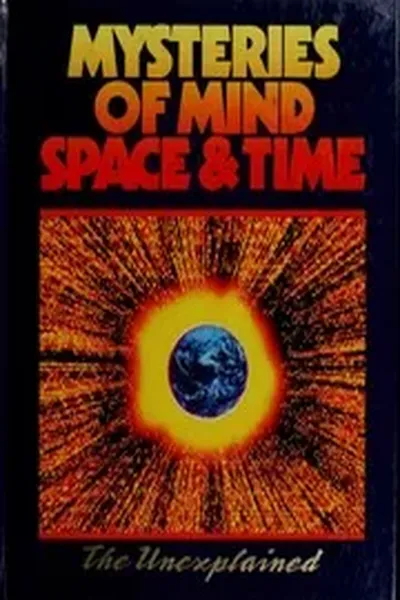
John Donne's 1633 collection of poems reveals a spiritual inquiry into faith and mortality.
This volume presents the verse of John Donne, a significant figure of the 17th century. His poetry often merges theological contemplation with personal experience, examining the connection between the physical and the spiritual. Donne’s work is marked by complex arguments and striking imagery, intended to provoke thought on subjects like divine love, human frailty, and the nature of the soul. He employed paradox and unusual comparisons to articulate his understanding of these concepts. The poems here are not simple expressions of emotion; they are structured explorations that invite careful consideration of complex ideas.
Readers will encounter Donne’s distinctive style, which challenges conventional poetic forms to express intense spiritual and intellectual concerns. His metaphors, often drawn from science, law, and theology, create a unique vocabulary for discussing existence. This collection showcases his ability to balance scholarly rigor with passionate expression, making his work a subject of continued study. It is a body of verse that rewards close attention, offering layers of meaning for those interested in its intellectual and spiritual dimensions.
Donne's poetry engages with traditions that sought spiritual knowledge through intellectual means, sometimes referred to as metaphysical or esoteric inquiry. He utilized concepts and modes of argumentation found in scholasticism and early modern natural philosophy. His use of paradox and complex analogies to express spiritual truths aligns with practices that saw deeper meaning embedded within the material world and human experience. This approach sought a form of illumination, not through mystical visions but through rigorous thought and the precise articulation of complex ideas. His work reflects a period where the boundaries between science, theology, and philosophy were more fluid, and where intellectual exploration was a path to understanding the divine.
💡 Why Read This Book?
Uncover the hidden spiritual and philosophical underpinnings of English literature. Explore Donne's masterful use of symbolism and paradox to probe the mysteries of faith, love, and mortality. Ideal for scholars, seekers of esoteric knowledge, and anyone drawn to profound intellectual and spiritual inquiry. Engage with poetry that transcends its era to offer timeless insights into the human condition.
⭐ Reader Reviews
Honest opinions from readers who have explored this book.
❓ Frequently Asked Questions
What makes John Donne's poetry considered 'esoteric'?
Donne's 'esoteric' nature lies in his intellectual complexity, use of obscure allusions, paradoxical conceits, and exploration of deep spiritual and philosophical themes that require thoughtful interpretation beyond a surface reading.
How does Donne connect the physical and spiritual?
Donne masterfully bridges the physical and spiritual through his 'metaphysical conceit,' drawing striking parallels between earthly experiences (like love, science, and geography) and divine truths or internal spiritual states.
Is this collection suitable for beginners to Donne?
While challenging, the collection offers a gateway for dedicated beginners. Its rich context and thematic exploration provide a solid foundation for understanding Donne's unique voice and complex ideas.
What spiritual traditions might resonate with Donne's themes?
Donne's works resonate with Christian mysticism, Renaissance Neoplatonism, and the Hermetic tradition, particularly in his contemplation of the soul's journey, divine love, and the interconnectedness of all things.
Can this poetry be used for meditative practice?
Yes, the profound introspection and contemplative nature of Donne's verse make it highly suitable for meditative reflection, encouraging a deeper connection with one's inner spiritual landscape.
🔮 Key Themes & Symbolism
The Divine Union and Earthly Love
Donne's poetry artfully ties together the sacred and the profane, exploring the profound connections between human love and divine love. He uses the intensity of romantic passion as a metaphor for the soul's yearning for God, suggesting that true earthly union can mirror the ultimate spiritual communion. His work looks at the alchemy of love, transforming physical desire into a pathway toward spiritual transcendence and understanding the divine through intimate human connection.
Mortality and the Soul's Journey
A central tenet of Donne's work is the contemplation of death, not as an end, but as a transition. He treats mortality with intellectual rigor and spiritual curiosity, often viewing it as a gateway to eternity and divine judgment. His poems explore the soul's preparation for this ultimate journey, questioning its fate and seeking solace in faith. This theme reflects a deep engagement with Christian eschatology and the human desire for everlasting life and divine grace.
Metaphysical Conceits and Hidden Knowledge
Donne's signature 'metaphysical conceits' are intricate, often surprising, comparisons that link disparate concepts—a compass, a flea, or a map—to explore profound spiritual or emotional truths. These elaborate metaphors act as coded messages, revealing layers of meaning accessible to those who can decipher their intellectual and symbolic language. This technique invites readers to engage in a form of intellectual divination, uncovering hidden knowledge about the universe and the self.
💬 Memorable Quotes
Direct passages from the work, attributed to the author.
“We are not ourselves / When by ourselves we are.”
— This paradox highlights the inherent social and spiritual interconnectedness of human beings, suggesting that true selfhood is realized in relation to others and the divine.
“For love is not love / Which alters when it alteration finds.”
— This emphasizes the enduring and unconditional nature of true love, positing that genuine affection remains steadfast even when faced with change or adversity.
“Busy old fool, unruly Sun, / Why dost thou thus, / Through windows, and through curtains call on us?”
— An early morning invocation that personifies the sun, treating its daily rise with a lover's exasperation, treating the mundane as a subject for profound, almost mystical contemplation.
💡 Key Ideas
Editorial paraphrase of the work's core concepts — not direct quotes.
For God's sake, hold your tongue, and let me love.
This line expresses Donne's assertion of the personal and sacred nature of love, suggesting it is a realm where external judgment or intrusion is unwelcome, even by divine decree.
Death, be not proud, though some have called thee mighty and dreadful.
A powerful defiance of mortality, this quote frames death not as an ultimate power, but as a temporary state, ultimately conquered by faith and the promise of eternal life.
🌙 Esoteric Significance
Tradition
Donne's poetry draws heavily from Renaissance Hermeticism, Neoplatonism, and Christian mysticism. These traditions provided frameworks for understanding the interconnectedness of the macrocosm and microcosm, the divine spark within the human soul, and the pursuit of spiritual enlightenment through intellectual and contemplative means. His work often reflects the Hermetic principle of 'as above, so below,' reflecting a universe imbued with divine order and meaning.
Symbolism
Key symbols in Donne's work include the compass (representing steadfastness and divine guidance), the flea (a provocative symbol of physical union and spiritual merging), and celestial bodies (representing divine order and the soul's cosmic journey). His use of alchemical imagery suggests the transformative power of love and faith, turning base emotions into spiritual gold. These symbols are not merely decorative but integral to his complex arguments and spiritual explorations.
Modern Relevance
In an age often characterized by fragmentation and existential doubt, Donne's poetry offers a powerful evidence of the enduring human search for meaning, love, and spiritual connection. His intellectual rigor and emotional depth provide a valuable counterpoint to superficiality, encouraging introspection and a deeper appreciation for the complexities of faith and existence. His masterful articulation of the soul's journey appeals to contemporary seekers of wisdom and profound self-understanding.
👥 Who Should Read This Book
This collection is essential for scholars of English literature and Renaissance thought, offering a deep dive into one of its most influential voices. Spiritual seekers and practitioners of esoteric traditions will find rich allegorical and philosophical sustenance within Donne's exploration of divine love and the soul's journey. Aspiring poets and writers seeking mastery of metaphor and intellectual argumentation will benefit immensely from his innovative techniques. Beginners to Donne will find this a challenging yet rewarding introduction, providing context and pathways to appreciate his enduring genius.
📜 Historical Context
John Donne (1572-1631) was a central figure of the English Renaissance, living through a period of immense religious and political upheaval. His life spanned the reigns of Elizabeth I and James I, a time marked by the Protestant Reformation's ongoing impact, the rise of scientific inquiry, and the flourishing of intellectual discourse. He was deeply engaged with contemporary philosophical currents, including Neoplatonism and Hermeticism, which influenced his unique approach to poetry. His work reflects the era's fascination with paradox, intricate argumentation, and the exploration of the human condition through both spiritual devotion and intellectual curiosity. Donne's poetry, particularly his 'metaphysical' style, challenged conventional poetic forms and sensibilities, paving the way for future generations of poets exploring complex themes with audacious imagery.
📔 Journal Prompts
Reflect on a time when you felt a profound connection to something greater than yourself. How did this experience shape your understanding of love or faith?
Explore the concept of a 'metaphysical conceit' in your own life. What seemingly unrelated things can you connect to illuminate a deeper truth about your experiences?
Consider your own relationship with mortality. How do you reconcile the finite nature of life with your spiritual or philosophical beliefs?
Write about a moment where love, in its various forms, felt like a spiritual revelation. What did this experience teach you about the divine or the self?
How can the pursuit of knowledge, whether scientific or spiritual, lead to a deeper understanding of one's own soul?
🗂️ Glossary
Metaphysical Conceit
An elaborate and often surprising comparison between two fundamentally dissimilar things, used by metaphysical poets like Donne to explore complex philosophical or spiritual ideas with intellectual ingenuity.
Sigil
In esoteric traditions, a symbol created to represent a specific intention or spiritual concept, often used in ritual or meditation to focus energy and consciousness towards a desired outcome.
Alchemical Transformation
A process in alchemy aiming to transmute base metals into gold, metaphorically applied in spiritual contexts to describe the purification and elevation of the soul or consciousness.
Neoplatonism
A philosophical system that emerged from Plato's teachings, emphasizing the existence of a transcendent, ultimate reality (The One) from which all else emanates, and the soul's journey back to this divine source.
Hermeticism
A religious, philosophical, and esoteric tradition based primarily upon writings attributed to Hermes Trismegistus. It emphasizes the interconnectedness of the universe and the potential for human spiritual ascent.
This book appears in 3 collections
🔮 Readers Also Liked
Browse all →







More by John Donne
All books →

From the “Tarot” Collection
View all →







More Free Divination & Tarot Books
View all →