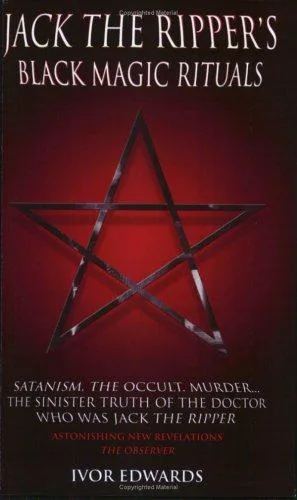
Jack the Ripper's Black Magic Rituals
 61
61

Jack the Ripper's Black Magic Rituals


Sophia Crane (Associate Editor) — Ivor J. Edwards' 'Jack the Ripper's Black Magic Rituals' is a profound and unsettling re-examination of the Whitechapel murders. Moving beyond typical true crime narratives, Edwards meticulously reconstructs a compelling case for occult influence, presenting meticulous research into ritualistic practices and symbolism. The book offers a unique lens through which to view the notorious case, appealing to readers interested in the esoteric underpinnings of historical events. Its strength lies in its ability to connect historical facts with arcane lore, making it a vital addition for occult historians, ritual practitioners, and anyone seeking a deeper, more mystical understanding of this dark chapter.
📝 Description
61
Ivor J. Edwards argues Jack the Ripper's murders were ritualistic acts of black magic in 1888.
Ivor J. Edwards's 2017 book examines the Whitechapel murders through the lens of occult practices. Edwards suggests the killer's actions were not random but deliberate performances tied to dark magic rituals. The work investigates potential esoteric motivations behind the killings, moving beyond standard criminal history. It details arcane symbols, astrological calculations, and ritualistic elements that may have informed the Ripper's methods.
The book challenges conventional interpretations of the case, proposing that hidden, mystical forces played a role. Edwards attempts to uncover the deeper, concealed aspects of this historical enigma. Readers will find an argument that the past harbors secrets more disturbing than conventional detective work can reveal. The text invites a reevaluation of what is understood about one of history's most notorious figures.
This book situates the Jack the Ripper case within a tradition of occult interpretations of historical events. It draws on concepts found in ceremonial magic and demonology, suggesting that specific rituals and beliefs may have guided the killer's actions. The analysis connects the murders to a broader interest in forbidden knowledge and the darker side of human nature prevalent in certain esoteric circles. It is an attempt to understand a notorious historical event not just as a crime, but as a manifestation of occult forces.
💡 Why Read This Book?
Uncover the hidden occult dimensions of the Jack the Ripper murders. This book offers a radical new perspective for seekers and scholars of esoteric history. If you're drawn to the mysteries of ritual, symbolism, and the darker aspects of human history, this compelling investigation will challenge your perceptions and illuminate the shadowed corners of the past. Explore the possibility of ritualistic intent behind infamous crimes.
⭐ Reader Reviews
Honest opinions from readers who have explored this book.
❓ Frequently Asked Questions
What is the primary argument of the book?
The primary argument is that Jack the Ripper's murders were not random acts of violence, but rather deliberate rituals performed with occult intent, possibly linked to dark magic practices prevalent in Victorian England.
What kind of evidence does the author present?
The author presents a combination of historical documentation, analysis of victimology, symbolic interpretation of crime scenes, and research into occult practices and beliefs of the era to support his thesis.
Is this book suitable for beginners in occult studies?
Yes, while the subject matter is advanced, the author explains esoteric concepts clearly, making it accessible to those new to occult studies but curious about its historical applications.
Does the book claim to definitively identify Jack the Ripper?
The book focuses on the *nature* and *intent* of the crimes rather than definitively identifying the perpetrator, though its analysis may indirectly shed light on potential profiles.
What historical period does the book cover?
The book primarily covers the late Victorian era, specifically the years of the Jack the Ripper murders (1888) and the broader cultural and occult milieu of that time in Great Britain.
🔮 Key Themes & Symbolism
The Occult Underbelly of Victorian London
This theme explores how the rigid societal structures of Victorian England concealed a vibrant and often sinister undercurrent of occultism, spiritualism, and fringe magical practices. The book posits that the Whitechapel district, rife with poverty and desperation, may have also been a fertile ground for the practice of dark arts, providing a context for ritualistic violence. It examines the prevalent fascination with the supernatural and the occult among various social strata, suggesting that such beliefs were not confined to the fringes but permeated the cultural consciousness, potentially influencing motivations behind the notorious murders.
Ritualistic Homicide and Symbolic Meaning
This theme explores the profound symbolic interpretations of the Ripper's murders, arguing that each act was a deliberate ritual designed to harness specific energies or fulfill arcane objectives. The book analyzes the selection of victims, the nature of the mutilations, and the placement of bodies as crucial elements within a larger magical framework. It explores potential connections to sacrificial rites, demonology, and other dark magical traditions, seeking to decode the 'language' of the crimes and understand their intended esoteric significance beyond mere butchery. The focus is on uncovering the hidden meaning embedded within the gruesome details.
The Esoteric Profile of the Killer
This theme constructs a hypothetical profile of Jack the Ripper based on the presumed occult nature of his crimes. Instead of focusing on conventional criminal profiling, it examines the characteristics of an individual likely knowledgeable in esoteric lore, ritualistic practices, and possibly possessing a specific magical agenda. The book explores the psychological and spiritual dimensions of such a perpetrator, considering their potential motivations, beliefs, and the type of spiritual or magical tradition they might have adhered to. It moves the discussion from 'who' to 'why' in a profoundly mystical context.
💬 Memorable Quotes
Direct passages from the work, attributed to the author.
“The veil between worlds thinned in the gaslight alleys of Whitechapel.”
— This evocative line suggests that the dark events of the Ripper murders occurred during a time and in a place where the boundary between the physical and supernatural realms was permeable, hinting at the influence of unseen forces.
“The true horror lies not in the blood, but in the intent that guided the blade.”
— This highlights the book's central thesis: that the terror of the Ripper case is amplified when considering the possibility of premeditated occult motivations driving the violence.
“History's darkest chapters are often written in invisible ink, visible only to those who seek the esoteric.”
— This statement positions the book as a key to unlocking hidden truths within historical events, emphasizing the importance of esoteric knowledge in understanding complex and disturbing phenomena.
💡 Key Ideas
Editorial paraphrase of the work's core concepts — not direct quotes.
Each cut was a sigil, each victim a sacrifice upon an unseen altar.
This quote frames the murders as intentional acts of ritualistic magic, imbuing the violence with symbolic meaning and suggesting a deliberate occult purpose behind the killer's actions.
The Ripper's legacy is a proof of the enduring power of shadow and ritual.
This quote captures the book's perspective, suggesting that the Ripper's notoriety stems from a primal connection to dark forces and ancient practices that continue to resonate.
🌙 Esoteric Significance
Tradition
This work draws heavily on the traditions of Western Esotericism, particularly demonology, ceremonial magic, and ritualistic practices prevalent in the late 19th century. It explores concepts found within grimoires and occult texts that detail methods for invoking or banishing entities, harnessing spiritual energies, and performing acts with symbolic magical intent. The analysis also touches upon the psychological and spiritual dimensions of individuals engaged in such practices, suggesting a framework for understanding the motivations of a perpetrator steeped in these arcane disciplines.
Symbolism
The book meticulously examines the symbolic language embedded within the Jack the Ripper murders. This includes the interpretation of specific mutilations as potential sigils or arcane symbols, the significance of the victims chosen in relation to astrological or ritualistic calendars, and the symbolic placement of bodies. It explores the potential meaning of various occult symbols that may have been present or alluded to, connecting them to ancient traditions of sacrifice, power acquisition, and spiritual manipulation, aiming to decipher the killer's hidden 'message.'
Modern Relevance
The exploration of ritualistic violence and the occult underpinnings of historical events holds significant modern relevance. It challenges contemporary understandings of criminality by suggesting that motivations can extend beyond purely psychological or social factors into the area of spiritual and magical intent. This perspective encourages a deeper, more nuanced analysis of extreme violence and the darker potentials within human consciousness. Furthermore, it highlights the enduring fascination with the occult and its potential influence on human behavior, even in a technologically advanced age, prompting reflection on hidden forces that may still shape our world.
👥 Who Should Read This Book
This book is a compelling read for several distinct audiences. For the **esoteric scholar**, it offers a meticulously researched case study at the intersection of history and occultism. **Seekers of hidden knowledge** and those fascinated by the darker mysteries of the past will find their curiosity richly rewarded. **Practitioners of magic** may find insights into historical applications of ritual and symbolism. **True crime enthusiasts** looking for a radical, unconventional perspective that goes beyond conventional analysis will be captivated. Finally, **historians of Victorian England** will find a provocative new lens through which to view this infamous period, challenging established narratives.
📜 Historical Context
The late Victorian era in Great Britain was a period of profound societal change, scientific advancement, and intense spiritual and intellectual ferment. Alongside rapid industrialization and urban growth, there was a burgeoning interest in spiritualism, the occult, and esoteric philosophies. Secret societies flourished, and figures like Helena Blavatsky and Aleister Crowley began to shape modern occult thought. This era's fascination with the supernatural, combined with the stark social inequalities and the grim realities of urban poverty, created a unique atmosphere where the rational and the irrational, the mundane and the mystical, often intertwined. The Whitechapel murders occurred against this backdrop, a brutal manifestation of violence that some, like Ivor J. Edwards, argue cannot be fully understood without acknowledging the esoteric currents of the time.
📔 Journal Prompts
Reflect on the concept of 'shadow work' and how it might relate to the psychological field of the Ripper's potential motivations.
Consider a historical event you find intriguing and explore what esoteric or symbolic interpretations could be applied to it.
How does the author's interpretation of the Ripper's actions as ritualistic challenge your understanding of evil?
Imagine you are investigating the Ripper case from an occult perspective; what symbols or patterns would you prioritize?
What are the ethical considerations when interpreting historical violence through an occult lens?
🗂️ Glossary
Sigil
A symbol or magical sign, often created with intent to invoke or manifest a specific outcome or energy. In occultism, sigils are typically designed and consecrated through ritualistic means.
Grimoire
A textbook of magic, typically containing instructions on how to create magical tools, cast spells, and invoke spirits or demons. Grimoires are ancient texts central to many Western occult traditions.
Ceremonial Magic
A type of ritualistic magic that employs elaborate ceremonies, often involving specific timings, incantations, tools, and costumes, to achieve magical effects. It aims to create a sacred space and connect with higher or lower spiritual forces.
Demonology
The study of demons or beliefs about demons. In occult contexts, it often involves understanding the hierarchies, characteristics, and methods of interacting with demonic entities, whether for invocation or banishment.
Esotericism
A broad category of mystical, spiritual, or philosophical traditions that posit an 'inner' or hidden knowledge accessible only to a select group of initiates. It often involves symbolic interpretation, meditation, and esoteric practices.
This book appears in 2 collections
🔮 Readers Also Liked
Browse all →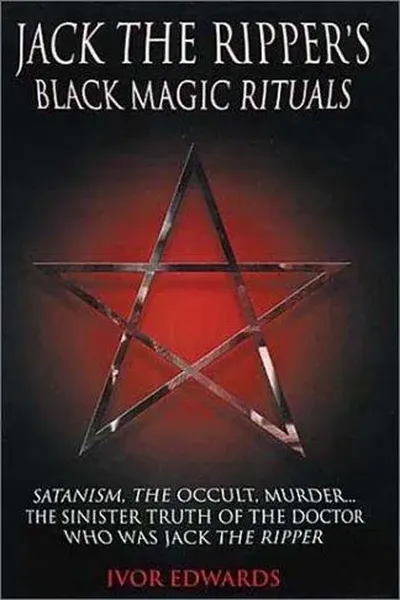




From the “Ritual Magic” Collection
View all →









More Free Magic & Ritual Books
View all →