Jack the Ripper's Black Magic Rituals
 63
63

Jack the Ripper's Black Magic Rituals

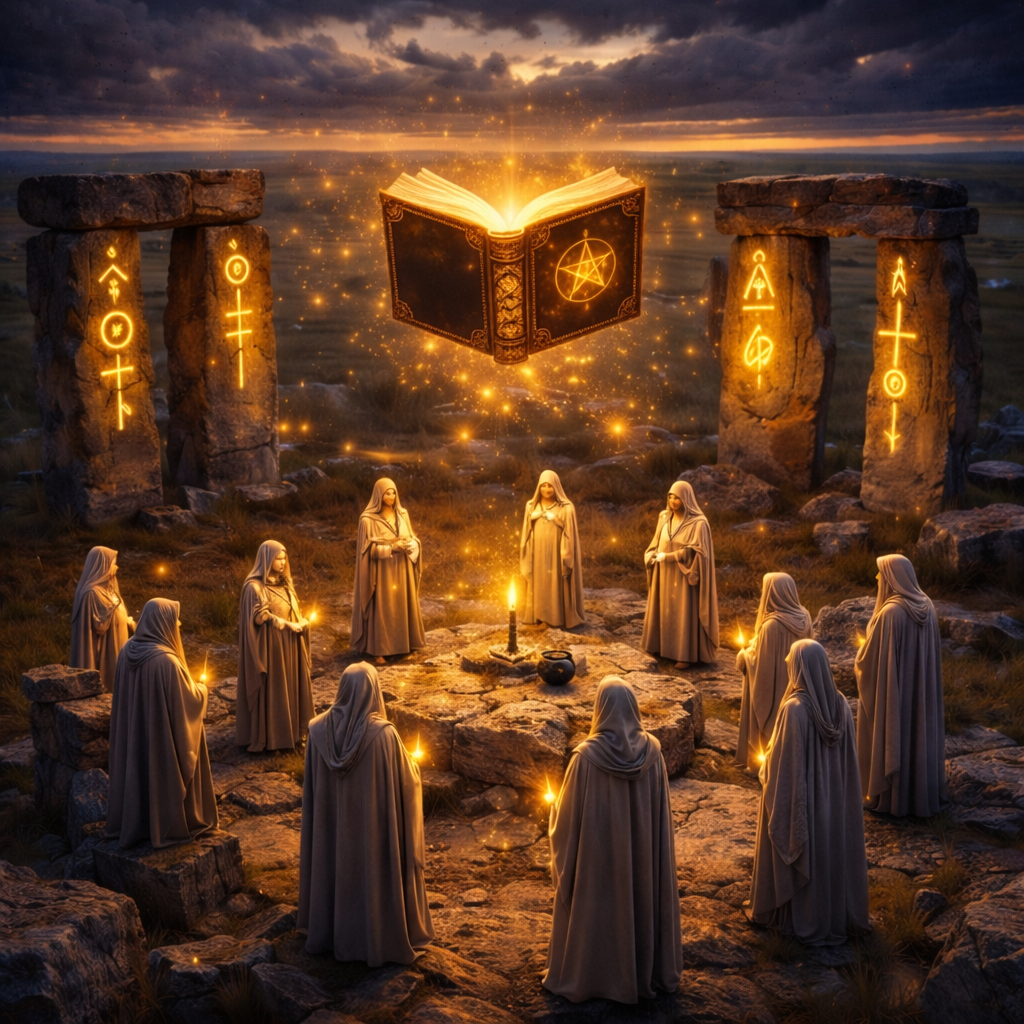

Ophelia Vance, Mystical Literature Reviewer: Ivor Edwards' 'Jack the Ripper's Black Magic Rituals' is a revelation, transforming a historical enigma into a profound esoteric investigation. Edwards masterfully connects the brutal efficiency of the Ripper's deeds to the symbolic language of occult ritual, suggesting a motive far beyond the mundane. His analysis of potential ritualistic patterns and the historical milieu of spiritualism and darker arts is both compelling and deeply unnerving. This work is essential reading for anyone interested in the convergence of historical crime and the hidden currents of magic. It challenges conventional wisdom and offers a truly unique perspective for serious students of the occult and historical mysteries.
📝 Description
63
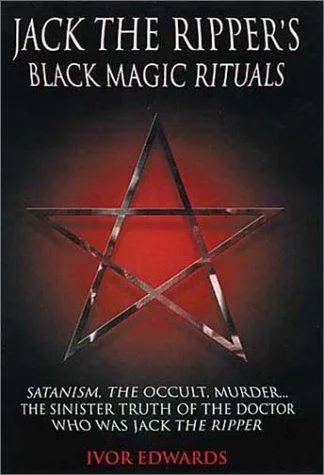
Ivor Edwards' 2001 book posits that Jack the Ripper's murders were acts of black magic.
This book examines the theory that the Whitechapel murders of 1888 were not solely the work of a criminal, but were instead connected to occult rituals. Ivor Edwards investigates historical accounts and esoteric texts, suggesting that practitioners of black magic may have been involved. The author looks into specific symbols and practices associated with grimoires, aiming to link them to the events of the time.
The work challenges conventional historical interpretations by proposing that arcane forces played a role in the murders. It questions how ancient, dark powers might manifest and interact with human violence, leaving a lasting impact on history. The book encourages readers to consider the possibility of unseen influences shaping significant historical events and the darker aspects of human behavior.
The book fits within traditions that explore the intersection of historical events and occult practices. It draws parallels between documented crimes and theories found in historical texts on magic and ritual. This approach aligns with esoteric scholarship that looks beyond purely materialistic explanations for historical phenomena, seeking underlying spiritual or magical causes.
💡 Why Read This Book?
Uncover the hidden occult dimensions of one of history's most infamous unsolved mysteries. 'Jack the Ripper's Black Magic Rituals' offers a provocative lens for understanding the Whitechapel murders through the prism of dark magic and ritual. Ideal for seekers of esoteric knowledge, students of occult history, and those fascinated by the intersection of the macabre and the mystical.
⭐ Reader Reviews
Honest opinions from readers who have explored this book.
❓ Frequently Asked Questions
Does the book claim definitive proof of Jack the Ripper's occult involvement?
While the book presents compelling theories and evidence suggesting occult ritual, it frames its findings as a profound investigation rather than absolute proof, inviting readers to consider a new interpretation of the events.
What specific occult traditions are explored?
The book delves into various elements of Western esotericism, including potential influences from ceremonial magic, folk magic practices, and the broader occult revival prevalent in Victorian England.
Is this book suitable for beginners in occult studies?
Yes, the author provides sufficient context for readers new to occult concepts, while offering depth for those already familiar with esoteric lore. It serves as an accessible yet profound introduction.
What is the historical accuracy of the book?
The book meticulously grounds its esoteric theories in historical research, examining contemporary accounts, social conditions, and the documented interest in spiritualism and the occult during the Victorian era.
Are the rituals described in the book actionable?
The book focuses on the historical and theoretical aspects of occult practices as they relate to the Ripper murders. It is not a manual for performing rituals but an exploration of their potential application in a historical context.
🔮 Key Themes & Symbolism
The Occult Underbelly of Victorian London
This theme studies the pervasive influence of spiritualism, occult societies, and darker magical practices that permeated Victorian society, providing the fertile ground from which the Ripper's alleged rituals may have sprung. It examines how the era's fascination with the supernatural and the forbidden could have masked or even inspired such horrific acts, revealing a hidden layer of reality beneath the veneer of industrial progress and societal norms. The exploration highlights the tension between burgeoning science and enduring ancient beliefs.
Ritualistic Symbolism in Serial Murder
Here, the focus shifts to the meticulous analysis of the Ripper's modus operandi through an esoteric lens. The book explores how specific mutilations, the choice of victims, and the timing of the murders might align with established patterns of occult sacrifice or ritualistic intent. It dissects the potential symbolic meanings behind the violence, suggesting that each act was not random but imbued with a dark, arcane purpose, designed to invoke specific energies or achieve a particular magical outcome within a ritualistic framework.
The Intersection of History and Esotericism
This theme bridges the gap between documented historical events and their potential esoteric interpretations. It argues that understanding the Ripper murders requires looking beyond conventional historical analysis and acknowledging the power of hidden knowledge and unseen forces. The book challenges readers to reconsider established narratives by integrating occult theories, suggesting that certain historical enigmas can only be fully grasped when viewed through the prism of esoteric traditions and their enduring influence on human behavior and societal events.
💬 Memorable Quotes
Direct passages from the work, attributed to the author.
“Every cut, a sigil; every victim, an offering.”
— This interpretation posits that the Ripper's actions were not random acts of violence but deliberate ritualistic gestures, each detail imbued with symbolic meaning and sacrificial intent.
“The grimoires whispered secrets the police could not comprehend.”
— This highlights the inadequacy of conventional investigative methods when faced with a perpetrator whose actions were guided by esoteric knowledge, implying a hidden language of magic.
“In the heart of the empire, ancient rites found a gruesome rebirth.”
— This suggests that despite London's modernity, primal, ancient magical practices found a terrifying expression through the Ripper's crimes, connecting the contemporary to the archaic.
“The true horror lay not in the blood, but in the intent.”
— This emphasizes that the psychological and spiritual motivation behind the murders, particularly if rooted in dark magic, is more chilling than the physical violence itself.
💡 Key Ideas
Editorial paraphrase of the work's core concepts — not direct quotes.
The fog that shrouded Whitechapel was not merely meteorological, but metaphysical.
This quote suggests that the darkness surrounding the Ripper's crimes was deeper than mere physical obscurity, hinting at unseen, perhaps spiritual, forces at play.
🌙 Esoteric Significance
Tradition
The book implicitly draws upon Western Esotericism, particularly the darker aspects of ceremonial magic and folk magic traditions prevalent in the late 19th century. It explores how concepts like ritualistic sacrifice, sympathetic magic, and the invocation of specific entities or energies, themes common in grimoires and occult texts, might have been applied. The analysis suggests a potential practitioner familiar with obscure rites, seeking to harness arcane forces for malevolent purposes within the urban landscape.
Symbolism
Key symbols explored include the number of victims, the specific anatomical mutilations, and the locations of the murders, all interpreted through the lens of ritualistic meaning. The book posits that these elements may have corresponded to astrological alignments, demonic invocations, or karmic retribution, as understood within certain esoteric frameworks. The symbolism is seen not as random violence, but as a coded language of dark magic, intended to achieve a specific arcane objective.
Modern Relevance
The enduring mystery of Jack the Ripper continues to captivate the public imagination, and this book offers a vital perspective for understanding why. Its exploration of the occult underpinnings of extreme violence remains relevant today, as it prompts reflection on the psychological and spiritual dimensions of crime. By examining the historical context of ritualistic practices, the book encourages a deeper understanding of human nature's darker impulses and the persistent influence of ancient beliefs in the modern world.
👥 Who Should Read This Book
This book is a compelling read for several audiences. For the **occult scholar**, it offers a unique case study blending historical investigation with esoteric theory. **Seekers of hidden knowledge** will find it a fascinating exploration of how ancient practices might manifest in modern history. **Practitioners** may gain insight into the historical application of ritual, albeit in its darkest form. **History enthusiasts** interested in Victorian London and true crime will discover a provocative new angle on a legendary enigma. Beginners to the occult will find the historical context accessible, while seasoned students will appreciate the depth of the analysis.
📜 Historical Context
Victorian London (1888) was a city of stark contrasts: a clear source of industrial progress and imperial power, yet simultaneously a breeding ground for poverty, social unrest, and a burgeoning fascination with the esoteric. The era witnessed a significant occult revival, with spiritualism, séances, mesmerism, and the study of ancient magical texts gaining traction amongst various social strata, from the aristocracy to the working class. This milieu of heightened spiritual and mystical curiosity, coupled with the grim realities of East End life, provided a unique backdrop for the Jack the Ripper murders. The palpable atmosphere of fear and superstition, amplified by sensationalist press coverage, created an environment where interpretations beyond the rational were not only possible but perhaps even inevitable, laying the groundwork for theories exploring the darker, hidden currents of ritual and magic.
📔 Journal Prompts
Reflect on the concept of 'black magic' as presented in the book. How does it differ from conventional understandings of crime?
Consider the societal factors in Victorian London that might have fostered an interest in occult practices. How do these compare to modern societal influences?
Analyze the potential symbolism of the Ripper's actions as described. If you were to create your own ritual, what elements would be essential for its perceived efficacy?
How does the idea of a 'metaphysical fog' alter your perception of historical mysteries?
Explore the ethical implications of interpreting historical events through an occult lens. What are the potential benefits and drawbacks of such an approach?
🗂️ Glossary
Grimoire
A textbook of magic, typically containing instructions for summoning demons, casting spells, and performing rituals. Often associated with historical occult practices and dark arts.
Sigil
A symbol or sign, often inscribed or drawn, believed to possess magical properties or to represent a specific intent or entity in occult traditions.
Esotericism
Belief systems and practices that are secret, hidden, or intended only for a select group of initiates. It encompasses a wide range of mystical and occult traditions.
Ceremonial Magic
A sophisticated system of ritual magic involving elaborate ceremonies, specific incantations, symbolic gestures, and the use of magical tools, often aimed at invoking supernatural forces or achieving spiritual transformation.
Sympathetic Magic
A form of magic based on the principle that like produces like, or that a cause and effect must be similar in nature. For example, harming an effigy of a person to harm the person themselves.
This book appears in 2 collections
🔮 Readers Also Liked
Browse all →






More by Ivor Edwards
All books →
From the “Ritual Magic” Collection
View all →








More Free Magic & Ritual Books
View all →