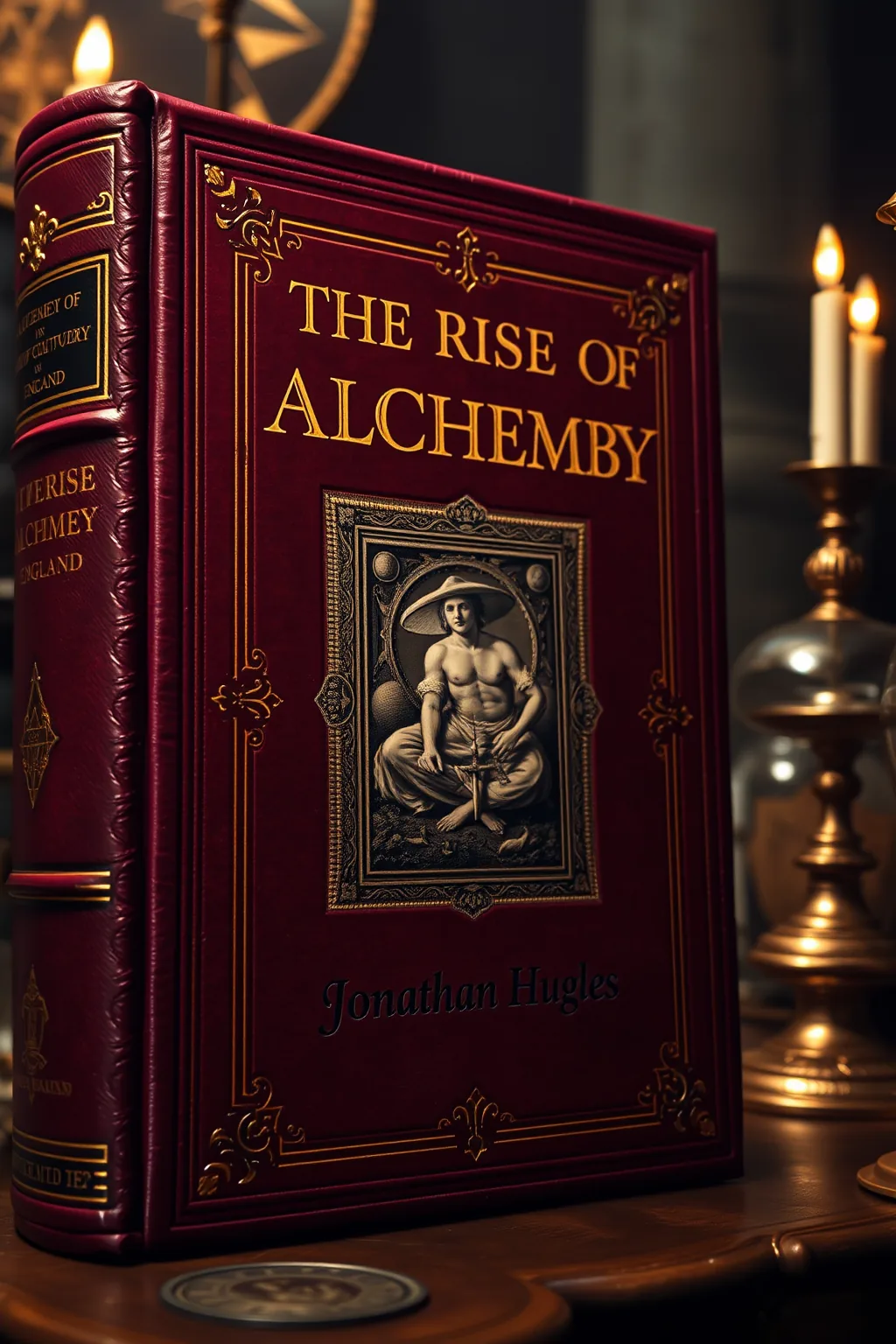
The rise of alchemy in fourteenth-century England
 61
61

The rise of alchemy in fourteenth-century England



Review by Ophelia Vance (Mystical Literature Reviewer) — Jonathan Hughes's 'The Rise of Alchemy in Fourteenth-Century England' is a masterful exploration of the occult sciences that defined a pivotal era in English history. Hughes's meticulous research and evocative prose make this book an essential read for anyone interested in the mystical and hermetic traditions. The author's deep understanding of alchemy's role in medieval society provides readers with a profound appreciation for its esoteric insights and enduring relevance. This work is particularly valuable for scholars and practitioners seeking to deepen their knowledge of alchemical symbolism and its philosophical significance.
📝 Description
61
Jonathan Hughes's 2019 book examines alchemy's growth in 14th-century England.
This book focuses on the development of alchemy in England during the 1300s. Jonathan Hughes investigates the occult practices and secret knowledge that were active then. The text describes a period where alchemy intertwined with magic, medicine, and spiritual beliefs. It looks at the philosophical ideas behind alchemy and how these influenced medieval English thought and spirituality.
The author details the symbolic language and specific insights found within alchemical traditions of the time. The work traces the connections between Hermetic philosophy and the practical pursuits of alchemists. It aims to show how these pursuits were part of the broader intellectual currents of the era. The book is written for those interested in the history of esotericism and medieval intellectual life.
Alchemy in 14th-century England is placed within the broader context of late medieval esotericism. This period saw a continuation of Hermetic traditions that had been revived earlier in the Middle Ages. Alchemical practices were not solely focused on material transmutation but also encompassed spiritual and philosophical goals. These goals often aligned with mystical inquiries and medicinal applications, creating a complex field of study. Hughes's work situates these English developments within that larger European intellectual framework.
💡 Why Read This Book?
Why read this book — 'The Rise of Alchemy in Fourteenth-Century England' offers a unique window into the mystical practices and hidden knowledge of medieval times. Whether you are a seeker of spiritual enlightenment, a scholar of esoteric studies, or a practitioner of mystical arts, this book provides a wealth of insights and inspiration. Hughes's detailed analysis of alchemical symbols and their meanings will enrich your understanding of the Hermetic tradition and its enduring influence.
⭐ Reader Reviews
Honest opinions from readers who have explored this book.
❓ Frequently Asked Questions
What is the main focus of 'The Rise of Alchemy in Fourteenth-Century England'?
The book focuses on the occult practices and hidden knowledge of alchemy in medieval England, exploring its philosophical significance and esoteric insights.
Who is the intended audience for this book?
This book is ideal for scholars of esoteric studies, practitioners of mystical arts, and anyone interested in the Hermetic tradition.
Does the book include historical context?
Yes, it provides a detailed historical context of the fourteenth century, explaining why alchemy was important during this era and its influence on medieval society.
Are there any memorable quotes in the book?
The book is filled with profound quotes that offer deep insights into the mystical and hermetic traditions, making it a valuable resource for seekers of hidden truths.
Is this book available to read free online?
This book is available to read free online at Esoteric Library, a curated collection of mystical, occult, and metaphysical literature.
🔮 Key Themes & Symbolism
The Hermetic Tradition
Hughes studies the Hermetic tradition, revealing how alchemy was a central to medieval mysticism. The book explores the philosophical and spiritual significance of alchemical practices, offering readers a deep understanding of this ancient art.
Alchemical Symbolism
The book provides an in-depth analysis of alchemical symbols and their meanings, helping readers decipher the hidden knowledge embedded in these mystical emblems. This theme is essential for practitioners and scholars seeking to understand the esoteric language of alchemy.
The Intersection of Magic and Medicine
Hughes examines the blurred lines between magic and medicine in medieval alchemy, showing how these practices were intertwined in the pursuit of spiritual and physical healing. This theme highlights the holistic approach of alchemy and its enduring relevance.
💬 Memorable Quotes
Direct passages from the work, attributed to the author.
“The symbols of alchemy are the keys to hidden knowledge, waiting to be unlocked by the seeker.”
— Hughes highlights the importance of alchemical symbols in revealing esoteric insights.
“The journey of alchemy is a journey of the soul, seeking transformation and enlightenment.”
— Hughes emphasizes the spiritual quest at the heart of alchemical practices.
💡 Key Ideas
Editorial paraphrase of the work's core concepts — not direct quotes.
Alchemy is the art of transforming base metals into gold, but it is also the art of transforming the soul.
This quote underscores the dual nature of alchemy, emphasizing its spiritual and material dimensions.
In the crucible of the alchemist, the boundaries between magic and medicine dissolve.
This quote illustrates the holistic approach of alchemy, blending spiritual and physical healing.
The secrets of the ancient arts are hidden in plain sight, waiting to be discovered by the initiated.
This quote underscores the esoteric nature of alchemy and its hidden knowledge.
🌙 Esoteric Significance
Tradition
This book belongs to the Hermetic tradition, which emphasizes the pursuit of hidden knowledge and spiritual transformation. Alchemy, as explored by Hughes, is a central to this tradition, blending mystical practices with philosophical insights.
Symbolism
Key symbols in the book include the alchemical symbols for transformation, such as the Philosopher's Stone and the Ouroboros. These symbols represent the quest for spiritual enlightenment and the unity of all things.
Modern Relevance
This book is relevant today for practitioners of mystical arts and seekers of spiritual enlightenment. Modern practitioners use alchemical symbolism and practices to deepen their understanding of the Hermetic tradition and its enduring influence.
👥 Who Should Read This Book
Beginners interested in the mystical and hermetic traditions will find this book an excellent introduction to the world of alchemy. Scholars of esoteric studies will appreciate Hughes's detailed analysis and historical context. Spiritual seekers will be inspired by the clear insights into the spiritual quest at the heart of alchemical practices. Practitioners of mystical arts will benefit from the deep understanding of alchemical symbolism and its philosophical significance.
📜 Historical Context
The fourteenth century was a time of profound change and mystery in England. Amidst the backdrop of the Black Death and the Hundred Years' War, alchemy flourished as a means of seeking spiritual and physical healing. 'The Rise of Alchemy in Fourteenth-Century England' provides a detailed historical context, explaining why alchemy was important during this era and its influence on medieval society. The book highlights the esoteric practices and hidden knowledge that defined this period, offering readers a unique perspective on the mystical traditions of the past.
📔 Journal Prompts
Reflect on the significance of alchemical symbols in your spiritual journey.
How does the Hermetic tradition influence your understanding of mystical practices?
Consider the blurred lines between magic and medicine in your own life.
What insights have you gained from the pursuit of hidden knowledge?
How does the quest for spiritual transformation resonate with your personal experiences?
🗂️ Glossary
Hermetic Tradition
A mystical and philosophical tradition that emphasizes the pursuit of hidden knowledge and spiritual transformation.
Alchemy
An ancient art that seeks to transform base metals into gold, symbolizing spiritual and physical healing.
Philosopher's Stone
A legendary alchemical substance said to transform base metals into gold and grant immortality.
Ouroboros
A symbol representing the eternal cycle of life, death, and rebirth, often depicted as a serpent swallowing its own tail.
Spagiric
Relating to the alchemical process of purification and transformation, often involving the use of natural substances.
This book appears in 3 collections
🔮 Readers Also Liked
Browse all →








From the “Hermeticism” Collection
View all →






More Free Alchemy & Hermeticism Books
View all →