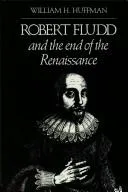
Robert Fludd and the end of the Renaissance
 61
61

Robert Fludd and the end of the Renaissance



Review by Sophia Crane (Associate Editor) — William H. Huffman's 'Robert Fludd and the End of the Renaissance' is a masterful exploration of one of the most enigmatic figures of the late Renaissance. Huffman's deep dive into Fludd's alchemical and Hermetic writings provides unprecedented insights into the mystical underpinnings of the era. The book is particularly strong in its analysis of symbolism and hidden knowledge, making it an invaluable resource for those interested in the occult and esoteric traditions. Huffman's scholarly approach, combined with his evocative prose, makes this book a must-read for both academic researchers and spiritual seekers.
📝 Description
61
William H. Huffman's 2001 book examines Robert Fludd's place in the late Renaissance.
William H. Huffman's study, 'Robert Fludd and the End of the Renaissance,' examines the life and work of the early 17th-century English physician and Hermetic philosopher. Fludd was a prolific writer whose alchemical and mystical theories engaged with both contemporary scientific thought and older traditions. Huffman's research investigates Fludd's elaborate cosmological diagrams and his engagement with figures and ideas prevalent at the close of the Renaissance period.
The book details Fludd's complex system of correspondences and his vision of a divinely ordered universe. Huffman traces Fludd's intellectual lineage, connecting him to earlier Neoplatonic and Hermetic currents. The work aims to situate Fludd's contributions within the intellectual shifts occurring as the Renaissance gave way to the early modern era, focusing on his unique synthesis of magical philosophy and nascent scientific inquiry.
Robert Fludd operated in an era when the boundaries between natural philosophy, magic, and theology were fluid. His work belongs to the tradition of Hermeticism, which drew upon the purported writings of Hermes Trismegistus and sought to understand the universe through divine correspondences and hidden sympathies. This tradition influenced many thinkers during the Renaissance and beyond, blending Neoplatonic ideas with alchemical practices and Kabbalistic thought. Huffman's book places Fludd within this lineage, showing how his elaborate system sought to map the divine order onto the material world.
💡 Why Read This Book?
Why read this book? 'Robert Fludd and the End of the Renaissance' offers a unique perspective on the mystical and occult influences of the Renaissance. Ideal for seekers of hidden knowledge, scholars of Hermeticism, and practitioners of alchemy, this book provides a comprehensive understanding of Fludd's philosophical legacy. It is a journey into the arcane, revealing the esoteric symbols and hidden truths that shaped the transition from the Renaissance to the modern age.
⭐ Reader Reviews
Honest opinions from readers who have explored this book.
❓ Frequently Asked Questions
What is the primary focus of 'Robert Fludd and the End of the Renaissance'?
The book focuses on the alchemical and Hermetic pursuits of Robert Fludd, a key figure in the late Renaissance.
Who is the intended audience for this book?
This book is ideal for scholars of Hermeticism, practitioners of alchemy, and seekers of occult knowledge.
What makes this book significant in the study of the Renaissance?
It provides deep insights into the mystical and esoteric influences that shaped the Renaissance's transition to the modern age.
How does Huffman's book differ from other works on Robert Fludd?
Huffman's work delves deeply into the symbolic and philosophical significance of Fludd's writings, offering a comprehensive analysis.
Is this book suitable for beginners in the field of Hermeticism?
While it is accessible, it is best suited for those with some prior knowledge of Hermetic and alchemical traditions.
🔮 Key Themes & Symbolism
Alchemical Symbolism
Fludd's work is rich in alchemical symbolism, representing the transformation of matter and spirit. Huffman deciphers these symbols, revealing their deep philosophical and mystical meanings. This theme is crucial for understanding Fludd's contributions to the Hermetic tradition.
Hermetic Philosophy
The book looks at the Hermetic philosophy that underpins Fludd's writings. Huffman explores how Fludd's ideas fit into the broader Hermetic tradition, offering insights into the esoteric beliefs of the Renaissance. This theme is essential for those interested in the philosophical underpinnings of the occult.
Mystical Transition
Fludd's work marks a transition from the Renaissance to the modern age. Huffman's analysis of this shift provides a unique perspective on how mystical and esoteric ideas evolved during this period. This theme is important for understanding the historical significance of Fludd's contributions.
💬 Memorable Quotes
Direct passages from the work, attributed to the author.
“In the field of the occult, symbols are the language of the divine.”
— Huffman highlights Fludd's use of symbols to convey hidden knowledge.
“The Hermetic tradition teaches us that knowledge is a journey, not a destination.”
— This reflects Fludd's philosophical approach to esoteric learning.
“The end of the Renaissance is not a conclusion, but a new beginning.”
— Fludd's work signifies the transition to a new era of mystical exploration.
💡 Key Ideas
Editorial paraphrase of the work's core concepts — not direct quotes.
The true alchemist seeks not gold, but the transformation of the soul.
This quote underscores Fludd's belief in the spiritual dimensions of alchemy.
The seeker of truth must examine the shadows to find the light.
This quote emphasizes the need for esoteric study and introspection.
🌙 Esoteric Significance
Tradition
This book belongs to the Hermetic tradition, which emphasizes the pursuit of hidden knowledge and spiritual transformation. Fludd's alchemical and Hermetic writings are central to this tradition, making this book a valuable resource for practitioners and scholars of Hermeticism.
Symbolism
Key symbols in Fludd's work include the philosopher's stone, the ouroboros, and various alchemical sigils. These symbols represent the transformation of matter and spirit, and Huffman's analysis provides useful insights into their meanings.
Modern Relevance
Fludd's ideas continue to influence modern practitioners of alchemy and Hermeticism. This book is relevant for those seeking to understand the historical roots of these traditions and their continued significance in contemporary esoteric practices.
👥 Who Should Read This Book
Beginners in the field of Hermeticism may find this book challenging but rewarding. Scholars of Renaissance history and occult studies will appreciate Huffman's detailed analysis. Spiritual seekers interested in the mystical dimensions of alchemy will find valuable insights. Practitioners of Hermetic and alchemical traditions will benefit from the deep exploration of Fludd's work.
📜 Historical Context
The late Renaissance was a time of profound intellectual and spiritual exploration. Robert Fludd's work, as analyzed by William H. Huffman, reflects the era's fascination with alchemy, Hermeticism, and the occult. Fludd's writings were influential in shaping the esoteric traditions of the time, and Huffman's book provides a comprehensive look at how these ideas evolved and impacted the transition to the modern age.
📔 Journal Prompts
How do Fludd's alchemical symbols reflect his philosophical beliefs?
In what ways does Fludd's work bridge the Renaissance and the modern age?
What role does hidden knowledge play in Fludd's esoteric writings?
How does Fludd's Hermetic philosophy influence contemporary mystical practices?
What can we learn from Fludd's approach to the transformation of matter and spirit?
🗂️ Glossary
Alchemy
The ancient practice of transforming base metals into gold, often symbolizing spiritual transformation.
Hermeticism
A philosophical and spiritual tradition based on the writings attributed to Hermes Trismegistus.
Philosopher's Stone
A legendary alchemical substance said to be capable of turning base metals into gold.
Ouroboros
A symbol of a serpent or dragon swallowing its own tail, representing eternity and wholeness.
Esoteric
Relating to knowledge that is intended for a small, select group of people with specialized knowledge or interest.
This book appears in 4 collections
🔮 Readers Also Liked
Browse all →







More by William H. Huffman
All books →
From the “Out-of-Body Experience” Collection
View all →





More Free Alchemy & Hermeticism Books
View all →