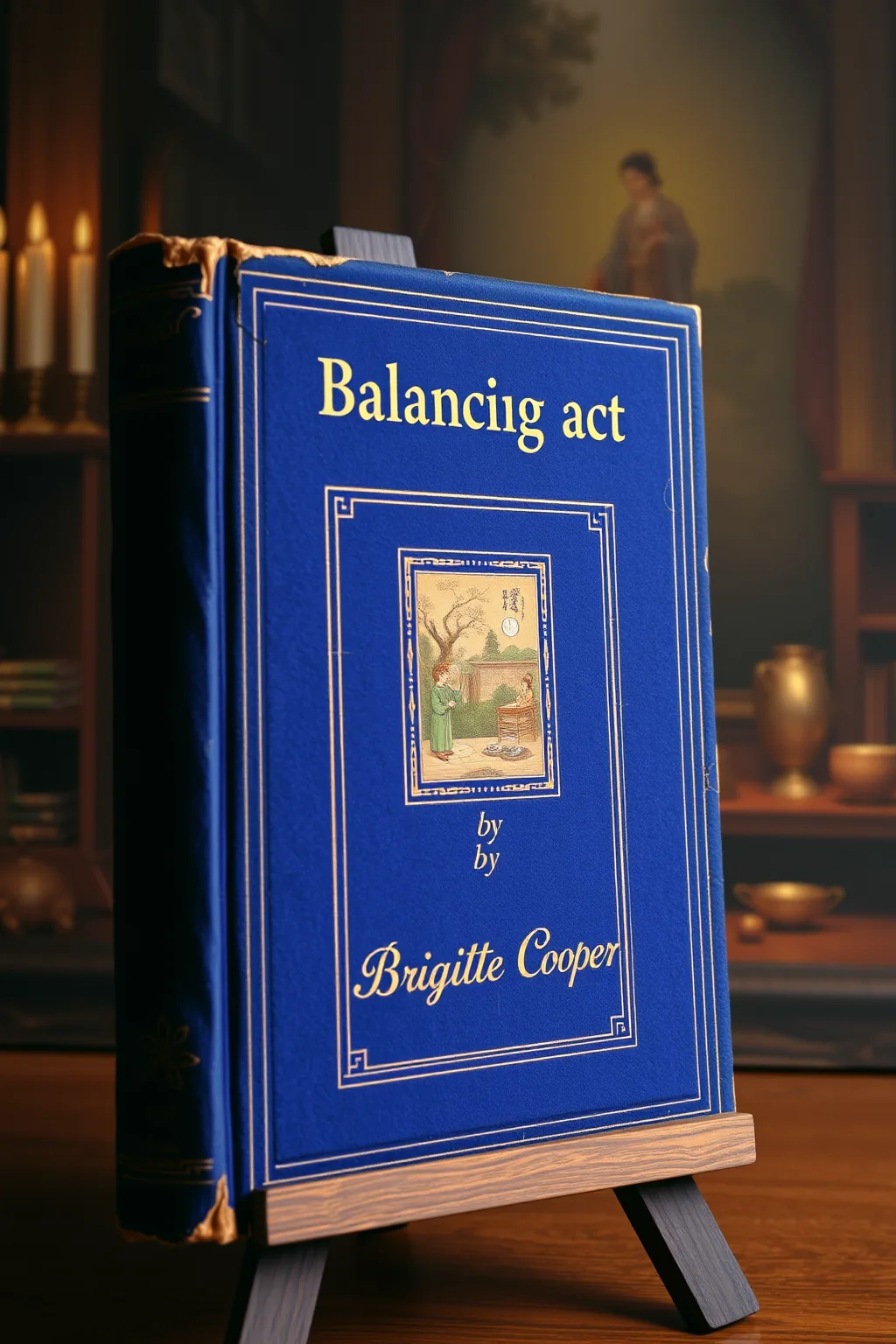
Balancing act
 61
61

Balancing act


Marcus Thorne, Esoteric Sciences Reviewer: Brigitte Cooper's 'Balancing Act' offers a surprisingly deep dive into the esoteric underpinnings of seemingly mundane activities. The narrative skillfully employs the Korean tea ceremony not merely as a plot device, but as a potent metaphor for spiritual discipline, mirroring the precision and intention required in both martial arts and high-level dance. Louie's struggle with impatience and external validation resonates with the common pitfalls encountered by practitioners in any esoteric path. The book's strength lies in its accessible portrayal of finding inner peace through ritual and attentive practice, making complex ideas about balance and self-control comprehensible for its intended young audience. A truly insightful read.
📝 Description
61
Brigitte Cooper's 'Balancing Act' connects dance discipline with the Korean tea ceremony.
Louie Lin, a young dancer preparing for a championship, faces inner conflict. Her training extends beyond athletics, becoming a pursuit of inner peace and a balance between ambition and mindfulness. Guided by her grandmother, Louie learns the quiet power of the Korean tea ceremony, a ritual that helps her manage external pressures and connect with internal energies. The narrative shows how physical grace and spiritual grounding are linked.
The story illustrates the challenge of finding stability in a fast world. It highlights self reliance and the quiet strength found in accepting life's rhythms. 'Balancing Act' suggests that mindful living, where each action and moment carries meaning, is key to personal growth.
This book draws parallels between the structured discipline of dance and the contemplative practice of the Korean tea ceremony. Both traditions, approached from an esoteric perspective, offer paths to self awareness and inner harmony. The tea ceremony, with its emphasis on precise movements and mindful attention, mirrors the focus required in dance. Together, they form a framework for understanding how ritual can cultivate presence and balance, allowing individuals to better manage external demands and connect with deeper internal states.
💡 Why Read This Book?
For seekers of inner harmony and practitioners of mindful living, 'Balancing Act' offers a unique portal into the esoteric. It reveals how ancient rituals, like the Korean tea ceremony, can illuminate the path to self-reliance and balance, even amidst the pressures of modern life. This book is ideal for young adults and adults alike who are drawn to the intersection of discipline, tradition, and personal growth, providing a gentle yet profound introduction to finding equilibrium.
⭐ Reader Reviews
Honest opinions from readers who have explored this book.
❓ Frequently Asked Questions
What is the core esoteric lesson Louie learns?
Louie learns that true balance is not achieved through external perfection, but through inner stillness and mindful presence. The tea ceremony teaches her patience and attunement, revealing that rushing leads to discord, while deliberate practice fosters harmony.
How does the Korean tea ceremony symbolize esoteric principles?
The meticulous steps of the tea ceremony represent the disciplined practice required in many esoteric traditions. Each gesture, from heating the water to pouring the tea, embodies intention, mindfulness, and the creation of a sacred space for inner reflection and connection.
Is this book suitable for absolute beginners to esoteric concepts?
Yes, 'Balancing Act' is an excellent starting point. It introduces esoteric themes through relatable characters and situations, making concepts of mindfulness, ritual, and inner balance accessible and engaging without overwhelming the reader.
What is the significance of the grandparent-grandchild relationship in this context?
The grandparent-grandchild dynamic represents the transmission of ancient wisdom and energetic lineage. The grandmother acts as a guardian of tradition, guiding Louie not just in tea ceremony, but in the deeper spiritual lessons embedded within it, fostering a connection across generations.
Does the book explore the concept of 'flow state' in dance and ritual?
Absolutely. The book subtly explores the 'flow state' where action and awareness merge. Louie's peak dance performances and moments of profound connection during tea ceremony exemplify this state, achieved through dedicated practice and a quieting of the ego.
🔮 Key Themes & Symbolism
The Alchemy of Stillness
This theme explores the transformative power of deliberate pauses and mindful presence within a life of constant motion. Louie's journey highlights how embracing stillness, as taught through the Korean tea ceremony, is not an absence of action but a catalyst for profound inner growth and clarity. It's about finding the sacred in the mundane, recognizing that true equilibrium arises from within, rather than from external achievements. This concept resonates deeply with alchemical principles, where base elements are transmuted into higher forms through precise processes and focused intent.
Ritual as a Gateway to Inner Truth
Cooper masterfully illustrates how ritual serves as a sacred pathway to self-discovery and esoteric knowledge. The meticulous steps of the Korean tea ceremony are presented not as mere tradition, but as a living embodiment of discipline, intention, and energetic alignment. For Louie, these rituals become a mirror reflecting her inner state, teaching her to observe her impulses and cultivate patience. This theme underscores the belief that engaging in structured, mindful practices can unlock deeper layers of consciousness and foster a profound connection to one's authentic self.
The Dance of Duality: Ambition and Acceptance
The narrative artfully navigates the inherent duality of human experience—the drive for achievement versus the necessity of acceptance. Louie's pursuit of championship glory is balanced by her grandmother's gentle guidance towards embracing the present moment and accepting her own imperfections. This theme speaks to the esoteric principle of integrating opposing forces to achieve wholeness. It’s about understanding that true mastery lies not in eliminating challenges, but in learning to dance with them, finding harmony between striving and surrendering, ambition and inner peace.
💬 Memorable Quotes
Direct passages from the work, attributed to the author.
“Each movement, a breath; each breath, a prayer.”
— This emphasizes the spiritual dimension of physical discipline, suggesting that synchronized movement and breath can elevate actions to a sacred, mindful practice.
“The finest tea is brewed not just with water, but with intention.”
— This points to the power of focused will and purpose in any endeavor, suggesting that the quality of outcome is deeply tied to the clarity and purity of the practitioner's intent.
“To rush is to miss the subtle unfolding.”
— This captures a core esoteric teaching: impatience obscures understanding. True wisdom and growth come from allowing processes to unfold naturally, observing each stage with presence.
“Balance is not found, but cultivated, sip by deliberate sip.”
— This illustrates that equilibrium is an active, ongoing practice, achieved through consistent, mindful effort rather than a passive state. It's a continuous cultivation of inner harmony.
💡 Key Ideas
Editorial paraphrase of the work's core concepts — not direct quotes.
Stillness is not an emptiness, but a fullness waiting to be heard.
This quote highlights the esoteric understanding that quietude is not a void, but a space rich with potential and hidden wisdom, waiting for the attentive mind to perceive it.
🌙 Esoteric Significance
Tradition
The primary esoteric tradition informing 'Balancing Act' is rooted in Zen Buddhism and its influence on East Asian contemplative practices, particularly the Korean tea ceremony (Darye). This tradition emphasizes mindfulness, impermanence, intentionality, and the pursuit of enlightenment through daily rituals. The discipline of dance can also be seen through the lens of ecstatic or ritualistic movement found in various spiritual practices, where the body becomes a vessel for divine expression or inner transformation.
Symbolism
Key symbols include the tea itself, representing purity and clarity; the teapot and cups, symbolizing containment and the vessel of the self; the water, signifying flow and purification; and the act of brewing, which embodies intentionality and transformation. Dance movements symbolize the outward expression of inner states, and the championship represents the external world's validation, contrasted with the internal validation sought through ritual. The grandmother embodies ancestral wisdom and energetic lineage.
Modern Relevance
In a hyper-connected, fast-paced world, the book's message of finding balance through mindful practice is profoundly relevant. It offers a counterpoint to the constant barrage of stimuli, advocating for intentionality and presence. The integration of physical discipline (dance) with contemplative ritual (tea ceremony) provides a holistic model for personal development, appealing to contemporary seekers looking for practical, yet spiritually resonant, tools for navigating stress and cultivating inner peace and self-reliance.
👥 Who Should Read This Book
This book is a treasure for a wide audience. Beginners to esoteric studies will find an accessible entry point into concepts of mindfulness, ritual, and inner balance through a relatable narrative. Young adult readers grappling with self-discovery and external pressures will connect with Louie's journey of finding equilibrium. Scholars of comparative religion and cultural studies will appreciate the nuanced portrayal of the Korean tea ceremony as a spiritual discipline. Practitioners of dance, meditation, or any contemplative art will find resonance in the themes of discipline, intention, and the integration of body and mind. Ultimately, anyone seeking to cultivate greater presence and harmony in their lives will benefit from this enchanting tale.
📜 Historical Context
Brigitte Cooper's 'Balancing Act' emerges from an era where a renewed interest in mindfulness, Eastern philosophies, and holistic well-being began to permeate Western culture. While set within a contemporary context, its themes echo the perennial wisdom found in ancient contemplative traditions. The mid-to-late 20th and early 21st centuries saw a surge in the accessibility of practices like yoga, meditation, and martial arts, often presented to younger generations as tools for self-improvement and stress management. The Korean tea ceremony, with its deep roots in Zen Buddhism and Confucianism, offers a specific cultural lens through which to explore these universal concepts. The book taps into this growing awareness, presenting these traditions not as exotic novelties, but as vital pathways to inner balance, self-reliance, and a more profound understanding of oneself and the world.
📔 Journal Prompts
Reflect on a time you felt overwhelmed by external pressures. How could incorporating a simple ritual, like a mindful cup of tea, have helped you find balance?
Describe a moment in your life where you achieved a 'flow state' in an activity. What elements contributed to this feeling of complete immersion?
How does the concept of 'deliberate unfolding' apply to a goal you are currently pursuing? What steps can you take to be more patient and observant?
Consider the 'alchemy of stillness.' What does stillness mean to you, and how can you intentionally cultivate moments of quiet presence in your daily life?
Explore the duality of ambition and acceptance. How can you honor your drive for achievement while also practicing self-compassion and acceptance of your current state?
🗂️ Glossary
Darye
The traditional Korean tea ceremony, a ritualistic practice emphasizing mindfulness, respect, and aesthetic appreciation, deeply rooted in Buddhist and Confucian principles.
Flow State
A mental state in which a person performing an activity is fully immersed in a feeling of energized focus, full involvement, and enjoyment in the process of the activity.
Contemplative Practice
A set of spiritual or meditative disciplines designed to foster introspection, self-awareness, and a deeper connection to the divine or one's inner self.
Esoteric
Intended for or likely to be understood by only a small number of people with a specialized knowledge or interest; relating to or concerned with the occult.
Mindfulness
A mental state achieved by focusing one's awareness on the present moment, while calmly acknowledging and accepting one's feelings, thoughts, and bodily sensations.
This book appears in 3 collections
🔮 Readers Also Liked
Browse all →









From the “Ritual Magic” Collection
View all →







More Free Magic & Ritual Books
View all →