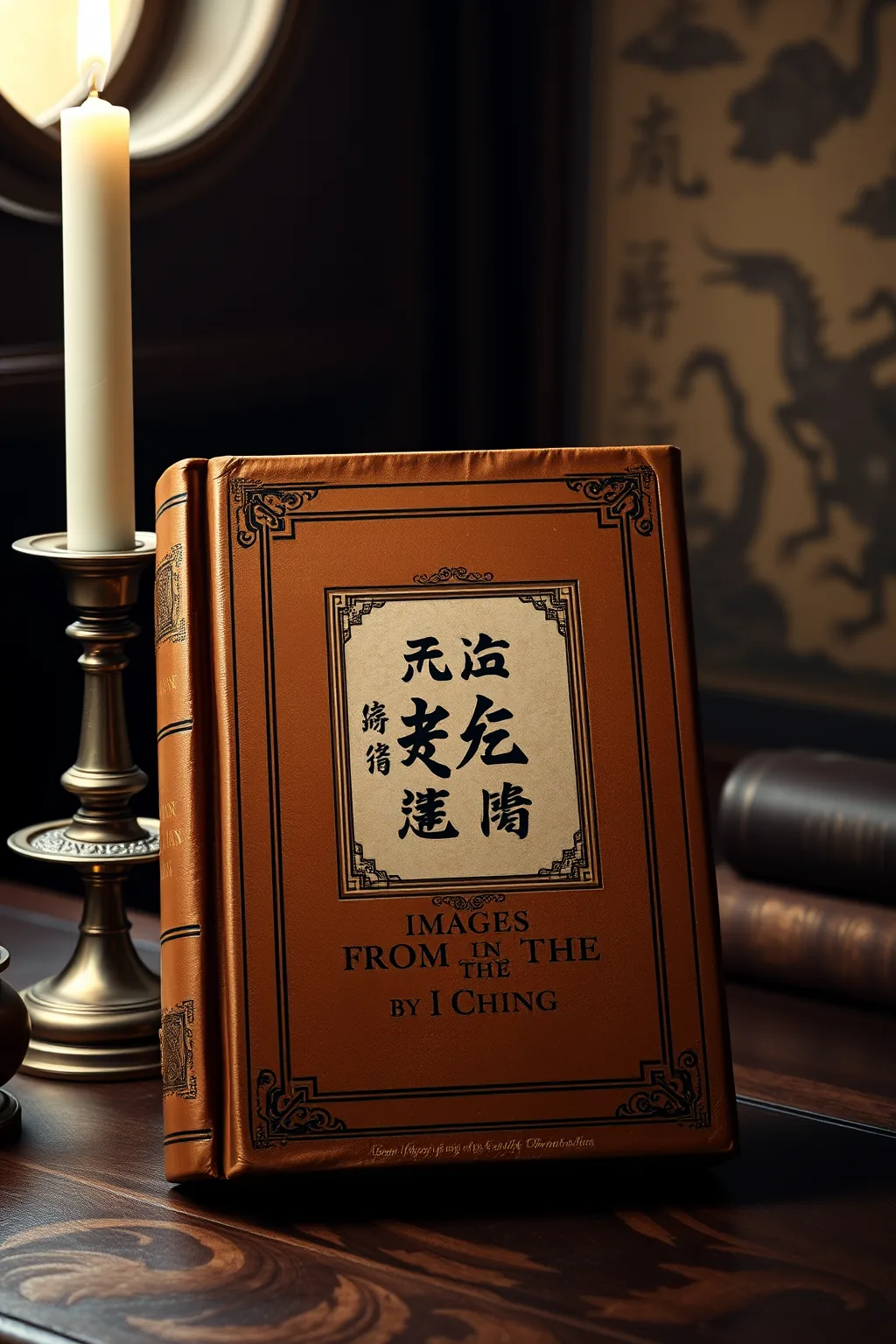
Images From the I Ching
 61
61

Images From the I Ching



Sophia Crane (Associate Editor) — 'Images From the I Ching' is a masterful distillation of esoteric wisdom, presenting the ancient oracle with unparalleled clarity and depth. The unknown author's profound connection to the text shines through, offering practitioners and scholars alike a gateway to its most profound secrets. This edition excels in its evocative portrayal of the hexagrams' symbolic language, moving beyond mere interpretation to a visceral understanding of their energetic resonance. It is an essential addition to any serious library on divination, offering not just a tool for foresight but a profound philosophical and spiritual exploration. Highly recommended for those seeking to deepen their practice and understanding of the I Ching's timeless teachings.
📝 Description
61
'Images From the I Ching' presents visual interpretations of the sixty-four hexagrams, a core component of the Chinese divination text.
This book offers visual interpretations of the I Ching's sixty-four hexagrams. The original I Ching, or Book of Changes, is a foundational text in Taoist thought and practice, used for divination and understanding cosmic patterns. 'Images From the I Ching' aims to make these complex symbolic structures more accessible through imagery. It translates the abstract principles of the hexagrams into concrete pictures, helping readers to better grasp their meanings. The text encourages a closer look at the forces that influence events and personal destiny. It is intended for those interested in the I Ching's symbolic language and its application to understanding life's dynamics.
The I Ching is a primary text within Chinese esoteric traditions, particularly Taoism and Confucianism, serving as a system for divination and philosophical reflection for over two millennia. Its hexagrams are seen not merely as random symbols but as representations of fundamental cosmic processes and human situations. This book engages with that tradition by providing visual keys to these hexagrams, facilitating a more intuitive understanding of the interconnectedness between the human realm and the broader energetic currents of the universe.
💡 Why Read This Book?
Unravel the enigmatic wisdom of the I Ching, a cornerstone of Eastern mysticism. 'Images From the I Ching' offers a unique lens into its profound symbolism, making ancient divination accessible and deeply resonant. Ideal for spiritual seekers, practitioners of esoteric arts, and scholars of ancient philosophy, this book provides a transformative path to understanding life's intricate patterns and your place within the cosmic dance. Discover hidden truths and unlock profound self-awareness.
⭐ Reader Reviews
Honest opinions from readers who have explored this book.
❓ Frequently Asked Questions
What is the I Ching?
The I Ching, or 'Book of Changes,' is an ancient Chinese divination text and philosophical classic. It consists of sixty-four hexagrams, each representing a fundamental situation or stage of change, offering guidance and insight into life's challenges.
Who is the author of 'Images From the I Ching'?
The authorship of 'Images From the I Ching' is traditionally attributed to an unknown scholar, adding to its mystique and the timeless nature of the wisdom it conveys. This anonymity allows the text to speak directly from the ancient source.
How can I use 'Images From the I Ching' for divination?
Consult the hexagrams within the text when seeking guidance. The book's evocative imagery and detailed interpretations will help you understand the underlying energies of your situation and potential outcomes, facilitating informed decision-making.
Is this book suitable for beginners?
Yes, while deeply esoteric, 'Images From the I Ching' is structured to guide both novice and experienced practitioners. Its rich symbolism provides a profound entry point into the study of the I Ching's complex philosophy.
What makes this edition special?
This edition is distinguished by its potent, evocative language and its focus on the visual and symbolic dimensions of the I Ching, making its profound teachings more accessible and spiritually engaging for the modern reader.
🔮 Key Themes & Symbolism
The Philosophy of Change
Fundamentally, the I Ching is a evidence of the ceaseless nature of transformation. 'Images From the I Ching' explores this fundamental principle, illustrating how all phenomena are in constant flux, waxing and waning like the moon. It teaches that understanding the patterns of change allows one to navigate life's vicissitudes with wisdom and foresight. This perspective encourages adaptability and resilience, urging the reader to embrace impermanence as a natural and essential aspect of existence, fostering a deep connection with the dynamic currents of the universe.
Symbolic Language of the Hexagrams
The sixty-four hexagrams of the I Ching are more than just abstract symbols; they are profound archetypes that encapsulate universal experiences and cosmic principles. 'Images From the I Ching' breathes life into these symbols, transforming them into vivid mental landscapes. Each line and trigram represents a specific energetic quality, and their combinations create intricate patterns that reflect the myriad possibilities of human experience. Understanding this symbolic language is key to unlocking the oracle's profound predictive and philosophical insights, revealing the hidden meanings behind daily events.
The Art of Divination and Self-Discovery
Beyond its role as a predictive tool, the I Ching serves as a powerful instrument for self-reflection and spiritual growth. 'Images From the I Ching' guides the reader in using the oracle not just to foretell the future, but to gain deeper self-awareness and make conscious choices aligned with cosmic harmony. By engaging with the hexagrams, individuals can uncover their subconscious motivations, understand their current circumstances from a higher perspective, and cultivate a more intuitive and aligned path forward, fostering personal evolution and inner peace.
💬 Memorable Quotes
Direct passages from the work, attributed to the author.
“Within the image, the truth resides.”
— This highlights the power of symbolic representation in the I Ching, suggesting that profound wisdom and hidden meanings are accessible through the careful contemplation of its visual and archetypal imagery.
“Know the flow, and you shall read through the storm.”
— This speaks to the practical application of I Ching wisdom, advising that understanding the underlying currents of a situation allows for skillful and effective action, even amidst adversity.
“The hexagrams are mirrors to the soul.”
— This suggests that the I Ching's insights are not merely external predictions but rather reflections of one's inner state, prompting introspection and self-discovery.
“Seek harmony in the dance of opposites.”
— This points to the concept of Yin and Yang within the I Ching, encouraging balance and understanding in the interplay of complementary forces that shape reality.
💡 Key Ideas
Editorial paraphrase of the work's core concepts — not direct quotes.
The universe breathes change, a ceaseless tide.
This quote captures the core Taoist principle of impermanence, emphasizing that all things are in a state of constant flux, like the natural rhythms of the cosmos.
🌙 Esoteric Significance
Tradition
Rooted deeply within Taoist philosophy, 'Images From the I Ching' serves as a vital conduit to this ancient Chinese spiritual and metaphysical system. It embodies the Taoist emphasis on natural law, the cyclical nature of existence, and the interconnectedness of all things. The text's divination system is a practical manifestation of these principles, offering a means to align oneself with the 'Tao' – the fundamental, ineffable force that underlies the universe.
Symbolism
The I Ching's sixty-four hexagrams are rich with symbolic meaning, each representing a complex interplay of elemental forces and archetypal situations. 'Images From the I Ching' illuminates this potent symbolism, translating abstract concepts into vivid imagery. The trigrams (three-line symbols) and their combinations unlock layers of meaning related to heaven, earth, water, fire, and other fundamental aspects of reality, serving as a profound visual language for understanding cosmic patterns.
Modern Relevance
In an era often characterized by uncertainty and rapid change, the wisdom of the I Ching, as presented in this work, offers profound relevance. Its teachings on adaptability, balance, and understanding the natural flow of events provide invaluable guidance for navigating personal and global challenges. The book encourages a more mindful and intuitive approach to life, fostering resilience, self-awareness, and a deeper connection to the underlying order of the universe.
👥 Who Should Read This Book
This evocative text is a treasure for a diverse audience. **Beginners** seeking an accessible yet profound introduction to the I Ching will find its clear presentation of symbolism invaluable. **Spiritual seekers** yearning to understand the cosmic dance and their place within it will be drawn to its philosophical depth and divinatory guidance. **Practitioners of esoteric arts**, including tarot readers and astrologers, will discover a powerful complementary system for insight and prediction. **Scholars of ancient philosophies and Eastern traditions** will appreciate its comprehensive exploration of this foundational text, offering a rich resource for academic and personal study.
📜 Historical Context
The I Ching, or Book of Changes, emerged from ancient Chinese shamanistic practices and philosophical discourse, likely taking its current form between the Western Zhou Dynasty (c. 1046–771 BCE) and the Spring and Autumn period (771–476 BCE). Initially used for divination, it evolved into a profound philosophical text, deeply influencing Taoism, Confucianism, and Chinese thought for millennia. Its hexagrams, derived from combinations of yin and yang lines, represent archetypal situations and cosmic processes. The text's transmission and interpretation have been a continuous scholarly and spiritual endeavor, with commentaries by figures like Confucius and his followers shaping its philosophical depth. 'Images From the I Ching' stands as a evidence of this enduring legacy, offering a modern portal into this ancient wisdom tradition.
📔 Journal Prompts
Reflect on a recent significant change in your life. How might the principles of 'Images From the I Ching' apply to this transition?
Choose a hexagram that speaks to you today. What visual imagery does it evoke, and what message does it hold for your current circumstances?
Consider the interplay of seemingly opposing forces in your life. How can you find harmony and balance between them, inspired by the I Ching's philosophy?
If the I Ching is a mirror, what aspects of your inner self does it reveal to you when you consult it?
How can understanding the 'flow' of events, as suggested by the I Ching, empower you to act more intentionally and skillfully in your daily life?
🗂️ Glossary
Hexagram
A symbol composed of six stacked horizontal lines, either solid (yang) or broken (yin), used in the I Ching to represent a specific situation or stage of change. Each hexagram is formed by combining two trigrams.
Trigram
A basic symbol composed of three stacked horizontal lines, either solid (yang) or broken (yin). There are eight trigrams, representing fundamental elements and concepts like heaven, earth, water, and fire.
Yang
In the I Ching and Taoist philosophy, yang represents the active, light, masculine, and assertive principle. It is symbolized by a solid line (-).
Yin
In the I Ching and Taoist philosophy, yin represents the passive, dark, feminine, and receptive principle. It is symbolized by a broken line (--).
Tao
The fundamental, ineffable principle that underlies all existence in Taoist philosophy. It represents the natural order, the way of the universe, and is often described as the 'path' or 'way'.
This book appears in 2 collections
🔮 Readers Also Liked
Browse all →









From the “I Ching” Collection
View all →









More Free Divination & Tarot Books
View all →