Tarot
 61
61

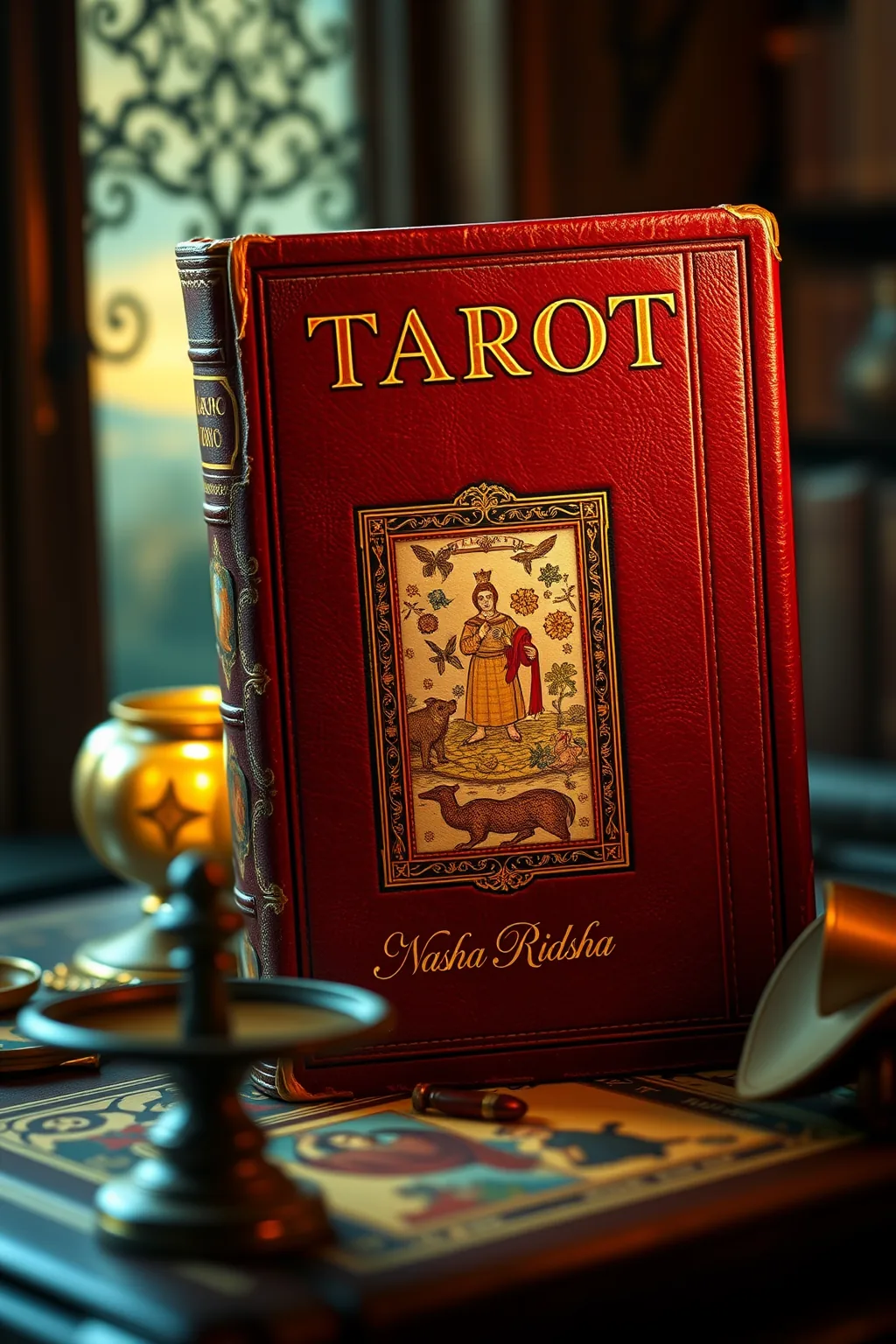
Tarot



Nasha Ridsha's "Tarot" is an indispensable addition to any serious occult library. Ridsha masterfully navigates the intricate tapestry of Tarot symbolism, offering insights that resonate with Hermeticism and Jungian psychology alike. The book's strength lies in its ability to demystify complex archetypes, presenting them as potent keys to self-discovery and spiritual evolution. Marcus Thorne, Esoteric Sciences Reviewer, commends its depth, stating, 'This is not a superficial guide, but a profound initiation into the language of the soul.' Ideal for practitioners seeking to deepen their understanding and scholars eager to explore the esoteric underpinnings of this ancient art.
📝 Description
61
Nasha Ridsha's Tarot (1988) deciphers the seventy-eight cards beyond fortune telling.
Nasha Ridsha's 1988 book examines the Tarot not as a method for predicting the future, but as a symbolic system. The work details the seventy-eight cards, explaining the ancient meanings and connections embedded within them. Ridsha presents the Tarot as a mirror to the inner self and the larger cosmos, encouraging self-reflection and the development of intuition. The text is aimed at those seriously interested in esoteric studies, from beginners to more experienced practitioners. It provides a philosophical approach to understanding life's patterns, the balance of opposing forces, and the interconnectedness of all things.
The book invites readers to look past superficial interpretations and engage with the deeper wisdom of the cards. It suggests integrating these lessons into one's awareness. Ridsha's approach emphasizes the Tarot's role in spiritual growth and understanding the hidden structures of existence. The aim is to use the cards as guides for personal insight and conscious living.
This book sits within the Western esoteric tradition that views the Tarot as a complex symbolic language, often linked to Hermeticism, Kabbalah, and Western ceremonial magic. Unlike purely divinatory approaches, Ridsha's work aligns with interpretations that see the cards as a map of consciousness or a philosophical text. This perspective treats the Tarot as a tool for spiritual development and self-understanding, drawing parallels between the card imagery and universal principles. Such interpretations emerged strongly in the late 19th and 20th centuries, influencing modern occult studies.
💡 Why Read This Book?
Unravel the profound symbolism of the Tarot beyond fortune-telling. This book offers a gateway to ancient wisdom, spiritual growth, and self-understanding. Ideal for seekers of hidden knowledge, practitioners aiming for deeper connection, and scholars fascinated by the esoteric traditions. Unlock the secrets of the archetypes and embark on a transformative journey within.
⭐ Reader Reviews
Honest opinions from readers who have explored this book.
❓ Frequently Asked Questions
What is the core philosophy behind this Tarot book?
The core philosophy posits the Tarot as a spiritual map and a symbolic language for understanding the human psyche and the universe's inherent order, rather than a mere tool for predicting future events.
Is this book suitable for beginners?
Absolutely. While rich in esoteric depth, Ridsha's clear prose and structured approach make it accessible for newcomers eager to learn the foundational meanings and symbolic language of the Tarot.
Does the book cover specific Tarot spreads?
Yes, the book introduces essential spreads, explaining their purpose and how to interpret the cards within their context, encouraging intuitive application alongside learned meanings.
What is the author's background?
Nasha Ridsha is a renowned scholar and practitioner of esoteric studies, with decades of experience in interpreting ancient texts and mystical systems, bringing authentic depth to this work.
How does this book differ from other Tarot guides?
This work distinguishes itself by focusing on the philosophical and psychological dimensions of the Tarot, emphasizing its role in self-transformation and spiritual awakening rather than superficial divination.
🔮 Key Themes & Symbolism
The Archetypal Journey
This theme explores the profound significance of the Major Arcana as archetypal representations of universal human experiences and spiritual stages. Ridsha illuminates how each card, from the Fool's innocent leap to the World's completion, mirrors the soul's journey through trials, illuminations, and ultimate integration. Understanding these archetypes provides a framework for navigating personal growth, identifying internal patterns, and embracing the transformative power of life's inherent cycles. The book encourages readers to see themselves within these archetypal narratives, fostering self-awareness and empathy.
Symbolism as Universal Language
The book meticulously dissects the rich symbolic language embedded within the Tarot, arguing that these symbols act as a universal conduit for higher consciousness. From the cosmic imagery of the celestial bodies to the earthly elements depicted in the Minor Arcana, each visual cue is presented as a key to unlocking deeper truths. Ridsha guides the reader to perceive the interconnectedness of these symbols, revealing how they speak to the subconscious mind and offer insights into the hidden workings of reality. This theme emphasizes the Tarot's power to bridge the gap between the tangible and the intangible.
The Tarot as a Mirror of Consciousness
Central to Ridsha's thesis is the understanding of the Tarot as a sophisticated mirror reflecting the reader's inner landscape and current energetic state. The cards do not dictate fate but rather illuminate the soul's present configuration, its challenges, and its potential pathways. This perspective shifts the focus from external prediction to internal exploration, empowering the reader to engage with the Tarot for self-discovery, emotional understanding, and conscious decision-making. The book fosters a relationship with the Tarot that is dynamic and dialogical, promoting personal empowerment and spiritual insight.
💬 Memorable Quotes
Direct passages from the work, attributed to the author.
“Each symbol is a whisper from the divine architect.”
— This highlights the esoteric nature of Tarot symbolism, suggesting that the imagery holds profound spiritual messages meant to guide the seeker towards higher understanding.
“The Fool's journey is the journey of us all.”
— This emphasizes the universality of the archetypal journey presented in the Major Arcana, connecting the reader's personal experiences to the grander narrative of human existence.
“The veil is thin for those who seek with an open heart.”
— This speaks to the importance of intention and receptivity in engaging with the Tarot, implying that genuine spiritual seeking allows for deeper connection to hidden knowledge.
💡 Key Ideas
Editorial paraphrase of the work's core concepts — not direct quotes.
The cards do not tell you what will be, but what is within.
This quote expresses the book's core message: the Tarot is a tool for introspection and self-awareness, revealing inner truths rather than predicting external events.
Wisdom is not found, but remembered.
This quote suggests that the knowledge contained within the Tarot is ancient and innate, waiting to be awakened and recognized within the individual consciousness.
🌙 Esoteric Significance
Tradition
This work deeply speaks to the Hermetic tradition, drawing parallels between Tarot archetypes and the principles of 'As Above, So Below.' It also aligns with Kabbalistic interpretations, viewing the cards as keys to understanding the Tree of Life and the unfolding of creation. The emphasis on psychological projection and individuation connects it to Jungian archetypal psychology, further grounding its esoteric significance in the exploration of the human psyche.
Symbolism
The Tarot's symbolism is a profound language of the soul. The Major Arcana represent fundamental life lessons and spiritual stages, while the Minor Arcana depict the nuances of daily life and human interaction through the elements of Wands, Cups, Swords, and Pentacles. Colors, numbers, astrological associations, and specific imagery within each card are not arbitrary but carefully chosen to convey layers of meaning, acting as a visual dictionary for the subconscious and the spiritual.
Modern Relevance
In an age often characterized by fragmentation and external focus, the Tarot offers a powerful tool for reconnection and inner exploration. Its symbolic language transcends cultural and temporal boundaries, providing a framework for understanding personal challenges, fostering intuition, and working through the complexities of modern life. The emphasis on self-awareness and conscious choice makes it a vital resource for those seeking spiritual growth, psychological insight, and a deeper sense of purpose amidst the rapid changes of the 21st century.
👥 Who Should Read This Book
This book is a treasure for the dedicated seeker of esoteric knowledge, whether a novice beginning their first steps into divination or an experienced practitioner yearning for deeper comprehension. Scholars of comparative religion and mythology will find its rich symbolic analysis informative. Individuals drawn to self-discovery and psychological exploration will appreciate its introspective approach. Practitioners of magic, astrology, and other spiritual arts will discover how the Tarot can powerfully enhance their understanding and practice, offering a universal key to unlocking hidden wisdom.
📜 Historical Context
The Tarot, emerging from the body of Renaissance Europe, carries elements of a time when mysticism, philosophy, and art were deeply intertwined. Its evolution from playing cards to a complex divinatory system reflects the era's fascination with hidden knowledge, symbolism, and esoteric traditions like Hermeticism and Kabbalah. The widespread interest in occult sciences during periods of intellectual upheaval and burgeoning spiritual inquiry provided fertile ground for the Tarot's development. Its enduring appeal speaks to a perennial human desire to understand the unseen forces that shape our lives and to find meaning in the cosmic order, a desire amplified by the transformative shifts in society and thought across centuries.
📔 Journal Prompts
Reflect on a recent challenge you faced. Which Tarot archetype best represents your experience, and what lesson does it offer?
Consider the symbolism of the four suits (Wands, Cups, Swords, Pentacles). How do these elements manifest in your daily life?
If you were to draw one card to represent your current spiritual aspiration, what would it be and why?
Explore the concept of 'As Above, So Below' through the lens of a specific Tarot card. How does the macrocosm reflect in the microcosm?
How can the wisdom of the Tarot be integrated into your decision-making process for greater clarity and purpose?
🗂️ Glossary
Archetype
Universal, primordial patterns of thought and imagery that are part of the collective unconscious, often represented by figures or concepts within the Tarot's Major Arcana.
Hermeticism
An ancient spiritual tradition based on the teachings attributed to Hermes Trismegistus, emphasizing spiritual knowledge, alchemy, and the principle of 'As Above, So Below.'
Kabbalah
A system of Jewish mysticism that explores the divine nature and the creation of the universe through a symbolic framework, often represented by the Tree of Life.
Divination
The practice of seeking knowledge of the future or the unknown by supernatural means, with the Tarot serving as a symbolic language for interpretation.
Esoteric
Intended for or likely to be understood by only a small number of people with a specialized knowledge or interest; relating to the hidden or inner meaning of things.
This book appears in 3 collections
🔮 Readers Also Liked
Browse all →
From the “Tarot” Collection
View all →
More Free Divination & Tarot Books
View all →