Divine Dance
 63
63

Divine Dance



Cassian Rothmann (Senior Critic, Ancient Wisdom) — In 'Divine Dance,' Richard Rohr offers a breathtaking re-envisioning of Trinitarian theology, grounding it in a rich tapestry of mystical experience and symbolic resonance. Rohr's genius lies in his ability to excavate profound esoteric truths from within the heart of Christian tradition, presenting them with an accessible yet deeply challenging clarity. He invites readers to perceive the Trinity not as a static doctrine but as a dynamic, relational flow of divine energy. This work is essential for anyone seeking to transcend simplistic notions of God and embrace a more fluid, participatory, and ultimately more liberating spiritual path. A truly luminous contribution to contemporary mystical thought.
📝 Description
63
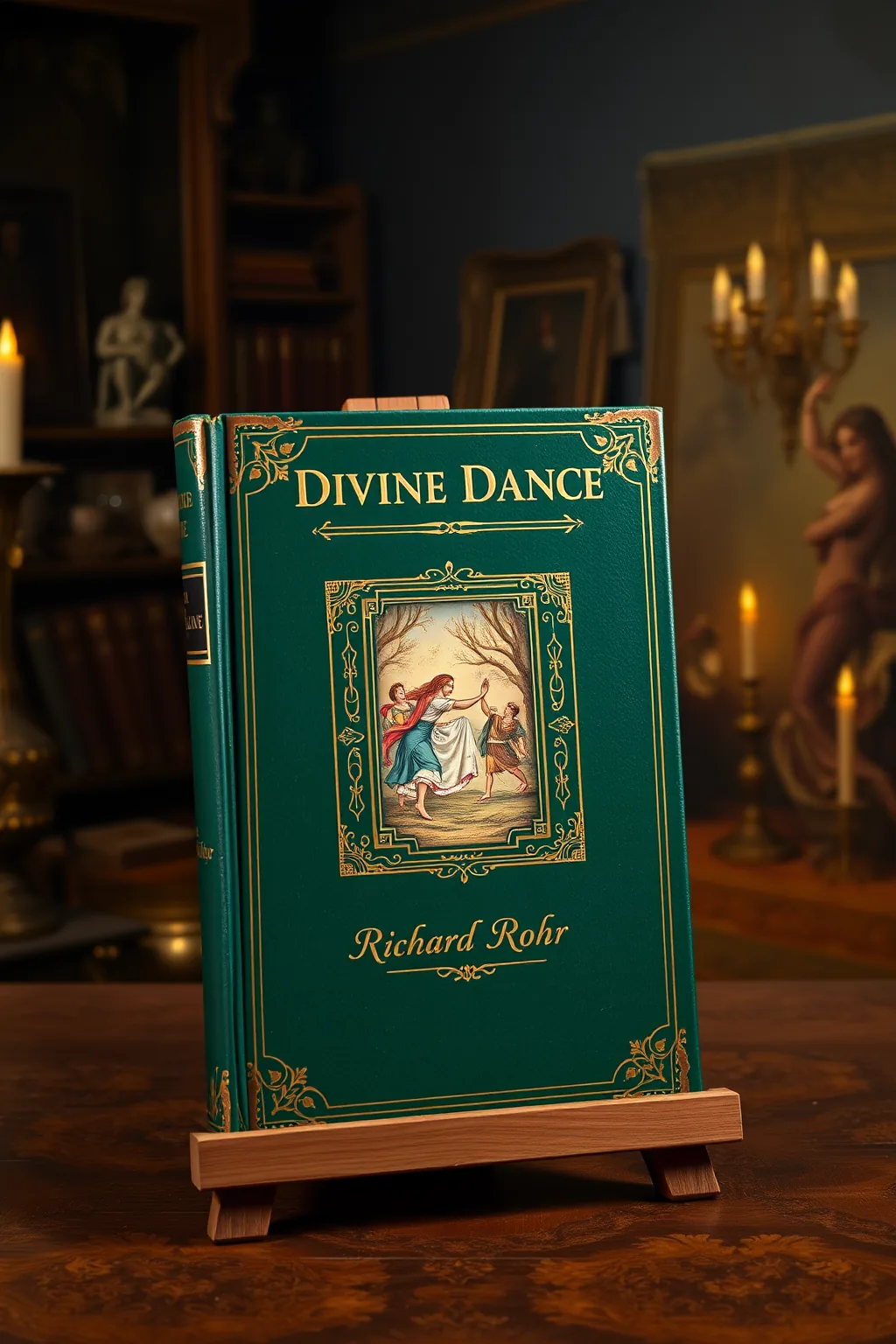
Richard Rohr’s 2016 book, 'Divine Dance,' reimagines the Trinity as a dynamic, loving communion.
In 'Divine Dance,' Richard Rohr argues that the Christian understanding of the Trinity is fundamentally about a vibrant, energetic relationship. He moves away from abstract theological definitions to present the Trinity as a continuous, loving exchange. Rohr examines ancient Christian symbols, uncovering their deeper meanings related to this active divine life. He suggests that this perspective allows for a more participatory approach to spirituality, where God is not a remote being but an inherent presence in all things.
The book aims to connect with individuals seeking a more felt sense of the divine. It speaks to those who perceive a universal interconnectedness and wish to live in harmony with it. Rohr's work encourages readers to shift their views of God, themselves, and the nature of reality, fostering a deeper, more experiential faith.
Richard Rohr's 'Divine Dance' engages with traditions that emphasize the immanent and relational aspects of the divine, often found in Christian contemplative and mystical streams. It draws parallels with concepts of divine energy and interconnectedness that resonate with broader esoteric thought, suggesting that spiritual truth is not solely found in dogma but in direct experience and a recognition of the divine within creation. This approach aligns with movements that seek a lived, embodied faith beyond strict intellectual assent.
💡 Why Read This Book?
Uncover the dynamic, relational nature of the Trinity beyond dogma. Experience a participatory spirituality that connects you to the divine flow of creation. For seekers of hidden wisdom, scholars of esoteric Christianity, and practitioners desiring a deeper, more integrated faith.
⭐ Reader Reviews
Honest opinions from readers who have explored this book.
❓ Frequently Asked Questions
What is the central metaphor of 'Divine Dance'?
The central metaphor is the Trinity as a dynamic, energetic dance of love and communion, a constant outflow and inflow of divine presence that permeates all of creation.
How does the book connect to Catholic tradition?
Rohr grounds his mystical insights within the rich symbolism and theological lineage of the Catholic Church, reinterpreting traditional doctrines through a lens of ecstatic, relational divinity.
Is this book suitable for non-Christians?
Absolutely. While rooted in Christianity, the book's exploration of divine unity, interconnectedness, and spiritual dance offers universal appeal to anyone on a path of spiritual seeking and self-discovery.
What does Rohr mean by 'participatory spirituality'?
It refers to a spirituality where individuals are active participants in the divine life, not passive observers, experiencing God's presence and collaborating in creation through their own being and actions.
What kind of 'hidden knowledge' does the book reveal?
It reveals the 'hidden' knowledge of God as intrinsically relational and dynamic, moving beyond static, abstract concepts to a lived experience of divine love as the very fabric of reality.
🔮 Key Themes & Symbolism
The Trinity as Cosmic Dance
Rohr reinterprets the Christian Trinity not as a static, abstract theological concept, but as a vibrant, ongoing 'dance' of divine love and relationship. This metaphor emphasizes the dynamic, energetic, and relational nature of God, portraying the Father, Son, and Holy Spirit as perpetually engaged in a cosmic ballet of creation, communion, and reciprocal giving. This perspective invites a participatory experience of the divine, where humanity is not merely an observer but an integral part of this sacred, ongoing movement, finding its place within the divine flow of existence.
Mystical Experience Beyond Dogma
This work champions a form of spirituality that transcends rigid dogma and intellectual assent, advocating for a direct, experiential encounter with the divine. Rohr encourages readers to look beyond literal interpretations and embrace the symbolic language of faith, finding in ancient Christian traditions a profound wellspring of mystical knowledge. The 'hidden' wisdom revealed pertains to the immanent presence of God within all things and the innate capacity of the human soul to participate in the divine life, fostering a more embodied and intuitive spiritual practice.
The Unity of All Things
Fundamentally, , 'Divine Dance' presents a worldview steeped in unity and interconnectedness, reflecting perennial philosophical and esoteric traditions. Rohr posits that the Trinitarian dance is the underlying principle that binds the universe together, revealing a profound oneness that permeates all of existence. This perspective encourages a shift from dualistic thinking to an appreciation of the inherent wholeness of reality, where the divine is not separate from creation but is its very source and substance, fostering a sense of belonging and sacred responsibility.
💬 Memorable Quotes
Direct passages from the work, attributed to the author.
“God is not a noun, but a verb.”
— This highlights the dynamic, active nature of the divine, emphasizing God as a continuous process of becoming and engaging with creation rather than a static, unchanging entity.
“The Trinity is the ultimate community.”
— This points to the relational essence of God, suggesting that divine existence is fundamentally about love, connection, and mutual participation, serving as a model for human community.
“We are all called to join the dance.”
— This invites active participation in the divine life, suggesting that spiritual fulfillment comes from aligning oneself with the cosmic rhythm of God's loving energy.
“The universe is a divine outpouring of love.”
— This frames creation as an act of divine generosity and affection, portraying existence as a manifestation of God's boundless love and creative spirit.
“Encountering God is encountering yourself.”
— This suggests the profound interconnectedness between the divine and the human, implying that self-knowledge is a pathway to divine awareness and vice versa.
🌙 Esoteric Significance
Tradition
This work is deeply rooted in the contemplative and mystical streams of Christianity, drawing parallels with Gnostic and Hermetic traditions through its emphasis on divine immanence and direct experiential knowledge. It aligns with the esoteric concept of God as an active, relational force rather than a detached creator, echoing the idea of the divine presence within all creation and the human potential for divine union.
Symbolism
The central symbol is the 'dance,' representing the perpetual, energetic, and loving communion of the Trinity. Other significant symbols include light, creation as an outpouring, and the interconnectedness of all beings. These symbols are employed to convey abstract theological truths in a more visceral and accessible manner, inviting the reader to perceive the divine not just intellectually but intuitively.
Modern Relevance
In an era often characterized by fragmentation and a search for meaning, 'Divine Dance' offers a powerful antidote by emphasizing unity, interconnectedness, and the immanent presence of the divine. Its call for a participatory spirituality speaks to individuals seeking a more engaged and authentic relationship with God, moving beyond passive belief to active co-creation and spiritual lived experience.
👥 Who Should Read This Book
This book is a profound gift for a diverse range of readers. **Beginners** on a spiritual path will find an accessible yet deeply enriching introduction to a more mystical understanding of God. **Scholars** of theology and comparative religion will appreciate Rohr's innovative reinterpretation of Christian doctrine and his engagement with esoteric thought. **Seekers** yearning for a more vibrant, participatory faith will find their souls stirred by the call to join the divine dance. **Practitioners** of meditation and contemplative prayer will discover new depths and frameworks for their spiritual disciplines, integrating intellectual understanding with embodied experience.
📜 Historical Context
Richard Rohr's 'Divine Dance' emerges from a collection of Christian contemplative traditions, drawing inspiration from figures like Meister Eckhart, Julian of Norwich, and the mystics of the early Church. Written in the late 20th and early 21st centuries, a period marked by a resurgence of interest in spirituality and a questioning of traditional religious structures, Rohr's work taps into a contemporary longing for a more authentic and experiential faith. It speaks to the perennial philosophical search for unity and the esoteric understanding of divine immanence, offering a bridge between ancient wisdom and modern seekers. The book's exploration of the Trinity as a dynamic, relational process can be seen as a response to a perceived need for a more vibrant and less abstract understanding of God in a secularizing world.
📔 Journal Prompts
Describe a moment in your life when you felt like you were participating in a 'divine dance.'
How does the concept of God as a verb, rather than a noun, change your perception of the divine?
In what ways do you feel interconnected with the universe and its creative processes?
Explore the 'hidden knowledge' of the Trinity that resonates most deeply with your own spiritual journey.
How can you consciously invite more 'divine dance' into your daily interactions and activities?
🗂️ Glossary
Trinity
The Christian doctrine of God as three co-equal, co-eternal persons: Father, Son (Jesus Christ), and Holy Spirit, understood as one God.
Immanence
The belief that God is present within the universe and all of creation, rather than being solely transcendent and outside of it.
Contemplative Spirituality
A spiritual path focused on direct, experiential knowledge of God through prayer, meditation, and deep inner reflection, often emphasizing union with the divine.
Perennial Philosophy
The idea that there is a single, universal truth or spiritual reality underlying all religions and spiritual traditions, accessible through various paths.
Dogma
A set of principles laid down by an authority as incontrovertibly true, often used in a religious or political context.
This book appears in 3 collections
🔮 Readers Also Liked
Browse all →








More by Richard Rohr
All books →


From the “Tarot” Collection
View all →









More Free Divination & Tarot Books
View all →