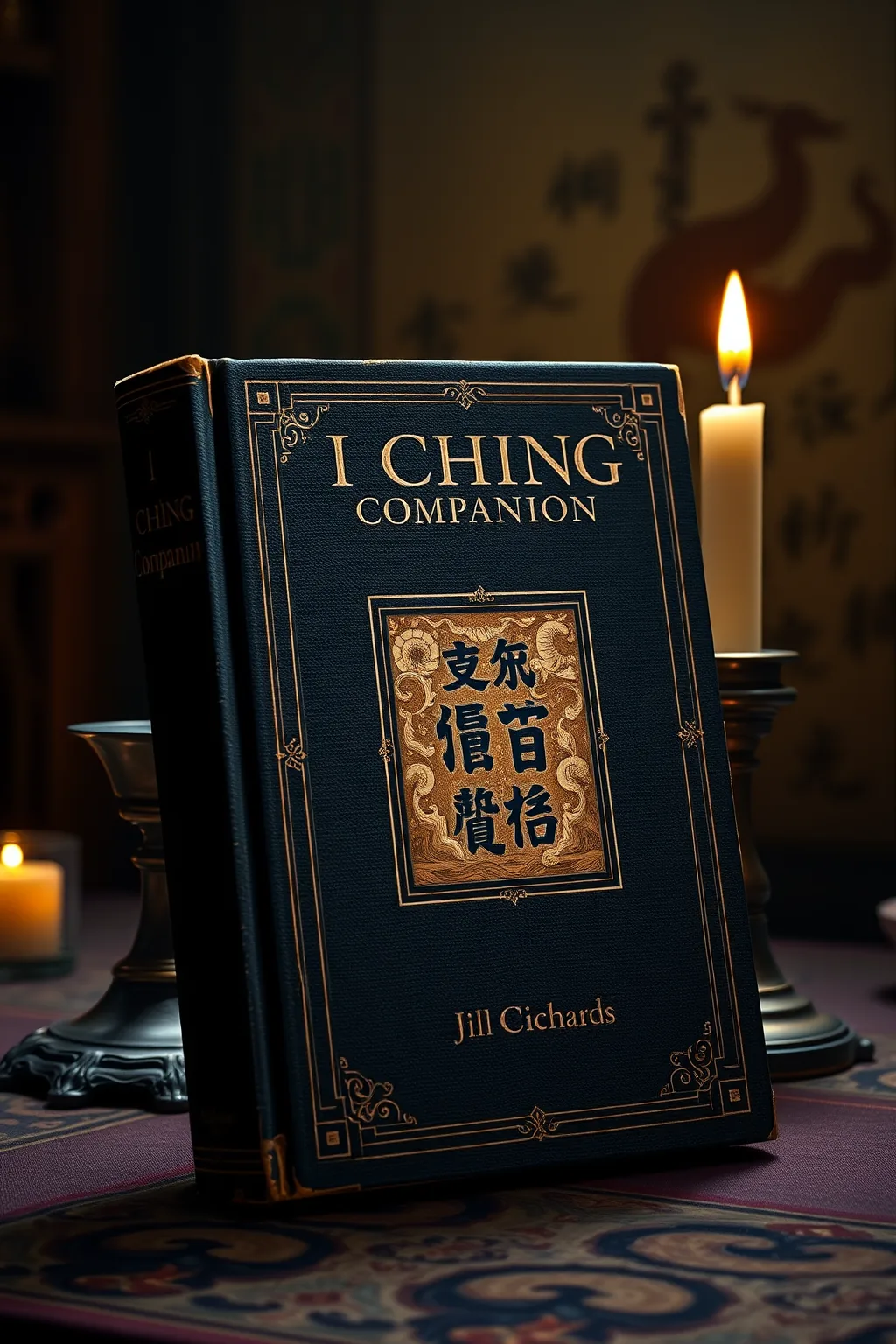
I Ching Companion
 61
61

I Ching Companion



Lorelei Sage, Contemplative Literature Editor: Jill Richards' 'I Ching Companion' is a masterclass in revealing the profound esoteric dimensions of the I Ching. Richards eschews superficial interpretations, instead delving into the rich symbolism and philosophical underpinnings that make this ancient oracle a cornerstone of contemplative practice. Her prose is both scholarly and deeply intuitive, making complex concepts accessible without sacrificing their mystical depth. This companion is not merely a tool for fortune-telling; it is an invitation to a dialogue with the cosmos, a guide for the serious seeker ready to explore the subtle interplay of fate and free will. An indispensable resource for practitioners and scholars alike.
📝 Description
61
Jill Richards published 'I Ching Companion' to clarify the ancient Chinese oracle for modern readers.
Jill Richards' 'I Ching Companion' examines the I Ching not just as a divination tool but as a philosophical system. The book details the meaning of its 64 hexagrams and the symbolic language used to interpret them. Richards connects the I Ching's cyclical patterns to the natural world and human experience, suggesting it offers a framework for understanding life's changes. The text aims to provide a clear entry point for those interested in the Book of Changes, illuminating its principles and potential for personal insight.
The author focuses on the structure of the hexagrams, the trigrams that form them, and the textual commentaries associated with each. This approach helps readers grasp the I Ching's inherent logic. Richards emphasizes how the oracle's advice reflects a deep understanding of universal processes, offering guidance applicable to various life situations. The book serves as a practical resource for anyone seeking to engage with this ancient text beyond superficial fortune telling.
The I Ching belongs to a lineage of Chinese divination and philosophy that stretches back thousands of years. It is a core text within Taoist thought and has influenced East Asian culture extensively. Its use as an oracle involves casting methods to generate hexagrams, which are then interpreted through associated texts. This practice is rooted in a worldview that sees correspondences between the human realm, the natural world, and cosmic forces. 'I Ching Companion' situates itself within this tradition by explaining the text's structure and philosophical dimensions.
💡 Why Read This Book?
Unlock the timeless wisdom of the I Ching with an expert guide. 'I Ching Companion' offers a deep dive into its mystical symbolism and philosophical significance, transforming it from a mere divination tool into a profound map for life. Ideal for spiritual seekers, students of esoteric traditions, and anyone yearning for deeper self-understanding and cosmic connection. Discover how to navigate life's changes with clarity and insight.
⭐ Reader Reviews
Honest opinions from readers who have explored this book.
❓ Frequently Asked Questions
What is the I Ching and what is its primary purpose?
The I Ching, or Book of Changes, is an ancient Chinese divination text and philosophical classic. Its primary purpose is to offer guidance and insight into the nature of change and the unfolding of events, providing wisdom for navigating life's complexities.
Is 'I Ching Companion' suitable for beginners?
Yes, Jill Richards' 'I Ching Companion' is thoughtfully structured to welcome both novice explorers and seasoned practitioners, offering a clear yet profound entry into the oracle's mysteries.
How does this book differ from other I Ching guides?
This companion emphasizes the esoteric and philosophical dimensions, moving beyond simple interpretation to explore the deeper symbolic language and its resonance with universal principles.
Can the I Ching be used for more than just fortune-telling?
Absolutely. The I Ching is a profound source of wisdom for self-reflection, ethical guidance, and understanding the dynamic forces at play in life, offering counsel beyond simple prediction.
What kind of insights can one expect from using the I Ching?
Expect profound insights into your current situation, potential outcomes, and the underlying patterns of change. It encourages contemplation, self-awareness, and informed decision-making.
🔮 Key Themes & Symbolism
The Dance of Yin and Yang
At the core of the I Ching lies the fundamental principle of Yin and Yang, the primal forces of duality that govern all existence. This section examines their dynamic interplay, illustrating how their constant flux and balance manifest in the sixty-four hexagrams. Understanding this cosmic dance is crucial for deciphering the oracle's messages, revealing the inherent interconnectedness of seemingly opposing energies and their role in the perpetual transformation of the universe. It's a profound exploration of how shadow and light, passive and active, feminine and masculine energies shape our reality and offer pathways to equilibrium.
Hexagrammatic Symbolism and Archetypal Meanings
Each of the 64 hexagrams in the I Ching is a potent symbol, a microcosm of universal patterns and archetypal situations. This theme explores the rich visual and conceptual language embedded within these six-line configurations. We uncover how the arrangement of broken (Yin) and unbroken (Yang) lines creates distinct images and evokes specific energetic signatures. From the foundational hexagrams representing beginnings and endings to those depicting conflict, harmony, and transition, this exploration illuminates how these symbols serve as a profound commentary on the human condition and the cosmic order, offering nuanced guidance for every conceivable scenario.
The Oracle as a Mirror of the Psyche
Beyond its function as a divinatory tool, the I Ching acts as a profound mirror reflecting the inner range of the querent. This section examines how the oracle doesn't merely predict the future but rather illuminates the present moment and the psychological dynamics at play. By engaging with the hexagrams, individuals are encouraged to confront their own biases, desires, and fears, fostering a deeper self-awareness. The I Ching becomes a catalyst for personal growth, offering insights into the unconscious motivations and karmic patterns that influence our choices and experiences, thereby empowering us to consciously shape our destinies.
💬 Memorable Quotes
Direct passages from the work, attributed to the author.
“Within the silence, the hexagrams whisper their ancient truths.”
— This highlights the meditative and intuitive approach required to truly hear the I Ching. It suggests that profound wisdom is revealed not through loud pronouncements, but through quiet contemplation and inner receptivity.
“Seek not to control the flow, but to navigate with wisdom.”
— This emphasizes a key lesson from the I Ching: that true mastery lies not in forcing outcomes, but in understanding the natural currents of life and responding with informed intention and adaptable strategy.
💡 Key Ideas
Editorial paraphrase of the work's core concepts — not direct quotes.
Change is the only constant, a river flowing eternally.
This quote expresses the fundamental tenet of the I Ching: the ceaseless nature of transformation. It reminds us that resistance to change is futile, urging acceptance and adaptation to life's fluid currents.
The coiled dragon awakens when the time is ripe.
Symbolizing latent power and potential, this quote speaks to the importance of timing and patience. It suggests that great achievements require careful preparation and the opportune moment for manifestation.
The shadow reveals the light, and the light defines the shadow.
This quote underscores the interconnectedness of duality. It suggests that understanding one aspect of existence inherently illuminates its opposite, leading to a more complete and balanced perception.
🌙 Esoteric Significance
Tradition
The I Ching is deeply rooted in the ancient Chinese esoteric traditions, primarily Taoism and its philosophical underpinnings. It is considered a foundational text for understanding the principles of cosmic order, the natural laws of transformation, and the interconnectedness of all phenomena. Its cyclical worldview and emphasis on balance and harmony align with Taoist concepts of the Tao, Yin and Yang, and the flow of Qi (vital energy). It serves as a bridge between the material and spiritual realms, offering a framework for working through the universe with awareness and attunement.
Symbolism
The esoteric significance of the I Ching lies in its intricate system of symbolism, primarily embodied in its sixty-four hexagrams. Each hexagram, formed by combinations of broken (Yin) and unbroken (Yang) lines, represents archetypal situations, natural phenomena, and stages of cosmic and human development. The trigrams (three-line combinations) within the hexagrams further enrich this symbolic language, representing elements like Heaven, Earth, Fire, Water, Mountain, Lake, Wind, and Thunder. These symbols are not mere abstract representations but are seen as living forces that mirror the energies and patterns of existence, offering a profound visual and conceptual map of reality.
Modern Relevance
In the modern era, the I Ching's esoteric significance endures as a powerful tool for self-discovery, ethical guidance, and navigating complexity. Its emphasis on adaptability, balance, and understanding the cyclical nature of change offers profound wisdom for individuals facing rapid technological advancements, societal shifts, and personal challenges. It provides a contemplative practice that fosters mindfulness, intuition, and a deeper connection to universal principles. For many, it serves as an ethical compass and a source of useful insights, helping to cultivate resilience, foster wisdom, and align oneself with the natural rhythms of life in an increasingly chaotic world.
👥 Who Should Read This Book
This 'I Ching Companion' is an essential read for a diverse audience. For the **beginner** seeking an accessible yet profound introduction to the Book of Changes, Jill Richards offers a clear and evocative pathway. **Scholars** of Eastern philosophy and esoteric traditions will find a meticulously researched and insightful exploration that deepens their understanding of this ancient oracle. **Spiritual seekers** yearning for a tool of profound self-reflection and guidance will discover a powerful mirror to their inner world and the cosmic forces at play. **Practitioners** of divination and contemplative arts will appreciate the nuanced interpretations and the emphasis on the I Ching as a living dialogue with the universe, offering fresh perspectives for their practice.
📜 Historical Context
The I Ching, or Book of Changes, traces its origins to ancient China, with its earliest components dating back to the Western Zhou Dynasty (c. 1046–771 BCE). Initially a method of divination using yarrow stalks or tortoise shells, it gradually evolved into a complex philosophical text. During the Spring and Autumn period (771–476 BCE) and the Warring States period (475–221 BCE), commentaries known as the Ten Wings were added, attributed to Confucius and his disciples. These commentaries transformed the I Ching from a purely divinatory manual into a profound work of philosophy, ethics, and cosmology. Its influence permeated Chinese thought, impacting Confucianism, Taoism, and various schools of esoteric practice, shaping art, literature, governance, and the very way of life for centuries, and continuing to resonate globally.
📔 Journal Prompts
Reflect on a recent significant change in your life. Which hexagram might represent this transition, and what wisdom does it offer?
Consider the interplay of Yin and Yang in your daily interactions. Where do you see balance, and where might you seek greater harmony?
If you were to consult the I Ching about a current dilemma, what question would you pose, and what is your initial expectation of the answer?
Explore the archetypal meaning of a trigram that speaks to you. How does its essence manifest in your personal journey?
How can the principle of 'the coiled dragon awakens' be applied to a long-term goal you are pursuing?
🗂️ Glossary
Hexagram
A symbol composed of six horizontal lines, either solid (Yang) or broken (Yin), representing a specific situation or cosmic pattern within the I Ching.
Trigram
A basic symbol of three horizontal lines (solid or broken), forming the building blocks of hexagrams and representing fundamental forces or elements.
Yin
In I Ching philosophy, the passive, receptive, dark, and feminine principle, often represented by a broken line.
Yang
In I Ching philosophy, the active, creative, light, and masculine principle, often represented by a solid line.
Oracle
A source of wisdom or prophecy, in this context referring to the I Ching as a system for divination and guidance.
This book appears in 3 collections
🔮 Readers Also Liked
Browse all →






More by Jill Richards
All books →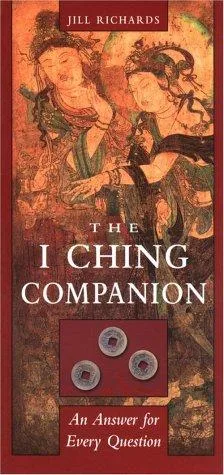
From the “Tarot” Collection
View all →






More Free Divination & Tarot Books
View all →