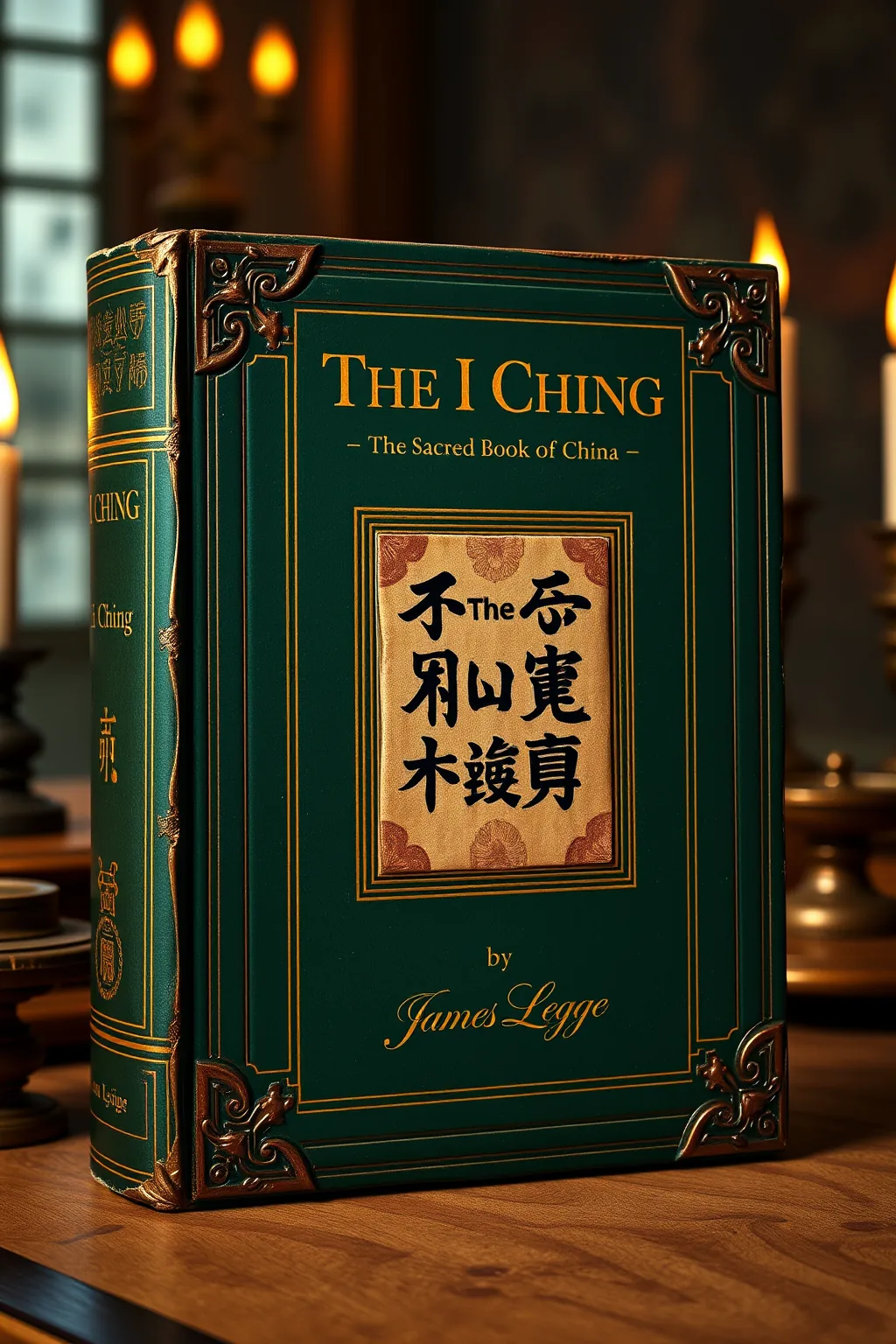
The I Ching The Sacred Book Of China
 61
61

The I Ching The Sacred Book Of China



Sophia Crane (Associate Editor) — James Legge's translation of 'The I Ching' remains an indispensable cornerstone for anyone serious about exploring this ancient Chinese oracle. His scholarly rigor, while accessible, unlocks the profound esoteric and philosophical layers of this sacred text. The translation excels in preserving the nuanced meanings of the hexagrams and their associated judgments, offering invaluable insights into the dynamics of change and human destiny. For practitioners of divination, scholars of Eastern philosophy, and seekers of spiritual wisdom, this edition provides an authoritative and deeply resonant encounter with one of humanity's most enduring mystical traditions. It's a portal to understanding the Tao, the flow of the universe, and our place within it.
📝 Description
61
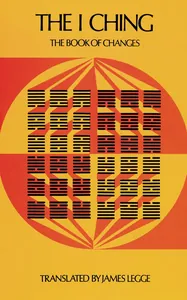
James Legge's 1882 translation of the I Ching is a key access point to this ancient Chinese classic.
James Legge's 1882 translation makes the I Ching, or 'Book of Changes,' available to English readers. This text is a foundational work in Chinese philosophy and cosmology, historically used for divination and understanding the natural order. It presents a system of 64 hexagrams, each formed by six lines representing combinations of yin and yang. These hexagrams are interpreted to offer guidance on various situations and the unfolding of events.
The book's structure includes the hexagrams themselves, accompanied by associated judgments and line texts. Legge's extensive annotations and introductory material provide historical and philosophical context for the text. He explains the development of the I Ching from early divination practices to its later interpretations within Confucianism. The translation aims to preserve the archaic language and layered meanings of the original Chinese.
The I Ching belongs to the tradition of Chinese cosmology and divination, dating back millennia. It is one of the oldest Chinese classics, influencing Taoism and Confucianism. Its use extends beyond mere fortune telling, acting as a philosophical guide for understanding the dynamic processes of the universe and human affairs. The hexagrams represent archetypal situations and the constant flux of reality, suggesting a path of alignment with natural patterns.
💡 Why Read This Book?
Unlock the secrets of change and destiny with 'The I Ching.' This sacred text offers profound philosophical insights and practical guidance for navigating life's challenges. Ideal for spiritual seekers, scholars of ancient wisdom, and practitioners of divination who wish to deepen their understanding of cosmic patterns and personal transformation. Discover timeless truths that resonate across cultures and epochs.
⭐ Reader Reviews
Honest opinions from readers who have explored this book.
❓ Frequently Asked Questions
What is the I Ching?
The I Ching, often translated as 'The Book of Changes,' is an ancient Chinese divination text and philosophical classic. It is comprised of 64 hexagrams, each formed by six lines, representing fundamental archetypes and situations in life.
Who was James Legge?
James Legge was a Scottish sinologist and missionary who produced seminal translations of classical Chinese texts, including the I Ching, Confucian Analects, and Tao Te Ching, making them accessible to Western readers.
How is the I Ching used?
Traditionally, the I Ching is consulted through a ritualistic process involving yarrow stalks or coins to generate a hexagram, which is then interpreted to offer guidance, insight, or foresight regarding a specific question or situation.
Is the I Ching only for divination?
While widely used for divination, the I Ching is also a profound philosophical and ethical text, offering wisdom on balance, change, leadership, and the cultivation of virtue. Its teachings are applicable to all aspects of life.
What makes Legge's translation significant?
Legge's translation is renowned for its scholarly accuracy and comprehensive annotations, which provide essential historical and philosophical context, making it a foundational text for understanding the I Ching in the Western world.
🔮 Key Themes & Symbolism
The Nature of Change and Transformation
Fundamentally, the I Ching is a profound exploration of the universal principle of change. It posits that reality is in constant flux, a dynamic interplay of forces leading to inevitable transformation. Through its 64 hexagrams, the text illustrates the myriad ways change manifests, from subtle shifts to cataclysmic upheavals. Understanding these patterns allows individuals to adapt, to flow with the currents of life rather than resist them, fostering resilience and wisdom. This theme encourages a philosophical acceptance of impermanence, guiding practitioners to recognize opportunities within challenges and to embrace evolution as a fundamental aspect of existence.
Cosmic Harmony and the Tao
The I Ching serves as a conduit to understanding the Tao, the ineffable cosmic order that underlies all creation. It reveals how the celestial and terrestrial realms are interconnected, and how human actions resonate within this grand symphony. The interplay of Yin and Yang, the primordial feminine and masculine energies, is central to this concept, illustrating the dynamic balance and interdependence of all things. By consulting the I Ching, individuals seek alignment with this cosmic flow, aiming to live in harmony with nature and the universal principles that govern the universe, thereby cultivating inner peace and auspicious circumstances.
The Art of Foresight and Wise Counsel
As a sacred oracle, the I Ching offers outstanding wisdom for working through the complexities of life. Its hexagrams and accompanying texts provide symbolic representations of situations, potential outcomes, and sage advice. This is not fatalistic prediction, but rather an illumination of tendencies and possibilities, empowering individuals to make informed decisions. The text encourages introspection, urging the user to consider the underlying causes of their circumstances and to act with virtue and foresight. It acts as a divinely inspired counselor, guiding seekers towards paths of integrity, balance, and ultimate fulfillment.
💬 Memorable Quotes
Direct passages from the work, attributed to the author.
“When the superior man sees what is good, he examines and corrects himself.”
— This aphorism highlights the importance of self-reflection and continuous self-improvement. True wisdom lies in recognizing virtue and actively striving to embody it, even when faced with one's own imperfections.
“The superior man makes himself strong.”
— Emphasizes the cultivation of inner strength, resilience, and moral fortitude. It speaks to the power of developing one's character and capabilities to face life's adversities with courage and resolve.
“The strong and the active are the means by which the earth is maintained.”
— Connects strength and proactive engagement with the stability and continuation of the natural world. It suggests that vital energy and purposeful action are essential for cosmic order.
“The light of the sun and moon is diffused everywhere.”
— Illustrates the pervasive and impartial nature of divine illumination or universal consciousness. It suggests that enlightenment and truth are accessible to all, like celestial bodies shining on all beings.
“The superior man acts according to the season.”
— Advocates for aligning one's actions with the natural rhythms and appropriate timing of life. It stresses the wisdom of adapting to circumstances and acting at the opportune moment.
🌙 Esoteric Significance
Tradition
The I Ching is a foundational text within the Taoist and Confucian philosophical traditions, deeply embedded in Chinese esoteric cosmology. It is a primary source for understanding concepts like the Tao, Yin and Yang, the Five Elements, and the principles of cosmic harmony. Its use in divination connects it to ancient shamanic practices and mystical oracles, positioning it as a tool for accessing subtle energies and understanding destiny through symbolic interpretation.
Symbolism
The hexagrams, composed of six lines (broken for Yin, solid for Yang), are the primary symbolic language of the I Ching. Each hexagram represents a fundamental archetype or situation, a cosmic pattern derived from the interplay of these two forces. The trigrams, forming the hexagrams, also carry symbolic meanings related to natural phenomena (heaven, earth, fire, water, etc.) and human relationships. The text's symbolism offers a profound map of reality, illustrating the dynamic forces that shape both the universe and the human psyche.
Modern Relevance
In the modern era, the I Ching continues to offer profound relevance as a tool for self-discovery, ethical guidance, and navigating complexity. Its emphasis on change and adaptability speaks to contemporary challenges, providing a framework for understanding uncertainty and fostering resilience. For those seeking spiritual depth or a connection to ancient wisdom traditions, the I Ching offers a sophisticated system for introspection, decision-making, and cultivating a more harmonious relationship with the world. Its philosophical insights remain remarkably pertinent to personal growth and understanding the human condition.
👥 Who Should Read This Book
This important work is essential for a diverse readership. **Spiritual Seekers** will find a profound guide to understanding life's cycles and aligning with cosmic forces. **Students of Eastern Philosophy and History** will gain invaluable insight into the intellectual bedrock of Chinese civilization. **Practitioners of Divination and Metaphysics** will discover a foundational oracle, rich with symbolic depth and practical application. **Anyone seeking wisdom on change, decision-making, and self-cultivation** will be profoundly enriched by the I Ching's timeless teachings.
📜 Historical Context
The I Ching, or 'Book of Changes,' boasts a lineage stretching back over three millennia, making it one of the oldest and most influential texts in Chinese civilization. Its origins are shrouded in legend, attributed to the mythical sage Fu Xi and later developed by King Wen and the Duke of Zhou. During the Spring and Autumn period (771–476 BCE) and the subsequent Warring States period (475–221 BCE), it evolved into a comprehensive philosophical and divinatory system. Confucius and his disciples are believed to have further elaborated on its commentaries, solidifying its place as one of the Five Classics of Confucianism. James Legge's 19th-century translation was a monumental undertaking, bridging Eastern and Western intellectual traditions and introducing this profound esoteric work to a global audience during a period of intense cross-cultural exchange and scholarly curiosity.
📔 Journal Prompts
When have you experienced a significant transformation, and what did it teach you about the nature of change?
How can you better align your actions with the natural rhythms of your life and the world around you?
Reflect on a situation where a balance between opposing forces (e.g., action/inaction, logic/intuition) was crucial for success.
Consider a challenge you are currently facing. What symbolic message or guidance might the I Ching offer for navigating it?
In what ways can you cultivate greater foresight and wisdom in your daily decisions?
🗂️ Glossary
Hexagram
A figure composed of six stacked horizontal lines, where each line is either solid (Yang) or broken (Yin). There are 64 unique hexagrams, each representing a specific archetypal situation or cosmic principle.
Trigram
A figure composed of three stacked lines, either solid (Yang) or broken (Yin). There are eight trigrams, each associated with natural elements and fundamental concepts.
Yin
In I Ching philosophy, Yin represents the passive, feminine, dark, receptive, and yielding aspects of reality. It is often depicted by a broken line (--) in hexagrams.
Yang
In I Ching philosophy, Yang represents the active, masculine, light, creative, and assertive aspects of reality. It is often depicted by a solid line (—) in hexagrams.
Tao (Dao)
The fundamental principle of the universe in Taoist philosophy; the Way or Path. It represents the ineffable, natural order that underlies all existence and governs its transformations.
This book appears in 2 collections
🔮 Readers Also Liked
Browse all →







More by James Legge
All books →




From the “I Ching” Collection
View all →









More Free Divination & Tarot Books
View all →