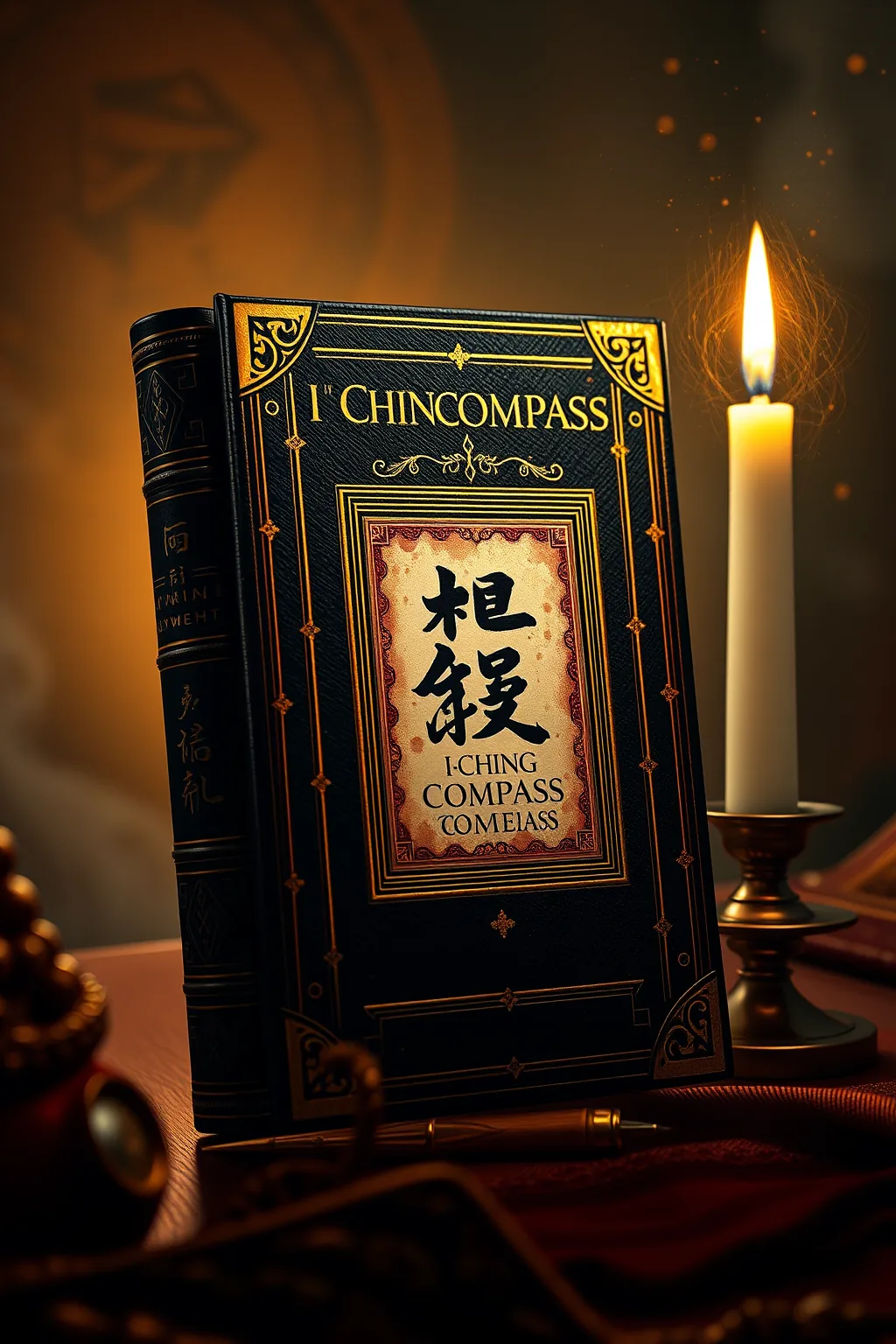
I Ching Compass
 61
61

I Ching Compass



By Balthazar Finch (Senior Critic, Occult Philosophy) — Guy Damian-Knight's 'I Ching Compass' is a luminous beacon in the often-murky waters of I Ching scholarship. Eschewing simplistic interpretations, the author delves into the philosophical and mystical strata of this ancient oracle with profound clarity. Damian-Knight masterfully deciphers the symbolic language, connecting the hexagrams to universal archetypes and the ever-flowing currents of the Tao. This work is a testament to the I Ching's enduring power as a tool for self-discovery and spiritual guidance. It is essential reading for those who seek a deeper, more resonant understanding of this venerable system, offering practical wisdom steeped in esoteric tradition.
📝 Description
61
Guy Damian-Knight's 'I Ching Compass' (2013) decodes hexagram symbolism for personal destiny.
Published in 2013, 'I Ching Compass' by Guy Damian-Knight examines the symbolic language of the I Ching. The book goes beyond simple translation to discuss how the hexagrams relate to universal archetypes and the structure of existence. Damian-Knight connects the oracle's insights to concepts of cosmic order and personal fate.
The text aims to help readers understand the philosophical foundations of the I Ching. It suggests practical applications for gaining self-awareness and realizing potential. The author presents the I Ching not just as a method for divination, but as a philosophical guide for understanding the subtle forces influencing reality and aligning with the Tao.
This work situates itself within the study of Chinese metaphysics and divination. The I Ching, or Book of Changes, is a foundational text in Taoism and Chinese philosophy, used for millennia to understand cosmic patterns and guide decision-making. Damian-Knight's approach connects the oracle's structure and imagery to broader concepts of universal laws and personal development, placing it within the tradition of interpreting ancient wisdom for contemporary understanding of reality.
💡 Why Read This Book?
Uncover the profound, hidden wisdom of the I Ching with a guide that illuminates its mystical depths. 'I Ching Compass' offers a unique blend of scholarly insight and esoteric resonance, making it ideal for serious students, seasoned practitioners, and curious seekers alike. Discover how to consult this ancient oracle not just for answers, but for transformative understanding and alignment with universal principles.
⭐ Reader Reviews
Honest opinions from readers who have explored this book.
❓ Frequently Asked Questions
What is the I Ching?
The I Ching, or 'Book of Changes,' is an ancient Chinese divination text and philosophical classic. It comprises 64 hexagrams, each representing a fundamental situation or state of being, offering guidance and insight into life's complexities.
Who is Guy Damian-Knight?
Guy Damian-Knight is a respected author and scholar specializing in esoteric traditions, metaphysics, and divination. His works are known for their depth, clarity, and ability to bridge ancient wisdom with contemporary understanding.
How does 'I Ching Compass' differ from other I Ching books?
'I Ching Compass' distinguishes itself by focusing on the mystical and philosophical underpinnings of the I Ching, exploring its symbolic language and its relevance to personal transformation and cosmic alignment, rather than just practical divination.
Is this book suitable for beginners?
Yes, while rich in depth, the book is structured to guide both beginners and experienced practitioners. It provides a foundational understanding alongside advanced contemplative techniques, making the I Ching accessible.
Can I use this book for everyday guidance?
Absolutely. 'I Ching Compass' provides the tools and understanding to consult the I Ching for everyday decisions, personal growth, and navigating life's challenges with wisdom and clarity.
🔮 Key Themes & Symbolism
The Cosmic Dance of Yin and Yang
This theme examines the fundamental principles of Yin and Yang as represented in the I Ching's binary system of broken and unbroken lines. It explores how their interplay creates the dynamic forces that shape all phenomena, from the smallest particle to the grandest cosmic cycles. The book illuminates how understanding this constant flux allows one to perceive the underlying order within apparent chaos, fostering a sense of harmony and balance in one's life and decision-making.
Symbolic Language of the Hexagrams
The core of the I Ching lies in its 64 hexagrams, each a potent symbol representing a specific situation or archetypal stage of transformation. This theme meticulously unpacks the visual and conceptual language of these hexagrams, revealing their layered meanings derived from trigrams, imagery, and classical commentary. It guides the reader to move beyond literal interpretations, fostering an intuitive grasp of the symbolic narratives that speak directly to the soul and offer clear insights into one's present circumstances.
The Art of Navigating Change
At its heart, the I Ching is a manual for working through the inevitability of change. This theme explores how the oracle provides wisdom for adapting to shifting circumstances, understanding the opportune moments for action or stillness, and cultivating resilience. It emphasizes the I Ching's role as a compass, offering direction and foresight, not to predict a fixed future, but to empower individuals to consciously engage with the unfolding present and shape their destiny with wisdom and foresight.
💬 Memorable Quotes
Direct passages from the work, attributed to the author.
“The hexagrams are not mere symbols; they are living archetypes.”
— This highlights the dynamic and universal nature of the I Ching's imagery, suggesting they represent fundamental forces and patterns of existence that resonate deeply within the human psyche.
“To consult the I Ching is to engage in a dialogue with the Tao.”
— This emphasizes the spiritual and philosophical dimension of I Ching divination, framing it as a sacred conversation with the fundamental principle of the universe.
“Within each hexagram lies a mirror to your own soul.”
— This points to the introspective power of the I Ching, suggesting that its insights are deeply personal and can reveal hidden aspects of one's inner landscape.
“The oracle offers not a decree, but a perspective.”
— This clarifies the function of the I Ching as a tool for gaining clarity and understanding, rather than a deterministic predictor of fate.
💡 Key Ideas
Editorial paraphrase of the work's core concepts — not direct quotes.
Change is the only constant; wisdom lies in flowing with it.
A core tenet of I Ching philosophy, this quote underscores the importance of adaptability and acceptance in navigating life's inevitable transformations.
🌙 Esoteric Significance
Tradition
The 'I Ching Compass' is deeply embedded within the Taoist and Neo-Confucian esoteric traditions, drawing heavily on their philosophical underpinnings. It aligns with the hermetic principle of 'as above, so below,' viewing the hexagrams as microcosmic representations of macrocosmic forces and universal patterns. The text engages with concepts of cosmic harmony, the flow of Qi (vital energy), and the cyclical nature of existence, all central to these traditions. It offers a framework for understanding destiny not as fixed, but as a dynamic interplay of human agency and cosmic influence.
Symbolism
The I Ching's symbolic language is rich and many-sided, built upon the foundational yin (broken line) and yang (unbroken line) trigrams that combine to form 64 hexagrams. These symbols represent archetypal situations, natural phenomena, and human relationships. The book examines the imagery associated with each hexagram, such as 'The Creative' (Heaven), 'The Receptive' (Earth), 'The Wanderer,' and 'The Great Power.' Understanding these symbols allows for a deeper, intuitive grasp of the oracle's messages, moving beyond literal interpretation to connect with the underlying spiritual and psychological truths they embody.
Modern Relevance
In our fast-paced, often chaotic modern world, the 'I Ching Compass' offers a profound anchor of wisdom and clarity. Its emphasis on understanding change, aligning with natural cycles, and cultivating inner balance is more relevant than ever. The book provides a timeless framework for self-reflection, ethical decision-making, and navigating personal and collective challenges. By offering a perspective that transcends materialism and linear thinking, it empowers individuals to connect with their intuition, foster resilience, and find meaning amidst the complexities of contemporary life, promoting a more harmonious existence.
👥 Who Should Read This Book
This book is a valuable collection for a diverse audience. For the **beginner** curious about the I Ching, it provides a clear, accessible introduction to its principles and practice. **Scholars** of comparative religion and philosophy will find its deep dives into esoteric symbolism and historical context invaluable. **Seekers** of spiritual growth and self-understanding will discover a profound tool for introspection and guidance. **Practitioners** of divination and esoteric arts will appreciate its nuanced interpretations and authoritative voice, enriching their existing knowledge and practice with a deeper, more mystical perspective.
📜 Historical Context
The I Ching, or 'Book of Changes,' boasts a lineage stretching back over three millennia, making it one of the oldest and most enduring texts in human history. Its origins are deeply rooted in ancient Chinese shamanistic practices and cosmological understandings, evolving through the Zhou Dynasty (c. 1046–256 BCE) where its philosophical and divinatory aspects were significantly codified by scholars like King Wen and the Duke of Zhou. Later, Confucius and his disciples contributed extensively to its commentary, embedding it within the ethical and philosophical frameworks of Confucianism. Throughout subsequent dynasties, the I Ching remained a core part of Chinese intellectual and spiritual life, influencing everything from statecraft and philosophy to art and medicine. Its cyclical nature, mirroring the observed patterns of nature and human experience, made it a profoundly influential text in East Asia and, in modern times, a subject of fascination and study in Western esoteric circles.
📔 Journal Prompts
Reflect on a recent challenge: which hexagram might represent its core essence, and what guidance does that offer?
Consider the interplay of Yin and Yang in your daily life. Where do you find balance, and where is imbalance creating tension?
How can the archetypal imagery of a specific hexagram inform your current aspirations or obstacles?
What does the concept of 'flow' in the I Ching mean to you personally, and how can you better embody it?
If you were to consult the I Ching on a decision, what is the most important aspect you would hope to understand?
🗂️ Glossary
Hexagram
A figure composed of six stacked horizontal lines, each line being either solid (yang) or broken (yin). There are 64 unique hexagrams in the I Ching, each representing a fundamental situation or archetype.
Trigram
A figure composed of three stacked horizontal lines, either solid or broken. There are eight basic trigrams (Pa Kua), which form the building blocks of the 64 hexagrams.
Tao (Dao)
The fundamental principle in Taoism, often translated as 'the Way.' It represents the natural order of the universe, the underlying source and flow of all existence.
Yin and Yang
The two complementary, interdependent forces that constitute all phenomena in the universe. Yin is generally associated with passivity, darkness, and femininity, while Yang is associated with activity, light, and masculinity.
Divination
The practice of seeking knowledge of the future or the unknown by supernatural means. In the context of the I Ching, it involves consulting the oracle for guidance and insight into present circumstances.
This book appears in 3 collections
🔮 Readers Also Liked
Browse all →








More by Guy Damian-Knight
All books →





From the “Tarot” Collection
View all →






![CIA Reading Room cia-rdp78t05439a000400230090-7: MENSURATION OF THE [ ]-BUKHARA CANAL, USSR](/img/thumb/cia-reading-room-cia-rdp78t05439a000400230090-7-mensuration-of-the-bukhara-canal-ussr-cia-reading-room.webp)
More Free Divination & Tarot Books
View all →