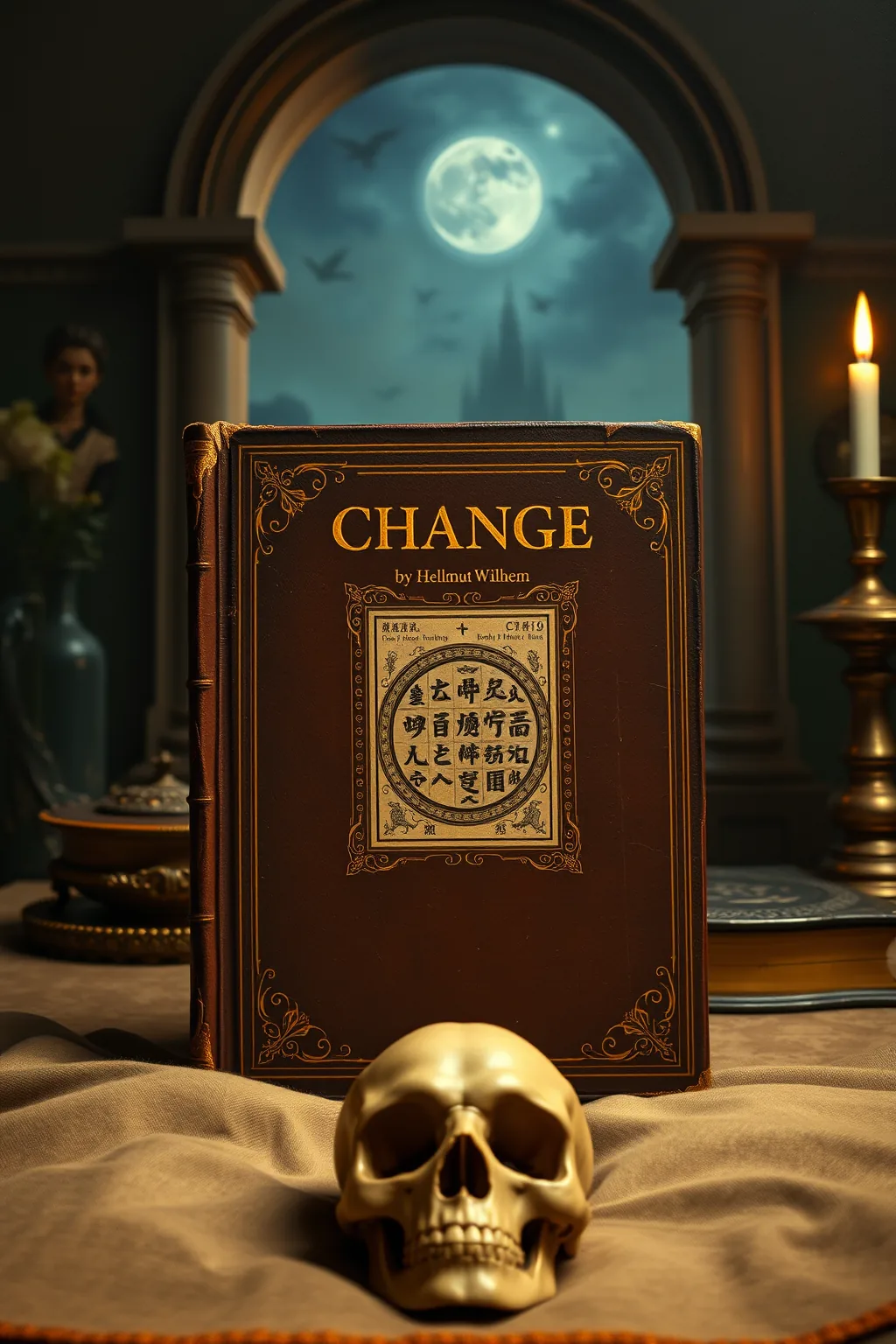
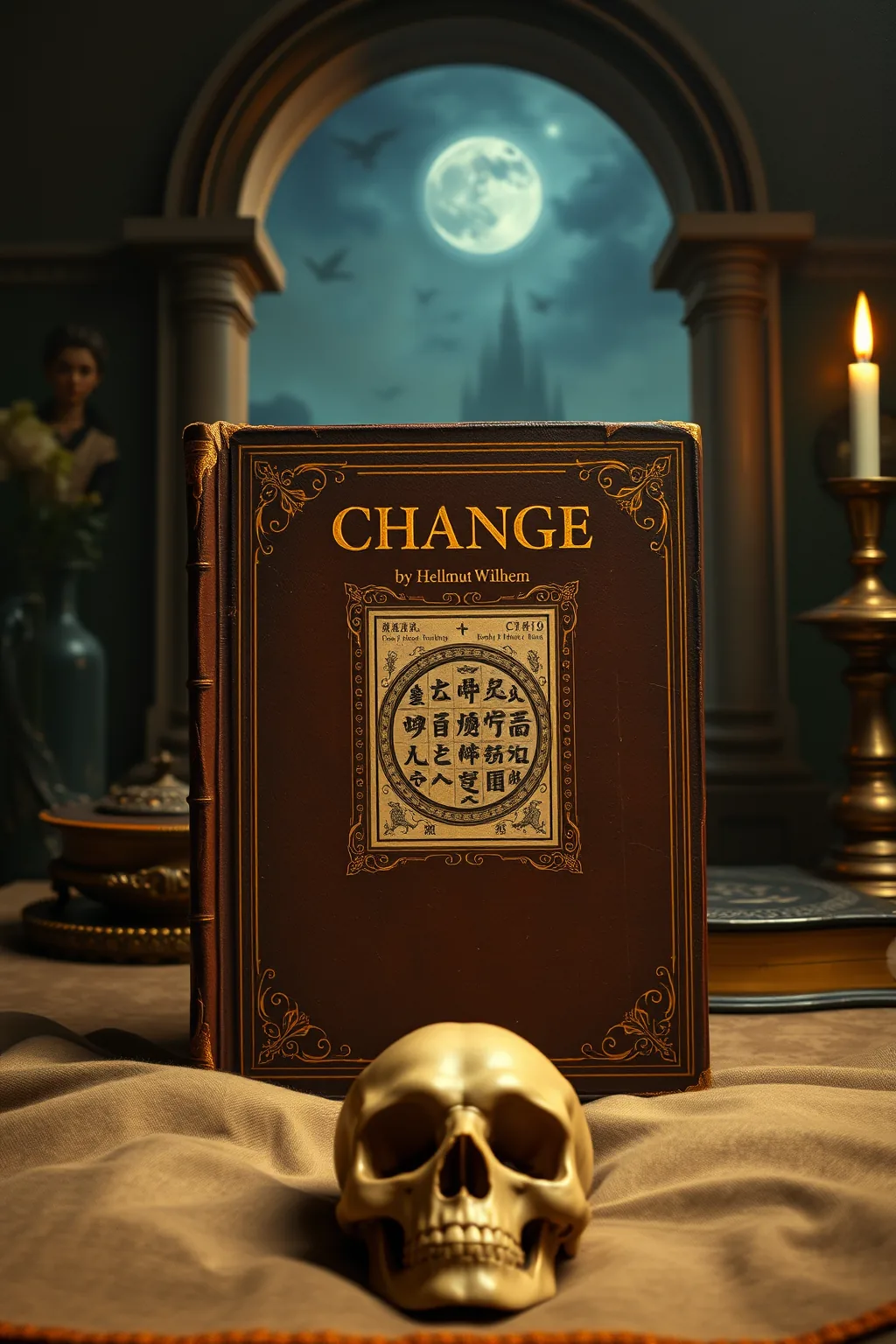
Change
 63
63

Change



Sophia Crane (Associate Editor) — Hellmut Wilhelm's 'Change' is an indispensable cornerstone for anyone serious about the I Ching. Wilhelm's scholarship, infused with a deep esoteric intuition, illuminates the profound philosophical and mystical dimensions of this ancient oracle. He moves beyond superficial interpretations, revealing the I Ching as a living system of cosmic principles and human potential. The text offers profound insights into the nature of transformation and the interconnectedness of all things, making it a vital read for practitioners and scholars alike. Its enduring legacy lies in its ability to guide readers towards a more profound understanding of themselves and the universe.
📝 Description
63
Hellmut Wilhelm's 'Change' (1956) interprets the I Ching as dynamic cosmic energy.
Hellmut Wilhelm's 1956 book, 'Change,' offers an interpretation of the I Ching. Wilhelm moves beyond seeing the hexagrams as simple predictions. Instead, he views them as representations of active cosmic forces that shape all existence. Each element within the I Ching's structure carries significant meaning, guiding the reader toward a deeper comprehension of personal growth and universal patterns.
The work engages with the philosophical basis of Chinese thought, particularly the idea of a universe in constant motion. Wilhelm presents the I Ching as a tool for understanding the fundamental forces that influence human lives and the wider cosmos. It aims to illuminate concepts such as fate, karma, and the interplay of Yin and Yang.
This book situates itself within the study of the I Ching, an ancient Chinese text traditionally used for divination and philosophical reflection. Wilhelm's approach emphasizes the dynamic, energetic aspects of the I Ching's symbolism, connecting it to broader cosmological ideas found in various esoteric traditions. It treats the I Ching not merely as a system of symbols but as a framework for understanding universal processes of transformation and interconnectedness.
💡 Why Read This Book?
Unlock the secrets of cosmic evolution and personal transformation. 'Change' offers a profound, esoteric exploration of the I Ching's symbolic language, revealing its deep philosophical roots and practical applications for navigating life's inevitable shifts. Ideal for serious seekers of ancient wisdom, scholars of Eastern philosophy, and practitioners of divination who desire a deeper, more nuanced understanding of universal patterns.
⭐ Reader Reviews
Honest opinions from readers who have explored this book.
❓ Frequently Asked Questions
What is the I Ching?
The I Ching, or 'Book of Changes,' is an ancient Chinese divination text and philosophical classic, believed to be the oldest of the Chinese classics. It consists of 64 hexagrams, each representing a fundamental situation or process.
How does Wilhelm's 'Change' differ from other I Ching books?
Wilhelm's interpretation is renowned for its philosophical depth and esoteric insights, transcending mere fortune-telling to explore the I Ching as a profound system of cosmic principles and human development.
Is this book suitable for beginners?
While dense with wisdom, 'Change' is highly rewarding for dedicated beginners willing to engage deeply with its philosophical and symbolic layers. It offers a rich foundation for understanding the I Ching.
What philosophical concepts are explored?
The book delves into core Taoist and Confucian concepts, including the interplay of Yin and Yang, the cyclical nature of time, the principle of constant transformation, and the attainment of harmony with the cosmic order.
Can the I Ching be used for practical guidance?
Absolutely. The I Ching, as presented by Wilhelm, offers profound insights into decision-making, understanding present circumstances, and navigating future possibilities by revealing the underlying forces at play.
🔮 Key Themes & Symbolism
The Philosophy of Transformation
At its heart, 'Change' is a profound exploration of the universal principle of impermanence. Wilhelm elucidates how the I Ching, through its 64 hexagrams, maps the ceaseless flux of existence, from the subtle shifts in personal consciousness to the grand cycles of cosmic evolution. He reveals that true wisdom lies not in resisting change, but in understanding its inherent patterns and aligning oneself with its flow. This theme emphasizes that stability is an illusion, and that growth and enlightenment are found by embracing the dynamic nature of reality.
Cosmic Interconnectedness and Synchronicity
Wilhelm masterfully illustrates the profound interconnectedness that binds all phenomena within the universe. The I Ching is presented as a divinatory tool that reflects the synchronistic nature of events, suggesting that external occurrences are not random but are meaningful expressions of inner states and cosmic currents. This theme encourages readers to perceive the subtle threads that tie together their lives with the greater cosmic range, fostering a sense of belonging and an awareness of the underlying order that governs apparent chaos.
The Alchemical Journey of the Self
Beyond its philosophical discourse, 'Change' serves as a manual for inner alchemy. Wilhelm guides the reader towards a process of self-transformation by interpreting the hexagrams as archetypal stages of psychological and spiritual development. Each hexagram becomes a mirror reflecting the soul's journey through trials, insights, and eventual integration. The book offers a sacred path for shedding old patterns, embracing new perspectives, and achieving a more harmonious and enlightened state of being through conscious engagement with the I Ching's wisdom.
💬 Memorable Quotes
Direct passages from the work, attributed to the author.
“The I Ching is not a prophecy, but a commentary on the present.”
— This highlights the I Ching's function as a mirror to current circumstances, offering insight into the forces at play rather than dictating a fixed future.
“True wisdom lies in flowing with the Tao.”
— This emphasizes aligning one's actions and understanding with the natural, effortless flow of the universe (the Tao), rather than struggling against it.
“The hexagrams are maps of the human soul.”
— This profound statement positions the I Ching not just as a divinatory tool but as a deep psychological and spiritual guide to understanding oneself.
“In every situation, there is potential for both growth and decay.”
— This illustrates the dualistic nature of change and the importance of recognizing the seeds of both progress and decline within any given moment.
💡 Key Ideas
Editorial paraphrase of the work's core concepts — not direct quotes.
Change is the only constant.
A fundamental tenet of Heraclitus and echoed by Wilhelm, this quote underscores the book's core message of embracing impermanence as the natural order.
🌙 Esoteric Significance
Tradition
Wilhelm's work is deeply rooted in the Chinese esoteric traditions, particularly Taoism and Confucianism, viewed through a lens of universal symbolism. It draws from the ancient practice of I Ching divination, often associated with shamanistic and philosophical inquiry. The book elevates the I Ching from a mere fortune-telling device to a profound system for understanding cosmic principles, human psychology, and the unfolding of destiny, aligning it with universal esoteric principles of transformation and cosmic order.
Symbolism
The core symbolism of 'Change' lies within the 64 hexagrams of the I Ching, each composed of six lines representing Yin (broken) and Yang (solid). These lines and their combinations create potent archetypal images that symbolize fundamental forces, situations, and transformations in nature and human life. Wilhelm's interpretation unveils the deeper, often hidden, symbolic meanings, revealing how these structures represent a universal language of change and balance, guiding the reader to decode the symbolic messages within their own lives.
Modern Relevance
In an era characterized by rapid technological advancement and constant flux, Wilhelm's 'Change' offers a timeless perspective on navigating uncertainty. The book's emphasis on understanding and adapting to change, rather than resisting it, provides invaluable guidance for personal growth, decision-making, and maintaining inner equilibrium. Its exploration of cosmic interconnectedness and synchronicity appeals to contemporary interests in mindfulness, systems thinking, and finding meaning in a complex world, making it a vital resource for modern seekers.
👥 Who Should Read This Book
This profound work is essential for serious students of the I Ching, offering a scholarly yet deeply intuitive interpretation. Philosophers and scholars of Eastern thought will find a rich exploration of Chinese metaphysics and ethics. Spiritual seekers and practitioners of divination will discover a guide to understanding the deeper currents of transformation and synchronicity. Those interested in Jungian psychology and archetypal symbolism will appreciate the profound psychological insights embedded within the hexagrams. Ultimately, anyone yearning for a deeper understanding of life's inherent dynamism and their place within the cosmic dance will find immense value here.
📜 Historical Context
Hellmut Wilhelm's 'Change' emerged in the mid-20th century, a period marked by a resurgence of interest in Eastern philosophies and esoteric traditions in the Western world. As the world grappled with the aftermath of global conflict and the anxieties of the Cold War, many sought solace and deeper meaning in ancient wisdom. Wilhelm, a sinologist and philosopher, brought a unique perspective, bridging Western intellectualism with a profound appreciation for the mystical and philosophical underpinnings of Chinese culture. His work arrived at a time when the I Ching was beginning to gain wider recognition beyond academic circles, offering a sophisticated yet accessible interpretation that resonated with those seeking spiritual and philosophical guidance in a rapidly changing world. His scholarship helped to legitimize and popularize the I Ching as a significant philosophical text and a practical tool for self-understanding.
📔 Journal Prompts
Reflect on a recent significant change in your life. How might the principles of a specific I Ching hexagram illuminate this transition?
Consider the concept of 'flow' as discussed by Wilhelm. In what areas of your life do you resist change, and how could embracing flow benefit you?
The I Ching often reveals the interplay of opposing forces. Identify a duality in your life (e.g., ambition/rest, logic/intuition) and explore its dynamic balance.
How does the idea of synchronicity, as presented in 'Change,' influence your perception of meaningful coincidences in your daily life?
Imagine the I Ching as a map of your inner landscape. Which hexagrams do you feel best represent your current psychological or spiritual state, and why?
🗂️ Glossary
Hexagram
A symbol composed of six horizontal lines, used in the I Ching. Each line is either solid (Yang) or broken (Yin), creating 64 unique combinations representing fundamental situations or energies.
I Ching
An ancient Chinese divination text and philosophical classic, also known as the 'Book of Changes.' It provides a framework for understanding the natural laws of the universe and human experience.
Yang
In Taoist philosophy, one of the two fundamental, complementary forces in the universe. Yang is typically associated with light, activity, strength, and the masculine principle.
Yin
The complementary force to Yang, associated with darkness, passivity, receptivity, and the feminine principle. Both are essential for balance and harmony.
Tao
The fundamental principle of the universe in Taoism, often translated as 'The Way.' It represents the natural, spontaneous, and underlying order of all things, which is best understood by flowing with it.
This book appears in 3 collections
🔮 Readers Also Liked
Browse all →









More by Hellmut Wilhelm
All books →



From the “Tarot” Collection
View all →







More Free Divination & Tarot Books
View all →