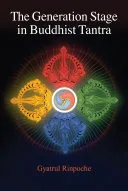
The Generation Stage in Buddhist Tantra
 84
84

The Generation Stage in Buddhist Tantra
Gyatrul Rinpoche’s "The Generation Stage in Buddhist Tantra" tackles the notoriously intricate subject of deity yoga with commendable clarity. The strength of this text lies in its systematic breakdown of practice components – from initial mental preparation to the detailed use of ritual implements like tormas. Rinpoche’s explanation of the three types of offerings, for instance, provides a much-needed practical anchor for practitioners often bewildered by symbolic gestures. However, the book’s sheer detail, while beneficial, might present a steep learning curve for absolute beginners to tantra, requiring prior familiarity with core Buddhist philosophy. A passage detailing the specific visualization sequence for Avalokiteshvara, while accurate, could have benefited from accompanying diagrams for enhanced clarity. Nevertheless, for those committed to deepening their sadhana, this work serves as an invaluable, authoritative guide to the generation stage.
📝 Description
84
Gyatrul Rinpoche's 2021 book details the generation stage in Buddhist Tantra, focusing on deity yoga.
This work by Gyatrul Rinpoche presents the generation stage practices of Buddhist Tantra, with a specific focus on deity yoga. It covers the necessary mental states for beginning practice, the sequential visualizations, and the proper use of ritual components. The book examines the three main types of offerings, mantra recitation techniques, and the application of mudras, tormas, and malas. These complex teachings are made understandable through its clear presentation.
The Generation Stage in Buddhist Tantra is meant for those already involved in Buddhist tantric practices. Practitioners from any Tibetan Buddhist lineage will find its explanations helpful for their sadhana, or formal meditation practice. The teachings are arranged to assist individuals familiar with basic Buddhist ideas who wish to improve their practice of visualization and mantra.
The book unpacks the fundamental aspects of the generation stage. This includes grasping the nature of the deity as a form of enlightened mind, the significance of proper motivation, and the symbolic meanings within mandalas and deity forms. It clarifies how to integrate these elements into practice.
This book draws from a long tradition of oral transmission and written commentary within Tibetan Buddhism. Gyatrul Rinpoche's work builds upon centuries of contemplative scholarship, offering a contemporary explanation of practices refined over generations. The focus on clear instruction reflects a pedagogical approach designed to ensure the accurate transmission of methods for spiritual development. These are practices central to Mahayana and Vajrayana Buddhism.
💡 Why Read This Book?
• You will learn the precise sequence for visualizing deities and mandalas, a core practice in Vajrayana Buddhism, as explained by Gyatrul Rinpoche in his 2021 publication, moving beyond generic meditation. • You will gain a functional understanding of three specific types of offerings (Skt: *puja*), understanding their role in sadhana practice beyond mere symbolic gestures, as detailed within the book. • You will grasp the correct application of mudras, tormas, and malas in deity yoga practice, enhancing your ability to perform sadhana with accuracy and intention, as Rinpoche instructs.
⭐ Reader Reviews
Honest opinions from readers who have explored this book.
❓ Frequently Asked Questions
What is the generation stage in Buddhist Tantra?
The generation stage (Skt: *utpatti-krama*) is a foundational practice in Buddhist Tantra, focusing on visualizing oneself as a specific deity and their mandala. Gyatrul Rinpoche's book details this process, emphasizing the mental states and ritual components involved.
Who is Gyatrul Rinpoche?
Gyatrul Rinpoche is a highly respected Tibetan Buddhist master known for his clear and accessible teachings on various aspects of Buddhist philosophy and practice. His work, including "The Generation Stage in Buddhist Tantra," aims to transmit authentic teachings.
What is deity yoga?
Deity yoga (Skt: *devata-yoga*) is a tantric practice where a practitioner visualizes themselves as an enlightened being (a deity) to realize their own inherent Buddha-nature. It is a key method within the generation stage of Buddhist Tantra.
What are Tormas in Tibetan Buddhism?
Tormas are ritual cakes or offerings, often elaborately sculpted from tsampa (roasted barley flour) and butter, used in Tibetan Buddhist ceremonies. Gyatrul Rinpoche explains their specific role and preparation within the generation stage practices.
How does this book differ from other texts on Buddhist Tantra?
This book provides a uniquely detailed and practical explanation of the generation stage, focusing on the specific steps of visualization, mantra, and ritual elements. Its accessibility, as noted in its 2021 first publication, makes it suitable for practitioners across different lineages.
What is a Sadhana in Tibetan Buddhism?
A Sadhana (Skt: 'accomplishment' or 'practice') is a ritual text and practice used in Tibetan Buddhism for meditation, often involving deity visualization, mantra recitation, and offerings. This book enhances understanding of how to perform sadhana.
🔮 Key Themes & Symbolism
Visualization Techniques
The book meticulously outlines the process of deity visualization, a core part of the generation stage. It moves beyond simple imagination, detailing the precise mental states, clarity of form, and environmental settings required for effective practice. Practitioners learn to construct mandalas and embody the attributes of specific enlightened beings, transforming ordinary perception into a sacred space informed by Buddhist cosmology.
Ritual Components
Central to the generation stage are the various ritual implements and actions. Gyatrul Rinpoche expounds upon the significance and correct usage of offerings, mudras (symbolic hand gestures), tormas (ritual cakes), and malas (prayer beads). Each element is presented not as arbitrary ritualism, but as a vital component that supports the practitioner's concentration and cultivates specific enlightened qualities.
Mantra Recitation
The book emphasizes the critical role of mantra in deity yoga. It explains how to correctly recite specific mantras associated with deities, detailing the phonetic precision and meditative focus required. Mantra is presented as a powerful tool for purifying the mind and actualizing the qualities of the visualized deity, acting as a direct link to enlightened consciousness.
State of Mind
A significant focus is placed on the practitioner's mental disposition. Gyatrul Rinpoche clarifies the foundational attitude and mental clarity necessary before commencing the generation stage practice. This includes understanding the nature of the mind, cultivating bodhicitta (the aspiration to enlightenment for all beings), and establishing a stable, focused awareness as the basis for all tantric activity.
💬 Memorable Quotes
Direct passages from the work, attributed to the author.
“The state of mind to be established at the beginning of the practice session.”
— This highlights the book's emphasis on proper preparation. It suggests that the foundational mental attitude is as crucial as the subsequent visualization or mantra recitation in achieving the efficacy of the practice.
“The details of the visualization sequences.”
— This points to the book's practical, step-by-step approach. It implies a thorough explanation of how to construct the mental imagery of deities and their environments, making complex tantric visualizations accessible.
“The three types of offerings.”
— This indicates a focus on specific ritual actions. The interpretation is that the book provides detailed instruction on the symbolic meaning and correct execution of various offerings used in deity yoga.
“Proper mantra recitation.”
— This emphasizes the importance of correct technique in chanting sacred syllables. It suggests the book guides practitioners on the precise pronunciation and meditative context for utilizing mantras effectively in their practice.
“Practitioners from all lineages of Tibetan Buddhism will find that these teachings enhance their understanding of sadhana practice.”
— This suggests the universal applicability of the core teachings presented. It implies that the fundamental principles of the generation stage, as explained by Rinpoche, are relevant across different schools of Tibetan Buddhism.
🌙 Esoteric Significance
Tradition
This work is firmly rooted in the Vajrayana tradition of Tibetan Buddhism, specifically within the Nyingma lineage, though its teachings on the generation stage are applicable across various Tibetan schools. It represents the transmission of esoteric knowledge concerning deity yoga, a practice central to achieving rapid enlightenment by embodying enlightened qualities through visualization and mantra.
Symbolism
Key symbols include the deity itself (e.g., Avalokiteshvara, Tara), representing enlightened mind and compassion; the mandala, a symbolic representation of the universe and the deity's pure abode; and specific mudras, which are ritual hand gestures conveying specific meanings and energies. These symbols are not mere decoration but active tools for transforming consciousness.
Modern Relevance
Contemporary practitioners engaged with Vajrayana Buddhism, regardless of specific lineage affiliation, find this text useful for clarifying the practical aspects of sadhana. Thinkers and practitioners exploring embodied spirituality and consciousness transformation often draw upon these detailed methodologies for cultivating specific mental states and realizing innate wisdom.
👥 Who Should Read This Book
• Dedicated practitioners of Tibetan Buddhism seeking to deepen their understanding and execution of deity yoga and sadhana, moving beyond superficial familiarity. • Students of comparative religion interested in the specific meditative and ritualistic practices of Vajrayana Buddhism, particularly the generation stage. • Advanced meditators from any tradition looking to explore the structured visualization and mantra techniques characteristic of Buddhist Tantra for enhanced meditative depth.
📜 Historical Context
Published in 2021, "The Generation Stage in Buddhist Tantra" arrives in an era where interest in Tibetan Buddhism's esoteric practices has grown significantly in the West, partly fueled by figures like the Dalai Lama and scholars such as Jeffrey Hopkins. Gyatrul Rinpoche's work builds upon a rich transmission lineage dating back centuries, offering a modern interpretation of practices refined within the Nyingma school, one of the oldest Tibetan Buddhist traditions. This contrasts with the more scholastic emphasis found in some earlier Western academic approaches to Buddhism, which sometimes overlooked the experiential dimension. The book's detailed explanation of deity yoga generation stage practices addresses a core component of Vajrayana Buddhism, a lineage that has faced both intense interest and, at times, misunderstanding regarding its rituals and symbolism. Unlike the meditative focus of Theravada or the philosophical rigor of Mahayana sutra schools, Vajrayana presents unique methods for rapid transformation.
📔 Journal Prompts
The precise visualization sequences for deity yoga as presented by Gyatrul Rinpoche.
The three types of offerings and their symbolic significance in tantric practice.
The role of mudras, tormas, and malas in structuring the generation stage session.
The mental state required at the beginning of a practice session.
Integrating correct mantra recitation with deity visualization.
🗂️ Glossary
Generation Stage
The initial phase of tantric practice (Skt: *utpatti-krama*) where the practitioner visualizes oneself as a deity and their mandala, cultivating the qualities associated with enlightenment.
Deity Yoga
A practice in Vajrayana Buddhism (Skt: *devata-yoga*) involving the visualization of oneself as an enlightened being to realize one's own Buddha-nature.
Sadhana
A ritual text and meditative practice used in Tibetan Buddhism for spiritual accomplishment, often involving deity yoga, mantra, and offerings.
Mudra
Symbolic hand gestures used in Buddhist rituals and meditation, conveying specific meanings and energetic intentions.
Torma
Ritual offerings, often shaped like cakes or pyramids, made from barley flour and butter, used in Tibetan Buddhist ceremonies.
Mala
A string of prayer beads used for counting mantras, prostrations, or breaths during meditation, typically consisting of 108 beads.
Mandala
A symbolic representation of the universe or a deity's pure environment, often used in visualization practices as a sacred space.